


⚙ Power System Selection Essentials
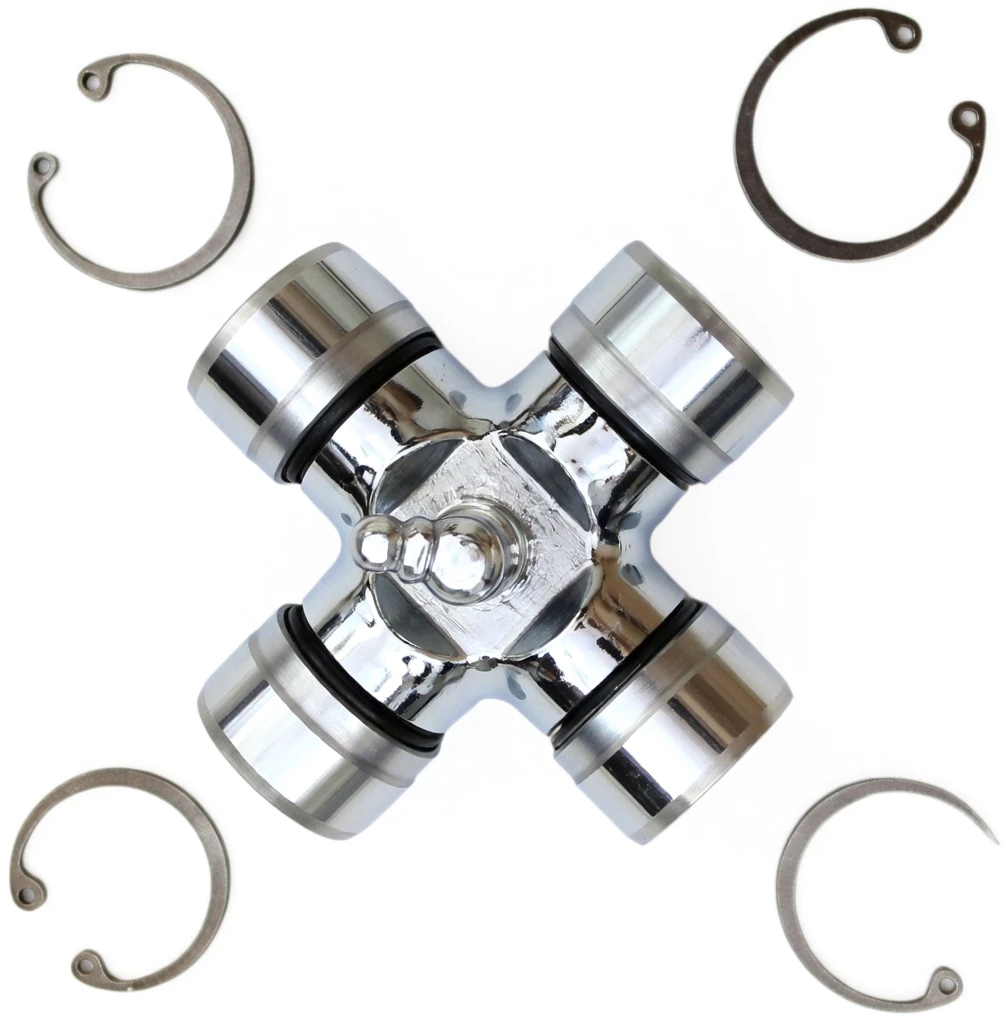
A PTO shaft cross kit replaces the worn cruciform journal (cross) and needle-roller bearing cups inside the universal joint of a PTO driveline. Correct selection depends on three primary dimensions: cap diameter (A), overall journal length (B), and circlip groove thickness (C). Kits with wing arms add two more parameters: arm width (D) and arm height (E/F). Matching these dimensions to your existing yoke geometry ensures full torque capacity and eliminates premature vibration. If in doubt, measure the old cross with a vernier calliper and contact our engineering team at sales@australia-drive.com.
Product Overview
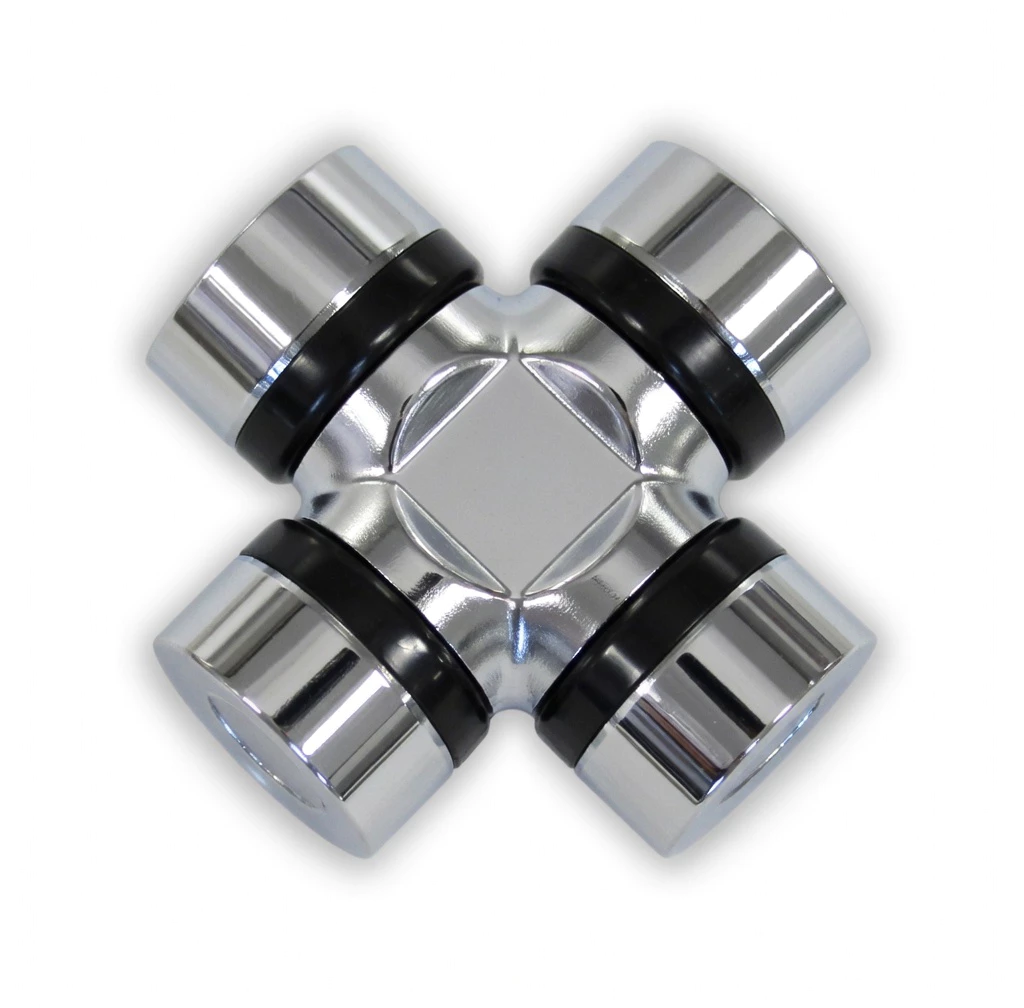
The PTO shaft cross kit — universally known as a U-joint cross kit, universal joint cross and bearing kit, or cardan joint cross kit — is the replaceable wear component at the heart of every agricultural PTO driveline shaft. It enables angular power transfer between the tractor power take-off output and the driven implement, accommodating the continuous changes in operating angle caused by field terrain, three-point-hitch movement, and implement articulation.
GBC (General Bearing Company Pty Ltd.), as the Ever-Power Group Australia Agency, supplies a full catalogue of cross kits covering standard series (1.01 through 50.01), heavy-duty JH series, and wing-arm (WA) series for centre-block yoke designs. Our inventory serves PTO shaft manufacturers, agricultural dealerships, machinery workshops, and farm maintenance teams across every state. As a professional PTO shaft supplier and agricultural drive component distributor, we hold stock for immediate dispatch from our Australian warehouse.
Industries & Applications at a Glance
Broadacre grain farming, pastoral livestock operations, mixed farming enterprises, dairy and feedlot operations, viticulture and horticulture, sugarcane harvesting (Queensland), cotton ginning (New South Wales), and municipal grounds maintenance — any sector that relies on tractor PTO shafts, PTO drive shafts, or PTO driveline shafts needs a reliable supply of cross kits to keep downtime to a minimum.
Core Advantages at a Glance
Precision-machined from chromium-molybdenum alloy steel, heat-treated to HRC 58–62 surface hardness, fitted with multi-lip nitrile seals, and supplied complete with bearing cups, needle rollers, circlips, and grease — every kit is a one-box, ready-to-install solution. Full dimensional interchangeability with OEM cross kits from major tractor and implement brands means you spend less time measuring and more time farming.

Technical Specifications
◆ Standard Cross Kit Series
Dimensions: A = Bearing Cap Diameter, B = Overall Journal Length, C = Circlip Thickness. All measurements in millimetres.
| Series | A (mm) | B (mm) | C (mm) |
|---|---|---|---|
| 1.01 | 22 | 54 | 1.2 |
| 2.01 | 23.8 | 61.3 | 1.2 |
| 3.01 | 27 | 70 | 1.2 |
| 4.01 | 27 | 74.6 | 1.2 |
| 5.01 | 30.2 | 80 | 1.5 |
| 32.01 | 32 | 76 | 1.5 |
| 6.01 | 30.2 | 92 | 1.5 |
| 7.01 | 30.2 | 106.5 | 1.5 |
| 7N.01 | 35 | 94 | 1.5 |
| 8.01 | 35 | 106.5 | 1.5 |
| 38.01 | 38 | 105.6 | 1.5 |
| 36.01 | 36 | 89 | 1.5 |
| 9.01 | 41 | 108 | 1.75 |
| 10.01 | 41 | 118 | 1.75 |
| 42.01 | 42 | 104.5 | 1.75 |
| 48.01 | 48 | 127 | 1.75 |
| 50.01 | 50 | 118 | 2 |
◆ JH Series Cross Kit (Heavy-Duty)
Designed for high-torque agricultural PTO applications. D = Circlip outer seat diameter. All measurements in millimetres.
| Series | A (mm) | B (mm) | C (mm) | D (mm) |
|---|---|---|---|---|
| JH32.01 | 32 | 57 | 92 | 1.5 |
| JH38.01 | 38 | 57 | 101 | 3 |
◆ Wing-Arm (WA) Series Cross Kit
For centre-block style yokes with integrated wing arms. Additional parameters: D = Arm span, E = Arm clip thickness, F = Arm clip thickness (secondary). All measurements in millimetres.
| Series | A (mm) | B (mm) | C (mm) | D (mm) | E (mm) | F (mm) |
|---|---|---|---|---|---|---|
| 2WA.01 | 23.8 | 61.3 | 22 | 76 | 1.2 | 1.2 |
| 4WA.01 | 27 | 74.6 | 23.8 | 91 | 1.2 | 1.2 |
| 6WA.01 | 30.2 | 92 | 27 | 100 | 1.5 | 1.2 |
| 8WA.01 | 35 | 106.5 | 30.2 | 106 | 1.5 | 1.5 |
| 32WA.01 | 32 | 76 | 27 | 94 | 1.5 | 1.2 |
| 36WA.01 | 36 | 89 | 32 | 106 | 1.5 | 1.5 |
| 42WA.01 | 42 | 104.5 | 36 | 124 | 1.75 | 1.5 |

How the PTO Shaft Cross Kit Works
Structural Composition
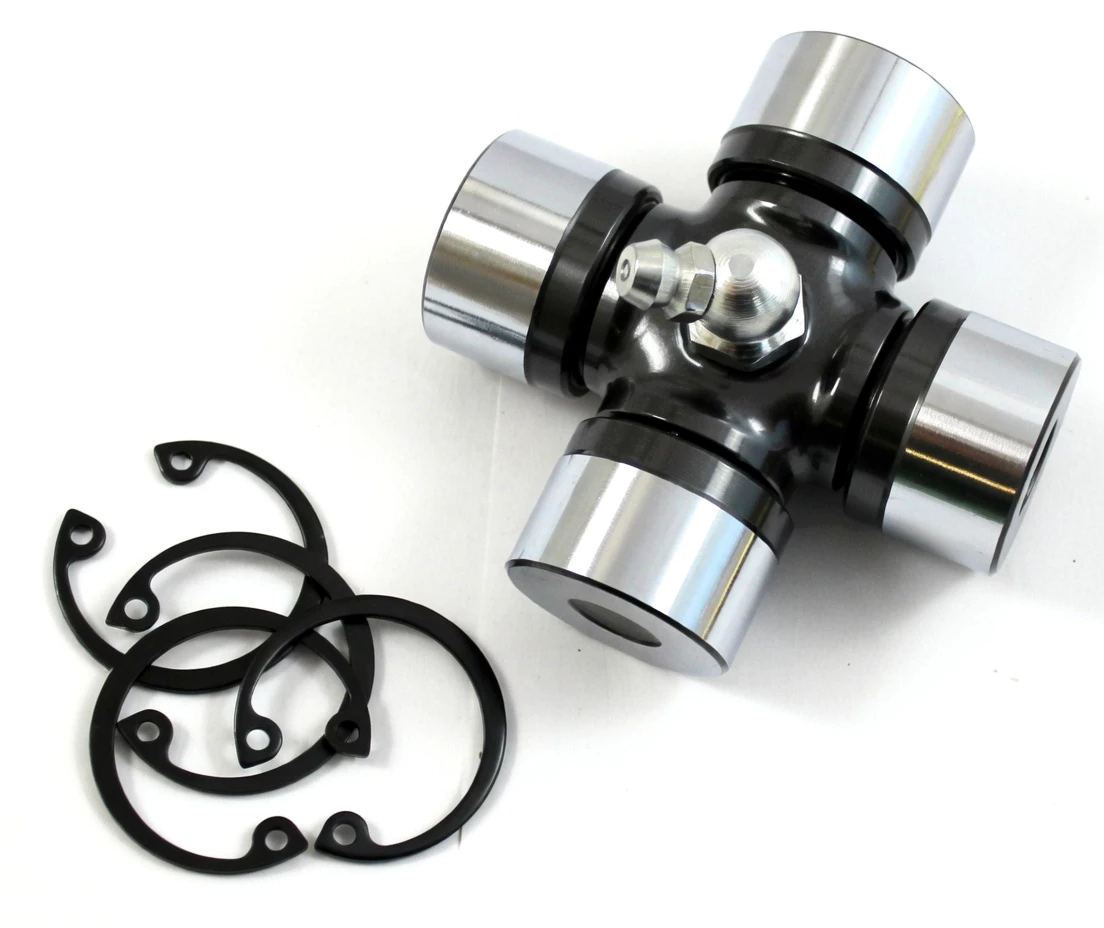
Each cross kit comprises a one-piece cruciform journal (the “cross”), four bearing cups packed with high-grade needle rollers, four multi-lip seals, internal grease reservoirs, and external circlips or snap rings for retention. The cross is machined from a single billet of chromium-molybdenum alloy steel to ensure concentric trunnion alignment within 0.01 mm TIR (Total Indicated Runout). The needle-roller bearing cups are case-hardened to HRC 60–62 and lapped to a surface finish below Ra 0.4 micrometres.
Operating Principle
When the tractor PTO output shaft rotates, torque flows through the driving yoke into the cross journal. Each pair of opposing trunnions sits inside needle-roller bearing cups pressed into the yoke bores. As the operating angle between input and output yokes changes — during field undulation, implement lift, or turning — the cross tilts on its bearings, maintaining unbroken torque transfer. Multi-lip seals on each cup retain grease and exclude contaminants such as dust, crop residue, and water spray. The circlips lock each bearing cup axially within the yoke bore, preventing walk-out under vibration and thrust loads.
🔎 Why Angular Compensation Matters in Agriculture
Agricultural PTO drivelines routinely operate at angles between 5 degrees and 25 degrees — far greater than most industrial cardan shafts. During headland turns, the angle can spike momentarily beyond 30 degrees. A precision cross kit with tight bearing tolerances and robust sealing absorbs these angular excursions without sacrificing bearing life. Poorly made cross kits develop notchy spots, leak grease under centrifugal force, and ultimately seize, causing catastrophic driveline failure mid-harvest. Choosing a quality PTO u-joint cross kit is not merely a maintenance decision; it is a risk-management strategy for your farming operation.
Core Advantages
Premium Alloy Steel Construction
Cruciform journals forged from 20CrMnTi chromium-molybdenum alloy steel, carburised and quenched to achieve HRC 58–62 surface hardness with a tough, ductile core. This dual-hardness profile resists surface pitting while absorbing shock loads common in broadacre stubble work and heavy baling operations.
Precision Needle-Roller Bearings
Each bearing cup contains a full complement of Grade 3 needle rollers ground to ISO 3096 tolerances. The high roller count distributes load evenly across the trunnion, reducing contact stress and extending fatigue life well beyond 500 hours of continuous PTO operation at 540 RPM.
Multi-Lip Seal Technology
Proprietary four-lip nitrile (NBR) seals with a stainless-steel backing washer retain lithium-complex grease under high centrifugal force and prevent ingress of fine Australian red dust, chaff, and water spray. Seal life is validated to 1,000+ hours in an accelerated dust-ingestion test chamber simulating outback conditions.
Direct OEM Interchangeability
Every series in our catalogue is dimensionally verified against the original cross kit specifications used by leading European and North American PTO shaft manufacturers. Drop-in fitment eliminates yoke modification, reduces workshop time, and ensures the correct torque rating is maintained without re-engineering the driveline.
Complete Kit — One Box, One Job
Each kit ships with the cruciform journal, four bearing cups pre-loaded with needle rollers, four seals, four circlips (internal or external as applicable), and a sachet of assembly grease. No chasing individual components from multiple suppliers — open the box, press the cups, fit the clips, and you are back in the paddock.
Wide Series Coverage for All PTO Categories
From the compact 1.01 series (22 mm cap) for light-duty rotary hoes and post-hole diggers, through the mid-range 6.01/7.01/8.01 series for mowers, balers, and feed mixers, to the heavy-duty 48.01/50.01 series for large square balers and forage harvesters — our range covers every PTO category defined by ASABE S203 and ISO 500.
Structure & Material Engineering
Cruciform Journal Design
The cross (cruciform journal) is the single most critical part of the universal joint. It must transmit full driveline torque through four bearing surfaces while maintaining concentricity as the joint articulates. Our crosses are CNC-turned from 20CrMnTi or equivalent grade, then carburised at 920 degrees C, quenched in oil, and tempered at 180 degrees C. This process produces a case depth of 0.8–1.2 mm at HRC 58–62 with a core hardness of HRC 33–38, balancing wear resistance with impact toughness.
Bearing Cup & Needle Roller Assembly
Bearing cups are deep-drawn from GCr15 (AISI 52100) chromium bearing steel, through-hardened to HRC 60–62, and internally lapped to a cylindricity tolerance of 0.005 mm. Each cup is loaded with a precision-counted complement of G3-grade needle rollers (GCr15, HRC 62–65) arranged in a single row around a thin-wall cage. The resultant radial load capacity comfortably exceeds the peak torque impulses generated by PTO-driven equipment such as rotary cultivators, flail mowers, and large round balers.
Sealing System
Agricultural driveline environments are among the harshest on earth for seals: fine silica dust, crop chaff, animal manure, fertiliser solutions, and high-pressure wash water. Our four-lip NBR seals feature a primary grease-retention lip, a secondary dust-exclusion lip, an intermediate labyrinth groove, and a stainless-steel expeller washer that centrifugally slings water away from the seal face. The result is a sealed-for-life bearing cup that can still accept additional grease through the zerk fitting on the cross centre if a re-grease interval is preferred.
Circlip Retention
All standard-series kits use external circlips (snap rings) manufactured from spring-tempered carbon steel (C67S equivalent). Circlip thickness ranges from 1.2 mm for light-duty series to 2.0 mm for the 50.01 heavy-duty series. Wing-arm kits use a combination of internal circlips on the cap side and external circlips on the wing-arm side, ensuring secure axial retention against the bidirectional thrust loads generated during headland reversals. Every circlip is stress-relieved after forming and hydrogen-embrittlement baked to prevent brittle fracture under cyclic loading.
Typical Application Scenarios

Rotary Slashers & Flail Mowers
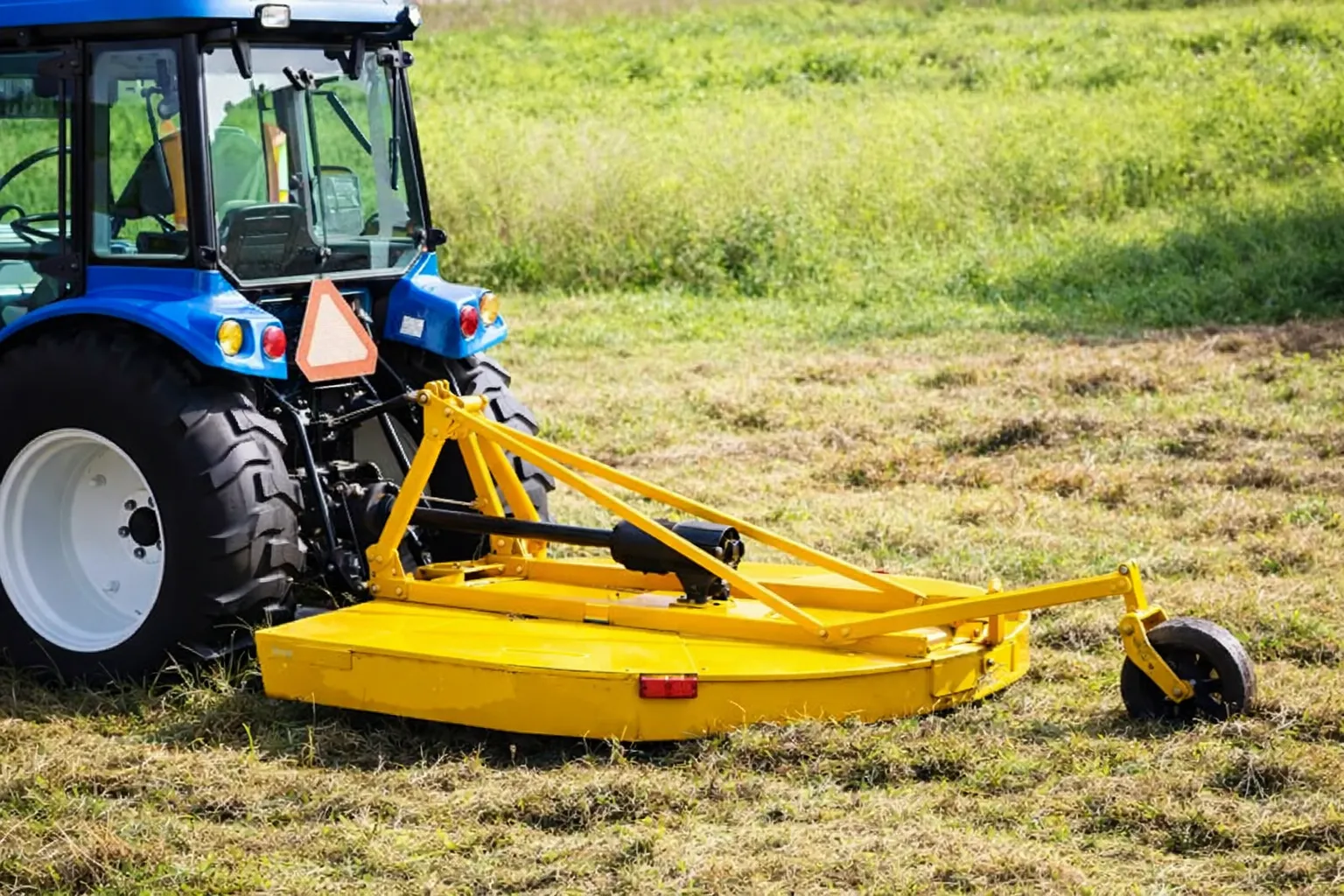
Series 5.01 to 7.01 cross kits handle the continuous 540 RPM loading and intermittent shock of blade impact against stumps, rocks, and hidden debris. The sealed bearings tolerate the grass-juice and moisture-laden environment beneath the mower deck.
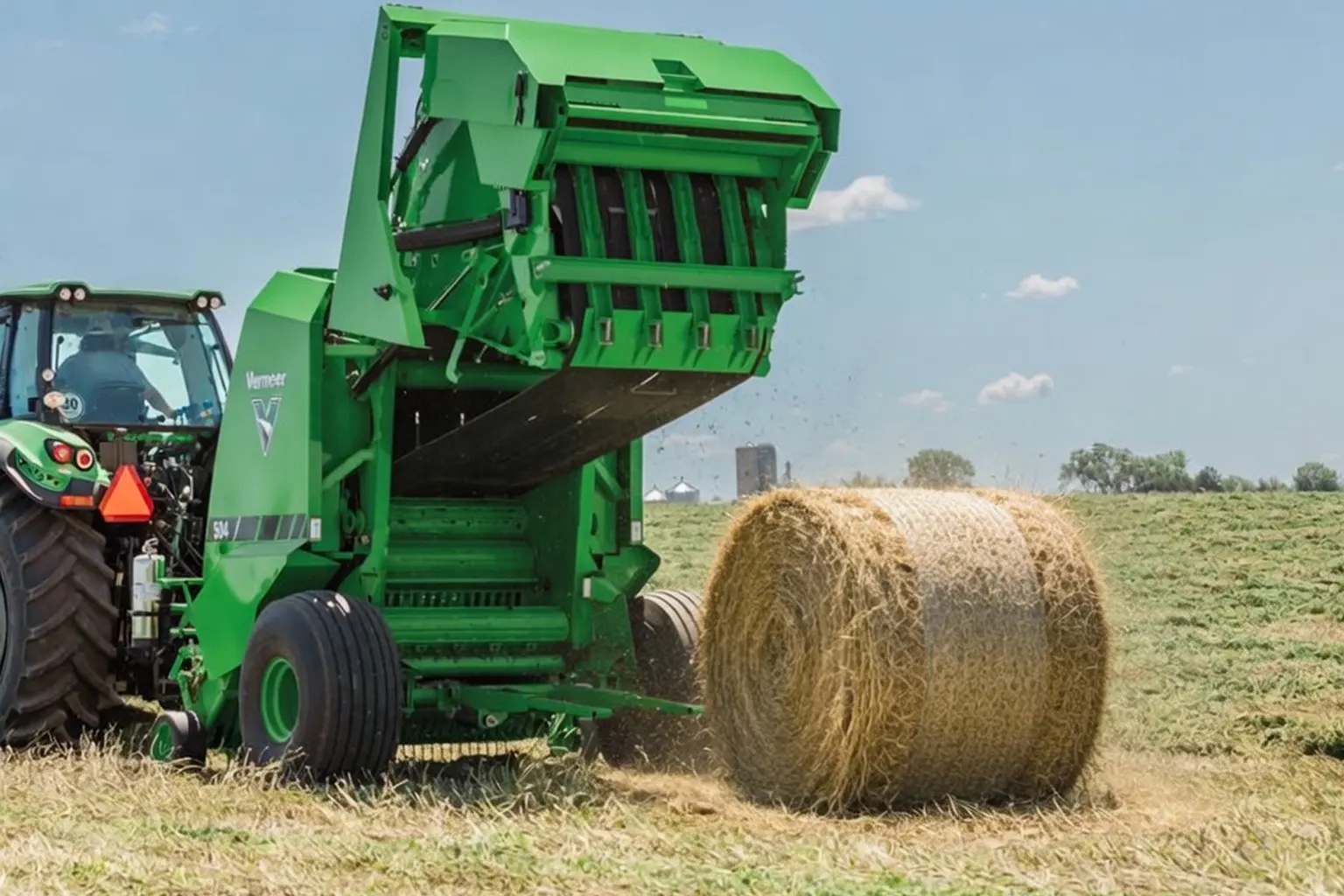

Round & Large Square Balers
Balers impose high peak torques as the bale chamber fills. Series 8.01 through 42.01 cross kits are rated for the cyclic torque spikes of the plunger mechanism (square balers) or belt-tension surges (round balers). Wing-arm WA series kits fit centre-block yoke designs common in European-manufactured balers.
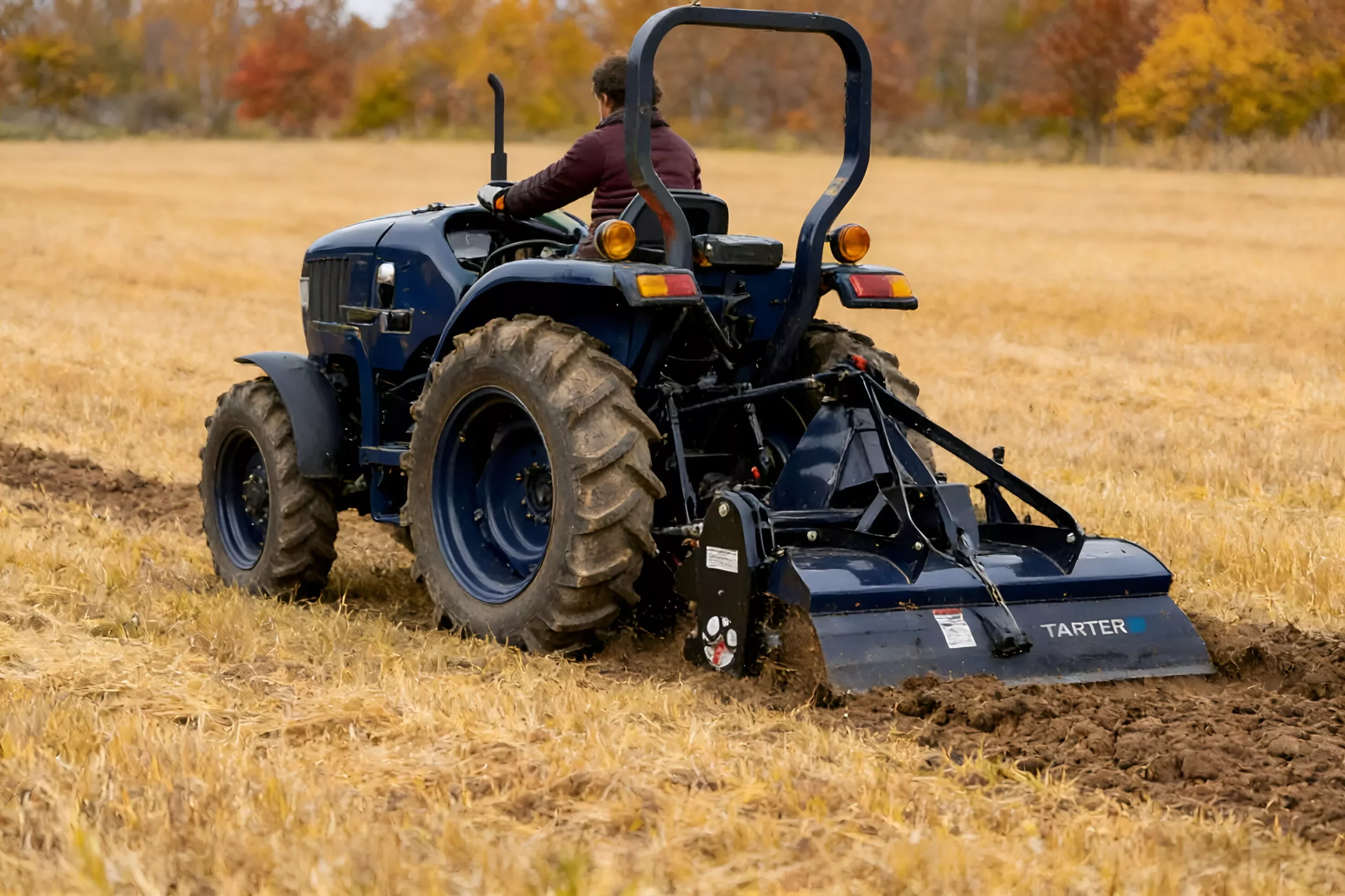

Rotary Tillers & Cultivators
Soil-engaging implements subject the driveline to sustained high-torque, low-speed loading and violent shock if the tines strike a rock. Series 6.01 and 32.01 cross kits provide the toughness required, and the four-lip seal system keeps abrasive soil particles out of the needle-roller bearings.
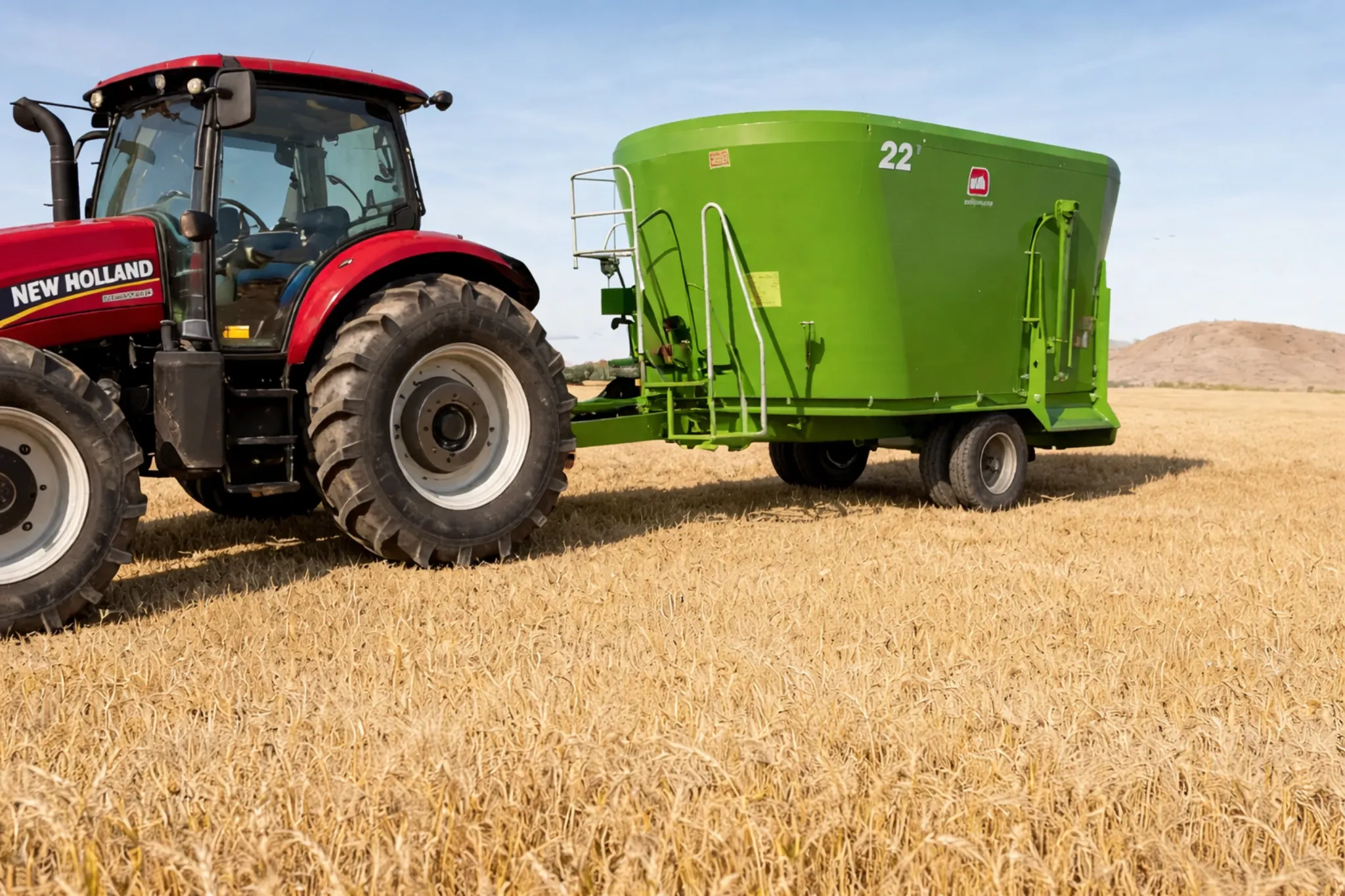

Feed Mixers & TMR Wagons
Vertical and horizontal feed-mixer augers draw heavy torque at start-up when the auger bites into a cold bale. Series 9.01 and 10.01 cross kits handle these stall-torque conditions without trunnion surface damage, keeping dairy and feedlot operations running on schedule.
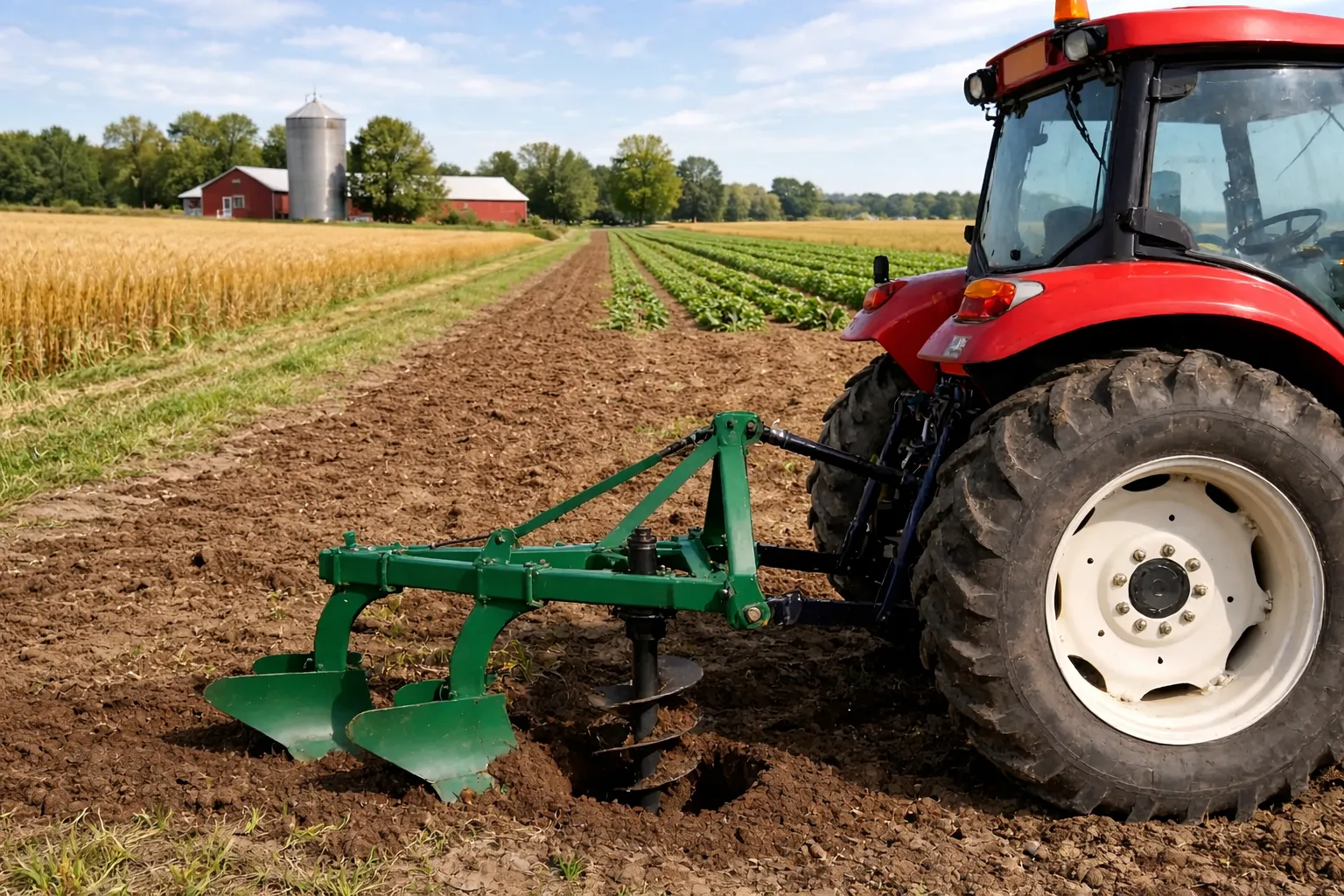
Post-Hole Diggers & Augers
Light-duty 1.01 to 3.01 series cross kits suit compact-tractor auger drives used for fencing across pastoral stations. Despite their smaller dimensions, these kits maintain the same seal technology and heat-treatment standards as the larger series, ensuring reliability on remote properties.
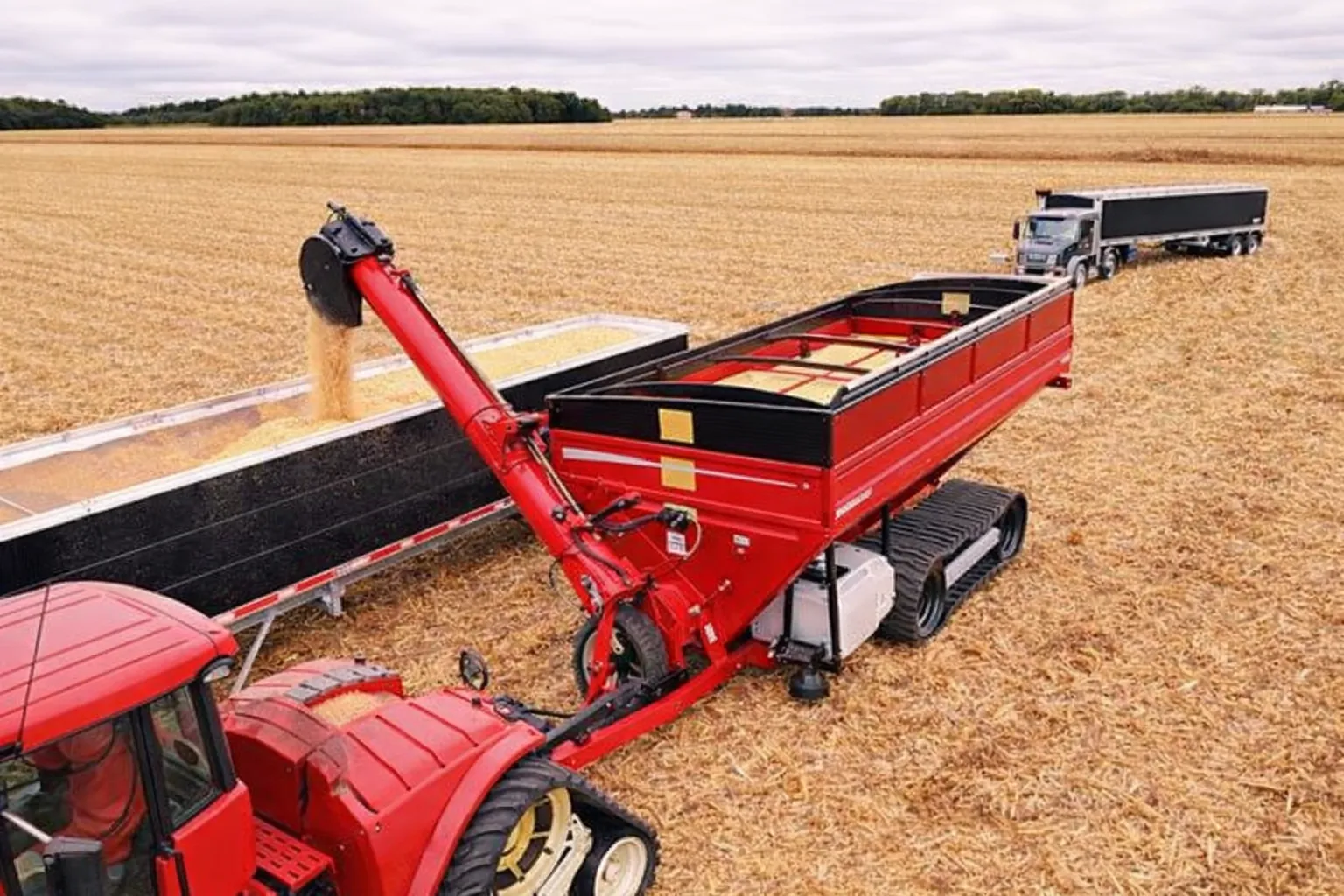
Grain Carts & Chaser Bins
Harvest logistics depend on fast unloading. The PTO-driven auger on a chaser bin runs at 1,000 RPM and must tolerate the angular changes as the cart tracks across the paddock beside the header. Series 38.01 and 48.01 cross kits deliver the speed and angle capability required during the intense harvest window.
Cross Kit Selection Guide
Selecting the correct PTO shaft cross kit is essential for driveline longevity and safety. Follow these steps to identify the right kit for your application:
Measure the Existing Cross
Use a vernier calliper or micrometre to measure: (A) bearing cap outside diameter, (B) overall length across both trunnion ends, and (C) circlip groove width or thickness. For wing-arm types, also measure arm span (D) and arm clip thickness (E, F). Record dimensions to one decimal place in millimetres.
Identify the Yoke Configuration
Determine whether your yoke uses a standard round-bore design (Standard or JH series cross), or a centre-block design with integrated wing arms (WA series cross). This determines which table to reference. Inspect the yoke bore for signs of wear, scoring, or ovality that may require yoke replacement before fitting a new cross kit.
Match to Series Number
Cross-reference your measured dimensions with the specification tables above. If your measurements fall between two series, contact our engineering team. Forcing a slightly oversize cross into a yoke bore causes bearing preload; an undersize cross leaves radial clearance that accelerates wear. Precision matters.
Consider Operating Conditions
For extreme-duty applications (continuous 1,000 RPM, high-angle, heavy soil), consider upgrading one series size if yoke bore permits, or selecting the JH heavy-duty variant. For corrosive environments (coastal salt spray, effluent irrigation), enquire about our stainless-steel circlip upgrade. Articulation angle, PTO speed (540 or 1,000 RPM), and horsepower rating all influence cross selection.
📞 Need Help Selecting?
Our driveline engineers can cross-reference your existing part number, OEM equipment model, or measured dimensions to the correct GBC cross kit. Email your dimensions and photos to sales@australia-drive.com or submit an enquiry online. We typically respond within 4 business hours.
Brand Compatibility & Cross-Reference
Our PTO shaft cross kits are engineered as direct dimensional replacements for the universal joint cross and bearing kits originally fitted to the following equipment and driveline brands:
| Category | Compatible as Replacement of |
|---|---|
| PTO Shaft Brands | Replacement of Walterscheid, replacement of Bondioli & Pavesi, replacement of Comer Industries, replacement of GKN / Elbe, replacement of Shafto, replacement of AW Dynamatic |
| Tractor Manufacturers | Replacement of John Deere, replacement of Case IH, replacement of New Holland, replacement of Massey Ferguson, replacement of Kubota, replacement of CLAAS, replacement of Fendt, replacement of Deutz-Fahr |
| Implement Manufacturers | Replacement of Krone, replacement of Kuhn, replacement of Vicon, replacement of Pottinger, replacement of McHale, replacement of Lely, replacement of Amazone |
| Bearing / U-Joint Brands | Replacement of SKF, replacement of NTN, replacement of NSK, replacement of Koyo, replacement of Timken, replacement of INA/FAG |
If you have an existing OEM part number from any of the above brands, send it to us and we will provide a confirmed cross-reference to the matching GBC series within one business day. Our technical library contains over 2,000 cross-reference entries covering legacy and current-model PTO driveline components.
Quality Certifications & Service Commitment
ISO 9001:2015
Manufacturing facilities operate under ISO 9001:2015 certified quality management systems. Every batch undergoes dimensional inspection, hardness testing, and seal integrity verification before packaging.
CE Marking
Cross kits supplied as part of complete PTO shaft assemblies carry CE marking in compliance with the EU Machinery Directive 2006/42/EC. Documentation available on request for export customers.
Material Traceability
Full material certificates (EN 10204 Type 3.1) are available for all steel grades used in cross journal and bearing cup production. Traceability from raw billet to finished kit is maintained electronically.
Australian Stock & Fast Dispatch
Core series are held in our Australian warehouse for same-day dispatch. Metro deliveries typically arrive next business day; regional and remote addresses within 2–5 business days via express freight.
Technical Support
Free cross-referencing, selection assistance, and installation guidance from our driveline engineering team. We support dealers, workshops, and end-users alike — no question is too basic or too technical.
Competitive B2B Pricing
Volume discounts for agricultural dealers, machinery rebuilders, and fleet maintenance operations. Request a trade-price schedule via our contact page.
Frequently Asked Questions
What is the difference between a PTO shaft cross kit and a U-joint?
+
How do I know when my PTO cross kit needs replacing?
+
Can I install the cross kit myself, or do I need a press?
+
What PTO speed rating do your cross kits support?
+
Do you supply cross kits for non-agricultural cardan shafts?
+
What is the minimum order quantity for B2B customers?
+
Do you ship to regional and remote Australia?
+
Can you supply greaseable cross kits with a zerk fitting?
+
Engineer Field Notes — Australian Case Studies
Sydney Basin Extreme-Dust Terrain Adaptation Study
Location: Western Sydney — Hawkesbury Valley | Equipment: 150 HP Tractor + Rotary Hoe | Cross Kit: Series 6.01
A market-garden operation west of Sydney was replacing generic-import cross kits every 80–100 engine hours due to seal failure in the fine alluvial silt of the Hawkesbury floodplain. After switching to GBC Series 6.01 kits with the four-lip seal system, service life extended to over 450 hours across two growing seasons. The operator noted the elimination of the “morning clunk” — the play that used to develop overnight as grease leaked past compromised seals. Total annual u-joint maintenance cost dropped by approximately 60%.
Result: 4.5x improvement in cross kit service life; significant reduction in unscheduled downtime.
Melbourne Peri-Urban Dairy Feed-System Overhaul
Location: Gippsland, Victoria | Equipment: TMR Feed Mixer (Vertical Twin-Auger) | Cross Kit: Series 9.01
A 600-head dairy in Gippsland experienced repeated cross kit failures on its PTO-driven feed mixer. Root-cause analysis revealed the previous cross kits (sourced from a generic online marketplace) had inferior case-hardening depth, leading to subsurface fatigue cracking under the stall-torque loading during cold-bale auger start-up. We supplied GBC Series 9.01 kits with verified 1.0 mm carburised case depth. The mixer has now operated through two full milking seasons (over 1,200 hours) without a u-joint replacement.
Result: Zero unscheduled cross kit replacements over 1,200+ operating hours.
Brisbane Sugarcane Region High-Speed PTO Adaptation
Location: Bundaberg, Queensland | Equipment: Sugarcane Haulout Bin with PTO Auger | Cross Kit: Series 38.01
Sugarcane haulout bins in the Bundaberg district operate at 1,000 RPM PTO speed with significant angular variation as the bin traverses uneven cane-field headlands. The operator’s previous cross kits were developing heat discolouration on the trunnions within 200 hours, indicating marginal lubrication at the higher rotational speed. GBC Series 38.01 cross kits, with their enhanced needle-roller count and larger grease reservoir, maintained operating temperatures below 70 degrees C as measured by contact pyrometer, and are now averaging 600+ hours per set.
Result: 3x service life improvement under 1,000 RPM high-angle conditions.
Adelaide Hills Vineyard Precision Application Study
Location: McLaren Vale, South Australia | Equipment: Under-Vine Mower (Compact Tractor, 45 HP) | Cross Kit: Series 3.01
Viticulture PTO drivelines are short, tight-angled, and run at moderate speed. A McLaren Vale vineyard replaced the worn cross kits on three under-vine mowing attachments with GBC Series 3.01 kits. The compact 27 mm cap / 70 mm length dimensions matched the existing European-manufactured yokes precisely. After a full vintage cycle (pruning, mowing, and harvest operations), no detectable play was found in any of the six installed cross kits. The vineyard manager subsequently placed a standing annual order for preventive replacement stock.
Result: Perfect dimensional fit with European yokes; zero play after full vintage cycle.
Perth Wheatbelt Broadacre Harvest Logistics Case
Location: Merredin, Western Australia | Equipment: 30-Tonne Chaser Bin (1,000 RPM PTO Auger) | Cross Kit: Series 48.01
During the 2024 wheat harvest, a broadacre operation east of Perth experienced a cross kit seizure on their chaser bin at the worst possible moment — mid-unload beside the header. The resulting downtime cost the equivalent of 4 hours of header operation. After the emergency repair, the farm manager switched all three chaser bins to GBC Series 48.01 cross kits (48 mm cap, 127 mm length, 1.75 mm circlip). The 2025 harvest ran without a single driveline issue across approximately 900 combined operating hours.
Result: 900+ combined hours with zero cross kit failures across three machines during peak harvest.
Customer Reviews
“We maintain 14 PTO-driven implements across our broadacre grain and sheep operation. Switched all u-joint replacements to GBC cross kits two seasons ago. Not a single failure since. The sealed bearings handle our red-dust conditions far better than the previous brand. Delivery to regional NSW was faster than expected.”
Mark T. — Farm Manager, Dubbo, NSW
Purchased: Series 6.01 & 8.01 cross kits for rotary slasher & round baler PTO shafts
“As an ag-machinery dealer, we need cross kits that drop straight in without warranty callbacks. GBC kits fit perfectly into both European and Japanese yokes. Our workshop techs appreciate the included circlips and grease sachet — no more rummaging through the parts drawer. Price is very competitive for the quality.”
Sarah L. — Parts Manager, Toowoomba, QLD
Purchased: Mixed standard & WA series for dealer workshop stock
“Replaced the cross kits on our feed mixer PTO shaft after the old ones seized during morning feed. The GBC 9.01 kits have been running for over a year now with daily use. Smooth, quiet, no play. Technical support was outstanding — they identified the correct series from a photo of the old cross in under an hour.”
David R. — Dairy Operations, Warragul, VIC
Purchased: Series 9.01 cross kits for TMR feed mixer driveline
“Good quality cross kits at a fair price. The only reason for 4 stars instead of 5 is I wish they stocked the JH38.01 locally — had to wait a few extra days for it to ship. But the product itself is excellent, hardness and finish look as good as the OEM kit it replaced. Will order again.”
James K. — Contract Baling, Moree, NSW
Purchased: JH38.01 heavy-duty cross kit for large square baler
Related Products & Agricultural Drive Components
The cross kit is just one element of a complete agricultural power transmission system. GBC supplies the full range of components that work alongside your PTO driveline to keep your machinery productive and reliable.
Agricultural Gearbox
Right-angle, inline, and T-type gearboxes for mowers, tillers, feed mixers, and spreaders. Matched to work with our PTO shaft assemblies for complete driveline solutions.
Sprockets
Agricultural, finished-bore, taper-lock, and weld-on sprockets for chain-driven implements and conveyors.
Chains
Roller chains, conveyor chains, and specialty agricultural chains for headers, balers, and feeders.
Pulleys
V-belt, timing-belt, and flat-belt pulleys for auxiliary drives on agricultural equipment.
Gears
Spur, bevel, spiral bevel, and worm gears for agricultural gearboxes and custom drivetrain applications.
Need a complete driveline package? We can supply PTO shafts, cross kits, gearboxes, and ancillary components as a single order with matched specifications. Contact our team for bundled pricing.
Extreme Working-Condition Field Studies Across Australia
New South Wales — Black-Soil Broadacre Adaptation
The cracking black-soil plains of the Liverpool Plains and Moree districts generate extreme fine-particle dust during stubble cultivation. PTO driveline cross kits must contend with abrasive dust infiltration at up to 540 RPM for 10–14 hours per day during seeding windows. Our four-lip seal technology has been field-proven across multiple properties in the region, with operators reporting a significant reduction in mid-season cross kit failures compared to single-seal alternatives. The clay soils also impose high torque loads on rotary harrows and cultivators, demanding the full case-hardened toughness of our chromium-molybdenum alloy journals.
Victoria — High-Rainfall Dairy Country Application
Gippsland and the Western District receive over 800 mm annual rainfall, meaning PTO drivelines on feed mixers, slurry spreaders, and mowers operate in persistently wet conditions. Water ingress is the primary failure mode for u-joint cross kits in this environment. Our stainless-steel expeller washer and labyrinth-groove seal configuration provide demonstrably superior moisture exclusion. Dairy operators running twice-daily feeding schedules accumulate operating hours rapidly; a cross kit that lasts 1,200+ hours under these conditions translates to substantial savings in both parts and labour over a five-year equipment lifecycle.
Queensland — Tropical Heat & Cane-Field Terrain
Sugarcane and cotton regions of Central and Southern Queensland subject PTO cross kits to ambient temperatures routinely exceeding 40 degrees C, combined with high-speed 1,000 RPM operation and the rough-terrain angular excursions of cane-field headlands. Under these conditions, bearing grease can thin and oxidise prematurely if the seal system allows centrifugal loss. Our cross kits use a lithium-complex grease rated to 180 degrees C dropping point, paired with the high roller count that reduces per-roller contact stress and therefore heat generation. Field data from Bundaberg and Mackay operations confirms 600+ hours at 1,000 RPM without thermal discolouration.
South Australia — Vineyard & Orchard Precision Requirements
Horticultural PTO applications in the Barossa Valley, McLaren Vale, and Riverland demand compact cross kits (Series 1.01 to 4.01) that fit the tight yoke geometry of under-vine mowers, inter-row cultivators, and orchard sprayers. Operating angles are often extreme due to the short driveline length and offset implement mounting. Vibration tolerance is critical because excessive driveline vibration can damage sensitive horticultural equipment. Our precision-ground crosses with 0.01 mm TIR concentricity eliminate the vibration-inducing runout that plagues lower-grade kits.
Western Australia — Wheatbelt Harvest-Window Reliability
The WA Wheatbelt harvest window is brutally time-critical: any machinery downtime during the 3–4 week peak directly reduces annual revenue. Chaser bins, field bins, and auger carts run PTO augers at 1,000 RPM for 16+ hours per day. Cross kit failure during peak harvest is one of the most costly unplanned events a broadacre farmer can experience. Our heavy-duty Series 48.01 and 50.01 cross kits, with their 1.75–2.0 mm circlips and maximum-capacity needle rollers, are specified by multiple large-scale WA farming operations as their standard harvest-preparation replacement item. Pre-season cross kit replacement is treated as insurance, not maintenance.
Installation Quick-Reference
Remove Old Cross
Remove circlips, then press out bearing cups using a vice, press, or C-clamp. Note the yoke orientation for reassembly phasing.
Inspect Yoke Bores
Check for scoring, ovality, and burrs. Clean the bore and circlip groove. Replace the yoke if bore is worn beyond specification.
Fit New Cross
Insert the new cruciform journal into the yoke. Apply a thin film of grease to the yoke bore. Press each bearing cup squarely until the circlip groove is exposed.
Secure & Test
Install circlips firmly into grooves. Confirm zero axial play and free angular movement. Grease via zerk if applicable. Rotate the shaft by hand to verify smooth operation before engaging PTO.
Maintenance & Longevity Tips
🕒 Inspect Cross Kits Regularly
Check for play at the start and end of each season, and after any abnormal vibration or noise event. Early detection of a worn cross prevents cascading damage to yokes, tubes, and guards.
💧 Grease Correctly
For greaseable kits, use a lithium-complex EP2 grease (NLGI Grade 2) at intervals recommended by the implement manufacturer. Over-greasing can blow seals; under-greasing starves the bearings. Two to three pumps from a standard grease gun is typically sufficient per cross.
📐 Maintain Correct Driveline Angles
Ensure the PTO shaft operating angle is within the recommended range for its series. Excessive angle accelerates bearing wear and can cause cyclic vibration (NVH). Adjust three-point-hitch height and driveline length to optimise the joint angle. Input and output yoke phasing must remain correct (ears in the same plane).
🔒 Replace Both Crosses Simultaneously
A PTO shaft has two universal joints. If one cross kit has failed, the other is typically at a similar stage of wear. Replacing both at the same time ensures balanced driveline behaviour and prevents a return trip to the workshop within weeks.
Terminology Guide for PTO Shaft Cross Kits
The PTO shaft cross kit goes by many names across different regions, brands, and workshop cultures. Understanding these terms ensures you find the right part regardless of terminology:
| Common Term | Description |
|---|---|
| PTO Shaft Cross Kit | The replacement package containing the cross journal, bearing cups, seals, and circlips. |
| U-Joint / Universal Joint | The assembled mechanism in the yoke that allows angular power transfer. The cross kit rebuilds this joint. |
| Cross and Bearing Kit | Alternative term emphasising that the kit includes both the cross journal and its bearing assemblies. |
| Cardan Joint Cross Kit | Term derived from “cardan shaft” (another name for a universal-joint driveline), common in European technical literature. |
| Cruciform / Spider | The cross-shaped journal itself, without the bearing cups. “Spider” is common in North American workshop slang. |
| PTO Driveline U-Joint | Specifically refers to the universal joint located within a PTO driveline shaft assembly on agricultural equipment. |
| Wing-Arm Cross Kit | A cross kit designed for centre-block yoke designs with integrated retaining arms instead of standard circlips. |
Partner with GBC for Your PTO Driveline Needs
General Bearing Company Pty Ltd. (Ever-Power Group Australia Agency) has served the Australian agricultural, industrial, and mining sectors for over 40 years. Our product range extends well beyond cross kits to encompass complete PTO shafts, agricultural gearboxes, chains, sprockets, pulleys, gears, couplings, bearings, hub units, hydraulic cylinders, and trailers. We are not simply a catalogue supplier — we are engineers, problem-solvers, and partners to Australian agriculture.
Manufacturing Capability
Backed by Ever-Power Group’s vertically integrated manufacturing facilities, we control every step from raw-material sourcing through CNC machining, heat treatment, grinding, assembly, and quality inspection. This gives us the flexibility to produce not only standard-catalogue cross kits, but also custom-engineered, non-standard PTO shaft components to your exact specifications. Whether you need a modified cross journal length, a special seal material for chemical-resistant applications, or a complete bespoke PTO shaft assembly with custom yokes and guard tubes, we can deliver.
Custom & Non-Standard Orders
We are not limited to the standard product catalogue. If you have a unique application that demands a non-standard cross kit dimension, a different material grade, or a complete PTO shaft assembly designed from scratch, we welcome your drawings and samples. Our engineering team will review your requirements, provide a detailed quotation with 3D CAD confirmation, and deliver production samples for your approval before full-scale manufacturing. This service is available to OEMs, machinery rebuilders, and large agricultural operations alike.
GBC — General Bearing Company Pty Ltd. (Ever-Power Group Australia Agency)
Email: sales@australia-drive.com | Web: australia-drive.com
Engineering Deep Dive — Common Cross Kit Failure Modes & Prevention
Understanding why PTO shaft cross kits fail is essential for preventing unplanned downtime. Two decades of driveline field service across Australian farms have revealed consistent failure patterns that can be addressed through correct kit selection, proper installation, and preventive maintenance discipline.
⚠ Seal Failure & Contamination Ingress
The number-one cause of premature cross kit failure in Australian agriculture is seal degradation followed by dust and moisture ingress. Single-lip seals, commonly found in budget-grade cross kits, cannot adequately exclude the fine silica particles present in Australian topsoil. Once abrasive particles enter the needle-roller zone, they act as a grinding compound, accelerating wear on the trunnion surface and the bore of the bearing cup. Within 50–100 hours, the resulting radial clearance causes perceptible vibration and noise.
Prevention: Specify multi-lip seal cross kits (such as our four-lip NBR design). Avoid high-pressure washing directly at the U-joint area. Inspect seals for extrusion, cracking, or hardening at each service interval.
⚠ Brinelling & False Brinelling
True brinelling occurs when a static overload creates permanent indentations on the trunnion surface at each needle-roller position. False brinelling happens when a stationary driveline is subjected to vibration (e.g., transport on a trailer) that causes micro-motion between the rollers and trunnion without full rotation. Both conditions create flat spots that cause the cross to “notch” during rotation, producing a rhythmic click or vibration.
Prevention: Never exceed the torque rating of the selected cross kit series. Disconnect PTO shafts during road transport where possible. Use a shear-bolt or slip-clutch safety device on the PTO driveline to limit shock-torque transmission to the cross.
⚠ Subsurface Fatigue Cracking
Under cyclic torque loading, microstructural fatigue initiates beneath the carburised case layer of the trunnion. Cracks propagate toward the surface, eventually causing spalling — flakes of hardened steel breaking away from the trunnion face. This failure mode is invisible until the spall reaches the surface, at which point the cross typically fails rapidly. Inferior cross kits with shallow or inconsistent case depth are particularly vulnerable because the fatigue-initiation zone falls within the relatively soft core instead of the tough transition zone.
Prevention: Specify cross kits with a verified carburised case depth of 0.8–1.2 mm and controlled core hardness of HRC 33–38. Avoid shock loading by matching driveline torque rating to tractor horsepower. Replace cross kits proactively at manufacturer-recommended intervals or at the first sign of vibration.
⚠ Thermal Damage from Grease Degradation
At 1,000 RPM PTO speed, particularly at elevated ambient temperatures in Queensland and Western Australia, bearing friction generates significant heat. If the grease charge is insufficient, contaminated, or of incorrect grade, the grease base oil evaporates, leaving a dry soap residue that provides minimal lubrication. The trunnion surface develops a blue-purple heat discolouration, and needle rollers may weld micro-spots onto the trunnion, creating a rough surface that accelerates further heat generation in a destructive feedback loop.
Prevention: Use cross kits pre-loaded with lithium-complex EP grease rated to at least 180 degrees C dropping point. For 1,000 RPM applications in hot climates, consider greaseable cross kits that allow periodic re-greasing during extended operating days. Monitor bearing temperature with a contact pyrometer during the first 50 hours of new kit operation.
⚠ Circlip Ejection
If a circlip is not fully seated in its groove, or if the groove is contaminated with rust, paint, or burrs, the circlip can pop out under axial thrust. Once a circlip ejects, the bearing cup walks out of the yoke bore, the cross tilts, and the driveline fails catastrophically — often with the PTO shaft separating from the implement. This is both a reliability issue and a safety hazard, as an uncontrolled PTO shaft can cause serious injury.
Prevention: Clean circlip grooves thoroughly before installation. Use a quality circlip plier to seat the clip fully and verify that it lies flat in the groove. Visually inspect circlips after the first 10 hours of operation. Use stress-relieved, hydrogen-embrittlement-baked circlips (as supplied in all GBC kits) to prevent brittle fracture.
⚠ Incorrect Yoke Phasing
When a PTO shaft has two universal joints (which most do), the input and output yokes must be “in phase” — meaning their ears are aligned in the same rotational plane. If the shaft is reassembled with yokes 90 degrees out of phase, the angular velocity fluctuation from each joint does not cancel out, resulting in severe cyclic vibration (twice per revolution) that rapidly destroys both cross kits and can damage the tractor PTO output bearing and the implement input shaft bearing.
Prevention: Before disassembly, mark the yoke alignment with a paint pen or scribe. During reassembly, confirm that both sets of yoke ears lie in the same plane when the shaft is straight. If using a new shaft, follow the manufacturer’s phasing marks.
Cross Kit vs. Complete U-Joint Assembly — Which Do You Need?
✅ Cross Kit (Repair Kit)
The cross kit is the correct choice when the existing yokes are in good condition — no bore wear, no cracks, no deformation. You remove the worn cross and bearing cups, clean the yoke bores, and press in the new kit. This is the most cost-effective repair and is suitable for the vast majority of field maintenance situations.
Typical scenarios: scheduled preventive replacement, cross kit failure with intact yokes, upgrading from a budget-grade kit to a higher-quality kit within the same yoke.
🔨 Complete U-Joint Assembly
A complete u-joint assembly includes the cross kit plus new yokes (half-round or full-round), welded or bolted to the tube. This is required when the yoke bores are worn, cracked, or deformed — conditions that prevent a new cross kit from achieving proper press-fit retention. Running a new cross kit in a worn yoke wastes the kit and risks repeated failure.
Typical scenarios: long-neglected drivelines, PTO shafts that have been run with severe cross-kit failure causing yoke bore damage, upgrading to a higher torque-rated driveline.
If you are uncertain whether your yokes are serviceable, measure the bore diameter with an internal micrometre or bore gauge and compare it to the nominal cap OD of the cross kit series. If the bore is more than 0.03 mm oversize, the yoke should be replaced. Our team can advise on yoke availability and compatibility for your specific PTO shaft model — contact us here.
Storage & Handling Guidelines
📦 Warehouse Storage
Store cross kits in their original sealed packaging in a clean, dry environment away from direct sunlight and temperature extremes. Ideal storage temperature is 10–30 degrees C with relative humidity below 60%. Do not store near welding areas, chemical storage, or areas with airborne abrasive particles. Shelf life in original packaging is typically 3–5 years, provided seals are not exposed to ozone or UV degradation.
📋 Handling Precautions
Never remove bearing cups from the cross journal until ready to install. The cups are shipped pressed onto the trunnions to protect the seals and retain the grease charge. Dropping a cross kit onto a hard surface can damage the seal lips or dent the bearing cup — always handle with care. If a kit is accidentally dropped, inspect the seal faces and cup edges under magnification before installation. Discard any kit with visible seal damage.
Ordering Information & Part-Numbering System
Our cross kit part-numbering follows a straightforward convention:
| Prefix | Meaning | Example |
|---|---|---|
| (none) | Standard series, external circlip retention | 6.01, 8.01, 48.01 |
| JH | Heavy-duty series with enhanced circlip and extended trunnion | JH32.01, JH38.01 |
| WA | Wing-arm series for centre-block yoke designs | 6WA.01, 8WA.01, 42WA.01 |
| N | Narrow variant (reduced overall length for space-constrained yokes) | 7N.01 |
To place an order, simply provide the series number and quantity. For cross-reference orders, provide the OEM part number and we will confirm the matching GBC series before dispatch. Bulk orders (50+ units) qualify for volume pricing — contact sales@australia-drive.com for a quotation.
🚚 Express Shipping Available Australia-Wide
Stock items dispatch same day for orders placed before 2:00 PM AEST. Standard shipping covers all metro and regional postcodes. Express overnight service available to Sydney, Melbourne, Brisbane, Adelaide, and Perth metro areas. Remote-area surcharges may apply for some Far North Queensland and outback postcodes — contact us for a freight quote.
Industry Standards & Compliance
Agricultural PTO drivelines and their components are governed by a set of international standards that define dimensions, torque ratings, safety requirements, and testing protocols. Our cross kits are manufactured in compliance with the following:
ASABE S203
American Society of Agricultural and Biological Engineers standard for agricultural PTO driveline dimensions, categories, and torque ratings. Defines PTO speed categories (540 RPM, 1,000 RPM) and the associated shaft/yoke dimensions.
ISO 500-1 / ISO 500-2
International standard for agricultural tractor PTO power test codes and rear-mounted PTO dimensions. Ensures interchangeability of PTO components across equipment from different manufacturers worldwide.
ISO 5673
Defines the guard tube and shield requirements for PTO drivelines. While this standard primarily concerns the safety guard, it also specifies the maximum allowable radial displacement of the U-joint, which directly impacts cross kit tolerances.
ISO 3096
Defines the dimensional and quality tolerances for rolling elements (including needle rollers) used in bearing assemblies. Our Grade 3 needle rollers comply with this standard for diameter tolerance, roundness, and surface finish.
EN 10204 Type 3.1
Metallic materials — types of inspection documents. Our material test certificates conform to Type 3.1, providing verified chemical composition and mechanical properties for every steel heat used in cross journal and bearing cup production.
AS/NZS 4024 (Safety of Machinery)
The Australian/New Zealand standard for safety of machinery. While primarily applicable to complete machine systems, cross kit quality and retention (circlip integrity) directly contribute to compliance with the driveline safety requirements outlined in this standard series.
Why Specify GBC Cross Kits Over Generic Imports?
The Australian market is flooded with low-cost cross kits sourced from unverified overseas factories and sold on generic online marketplaces. While the initial purchase price may be attractive, the total cost of ownership — including premature failure, repeat purchases, increased labour, and harvest downtime — almost always exceeds the cost of a quality kit. Here is a comparison based on our experience supporting agricultural customers nationwide:
| Attribute | GBC Cross Kit | Typical Generic Import |
|---|---|---|
| Journal Material | 20CrMnTi alloy steel, verified by mill certificate | Often unspecified carbon steel, no material certificate |
| Case Hardening Depth | 0.8–1.2 mm, verified by cross-section micro-hardness | Variable, often 0.3–0.5 mm or inconsistent |
| Seal Configuration | Four-lip NBR with stainless expeller washer | Single or double lip, no expeller washer |
| Needle Roller Grade | G3 per ISO 3096 | G5 or ungraded |
| Grease Type | Lithium-complex EP, 180 degrees C dropping point | Basic lithium, ~140 degrees C dropping point |
| Circlip Treatment | Stress-relieved + hydrogen-embrittlement baked | As-stamped, no post-treatment |
| Typical Service Life (540 RPM) | 500–1,200+ hours | 80–200 hours |
| Technical Support | Australian-based engineers, free cross-referencing | Typically none; online marketplace seller |
For agricultural dealers, workshops, and farm managers who value predictable driveline performance and cannot afford unplanned downtime during critical seasonal windows, specifying GBC cross kits is a sound engineering and financial decision. The cost per operating hour of a quality kit is a fraction of the cost per operating hour of a generic kit that fails prematurely.
Need Technical Data Sheets or Bulk Pricing?
Request our comprehensive PTO shaft cross kit catalogue, CAD dimensional drawings, material certification samples, or volume-pricing schedules. Our team responds within 4 business hours during Australian business days.
PTO Driveline Safety & Best Practice
PTO shaft drivelines are among the most dangerous components on a farm. A rotating PTO shaft can entangle clothing, hair, or limbs in a fraction of a second. Maintaining the U-joint cross kits in proper working condition is not only a reliability measure but also a critical safety practice.
⚠ Always Replace Guard Tubes After Cross Kit Service
When you remove a PTO shaft to replace the cross kit, inspect the plastic or steel guard tube and the guard bearing. Cracked, split, or missing guard tubes must be replaced before the shaft is returned to service. A guard tube that does not rotate freely on its bearings is a serious entanglement hazard. Australian workplace health and safety legislation (WHS Act 2011 and related regulations) requires that PTO driveline guards be maintained in functional condition at all times during operation.
⚠ Never Operate with a Worn Cross Kit
A cross kit with excessive play allows the PTO shaft to develop a wobble. At 540 or 1,000 RPM, this wobble generates centrifugal force that can eject a circlip, cause the shaft to separate from the yoke, and create an uncontrolled flailing hazard. The vibration also accelerates wear on the guard tube bearings, compromising their protective function. Preventive replacement of cross kits before they reach the point of perceptible play is a fundamental farm safety practice. Consider carrying spare cross kits in the field workshop so that any suspicious vibration can be addressed immediately rather than deferred.
⚠ Correct Driveline Length Is Critical
An overlength PTO shaft can bottom out in the telescoping section, transferring axial thrust directly through the cross kits to the tractor PTO output bearing. An underlength shaft can separate entirely when the implement is raised. Both conditions cause accelerated cross kit wear and present serious safety hazards. After installing new cross kits, verify that the shaft telescoping section has adequate overlap (minimum 150 mm recommended) at full extension and does not bind at full compression. Adjust the shaft cut-length or telescoping section as required.
⚠ Torque Limiters Protect Cross Kits and Operators
Shear-bolt clutches, friction-disc clutches, and overrunning clutches (freewheel devices) are designed to protect the PTO driveline from torque overloads caused by implement jams, rock strikes, or sudden stops. These safety devices limit the maximum torque transmitted through the cross kits, preventing catastrophic cross failure and the associated shaft-separation hazard. Ensure that the torque limiter on your PTO shaft is correctly calibrated and functional. A missing or bypassed torque limiter voids the safety engineering of the entire driveline and places excessive stress on the cross kit bearings, reducing their service life and creating a dangerous operating condition.
Seasonal PTO Driveline Maintenance Calendar for Australian Farms
| Season | Timing | PTO Cross Kit Action |
|---|---|---|
| Pre-Seeding | March–May (broadacre) | Inspect all cross kits on seeding-train PTO shafts (air seeders, disc openers). Replace any kit with detectable play. Grease greaseable kits. Verify guard tube condition and rotation. |
| Mid-Season (Growing) | June–September | Inspect cross kits on spray-rig PTO pumps and slashing equipment. Lower usage period for most PTO shafts; use this time to order replacement stock for harvest. |
| Pre-Harvest | October–November | Critical inspection window. Replace cross kits on all harvest-chain PTO shafts (headers, chaser bins, grain carts, field bins). Carry spare kits in the harvest support vehicle. Verify circlip security and driveline length. |
| Post-Harvest / Summer | December–February | Inspect cross kits on baler, feed-mixer, and stubble-management PTO shafts. Document any kits nearing end of life for replacement before next seeding. Clean, grease, and store PTO shafts under cover to prevent UV seal degradation. |


