


⚡ Power System Selection Summary
Key engineering data at a glance for agricultural PTO shaft wide angle joint specification
Product Overview: PTO Shaft Wide Angle Joint
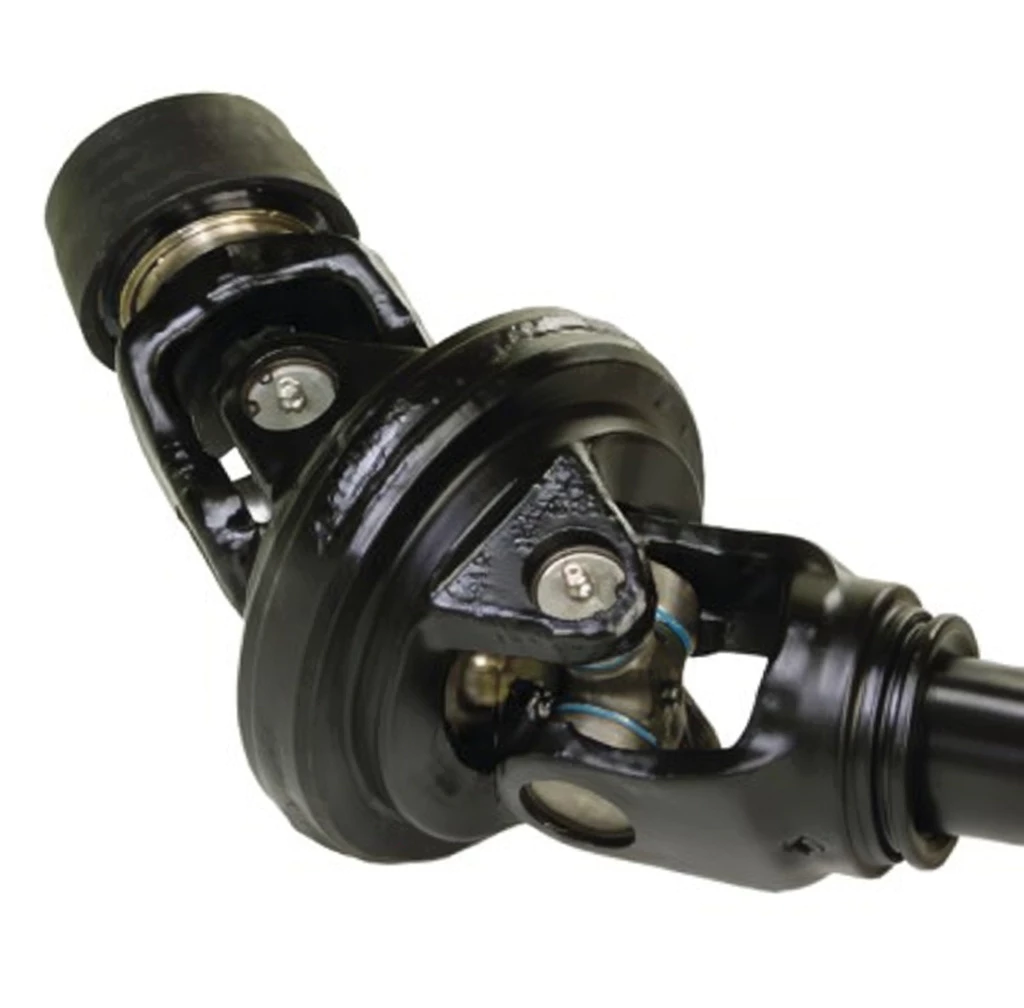
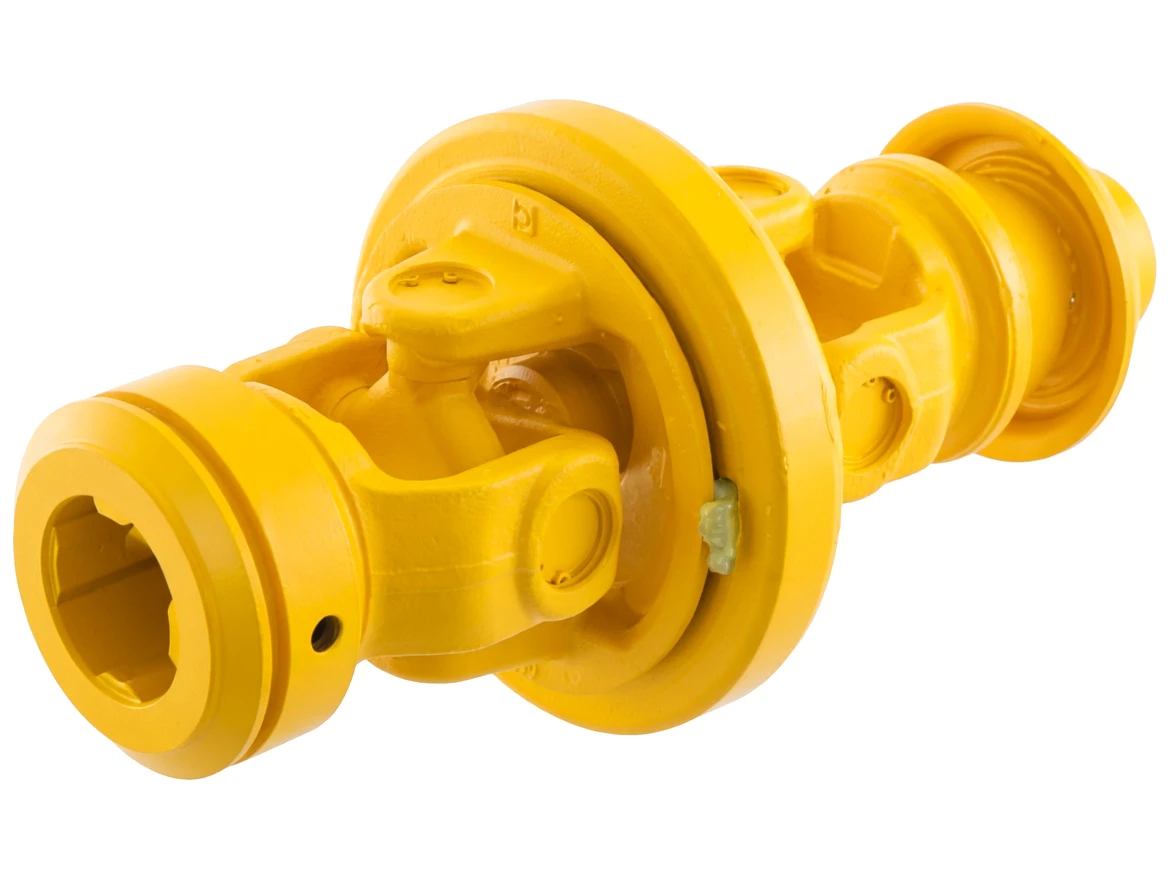
A PTO shaft wide angle joint (also known as a wide angle CV joint, constant velocity PTO joint, or wide angle universal joint) is a precision-engineered driveline coupling designed to transmit rotational power from the tractor power take-off to implements at articulation angles far beyond what standard Cardan-type cross joints can handle. Whereas a conventional universal joint is limited to approximately 20-25 degrees of misalignment, a wide angle PTO joint achieves smooth, constant-velocity torque transfer at operating angles of up to 80 degrees.
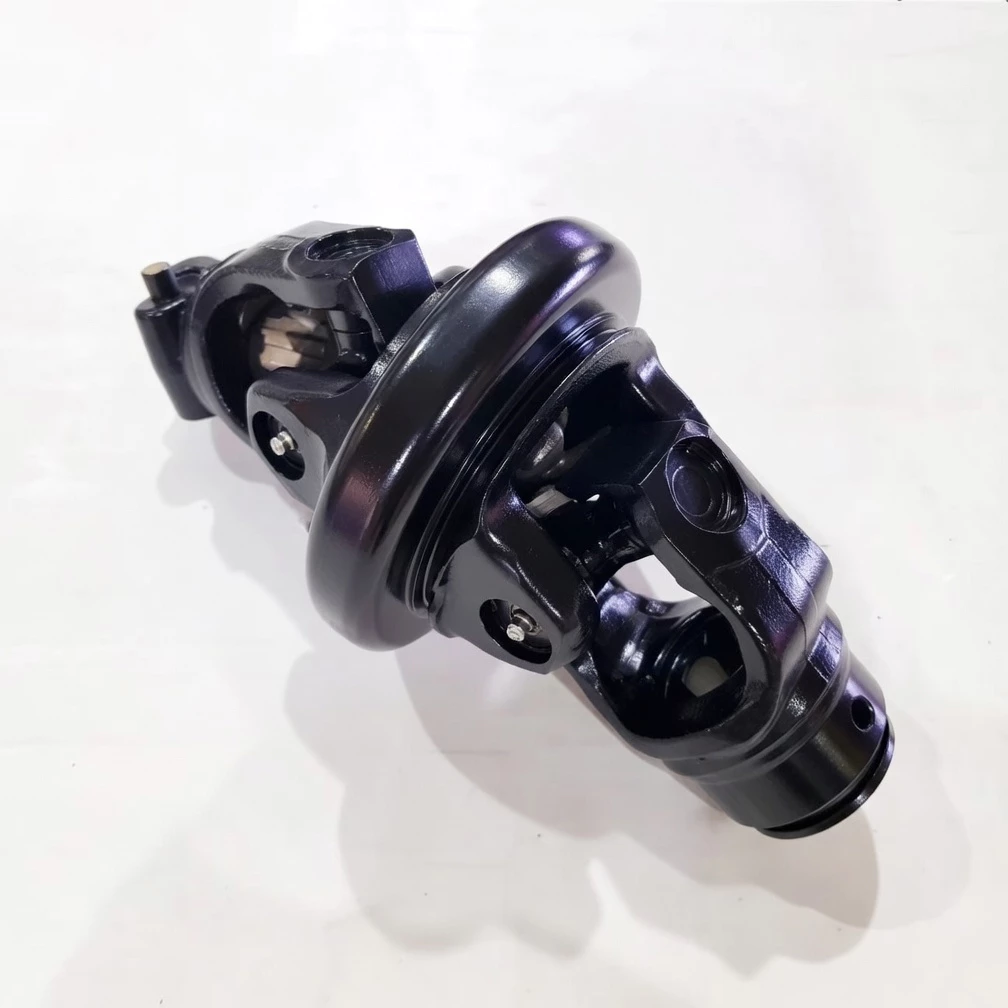

This capability is critical for modern agricultural operations where implements such as mower-conditioners, round balers, self-loading forage wagons, and mixer feeders regularly require sharp turning radii during headland turns or when working on sloped pastures. Without a wide angle joint, excessive driveline vibration, accelerated bearing wear, and even catastrophic shaft failure can occur during tight turns.
GBC (General Bearing Company Pty Ltd), as the Ever-Power Group Australia Agency, supplies a comprehensive range of PTO shaft wide angle joints across Series 2 through Series 42, covering virtually every torque and horsepower requirement in the Australian agricultural sector. Each joint is manufactured using forged alloy steel yokes, precision-ground needle-roller bearings, and hardened cross journals to ensure maximum service life in the demanding conditions found across Australian broadacre, dairy, and mixed farming operations.
Tractor PTO Shaft
Wide Angle CV Joint
PTO Drive Shaft
Power Take Off Shaft
Farm Implement Driveline
Wide Angle Universal Joint
Product Gallery


Technical Specifications: Wide Angle Joint Series
The following data is extracted from our engineering catalogue. All dimensions in millimetres. Refer to our technical team for torque ratings per series.
| Series | Cross (mm) | A (mm) | B (mm) | C (mm) | D (mm) | E (Bearing Ref.) | F (Yoke Ref.) |
|---|---|---|---|---|---|---|---|
| 2WA.01 | 23.8 x 61.3 / 22 x 76 | 153 | 104 | 119 | 105 | 2WA.0505B/D/G | 2WA.06/06L |
| 4WA.01 | 27 x 74.6 / 23.8 x 91 | 153 | 104 | 124 | 110 | 4WA.0505B/D/G | 4WA.06/06L |
| 6WA.01 | 30.2 x 92 / 27 x 100 | 176 | 105 | 136 | 127 | 6WA.0505B/D/G | 6WA.06/06L/06ST |
| 8WA.01 | 35 x 106.5 / 30.2 x 10⁶ | 184 | 120 | 146 | 147 | 8WA.0505B/C/D/E | 8WA.06/06L/06ST |
| 32WA.01 | 32 x 76 / 27 x 94 | 176 | 105 | 126 | 117 | 32WA.0505B/D/G | 32WA.06/.06L/06ST |
| 36WA.01 | 36 x 89 / 32 x 106 | 184 | 120 | 125 | 126 | 36WA.0505B/C/D/E | 36WA.06/06L/06ST |
| 42WA.01 | 42 x 104.5 / 36 x 124 | 184 | 124 | 149 | 150 | 42WA.0505B/C/D/E | 42WA.06/06ST/06G |
A = Overall closed length | B = Collapsed length | C = Centre bearing to yoke flange | D = Working stroke range. E/F = Compatible bearing and yoke references for ordering.
SD-Double Joint (Whole) Specifications
Our SD-Double Joint range is available in one-piece (whole) configuration for applications requiring compact, pre-assembled wide angle driveline couplings. Suitable for low-to-medium horsepower tractor PTO drive shaft systems.
| Series | Type | A (mm) | B (mm) |
|---|---|---|---|
| 1 | 1.05.DY | 66 | 72 |
| 2 | 2.05.DY | 69 | 78 |
| 3 | 3.05.DY | 79 | 80 |
| 4 | 1310.05.DY | 68.5 | 99 |
| 5 | 100.05.DY | 70 | 109 |
| 6 | 25HP.05.DY | 69 | 78 |
| 7 | 50HP.05.DY | 70 | 109 |
SD-Double Joint (Welded) Specifications
The welded SD-Double Joint configuration provides enhanced strength for medium-to-heavy agricultural PTO driveline applications. Weld-on yoke construction offers superior fatigue resistance under high-cycle loading conditions.
| Series | Type | A (mm) | B (mm) |
|---|---|---|---|
| 1 | 1.05.SDY | 102 | 102 |
| 2 | 2.05.SDY | 102 | 102 |
| 3 | 3.05.SDY | 124 | 102 |
| 4 | 4.05.SDY | 126 | 102 |
| 5 | 5.05.SDY | 134 | 102 |
| 6 | 6.05.SDY | 146 | 102 |
| 7 | 7.05.SDY | 168 | 102 |
| 7N | 7N.05.SDY | 140 | 102 |
| 8 | 8.05.SDY | 168 | 102 |
| 32 | 32.05.SDY | 134 | 102 |
| 36 | 36.05.SDY | 154 | 102 |
| 42 | 42.05.SDY | 190 | 104 |
How a PTO Shaft Wide Angle Joint Works
A standard universal joint (U-joint or Cardan joint) transmits torque between two shafts that are at an angle to each other using a simple cross-shaped trunnion and four bearing caps. While effective for small angles, this design produces cyclical speed variation (homokinetic error) that worsens dramatically as the operating angle increases. Above 25 degrees, a single U-joint generates unacceptable vibration that damages bearings, seals, and implement gearboxes.
The wide angle joint solves this by incorporating a double-joint mechanism within a compact bell housing. Two U-joint crosses are mounted in series within an intermediate coupling element, with the geometry arranged so that the speed variations from each cross cancel out. The result is near-constant velocity output at angles up to 80 degrees. This is the same fundamental principle used in automotive CV joints, but engineered to withstand the much higher torques and shock loads encountered in agricultural PTO driveline applications.
Structural Components
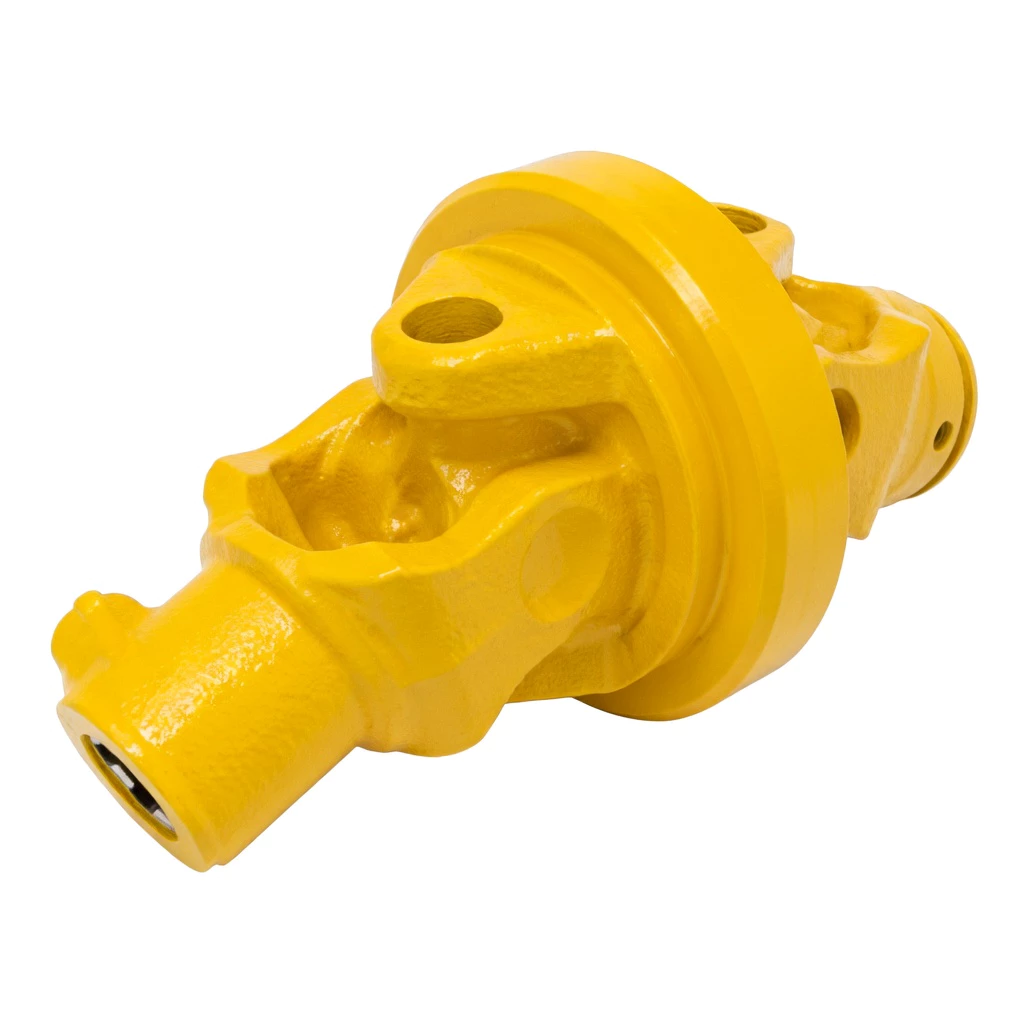
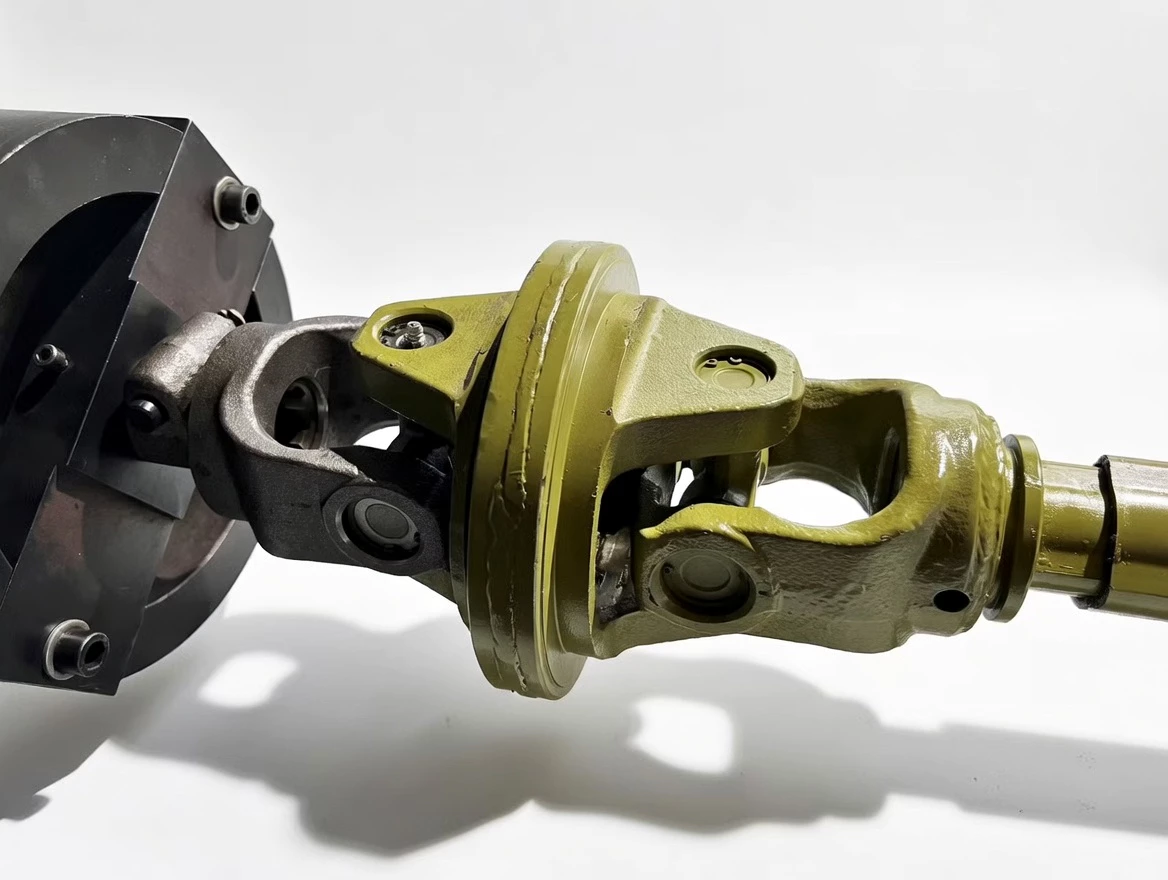
Each GBC wide angle joint assembly consists of: an outer bell housing (forged and machined alloy steel), two precision cross journals with needle-roller bearing assemblies, an intermediate coupling element, dust seals and retaining hardware, and grease fittings for field lubrication. The yoke ends are available in multiple configurations including quick-release, bolt-on flange, and weld-on types to match virtually any tractor or implement connection standard used in Australia.
Core Advantages of GBC PTO Shaft Wide Angle Joints
80-Degree Operating Angle
Far exceeds the 20-25 degree limit of standard U-joints. Enables tight headland turns with mower-conditioners, round balers, and forage equipment without disconnecting the PTO drive shaft or risking driveline damage.
Constant Velocity Output
The double-cross geometry cancels homokinetic error, delivering smooth, vibration-free torque transfer. This protects implement gearboxes, bearings, and seals from the cyclic loading that destroys components on conventional drivelines.
Forged Alloy Steel Construction
Yokes and bell housings are manufactured from forged chromium-molybdenum alloy steel, then induction-hardened at critical stress points. This delivers superior fatigue life compared to cast or stamped alternatives found on budget agricultural PTO shafts.
Sealed Needle-Roller Bearings
Precision-ground needle-roller bearings with integrated lip seals and dust boots resist contamination from the fine red dust, chaff, and moisture prevalent in Australian farming environments. Extended greasing intervals reduce maintenance time in the field.
Full Series Coverage (2-42)
From compact Series 2 for small horsepower rotary cutters to heavy-duty Series 42 for large round balers and TMR mixers, our range covers the complete spectrum of agricultural PTO shaft torque requirements used across Australia.
Direct OEM Cross-Compatibility
Engineered as a direct dimensional replacement for joints from major European and North American driveline manufacturers. Cross-reference tables available for fast identification. No modifications required for fitment.
Structure and Material Engineering
Every GBC PTO shaft wide angle joint is built with a multi-layered approach to material selection and manufacturing process control. The engineering philosophy centres on three priorities: maximising fatigue life under cyclic torsional loading, minimising friction losses within the bearing assemblies, and ensuring long-term resistance to the environmental extremes encountered in Australian agriculture.
Bell Housing and Yoke Forging
The outer bell housing and mating yokes are closed-die forged from chromium-molybdenum steel (equivalent to 4140/4340 series). Forging produces a continuous grain flow that follows the component geometry, yielding approximately 20-30% greater fatigue strength compared to equivalent castings. After forging, critical bearing bores and mating surfaces are CNC-machined to tolerances of +/-0.02 mm, ensuring precise cross journal alignment and minimising the NVH (noise, vibration, harshness) signature.
Cross Journal and Bearing Assembly
Each cross journal is manufactured from case-hardened bearing steel (equivalent to SAE 8620). Surface hardness is maintained at 58-62 HRC to resist spalling, while the core remains ductile at 30-35 HRC to absorb shock loads. The journal arms run on precision needle-roller bearing packs, with each pack containing a calculated number of rollers sized for the specific torque rating of the series. Integrated polyurethane lip seals and nylon thrust washers protect the bearing cavity from ingress.
Surface Treatment and Corrosion Protection
External surfaces receive a zinc-phosphate conversion coating followed by electrophoretic painting, providing multi-layer corrosion resistance suitable for the coastal humidity of Sydney and Brisbane as well as the dry, abrasive dust conditions of inland Queensland and Western Australia. Bearing surfaces are super-finished to Ra 0.2 micrometres or better for minimum friction and maximum lubricant film retention.
Lubrication System
All wide angle joints feature zerk-type grease fittings positioned for easy access. We recommend NLGI #2 EP (extreme pressure) lithium-complex grease, applied at 50-hour intervals during normal agricultural operation. The sealed bearing design retains grease effectively, so even if a greasing interval is missed during peak harvest periods, the bearings are protected by the residual lubricant within the sealed chamber.
Typical Application Scenarios for PTO Shaft Wide Angle Joints
Wide angle joints are not a luxury specification; for many agricultural implements, they are a functional necessity. The following applications represent the most common use cases among Australian farmers and agricultural contractors.
🌿 Mower-Conditioners and Disc Mowers
Mower-conditioners are trailed or semi-mounted implements that must articulate sharply at each headland turn. The PTO driveline angle regularly exceeds 40 degrees during these turns. A wide angle joint maintains smooth power delivery, preventing the driveline snatch and vibration that damages conditioner rolls and cutter bar gearboxes. Series 4WA.01 to 6WA.01 are the most commonly specified for mower-conditioners in the 80-150 HP tractor class.
🌾 Round Balers
Round balers, particularly large fixed-chamber models, generate very high peak torques during the final wrapping phase. The driveline angle increases as the tractor turns at the end of each windrow. A wide angle PTO shaft joint in Series 6WA.01 or 8WA.01 accommodates this angle change while transmitting the high torque pulses without damaging the baler pickup or main drive chain.
🐄 TMR Mixers and Feed Wagons
Total Mixed Ration (TMR) mixers used in Australian dairy and feedlot operations require the tractor to manoeuvre into tight feed-out areas. Wide angle joints on the PTO drive shaft allow the tractor to articulate sharply while maintaining constant auger speed. This is critical for uniform ration mixing. Series 8WA.01 and 36WA.01 are standard for medium and large mixers respectively.
🌱 Self-Loading Forage Wagons
Self-loading wagons pick up and chop silage in one pass. The wagon articulates significantly during paddock operation, especially on contoured land typical of Victorian and Tasmanian dairy regions. A wide angle constant velocity joint ensures the rotor maintains consistent speed for uniform chop length regardless of turning angle.
🔨 Manure Spreaders
Large rear-discharge and side-discharge manure spreaders require wide angle PTO joints to accommodate the high articulation angles encountered during spreading passes across irregular paddock surfaces. The corrosion-resistant coatings on GBC joints provide an additional advantage in the highly corrosive operating environment of livestock waste handling.
🍀 Slashers and Rotary Cutters
Offset and trailing slashers, particularly multi-gang models used for roadside or large-area vegetation management, frequently operate at high driveline angles. A wide angle PTO shaft prevents the cyclic vibration that loosens bolts, cracks gearbox housings, and accelerates blade wear on these implements.
Selection Guide: How to Choose the Right PTO Shaft Wide Angle Joint
Selecting the correct wide angle joint for your agricultural PTO driveline requires confirming several parameters. An incorrectly specified joint can be under-rated for the torque, too long or too short for the closed/extended lengths, or fitted with incompatible yoke ends. Follow this checklist to ensure accurate selection.
Step 1: Determine the Required Series
Match the series to the implement manufacturer’s specification. Check the existing shaft for markings (e.g., “6 Series” or cross-kit size). The cross journal dimensions listed in our specification table directly correspond to industry-standard series sizing. If in doubt, measure the cross journal outside diameter and bearing cap diameter.
Step 2: Measure Closed and Extended Lengths
With the tractor and implement in a straight line and backed up as close as possible, measure the centre-to-centre distance between the tractor PTO stub and the implement input shaft. This is the minimum (closed) length. Then pull the tractor forward to the maximum working separation. The shaft must accommodate both lengths with adequate telescopic overlap (minimum 1/3 tube engagement).
Step 3: Identify Yoke Connection Types
Confirm the yoke type at both the tractor end and implement end. Common types include: push-pin quick-release (for tractor PTO stub), flange bolt-on (for implement gearbox input), and splined bore. Our catalogue designations (e.g., 06, 06L, 06ST) correspond to specific yoke configurations. Provide us with photos or drawings if uncertain.
Step 4: Confirm PTO Speed
Verify whether the tractor PTO operates at 540 RPM, 1000 RPM, or is switchable. The spline count on the tractor PTO stub shaft is the quickest indicator: 6-spline 35mm = 540 RPM; 21-spline 35mm = 1000 RPM. This determines the correct input yoke spline configuration.
Step 5: Assess Operating Angle
While all wide angle joints handle up to 80 degrees, confirm that your application actually requires one. If the implement stays within 20 degrees of the tractor centre line during all normal operations, a standard U-joint may be sufficient. Wide angle joints are recommended when the application regularly exceeds 25 degrees, or where constant velocity output is required for smooth implement operation.
Step 6: Installation Environment
Consider the operating environment. Coastal regions (Sydney, Brisbane, Perth) may warrant additional corrosion protection. Inland red-soil zones require enhanced dust sealing. High-temperature operations (e.g., sugar cane harvesting in North Queensland) benefit from high-temperature bearing grease. Our technical team at sales@australia-drive.com can advise on environment-specific options.
Brand Compatibility and Cross-Reference Guide
Note: All brand names mentioned below are the registered trademarks of their respective owners. They are referenced solely for the purpose of identifying compatible equipment and facilitating correct part selection. GBC is not affiliated with these brands.
GBC PTO shaft wide angle joints are engineered as direct dimensional replacements for wide angle joints originally supplied on agricultural implements from the following manufacturers. Our joints match the critical cross journal dimensions, yoke geometry, and bearing specifications required for seamless installation.
| Original Driveline Brand | Compatible GBC Series | Common Implement Applications |
|---|---|---|
| Replacement of Walterscheid | 2WA, 4WA, 6WA, 8WA, 36WA, 42WA | Mower-conditioners, round balers, TMR mixers |
| Replacement of Bondioli & Pavesi | 4WA, 6WA, 8WA, 32WA, 36WA | Forage harvesters, manure spreaders, slashers |
| Replacement of Comer Industries | 2WA, 4WA, 6WA, 8WA | Rotary cutters, post hole diggers, hay rakes |
| Replacement of AW Dynamatic (Benzi & Di Terlizzi) | 6WA, 8WA, 36WA, 42WA | Large square balers, self-loading wagons |
| Replacement of Bareco / BA Products | 2WA, 4WA, 6WA | General Australian farm PTO shaft applications |
Spare Parts and Service Components
All GBC wide angle joints are fully serviceable. Individual components are available as spare parts including: cross journal kits (bearing and seal sets), bearing cap assemblies, bell housings, yoke ends (all configurations), dust boots, snap rings, and thrust washers. This means you can rebuild an existing wide angle joint rather than replacing the complete assembly, significantly reducing ongoing driveline maintenance costs.
Our parts numbering system (E and F columns in the specification table above) allows you to identify and order individual components. For example, bearing reference 6WA.0505B/D/G indicates the available bearing cap configurations for the 6 Series wide angle joint. Contact our technical team with your series number for a full breakdown of available spares.
Quality Certification and Service Commitment
✅ ISO 9001:2015 Quality Management
Our manufacturing facility operates under ISO 9001:2015 quality management systems. Every batch of wide angle joints undergoes dimensional inspection, hardness testing, and torque verification before release. Statistical process control (SPC) charts are maintained for all critical dimensions to ensure consistency.
✅ CE Marking (Machinery Directive)
Products comply with relevant machinery safety directives and carry the CE mark. PTO shaft guard compatibility is verified to ensure safe operation in accordance with Australian workplace health and safety requirements for agricultural machinery.
✅ Material Traceability
Full material traceability is maintained from raw steel mill certificates through to finished product. Heat treatment records, forging lot numbers, and bearing supplier certificates are archived. This traceability is particularly important for fleet operators and agricultural contractors who require documentation for their equipment management systems.
✅ Service and Warranty
GBC offers a standard 12-month warranty against manufacturing defects on all PTO shaft wide angle joints. Our Melbourne-based warehouse holds stock of all series for fast dispatch to customers across New South Wales, Victoria, Queensland, South Australia, and Western Australia. Technical support is available via sales@australia-drive.com for selection assistance, installation guidance, and warranty claims.
Frequently Asked Questions: PTO Shaft Wide Angle Joints
✚ What is the difference between a wide angle joint and a standard universal joint on a PTO shaft?
✚ How do I know if my implement requires a wide angle PTO joint?
✚ Can I replace only the wide angle joint, or do I need to replace the entire PTO shaft?
✚ What maintenance does a PTO shaft wide angle joint require?
✚ Do GBC wide angle joints fit tractors from all major brands?
✚ What is the lead time for wide angle joints shipped to regional Australia?
✚ Can I use a wide angle joint on a 1000 RPM PTO system?
✚ What causes a PTO wide angle joint to fail prematurely?
Engineer’s Field Notes: Australian Wide Angle Joint Case Studies
Melbourne, Victoria
Victoria Western District Dairy – Mower-Conditioner Driveline Upgrade
A 600-cow dairy operation south-west of Melbourne was experiencing repeated U-joint failures on their trailed mower-conditioner. The operator was replacing cross kits every 150-200 hours, with each failure causing at least 4 hours of downtime during the critical silage season. The property featured undulating paddocks with significant contouring, and the operator needed to make tight turns at each headland.
We specified a 6WA.01 wide angle joint to replace the standard cross joint at the implement end. The installation took approximately 90 minutes. The result: over 1,200 hours of operation across two seasons with zero joint failures. The operator also reported noticeably smoother operation during turns, with less vibration transmitted through the tractor seat. The mower-conditioner gearbox oil analysis showed a 40% reduction in metallic wear particles at the next service interval.
Outcome: 1,200+ hours achieved vs. 150-200 hours previously. ROI payback within the first season.
Greater Sydney Region, New South Wales
NSW Central Tablelands Mixed Farm – Round Baler Peak Torque Failure Resolution
A mixed cropping and livestock property on the Central Tablelands west of Sydney was destroying one complete PTO shaft per hay season on their large round baler. Investigation revealed that the standard U-joint was failing at the peak torque moment when the bale chamber reached full compression, coinciding with the operator initiating a turn to align for the next windrow pass.
We recommended an 8WA.01 wide angle joint with upgraded bearing pack. The higher torque rating of the Series 8 combined with the wide angle capability meant the joint could handle both the peak torque and the turning angle simultaneously. Three complete seasons and approximately 8,000 bales later, the joint shows no measurable wear. The property manager estimates savings of over AUD $4,500 in avoided shaft replacements and lost baling time.
Outcome: 8,000+ bales produced. Zero joint failures across three seasons.
Darling Downs, Queensland
Queensland Broadacre Extreme Heat and Dust Endurance Test
A large-scale grain and cotton operation on the Darling Downs west of Brisbane operates slashers and rotary cutters for over 2,000 hours annually in extreme heat (ambient temperatures frequently exceeding 40 degrees Celsius) and severe dust conditions. Standard PTO shaft joints were lasting only 300-400 hours before bearing failure due to seal degradation and lubricant breakdown.
We supplied 4WA.01 wide angle joints with upgraded polyurethane dust seals and specified a synthetic high-temperature EP grease. The combination of the wide angle joint’s sealed bearing design and the upgraded sealing package extended service life to over 1,500 hours in the same extreme conditions. The property manager now standardises on GBC wide angle joints across their entire implement fleet.
Outcome: 1,500+ hours in 40 degree+ heat conditions. Fleet-wide standardisation achieved.
Adelaide Hills, South Australia
Adelaide Hills Steep Terrain Vineyard and Orchard Slasher Application
A viticulture contractor operating in the Adelaide Hills was unable to use a standard PTO shaft on their offset slasher due to the extreme articulation angles encountered when mowing between vine rows on steep hillside plantings. The driveline angle regularly exceeded 35 degrees, well beyond the safe operating limit of a conventional cross joint.
A 4WA.01 wide angle joint was fitted, enabling safe and smooth PTO operation at the steep angles required. The constant velocity output also improved cut quality by maintaining consistent blade tip speed regardless of turning angle. The contractor has since specified wide angle joints for all vineyard slashers in their fleet, including operations in the Barossa Valley and McLaren Vale.
Outcome: Enabled previously impossible steep-angle mowing. Fleet rollout across three wine regions.
Perth, Western Australia
Western Australia Wheatbelt – TMR Mixer Feedlot Application
A 5,000-head cattle feedlot east of Perth required a PTO shaft solution for their large vertical TMR mixer that could withstand the high torque loads during mixing of dense grain-based rations while allowing the tractor to manoeuvre into tight feed-out alleys between pen rows. Standard drivelines were experiencing cross joint failures approximately every 800 hours.
We specified a 36WA.01 wide angle joint for the heavy-duty torque requirement, combined with extended-length telescopic tubes to accommodate the long feed-out alley approach distances. After 2,400 hours of operation, the joint remains serviceable with normal bearing clearances confirmed during routine inspection. The feedlot has reported zero unplanned driveline downtime since installation.
Outcome: 2,400+ hours at heavy torque loading. Zero unplanned downtime.
Customer Reviews
“Fitted the 6WA wide angle joint to our mower-conditioner before silage season. Completely eliminated the vibration we used to get at headland turns. The operator says it feels like a different machine. We’ve done 800 hours and greased it three times. Excellent quality for the price.”
– David R., Dairy Farmer
Gippsland, Victoria | Purchased: 6WA.01 for Mower-Conditioner
“We run a contracting business baling about 15,000 round bales a season. Used to go through two or three PTO shafts each year. Switched to GBC wide angle joints on all our balers. Haven’t replaced one in two seasons. The savings in parts and downtime have been significant.”
– Mark T., Agricultural Contractor
Dubbo, NSW | Purchased: 8WA.01 for Round Balers (x4)
“Needed a wide angle joint for our TMR mixer urgently. GBC had the 36WA series in stock in Melbourne and got it to us in Adelaide within three days. Fitment was spot-on as a direct replacement. The grease points are well-positioned and accessible. Very happy with the product and the service.”
– Sarah K., Feedlot Operations Manager
Murray Bridge, SA | Purchased: 36WA.01 for TMR Mixer
“Good quality wide angle joint at a competitive price. Only reason for 4 stars is the instructions could be more detailed for someone who hasn’t fitted one before. That said, their tech support team talked me through the installation over the phone. Joint works perfectly.”
– James W., Hobby Farmer
Toowoomba, QLD | Purchased: 4WA.01 for Rotary Slasher
“We manage 12 vineyards across the Adelaide Hills and Barossa. The wide angle joints GBC supplied have completely solved our steep-terrain slasher problems. We’ve standardised on their 4WA series. Reliable, well-made, and competitively priced against the European originals.”
– Antonio M., Vineyard Contractor
Adelaide Hills, SA | Purchased: 4WA.01 (x8) for Vineyard Slashers
Related Products
Agricultural Gearboxes
GBC also manufactures a comprehensive range of agricultural gearboxes designed to pair with PTO shaft systems. Our gearbox range includes right-angle drives, speed-increasing and speed-reducing units, and specialty gearboxes for mowers, rotary tillers, feed mixers, grain augers, and more. All gearboxes feature hardened spiral bevel or helical gear sets, heavy-duty oil seals, and cast iron housings rated for continuous agricultural duty.
PTO Shaft Components and Accessories
Beyond complete wide angle joint assemblies, we stock the full range of PTO driveline components including: standard cross kits and bearing assemblies, telescopic shaft tubes (lemon, star, and triangular profiles), PTO shaft safety guards and shields, clutch assemblies (friction, overrunning, and shear bolt types), yoke ends in all standard configurations, and drive pins and hardware. Everything you need to build, rebuild, or upgrade any agricultural PTO driveline.
Partner with GBC for Your PTO Shaft Requirements
General Bearing Company Pty Ltd (Ever-Power Group Australia Agency) is a specialist PTO shaft manufacturer and supplier with over 40 years of experience serving Australian agriculture, mining, and industrial sectors. Our Melbourne-based operation maintains deep inventory of wide angle joints, standard PTO shafts, agricultural gearboxes, driveline components, and accessories for fast dispatch nationwide.
We do not only supply standard-catalogue PTO shafts. GBC welcomes custom engineering enquiries for non-standard lengths, special yoke configurations, heavy-duty torque ratings, and application-specific modifications. Send us your drawings, samples, or specifications, and our engineering team will develop a tailored solution.
✉ Email: sales@australia-drive.com


