
Worm Gearbox for Mining Belt Conveyor: Engineered for Australian Duty
Across Western Australia’s iron ore heartland, the Bowen Basin’s coal operations and the nickel corridor of Kambalda, mining belt conveyors are the relentless arteries that move ore from pit to port. Every stoppage costs thousands of dollars per minute — yet the conveyor drive still has to survive 45 °C pit temperatures, ironstone dust that slices through ordinary seals, cyclonic rain bursts during wet season, and the relentless vibration of a fully loaded 42-inch belt. Selecting the right worm reducer for this duty is less a purchasing decision than a mine-site reliability strategy.
Our heavy-duty speed reducers are purpose-built for this Australian context. The cast housings are ribbed and machined to shed heat even at high ambient temperature, the sealing system is rated for abrasive ironstone fines, and every unit undergoes a run-in cycle that mirrors the starting torque profile of a loaded belt. That is why mine-site reliability engineers across WA, QLD and the NT specify these worm gear units Australia-ready for their new builds and critical replacements alike.
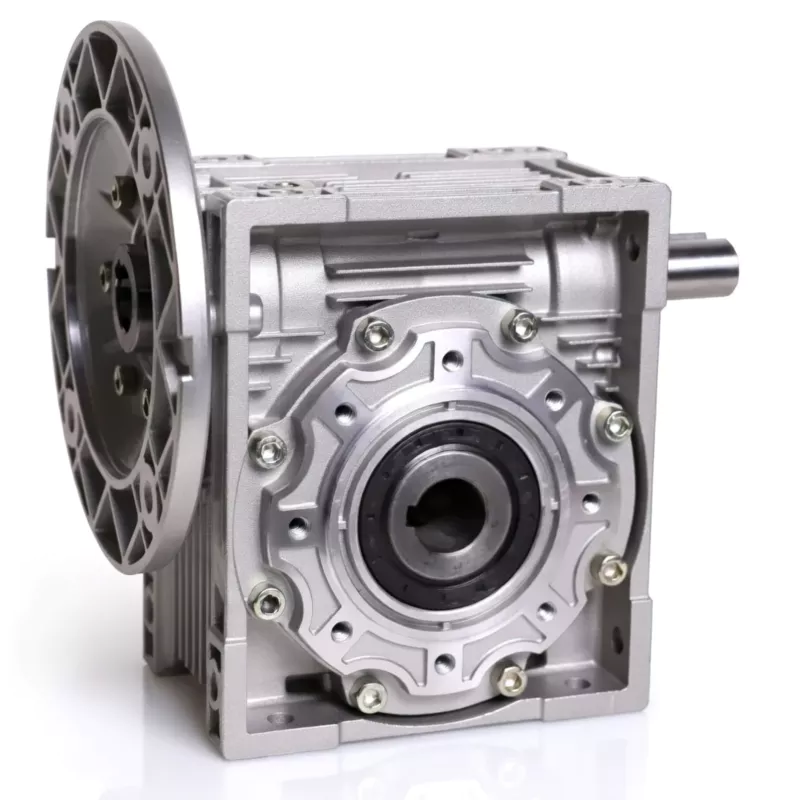
Typical worm gearbox configuration for mining belt conveyor duty
How the Mining Belt Conveyor Drives Your Operation

On a mining belt conveyor, the drive train is typically configured with a TEFC IEC motor coupled into the worm input through a flexible coupling or fluid coupling for soft-start protection. The worm gearbox steps the motor speed down to the head-pulley RPM required for the belt design — usually between 1.5 m/s and 4 m/s depending on ore grade, belt width and lift. In overland conveyors on WA iron ore sites, drive powers of 75 kW to 250 kW per drum are common; in underground coal belts in the Bowen Basin, flameproof motor arrangements are paired with explosion-risk-rated gear lubrication.
The gearbox housing is produced from high-strength ductile iron (commonly EN-GJS-500-7) to absorb shock loads from belt slip, blocked chutes and surge loading. The worm wheel is cast in tin bronze (CuSn12) for favourable friction behaviour against the steel worm, which is carburised and hardened to HRC 58-62 on the flanks then ground to DIN 3, giving long service life under the grit-laden oil conditions common to open-cut mining. Double-lip Viton seals with secondary labyrinth baffling keep red dust out of the gear sump — critical when conveyors idle through Pilbara dust storms.
Construction: high-strength/ductile iron housing, tin bronze worm wheel, carburized and hardened steel worm shaft. This material stack is the foundation of the reducer’s long service life on Australian sites.
Keyword focus: worm reducer for mining belt conveyor Australia.
Technical Specifications & Selection Guide
The table below captures the core selection parameters. For a detailed thermal rating or a custom output configuration, reach out to our engineering desk.
| Parameter | Specification / Range |
|---|---|
| Ratio Range | 7.5:1 to 100:1 (single stage); up to 10,000:1 with pre-stage helical |
| Output Torque | 200 Nm to 25,000 Nm |
| Input Power | 0.75 kW to 250 kW |
| Input Shaft | IEC B5 / B14 flange, hollow shaft option Ø24–Ø90 mm |
| Output Shaft | Solid Ø35–Ø110 mm or hollow bore with shrink disc |
| Housing Material | High-strength ductile iron EN-GJS-500-7 |
| Mounting | Foot, flange, torque arm, or shaft-mounted with back-stop |
| Protection | IP65 standard, IP66 with third-party breather |
Compliance & Quality Standards
Every unit we ship into Australia is built against a documented quality system and marked against the standards your plant auditors will look for.
For a broader overview of our capabilities, explore worm reducer options across the full range, or review our full range of worm gear motors for related product families.
Australian Case Studies
These are real Australian deployments where our worm gear reducers solved documented site problems. Names and exact locations are withheld for commercial confidentiality.
Equipment: Overland belt conveyor, 1,600 mm wide × 4.2 km
Pain point: OEM worm reducers failed at 14 months due to red-dust ingress and thermal runaway during 45 °C summers.
Solution: Supplied size 250 ductile iron units with upgraded IP66 seals, forced-air cooling fans and synthetic PAG lubrication.
Result: Service life extended beyond 48 months; oil change interval doubled to 8,000 hours.
Equipment: Stockpile reclaim conveyor, 2 × 90 kW drives
Pain point: Frequent drive coupling misalignment caused repeated output shaft failures during wet-season surge loading.
Solution: Installed a torque-arm mounted hollow-shaft worm gear unit with shrink disc and integrated back-stop.
Result: Coupling maintenance eliminated; 22 months of uninterrupted service.
Equipment: Run-of-mine ore feed belt, 55 kW drive
Pain point: Shock loads from oversize rocks caused gear tooth pitting within 10 months.
Solution: Upgraded to size 175 unit with a service factor of 1.8 and hardened and ground worm to DIN class 3.
Result: No measurable gear wear at annual inspection; site rolled the same spec across five further feeders.
Equipment: Tripper car conveyor, 37 kW per drive
Pain point: Tripper car travel demanded frequent start/stop cycles, overheating competitor units.
Solution: Supplied a worm gear unit with forced lube, oversized sump, and PT100 temperature monitoring.
Result: Gearbox temperatures dropped 22 °C; customer specified identical units across two additional tripper cars.
Equipment: Ship-loader feed conveyor, 160 kW drive
Pain point: Salt-laden coastal air corroded housings within 18 months despite standard paint.
Solution: Applied a C5-M marine-grade epoxy paint system with zinc-rich primer and 316 stainless fasteners.
Result: Corrosion rate reduced to negligible levels three years post-commissioning.
Why Australian Buyers Choose Us
Selecting the right supplier is as important as selecting the right gearbox. Here is what sets our team apart.
25+ Years Manufacturing Experience
Four generations of worm gear production know-how, with a dedicated engineering team serving mining, agriculture, food, water and construction clients across Australia.
Remote Technical Support
Australia-timezone engineering support via phone, email and video call, with selection calculators, drawing packs and installation guides available on request.
OEM / ODM Customisation
Non-standard shaft geometries, flange drillings, housing paint systems, and torque-arm designs are routine — our engineers will match your exact mechanical interface.
Outstanding Value for Money
Direct-from-factory pricing with logistics to any Australian capital and major regional centre, competitive against premium European brands while meeting the same specifications.
Australia-Ready Logistics
Regular sea-freight consolidation to Sydney, Melbourne, Brisbane, Perth and Adelaide, with in-country distribution partners for same-week delivery on stocked sizes.
100% Load-Tested
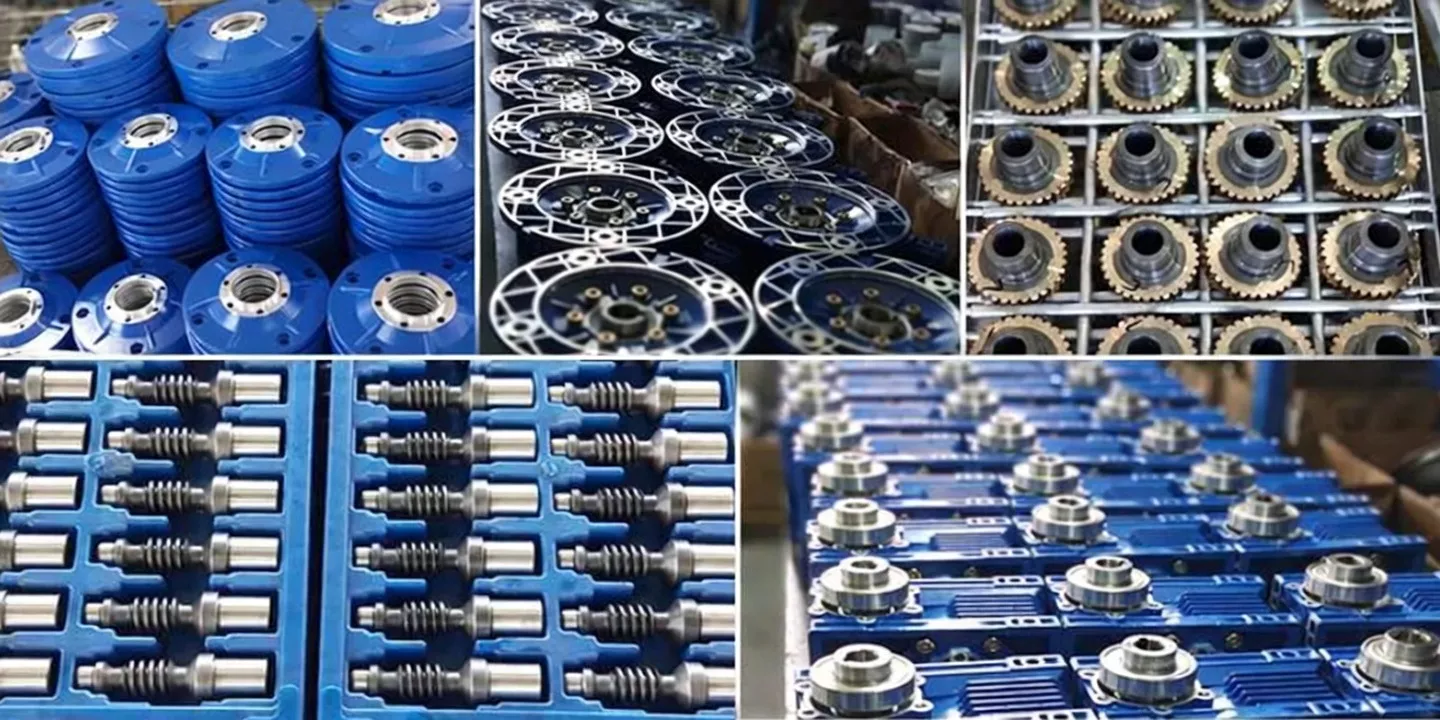
Every unit is bench-tested for noise, vibration, running temperature and oil seal integrity before it leaves the factory, with a test certificate shipped in the documentation pack.
Frequently Asked Questions
Common questions from Australian engineers, procurement managers and maintenance supervisors — answered in detail.
What size worm gearbox do I need for a 60 kW iron ore belt conveyor?
For a 60 kW drive on an iron ore belt conveyor, most operators specify a size 175 or size 200 worm reducer depending on belt speed and start-up behaviour. The key is calculating the required output torque (P × 9550 / output RPM) and then multiplying by a service factor of at least 1.5 for continuous mining duty. For surge-loaded applications such as feed-chute conveyors, a service factor of 1.8 to 2.0 is more appropriate. Always share your belt width, incline, and whether a soft starter or VFD is in use when requesting a quote.
Can a worm gearbox replace a helical–bevel reducer on a belt conveyor?
Yes — for low- to medium-speed, low-to-moderate-duty belt conveyors, a worm gearbox is often the more economical choice, particularly below 75 kW. Above that threshold, helical-bevel units offer higher efficiency (typically 94 %+ vs 75–90 % for worm), which translates into energy savings on long-running overland belts. However, worm gearboxes have built-in shock absorption, a lower entry cost and inherent self-locking at ratios above 40:1, which can eliminate the need for a separate back-stop on inclined conveyors.
How do I protect a conveyor gearbox from Pilbara red dust?
Red dust ingress is the single largest cause of premature gearbox failure in the Pilbara. Protection starts with specifying IP66-rated shaft seals in a double-lip arrangement with a labyrinth pre-seal and an externally accessible grease nipple at the shaft. Desiccant breathers should replace standard vent plugs, and synthetic PAG lubrication should be used to raise flash point and viscosity index. Finally, position the breather as high as possible and shield it from airborne fines.
Do I need a back-stop on an inclined conveyor drive?
Any conveyor with a significant incline (usually >5°) that is fully loaded on stop-up needs protection against reverse rotation. A worm gearbox with a ratio of 40:1 or higher is self-locking in most loading conditions, but standards-based safety assessments still recommend an independent back-stop device, particularly on belts that carry personnel or cross over roadways. Our heavy-duty units can be supplied with a shaft-mounted cam-and-roller back-stop rated to the full stall torque.
What lubricant is recommended for mining belt conveyor worm gearboxes?
For Australian mining service we recommend a polyalkylene glycol (PAG) synthetic oil, typically ISO VG 320 for ambient temperatures of 20–45 °C. PAG oils deliver better film strength against the steel–bronze friction pair of a worm reducer, a wider operating temperature window, and significantly longer drain intervals (up to 16,000 hours) compared with mineral oils. Always check compatibility with seal elastomers — FKM (Viton) is fine; NBR is not.
Can you supply a worm gearbox with condition monitoring built in?
Yes. Our worm reducer series can be supplied with PT100 temperature probes, oil-level sensors, and vibration sensor mounting pads that integrate with common mine-site SCADA systems. This is increasingly specified on unattended overland and stockyard conveyors in WA to prevent unplanned shutdowns.
Talk to an Engineer About Your Mining Belt Conveyor Project
Send us your duty data sheet and we will return a sized, priced selection with lead-time indication — no obligation.