
Worm Gearbox for Thickener and Clarifier Center Drive: Engineered for Australian Duty
Thickener and clarifier center drives are the beating heart of mineral and water treatment plants across Australia — from alumina refineries in Gladstone and Gove, to copper–gold tailings thickeners in Cadia, to municipal sewage clarifiers from Sydney to Perth. These are the slowest-rotating, highest-torque drives in the plant, rotating a giant rake at perhaps 0.05–0.2 rpm while withstanding the enormous residual torque of a settled mineral bed. When a thickener drive stalls, the tank can solidify into rock — a multi-million-dollar disaster. The worm reducer or pre-stage worm gear unit is therefore the first line of defence.
Choosing a thickener drive for the Australian environment is as much about chemistry and climate as it is about torque. A tailings thickener in WA sees process water with chloride levels that will pit standard steels. A municipal clarifier in NSW runs 24/7/365 and cannot be taken offline for bearing service. Our worm gear units Australia-ready for this duty are built with heavy anti-corrosion coatings, labyrinth-sealed shafts, and tooth geometry optimised for the extreme low-speed, high-torque profile this application demands.
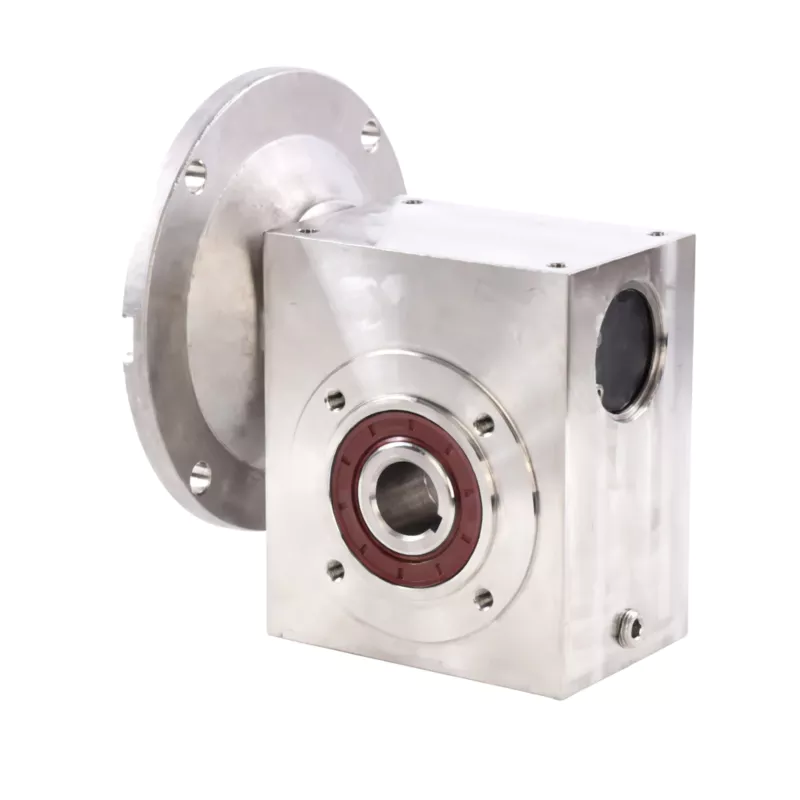
Typical worm gearbox configuration for thickener and clarifier center drive duty
How the Thickener and Clarifier Center Drive Drives Your Operation
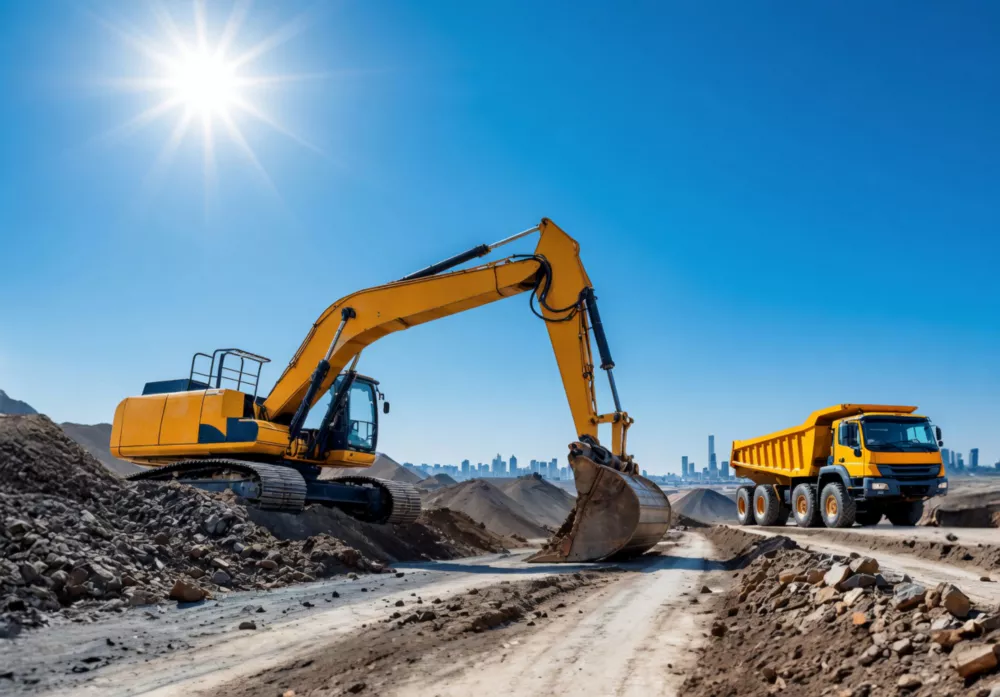
A thickener center drive is typically a multi-stage assembly: a pre-stage worm gearbox reducing the motor speed by 40:1 to 60:1, feeding into a large-diameter slewing-ring or spur-gear final stage that rotates the rake arm at 0.1 rpm. The worm reducer sits at the top of the stack, mounted vertically, driving a vertical pinion shaft. Its role is to provide massive mechanical advantage and act as the first torque-limiting fuse in the event of a rake blockage.
To withstand the humid, splash-laden atmosphere above a clarifier tank, the gearbox housing is finished with a three-coat C5-I anti-corrosion system, and the output shaft is supplied in either 316 stainless steel or carbon steel with a ceramic coating. The shaft-entry sealing is a multi-stage labyrinth with a grease-purge facility, which reliably keeps splash water and condensate out of the oil sump. The worm wheel is tin bronze with a long-duty rating, and the worm is ground to DIN 3 for the lowest possible friction at these glacial operating speeds.
Construction: heavy anti-corrosion coated housing, stainless/rust-proof output shaft, multi-stage labyrinth sealing. This material stack is the foundation of the reducer’s long service life on Australian sites.
Keyword focus: worm reducer for thickener center drive mineral processing.
Technical Specifications & Selection Guide
The table below captures the core selection parameters. For a detailed thermal rating or a custom output configuration, reach out to our engineering desk.
| Parameter | Specification / Range |
|---|---|
| Ratio Range | 40:1 to 100:1 at pre-stage |
| Output Torque at Pre-Stage | 1,500 Nm to 35,000 Nm |
| Overall Rake Torque Range | 40 kNm to 2,500 kNm with final drive |
| Input Power | 1.1 kW to 55 kW |
| Housing Material | Ductile iron with three-coat C5-I epoxy |
| Output Shaft | 316 SS or ceramic-coated carbon steel |
| Sealing | Three-stage labyrinth with grease purge |
| Mounting | Vertical flange-mounted, oil-sump splash lubrication |
Compliance & Quality Standards
Every unit we ship into Australia is built against a documented quality system and marked against the standards your plant auditors will look for.
For a broader overview of our capabilities, explore worm reducer options across the full range, or review our full range of worm gear motors for related product families.
Australian Case Studies
These are real Australian deployments where our worm gear reducers solved documented site problems. Names and exact locations are withheld for commercial confidentiality.
Equipment: Red mud thickener, 22 kW center drive
Pain point: Caustic splash degraded OEM seals, contaminating oil with red mud.
Solution: Deployed worm pre-stage with Viton labyrinth seals, stainless output shaft and epoxy-coated housing.
Result: Oil cleanliness maintained over 36-month inspection cycle.
Equipment: Primary clarifier center drive, 5.5 kW
Pain point: Continuous 24/7 duty with no maintenance window caused bearing wear in year 3.
Solution: Supplied oversized size 150 worm reducer with synthetic PAG oil and condition-monitoring ports.
Result: Bearings on-condition at 60 months; oil condition still within spec.
Equipment: High-rate tailings thickener, 30 kW drive
Pain point: Chloride-laden process water pitted standard carbon-steel output shafts.
Solution: Upgraded to 316 stainless steel output shaft with ceramic-coated bronze bushing.
Result: Pitting eliminated; drive now in third year of service.
Equipment: Paste thickener, 45 kW center drive
Pain point: Frequent rake blockage caused torque-spike damage in existing helical drive.
Solution: Replaced with worm pre-stage rated to 2.2 service factor, paired with electronic torque limiter on motor.
Result: Six operational quarters without torque-overload event.
Equipment: Tailings thickener, 37 kW drive
Pain point: Remote Pilbara location made every failure a logistics nightmare.
Solution: Supplied duty–standby twin worm reducer assembly with quick-change flange mounting.
Result: Mean time to repair dropped from 72 hours to 4 hours.
Why Partner With Us
If you are new to specifying worm gear units, here is the shortest possible case for working with our team.
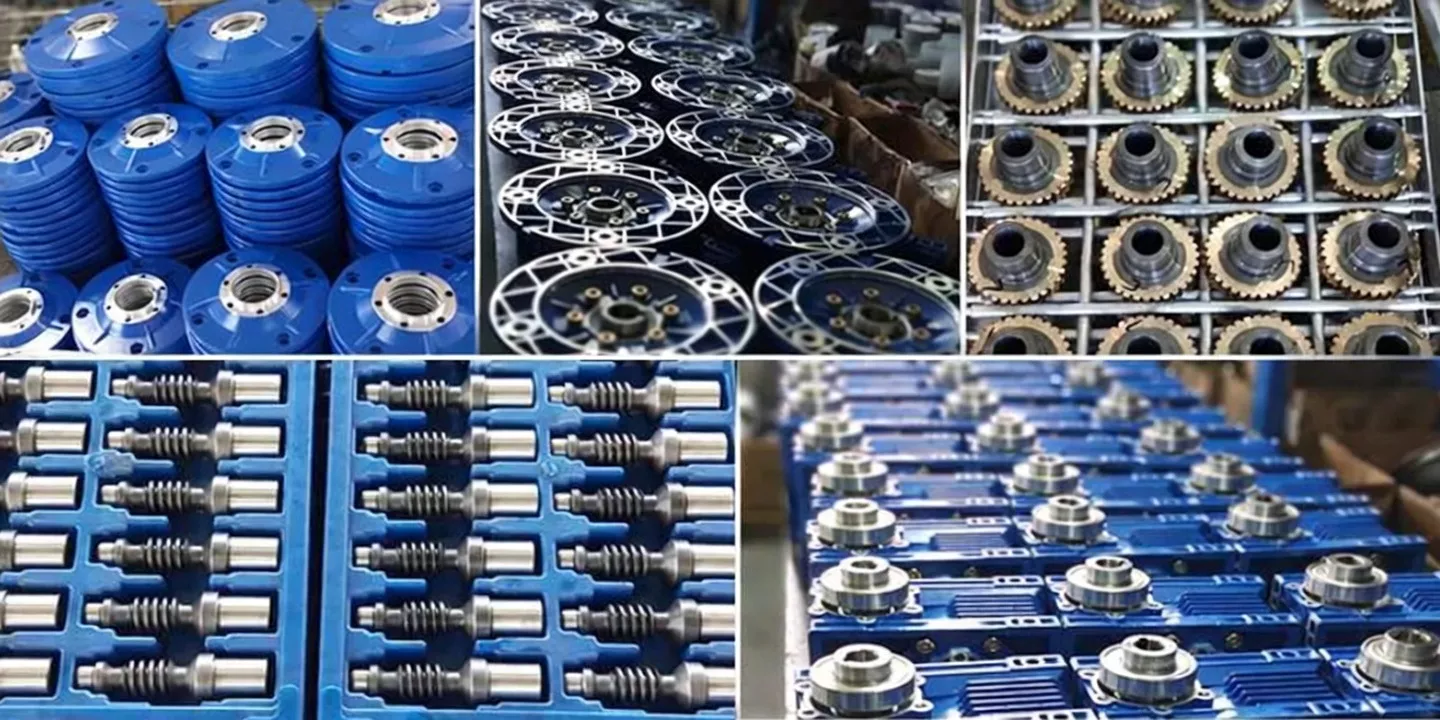
Four generations of worm gear production know-how, with a dedicated engineering team serving mining, agriculture, food, water and construction clients across Australia.
Australia-timezone engineering support via phone, email and video call, with selection calculators, drawing packs and installation guides available on request.
Non-standard shaft geometries, flange drillings, housing paint systems, and torque-arm designs are routine — our engineers will match your exact mechanical interface.
Direct-from-factory pricing with logistics to any Australian capital and major regional centre, competitive against premium European brands while meeting the same specifications.
Regular sea-freight consolidation to Sydney, Melbourne, Brisbane, Perth and Adelaide, with in-country distribution partners for same-week delivery on stocked sizes.
Every unit is bench-tested for noise, vibration, running temperature and oil seal integrity before it leaves the factory, with a test certificate shipped in the documentation pack.
Answers to Common Questions
Six detailed answers to the questions we are asked most often about this application.
Q: Why use a worm gearbox at the pre-stage of a thickener drive?
A: The worm gearbox provides a large ratio in a small volume, absorbs shock load from rake blockages, and acts as a mechanical torque fuse. Its self-locking property also prevents the heavy rake assembly from rotating under wind load when the drive is stationary — an important safety consideration on large outdoor thickeners.
Q: What happens if the rake gets buried in settled solids?
A: The drive experiences a sudden, massive increase in torque. Our worm reducers are rated for peak torques up to 2.5× nominal, giving the operator time to react. We strongly recommend supplementing the gearbox with an electronic torque monitoring system that alarms at 150 % nominal torque and trips at 200 %.
Q: Can the gearbox be retrofitted to an existing thickener?
A: Yes — we regularly supply drop-in replacement worm gear units to match the mounting dimensions of common OEM thickener drives. Share the drawings or a photo of your existing drive and our team can match the shaft heights, flange pattern and output shaft diameter.
Q: How often should I change the oil in a thickener drive gearbox?
A: With a synthetic PAG oil fill, most thickener drives can run 12,000 to 16,000 hours between changes — typically an annual change on a 24/7 clarifier, or 18 months on a plant with a scheduled shutdown. Always combine oil changes with a sample analysis to track internal wear particles.
Q: Does the drive need special protection for outdoor installation?
A: Yes. Outdoor thickeners in Australia’s climate benefit from an IP66 sealing upgrade, a C5-I or C5-M anti-corrosion paint system, and a canopy over the motor/breather. For coastal plants, we also recommend 316 stainless fasteners and stainless breathers.
Q: What is the expected service life of a properly specified thickener worm gearbox?
A: With correct service factor, clean oil and effective sealing, a worm reducer on a thickener pre-stage can reliably deliver 15 to 20 years of service. The slow rotational speed actually favours long life because fatigue cycles accumulate very slowly.
Talk to an Engineer About Your Thickener and Clarifier Center Drive Project
Send us your duty data sheet and we will return a sized, priced selection with lead-time indication — no obligation.