
Worm Gearbox for Washdown Conveyor: Engineered for Australian Duty
Food-grade washdown conveyors are the backbone of Australian food processing — from chicken abattoirs in Queensland to dairy plants in Victoria and seafood processors in Tasmania. Every shift ends with a high-pressure, high-temperature chlorinated wash to eliminate pathogens. Every drive component has to survive that wash, day after day, for years. The worm reducer on a washdown conveyor is therefore a uniquely punishing application: food-grade lubrication, stainless or food-grade coated surfaces, no crevices, and IP69K ingress protection are the baseline expectations.
Our stainless steel worm reducer range is engineered specifically for these Australian HACCP-accredited plants. Full 304 or 316 stainless housings, smooth crevice-free surfaces that drain completely, food-grade H1 PAG lubrication, and hygienic shaft seals that resist Listeria biofilm formation — these are our standard features, not options. We build heavy-duty speed reducers that belong in the sanitary zone of any FSANZ-audited facility.
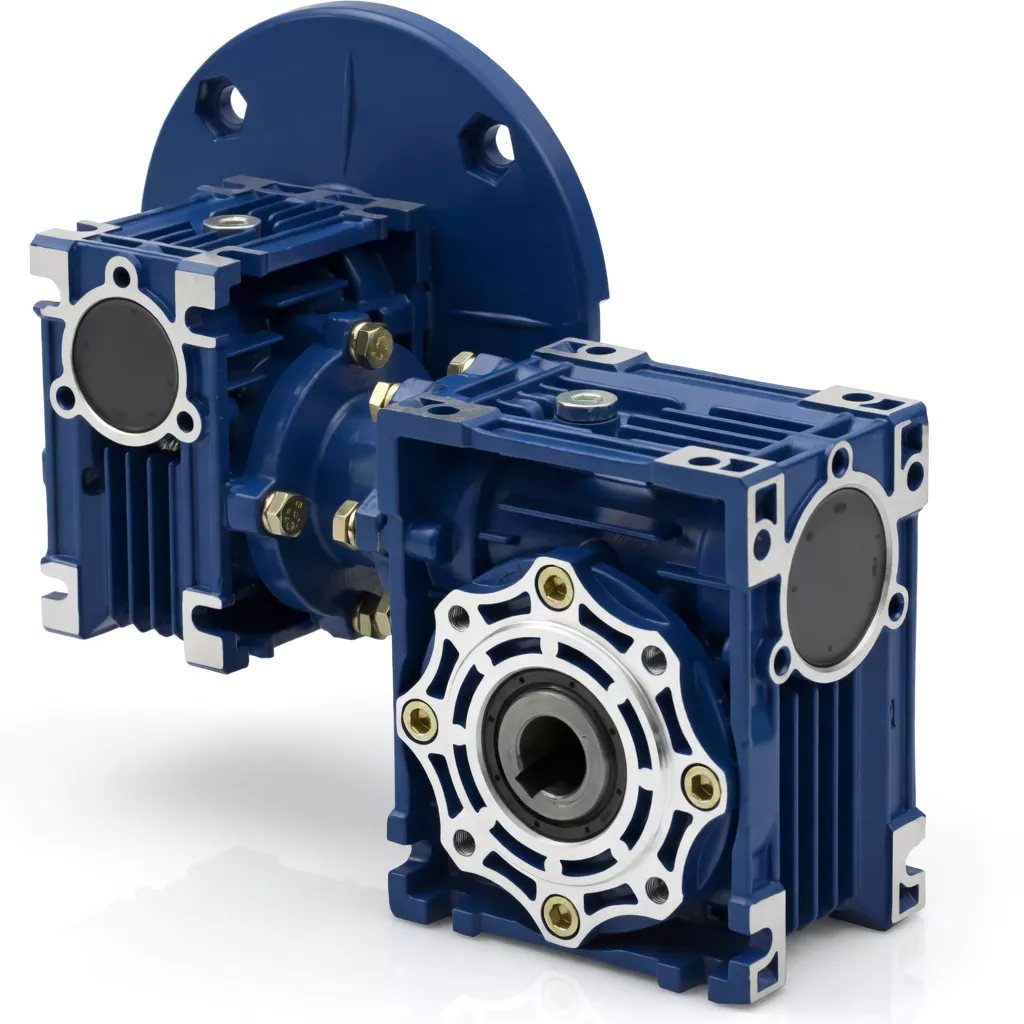
Typical worm gearbox configuration for food-grade washdown conveyor duty
How the Food-grade Washdown Conveyor Drives Your Operation
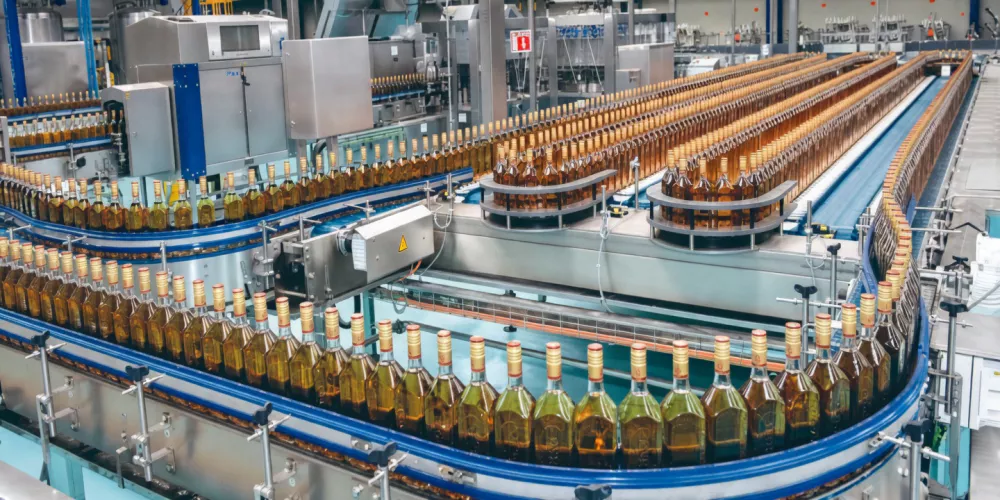
On a washdown conveyor, the worm gearbox typically drives the head pulley directly via a hollow output shaft, or through a torque arm shaft mounted on the drum. The conveyor belt may be stainless mesh, modular polymer or a sanitary fabric belt, carrying product at speeds of 0.1 to 2 m/s. The gearbox sits in a zone subject to daily washing with 60 °C water at 40 bar, often including chemical sanitisers — the operating environment is arguably harsher than most chemical plants.
Housings are machined from 304 or 316 stainless steel or high-grade marine aluminium with an epoxy-free food-grade ceramic coating. All external surfaces have a 3A-compliant finish (Ra ≤0.8 μm) with generous draining radii — no flat-top bolt heads to pool water, no seams that harbour bacteria. Shafts are 316 stainless with ground sealing diameters. The internal gear set still uses the bronze–steel pair of a conventional worm reducer, but the lubricant is NSF H1-registered PAG oil, and the breather is a vented cap that prevents both water ingress and bacterial contamination.
Construction: full stainless steel housing or anti-corrosion / anti-microbial coated aluminium with food-grade lubrication. This material stack is the foundation of the reducer’s long service life on Australian sites.
Keyword focus: stainless steel worm reducer for washdown conveyor.
Technical Specifications & Selection Guide
The table below captures the core selection parameters. For a detailed thermal rating or a custom output configuration, reach out to our engineering desk.
| Parameter | Specification / Range |
|---|---|
| Ratio Range | 7.5:1 to 100:1 |
| Output Torque | 50 Nm to 2,500 Nm |
| Input Power | 0.18 kW to 22 kW |
| Input Shaft | Stainless IEC B14 flange |
| Output Shaft | 316 SS hollow bore Ø20–Ø50 mm |
| Housing Material | 304/316 stainless steel, Ra ≤0.8 μm |
| Lubrication | NSF H1-registered PAG oil |
| Protection | IP69K |
Compliance & Quality Standards
Every unit we ship into Australia is built against a documented quality system and marked against the standards your plant auditors will look for.
For a broader overview of our capabilities, explore worm reducer options across the full range, or review our full range of worm gear motors for related product families.
Australian Case Studies
These are real Australian deployments where our worm gear reducers solved documented site problems. Names and exact locations are withheld for commercial confidentiality.
Equipment: Evisceration line conveyor, 1.1 kW drive
Pain point: Standard painted gearboxes failed corrosion audit within 18 months.
Solution: Replaced with 316 SS stainless worm reducers with H1 lubrication.
Result: Passed HACCP audits consecutively for 4 years with zero corrosion findings.
Equipment: Curd transfer conveyor, 0.75 kW drive
Pain point: Chlorinated CIP wash corroded standard aluminium housings within 3 years.
Solution: Upgraded to full 304 SS construction with ceramic coating.
Result: No visible corrosion after 5 years in service.
Equipment: Fillet transfer conveyor, 0.55 kW drive
Pain point: Saltwater and bone fragments pitted OEM stainless shafts.
Solution: Specified 316 SS shafts and duplex 2205 bearings.
Result: Maintenance-free operation over 3 years and counting.
Equipment: Primal cut conveyor, 1.5 kW drive
Pain point: Shaft seal failure caused lubricant contamination of product line.
Solution: Installed worm reducer with triple-lip FDA-compliant seal and external drain.
Result: Zero product contamination incidents in 24 months.
Equipment: Lettuce wash-line conveyor, 0.37 kW drive
Pain point: High-pressure daily wash eroded standard paint and gasket.
Solution: Specified IP69K-rated stainless unit with 316 SS hardware.
Result: Gasket and housing intact after 36 months of daily wash-down.
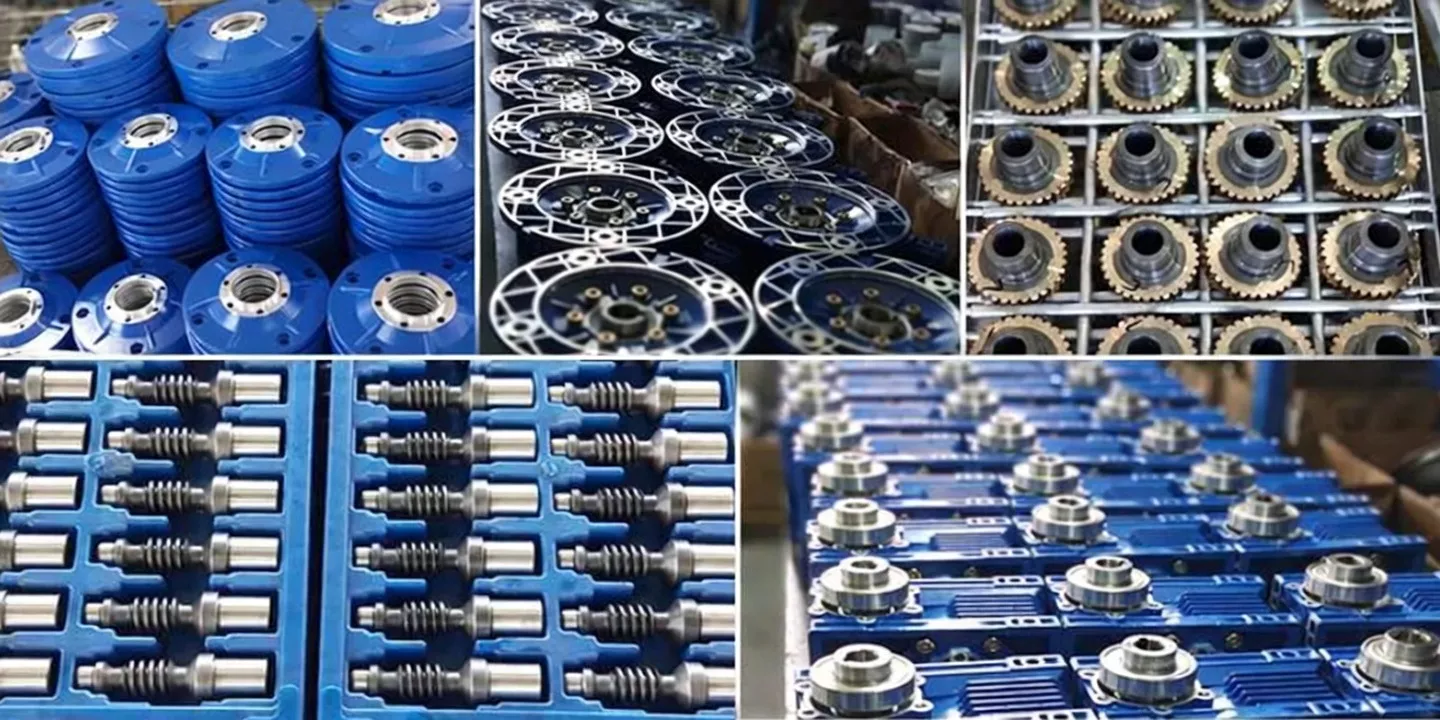
What Makes Us the Right Partner
Our Australian customers choose us for a pragmatic set of reasons — here are the six that come up most often.
Four generations of worm gear production know-how, with a dedicated engineering team serving mining, agriculture, food, water and construction clients across Australia.
Australia-timezone engineering support via phone, email and video call, with selection calculators, drawing packs and installation guides available on request.
Non-standard shaft geometries, flange drillings, housing paint systems, and torque-arm designs are routine — our engineers will match your exact mechanical interface.
Direct-from-factory pricing with logistics to any Australian capital and major regional centre, competitive against premium European brands while meeting the same specifications.
Regular sea-freight consolidation to Sydney, Melbourne, Brisbane, Perth and Adelaide, with in-country distribution partners for same-week delivery on stocked sizes.
Every unit is bench-tested for noise, vibration, running temperature and oil seal integrity before it leaves the factory, with a test certificate shipped in the documentation pack.
Answers to Common Questions
Six detailed answers to the questions we are asked most often about this application.
Q: What is the difference between IP66 and IP69K?
A: IP66 protects against strong water jets. IP69K is a higher standard — protecting against close-range, high-temperature, high-pressure jets (80 °C at 100 bar), which replicate the washdown protocols used in food plants. For food-grade washdown service, IP69K is the correct specification.
Q: Is the lubricant safe for accidental product contact?
A: Yes. We use NSF H1-registered PAG gear oils that are certified for incidental food contact. In the event of a seal leak, the product can be retained and inspected according to HACCP procedures, rather than being destroyed.
Q: Can I use a standard painted worm gearbox in a food plant?
A: Only in dry, non-sanitary zones. In any splash zone or sanitary zone, a painted aluminium or cast iron housing will eventually corrode under chlorinated wash, and the peeling paint then becomes an HACCP finding. A stainless housing is the defensible choice.
Q: How do you prevent bacterial growth on the gearbox?
A: The gearbox housing is designed to drain fully — no flat upper surfaces, no crevices, all seams sealed, all external surfaces polished to Ra ≤0.8 μm. Shaft entries use hygienic lip seals that do not trap product or water.
Q: Do I need to specify 316 or is 304 stainless acceptable?
A: For most dry-food and dairy applications, 304 stainless is sufficient. For seafood, brine-cured meat, or processors using chlorinated sanitisers at high concentration, we strongly recommend 316 stainless to resist chloride pitting. See the full worm reducer series online.
Q: Can you supply the motor as well?
A: Yes — we can supply a matched stainless steel or white-coated IEC motor, either flange-coupled directly to the gearbox or with a hygienic coupling. The motor is rated IP69K to match the gearbox.
Talk to an Engineer About Your Food-grade Washdown Conveyor Project
Send us your duty data sheet and we will return a sized, priced selection with lead-time indication — no obligation.