
Worm Gearbox for Clarifier / Aerator — Built for Australia’s Harshest Operating Conditions
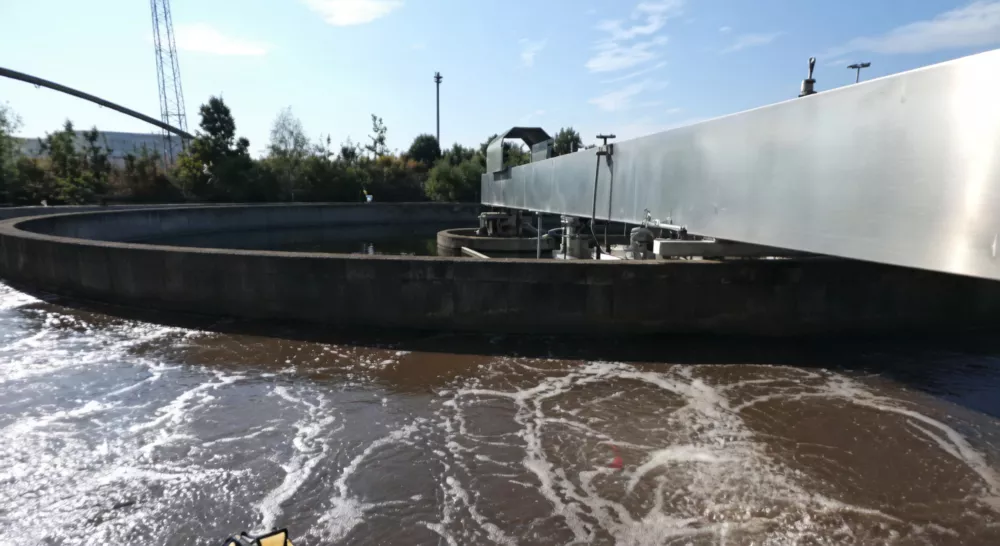
Every Australian capital city runs vast municipal wastewater treatment plants — Sydney’s Bondi and Malabar, Melbourne’s Western Treatment Plant, Brisbane’s Luggage Point — all relying on enormous clarifier scrapers and surface aerators for primary and secondary treatment. Each of these machines turns at painful slowness (as low as 0.05 rpm for a clarifier scraper, 60-100 rpm for an aerator) for 24 hours a day, 365 days a year. The worm reducer driving them must be corrosion-resistant, self-locking under rake stall, and absolutely reliable in an environment of H2S gas, splash water and UV.
Our worm gear units Australia-ready for wastewater treatment deliver a commitment we make to every water utility: if a gearbox goes down, the plant doesn’t. Heavy cast iron housings with epoxy-coated exteriors, stainless steel fasteners and output shafts, labyrinth sealing, and synthetic PAG lubrication combine to give a service life measured in decades rather than years. These are specialist heavy-duty speed reducers for a demanding industry.
Australian Application Detail: Wastewater Clarifier / Aerator
On a circular clarifier, the worm gearbox is the pre-stage of a multi-stage drive — it steps the motor speed down 40:1 before the main slew ring reduces it to the final rake speed of 0.1 rpm. On a surface aerator, the gearbox is typically a single-stage worm reducer mounted horizontally or vertically driving the aerator impeller at 60–100 rpm. In both cases, the mechanical loading is severe: slow-speed, high-torque, shock-loaded, and continuous.
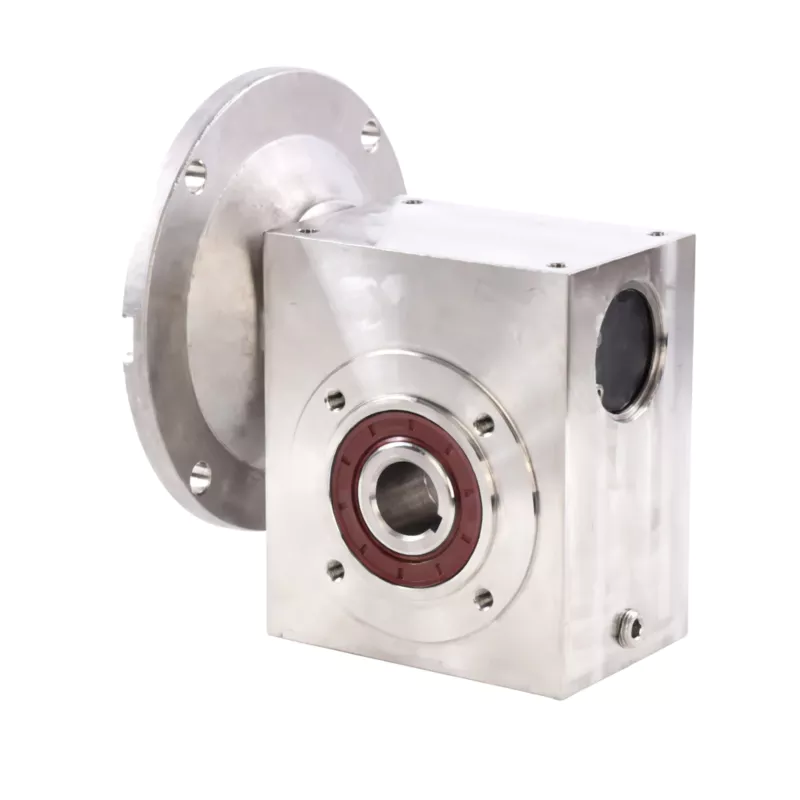
The housing is high-corrosion-resistance cast iron, finished externally with a three-coat epoxy system (zinc primer, epoxy mid-coat, polyurethane top coat) rated for C5-I industrial atmospheres. Stainless steel (316) is used for all external fasteners and for the output shaft sealing journal. Internal components are conventional steel worm and bronze wheel, lubricated by synthetic PAG oil with a 16,000-hour drain interval. A labyrinth shaft seal with grease-purge facility prevents H2S-laden splash from ever reaching the gear oil.
Core Material Stack
heavily corrosion-protected cast iron housing (commonly epoxy-coated) with stainless steel fasteners.
Keyword focus: worm gearbox for wastewater clarifier aerator Australia.
International & Australian Compliance
Our gearboxes are designed, manufactured, tested and certified against the standards your site-acceptance tests will reference.
Technical Specifications & Selection Guide
Use this data as your first-pass selection table. Service factor, ambient temperature, and duty cycle should always be reviewed with our application team for a binding specification.
| Parameter | Specification / Range |
|---|---|
| Ratio Range | 40:1 to 100:1 pre-stage, 10:1 to 40:1 aerator |
| Output Torque at Pre-Stage | 1,000 Nm to 20,000 Nm |
| Input Power | 1.5 kW to 75 kW |
| Output Shaft Material | 316 stainless steel or ceramic-coated carbon |
| Housing Coating | C5-I three-coat epoxy system |
| Sealing | Labyrinth + FKM with grease purge |
| Lubrication | Synthetic PAG, 16,000 h drain interval |
| Protection | IP66 |
Case Studies from Australian Sites
These are real Australian deployments where our worm gear reducers solved documented site problems. Names and exact locations are withheld for commercial confidentiality.
Equipment: Primary clarifier, 5.5 kW pre-stage
Challenge: Sulfide attack had degraded the previous gearbox paint, exposing bare iron within 4 years.
Our response: Specified full C5-I coating with stainless fasteners.
Outcome: Protected housing at 8-year inspection, no corrosion found.
Equipment: Secondary aerator, 22 kW drive
Challenge: Humid splash zone dumped water into oil via breather.
Our response: Fitted oil-mist breather and upgraded labyrinth seal with grease purge.
Outcome: Oil water content stayed below specification for 5 years.
Equipment: Final clarifier scraper, 11 kW pre-stage
Challenge: Heat cycling between day and night caused condensation in the sump.
Our response: Specified desiccant breather and external PAG oil reservoir.
Outcome: Oil cleanliness remained consistent through wet and dry seasons.
Equipment: Sludge thickener, 7.5 kW drive
Challenge: Remote site could not easily service gearbox.
Our response: Supplied unit with 16,000-hour lube life and remote oil-level sensor.
Outcome: Service interval moved to every 2 years; maintenance visits halved.
Equipment: Aeration basin agitator, 15 kW drive
Challenge: Process chemistry varied, causing unexpected corrosion events.
Our response: Upgraded external coating to C5-M and used 316 SS shaft.
Outcome: No corrosion events across 3 years of variable duty.
If your wastewater clarifier / aerator project needs a tailored solution, contact our technical team — they will size, price and quote a matched worm reducer within one business day.
What Makes Us the Right Partner
Our Australian customers choose us for a pragmatic set of reasons — here are the six that come up most often.
Four generations of worm gear production know-how, with a dedicated engineering team serving mining, agriculture, food, water and construction clients across Australia.
Australia-timezone engineering support via phone, email and video call, with selection calculators, drawing packs and installation guides available on request.
Non-standard shaft geometries, flange drillings, housing paint systems, and torque-arm designs are routine — our engineers will match your exact mechanical interface.
Direct-from-factory pricing with logistics to any Australian capital and major regional centre, competitive against premium European brands while meeting the same specifications.
Regular sea-freight consolidation to Sydney, Melbourne, Brisbane, Perth and Adelaide, with in-country distribution partners for same-week delivery on stocked sizes.
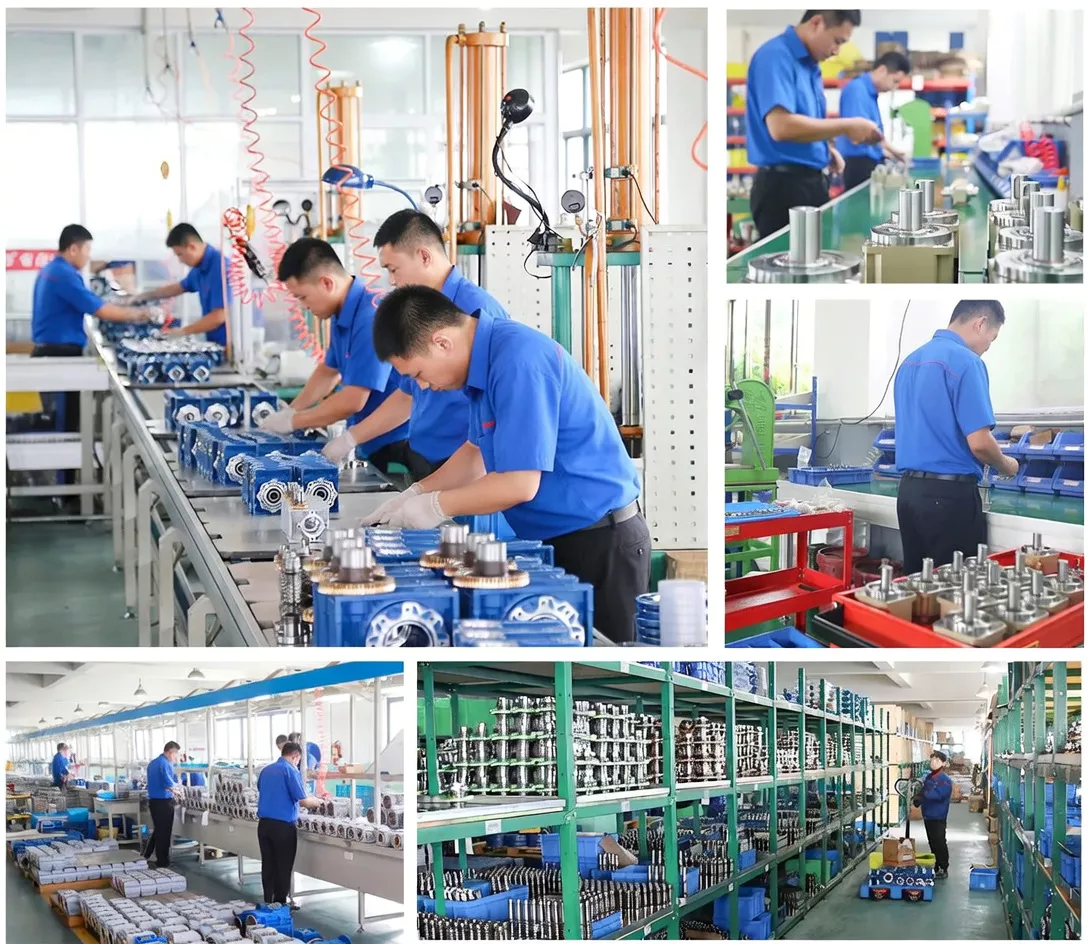
Every unit is bench-tested for noise, vibration, running temperature and oil seal integrity before it leaves the factory, with a test certificate shipped in the documentation pack.
Answers to Common Questions
Six detailed answers to the questions we are asked most often about this application.
Q: What coating system does a wastewater gearbox need?
A: For most Australian municipal wastewater plants, a C5-I industrial three-coat epoxy system is appropriate. For coastal plants or plants handling H2S-rich flows, upgrade to C5-M (marine) rating with a zinc-rich primer and a UV-stable polyurethane top coat.
Q: How long between oil changes on a slow-speed clarifier gearbox?
A: With synthetic PAG oil, 16,000 hours is typical — which on a 24/7 clarifier is roughly once every 22 months. We recommend an oil analysis at each change to verify wear rates and moisture ingress.
Q: Does the gearbox have a torque overload protection?
A: We can supply gearboxes with integrated torque sensing (strain-gauge on output shaft) that alarms and trips at configurable thresholds. This is particularly valuable on clarifiers where a rake blockage can destroy the drive in seconds.
Q: Is the gearbox safe in a H2S-rich atmosphere?
A: Standard neoprene gaskets will degrade in H2S atmospheres; our wastewater-specification gearboxes use Viton (FKM) gaskets and seals throughout, and all external fasteners are 316 stainless. Internally the gearbox is hermetically sealed, so H2S does not reach the gear oil.
Q: Can you supply the complete drive package?
A: Yes — we supply the motor, coupling, gearbox, back-stop and, if required, the slew ring or main drive for the clarifier. You can see our full range of worm gear motors online.
Q: What maintenance is required on a wastewater gearbox?
A: Routine maintenance is oil level checks, oil sampling annually, and a full oil change at the synthetic drain interval. Physical inspection of the breather and the external paint system should be done annually; the grease-purge on the labyrinth seal should be topped up every 6 months.
Next Steps
Whether you need a single replacement unit or a site-wide specification, our application engineers are ready to help.