
Worm Gearbox for Labeling / Cartoning Line: Engineered for Australian Duty
A modern Australian bottling plant — from Coopers in Adelaide to Asahi in Laverton to a craft gin distillery in the Yarra Valley — contains dozens of small but precise machines: labellers, cartoners, case packers, and carton sealers. Each carries its own compact worm reducer driving belts, star wheels, label rollers or carton formers at exactly the right speed and torque. Precision, low noise, and a small footprint are the defining requirements; the gearbox must disappear into the machine without complaint.
Our compact worm gearbox range for packaging machinery is designed for this space-constrained, precision-driven environment. Lightweight aluminium alloy housings, precision-machined brass or tin bronze worm wheels, and ground steel worms deliver sub-10-arc-min backlash, efficiency approaching 85 %, and noise below 62 dB(A). Our worm gear reducer Australia offering in this range is the quiet backbone of many of Australia’s most modern packaging lines.
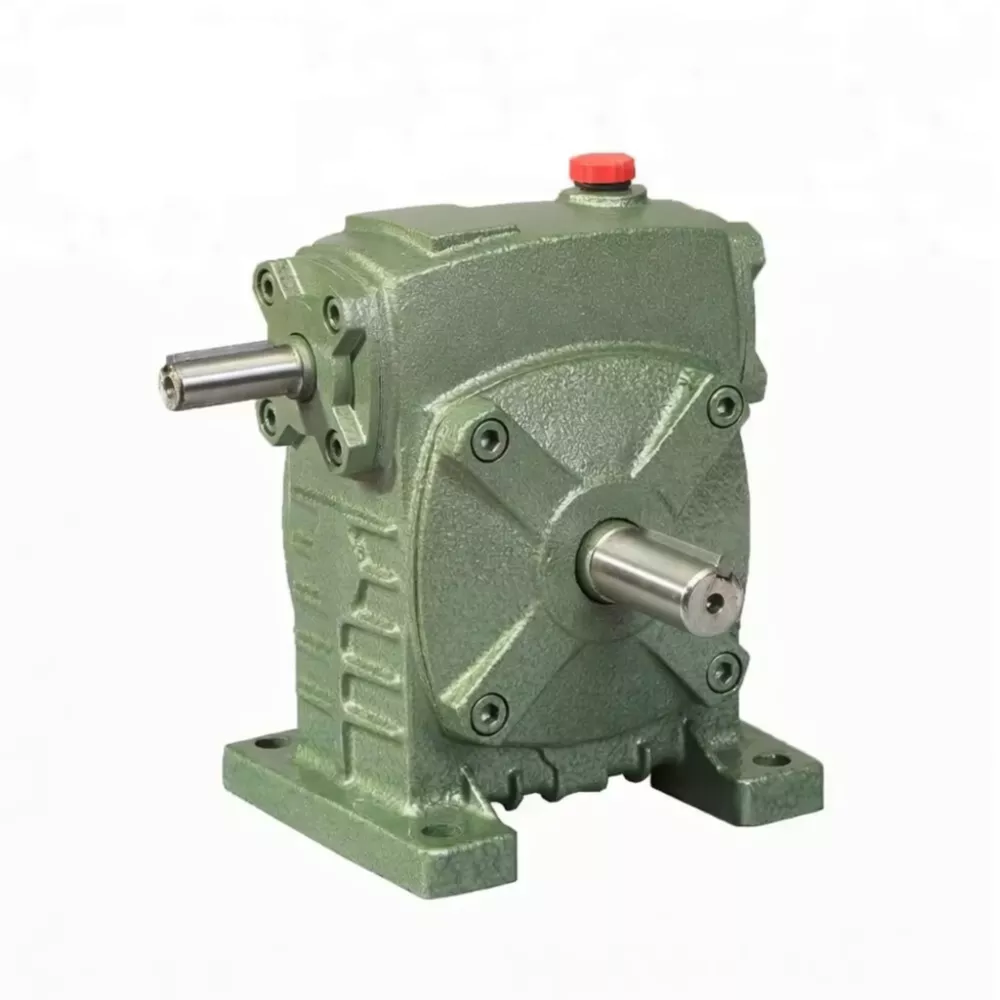
Typical worm gearbox configuration for labeling / cartoning line duty
How the Labeling / Cartoning Line Drives Your Operation
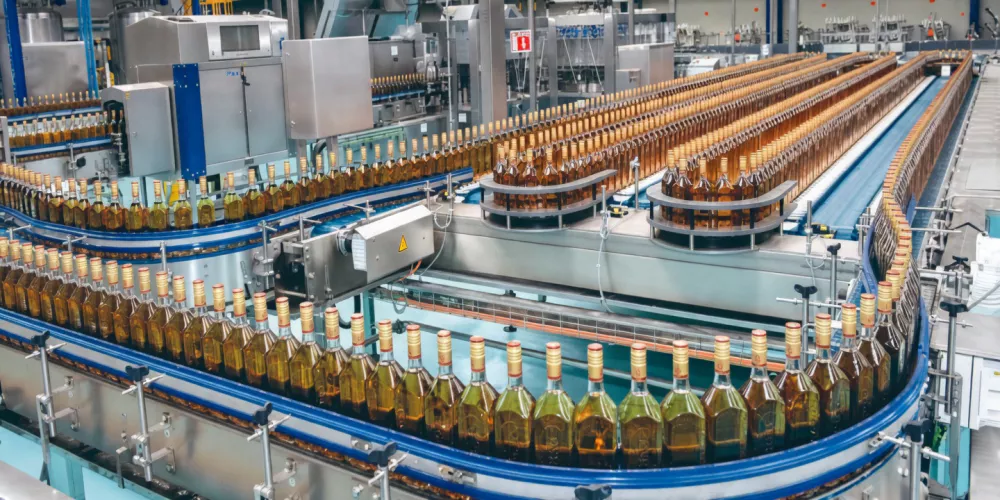
On a labelling line, the worm gearbox drives the label-applicator rollers, the product infeed screw, and the carton erector. Each drive runs at a different speed, and all must stay synchronised via a centralised motion controller. The gearbox here is selected for precise torque at low rpm, high efficiency (to minimise heat build-up in a tight machine enclosure), and long-term backlash stability.
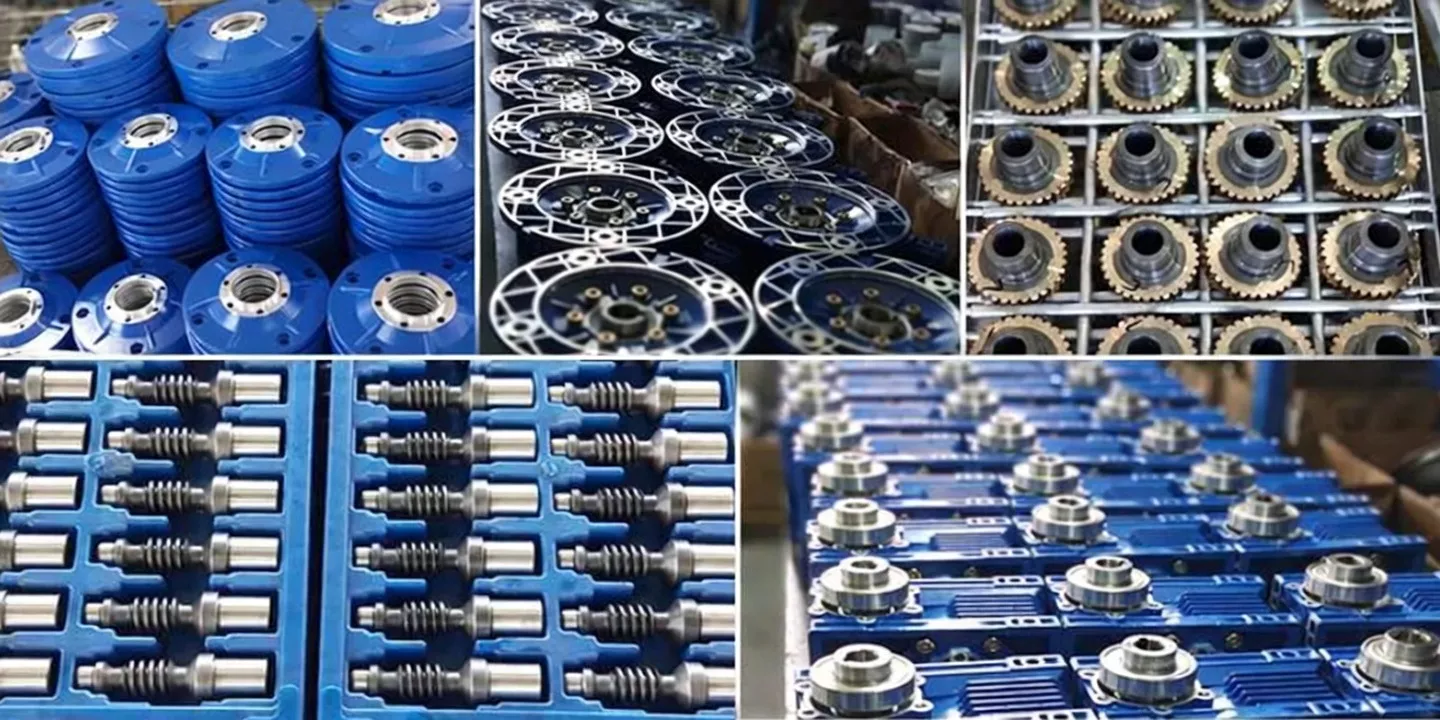
The housing is a compact die-cast aluminium alloy with integrated cooling ribs. The worm wheel is machined from aged brass or tin bronze — brass for lower-duty label rollers, tin bronze for the higher-loaded carton formers — and lapped against a ground steel worm for best gear quality. Bearings are deep-groove ball bearings on the light-duty variants, tapered rollers on the heavier frames. Output shafts are typically hollow for direct coupling to the driven shaft.
Construction: compact aluminium alloy housing with precision-machined brass / tin bronze worm wheel. This material stack is the foundation of the reducer’s long service life on Australian sites.
Keyword focus: compact worm gearbox for labeling cartoning line.
Technical Specifications & Selection Guide
The table below captures the core selection parameters. For a detailed thermal rating or a custom output configuration, reach out to our engineering desk.
| Parameter | Specification / Range |
|---|---|
| Ratio Range | 5:1 to 80:1 |
| Output Torque | 8 Nm to 250 Nm |
| Input Power | 0.09 kW to 1.5 kW |
| Backlash | <10 arc-min (precision class) |
| Housing | Die-cast aluminium with anodised finish |
| Noise | ≤62 dB(A) at 1 m |
| Efficiency | Up to 85 % at ratio 5:1 |
| Protection | IP54 standard, IP65 optional |
Compliance & Quality Standards
Every unit we ship into Australia is built against a documented quality system and marked against the standards your plant auditors will look for.
For a broader overview of our capabilities, explore worm reducer options across the full range, or review our full range of worm gear motors for related product families.
Australian Case Studies
These are real Australian deployments where our worm gear reducers solved documented site problems. Names and exact locations are withheld for commercial confidentiality.
Equipment: Front/back labeller, 0.37 kW drive
Pain point: Label skew due to gearbox backlash drift after 18 months.
Solution: Replaced with precision-lapped units (backlash ≤6 arc-min).
Result: Label alignment restored and maintained over 3 years.
Equipment: Mini-cartoning line, 0.55 kW drive
Pain point: Gearbox noise exceeded audit limit for the clean-room suite.
Solution: Specified ground gear pair in low-noise aluminium housing.
Result: Measured 58 dB(A) at 1 m — below 60 dB audit threshold.
Equipment: Jar labeller, 0.18 kW drive
Pain point: Temperature variation caused drive overheat.
Solution: Upsized to next frame and fitted external cooling fan.
Result: Temperature stable at 60 °C in a 35 °C ambient shed.
Equipment: Bottle orientator and labeller, 0.25 kW drive
Pain point: Existing gearboxes showed bronze wear at 14 months.
Solution: Upgraded to tin bronze wheel and shorter drain interval.
Result: Wear arrested; 3 years of service achieved.
Equipment: Carton erector, 0.75 kW drive
Pain point: Chocolate dust contaminated breather.
Solution: Fitted desiccant breather at elevated position with protective cover.
Result: Clean oil maintained; no production stops linked to drive.
Why Partner With Us
If you are new to specifying worm gear units, here is the shortest possible case for working with our team.
Four generations of worm gear production know-how, with a dedicated engineering team serving mining, agriculture, food, water and construction clients across Australia.
Australia-timezone engineering support via phone, email and video call, with selection calculators, drawing packs and installation guides available on request.
Non-standard shaft geometries, flange drillings, housing paint systems, and torque-arm designs are routine — our engineers will match your exact mechanical interface.
Direct-from-factory pricing with logistics to any Australian capital and major regional centre, competitive against premium European brands while meeting the same specifications.
Regular sea-freight consolidation to Sydney, Melbourne, Brisbane, Perth and Adelaide, with in-country distribution partners for same-week delivery on stocked sizes.
Every unit is bench-tested for noise, vibration, running temperature and oil seal integrity before it leaves the factory, with a test certificate shipped in the documentation pack.
Answers to Common Questions
Six detailed answers to the questions we are asked most often about this application.
Q: What is the backlash of a precision worm gearbox?
A: Our precision-class units use ground-and-lapped worm and wheel sets to achieve <10 arc-min backlash, which is sufficient for virtually all packaging line positioning tasks when combined with a closed-loop motor and encoder.
Q: How compact can the gearbox be?
A: Our size 40 die-cast aluminium unit fits in roughly a 150 × 120 × 100 mm envelope, weighs under 3 kg, and delivers up to 25 Nm of output torque. We offer even smaller footprint variants for mini-cartoners.
Q: Is the unit suitable for food packaging?
A: For dry food packaging in a splash-free zone, our standard aluminium units are acceptable. For wet-wash zones or primary food contact proximity, switch to our stainless steel washdown range.
Q: What lubrication is used and how often does it need changing?
A: Our compact units ship with food-grade synthetic PAG oil, maintenance-free for the life of the unit under normal packaging duty (typically 20,000 hours, or 10 years on 8 hours/day operation).
Q: Is the output shaft available hollow or solid?
A: Both. Hollow bore is the most popular for direct coupling to label rollers and star wheels; solid shaft for belt and chain drives. Both are available in all common shaft sizes from Ø12 to Ø30 mm.
Q: Can you supply with servo motor input?
A: Yes — we supply with IEC or NEMA servo motor flanges, with ratings to match common Australian servo brands. This enables precision packaging applications without a separate coupling assembly.
Talk to an Engineer About Your Labeling / Cartoning Line Project
Send us your duty data sheet and we will return a sized, priced selection with lead-time indication — no obligation.