
Worm Gearbox for Automated Storage Hoist: Engineered for Australian Duty
Automated Storage and Retrieval Systems (ASRS) are the backbone of modern Australian warehousing — from cold-store distribution centres in Ingleburn to pharmaceutical warehouses in Melbourne and general goods AS/RS in Perth. The vertical hoist of each crane or shuttle has to accelerate a load of hundreds of kilograms several metres vertically in a few seconds, then decelerate precisely at the target bin. The worm reducer driving that hoist is the critical link between motor torque and positioning accuracy.
Our worm gear reducer Australia range for ASRS applications is engineered for the unique mix of high duty cycles, self-locking safety, and precise positioning required in automated storage. Ductile iron housings, bronze wheels optimised for cyclic wear, and integrated back-stop machining allow us to supply a complete hoist drive package. Our heavy-duty speed reducers for this duty are proven in several of Australia’s largest automated warehouses.
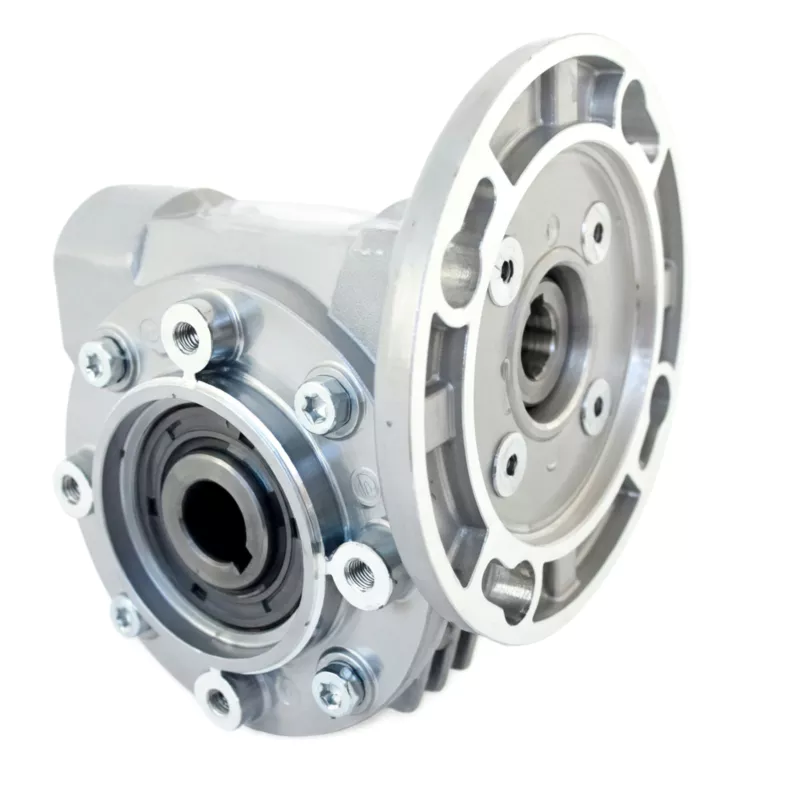
Typical worm gearbox configuration for automated storage & retrieval hoist duty
How the Automated Storage & Retrieval Hoist Drives Your Operation
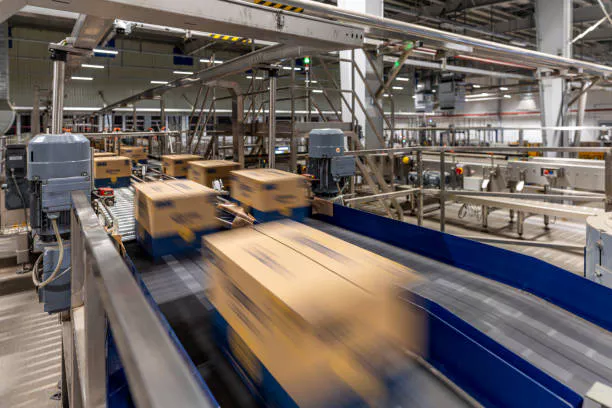
On an ASRS hoist, the gearbox sits at the top of the mast, driving a cable drum or a rack-and-pinion system. The motor is typically a servo or vector-controlled induction motor with encoder feedback. The worm reducer steps the motor speed down to the desired lifting speed (typically 60–150 m/min in high-throughput systems), and its self-locking characteristic means the load is held safely without a mechanical brake during long idle periods.
The housing is high-strength cast iron (EN-GJS-500-7) with heavy dust ribbing and precise machining tolerances for repeat positioning. The worm wheel is a high-wear bronze alloy (CuSn12Ni) optimised for the start-stop fatigue profile of an ASRS crane. Taper roller bearings are preloaded at the factory for minimal deflection under load, which is critical for positioning accuracy. A back-stop interface is machined into the housing to accept an external safety device.
Construction: high-strength cast iron housing with high-wear bronze alloy worm wheel. This material stack is the foundation of the reducer’s long service life on Australian sites.
Keyword focus: worm reducer for automated storage and retrieval system.
Technical Specifications & Selection Guide
The table below captures the core selection parameters. For a detailed thermal rating or a custom output configuration, reach out to our engineering desk.
| Parameter | Specification / Range |
|---|---|
| Ratio Range | 15:1 to 60:1 |
| Output Torque | 300 Nm to 5,000 Nm |
| Input Power | 2.2 kW to 45 kW |
| Positioning Backlash | <10 arc-min (precision class) |
| Housing Material | Cast iron EN-GJS-500-7 |
| Duty Cycle | S3 60 % intermittent, >300 cycles/hour |
| Bearings | Taper roller, preloaded |
| Protection | IP65 |
Compliance & Quality Standards
Every unit we ship into Australia is built against a documented quality system and marked against the standards your plant auditors will look for.
For a broader overview of our capabilities, explore worm reducer options across the full range, or review our full range of worm gear motors for related product families.
Australian Case Studies
These are real Australian deployments where our worm gear reducers solved documented site problems. Names and exact locations are withheld for commercial confidentiality.
Equipment: 15 m high pallet crane, 22 kW hoist drive
Pain point: Low temperature (-25 °C) caused oil viscosity issues and positioning errors.
Solution: Specified PAO synthetic oil rated to -40 °C.
Result: Positioning accuracy maintained across entire temperature range.
Equipment: Mini-load crane, 2.2 kW hoist drive
Pain point: Frequent cycling caused bronze wear, degrading positioning.
Solution: Upgraded to high-wear CuSn12Ni bronze wheel and precision-ground worm.
Result: Backlash remained below 8 arc-min at 4-year inspection.
Equipment: Shuttle lift, 1.5 kW drive, 400 cycles/hour
Pain point: Thermal rise at peak operation caused emergency stops.
Solution: Fitted integrated PT100 sensor and oil cooling fan.
Result: Continuous peak operation with no thermal trips.
Equipment: Automated pallet lift, 30 kW hoist drive
Pain point: Maintenance crews needed a safer positive hold-back for servicing.
Solution: Supplied gearbox with machined back-stop interface and shaft-mounted cam back-stop.
Result: Safer maintenance procedures; back-stop engaged successfully during every service.
Equipment: Carton lift, 11 kW drive
Pain point: Humid warehouse caused condensation in gearbox sump.
Solution: Fitted desiccant breather and sealed vent; switched to synthetic PAG oil.
Result: Water content in oil stayed below 50 ppm over 24 months.
Why Australian Buyers Choose Us
Selecting the right supplier is as important as selecting the right gearbox. Here is what sets our team apart.
25+ Years Manufacturing Experience
Four generations of worm gear production know-how, with a dedicated engineering team serving mining, agriculture, food, water and construction clients across Australia.
Remote Technical Support
Australia-timezone engineering support via phone, email and video call, with selection calculators, drawing packs and installation guides available on request.
OEM / ODM Customisation
Non-standard shaft geometries, flange drillings, housing paint systems, and torque-arm designs are routine — our engineers will match your exact mechanical interface.
Outstanding Value for Money
Direct-from-factory pricing with logistics to any Australian capital and major regional centre, competitive against premium European brands while meeting the same specifications.
Australia-Ready Logistics
Regular sea-freight consolidation to Sydney, Melbourne, Brisbane, Perth and Adelaide, with in-country distribution partners for same-week delivery on stocked sizes.
100% Load-Tested
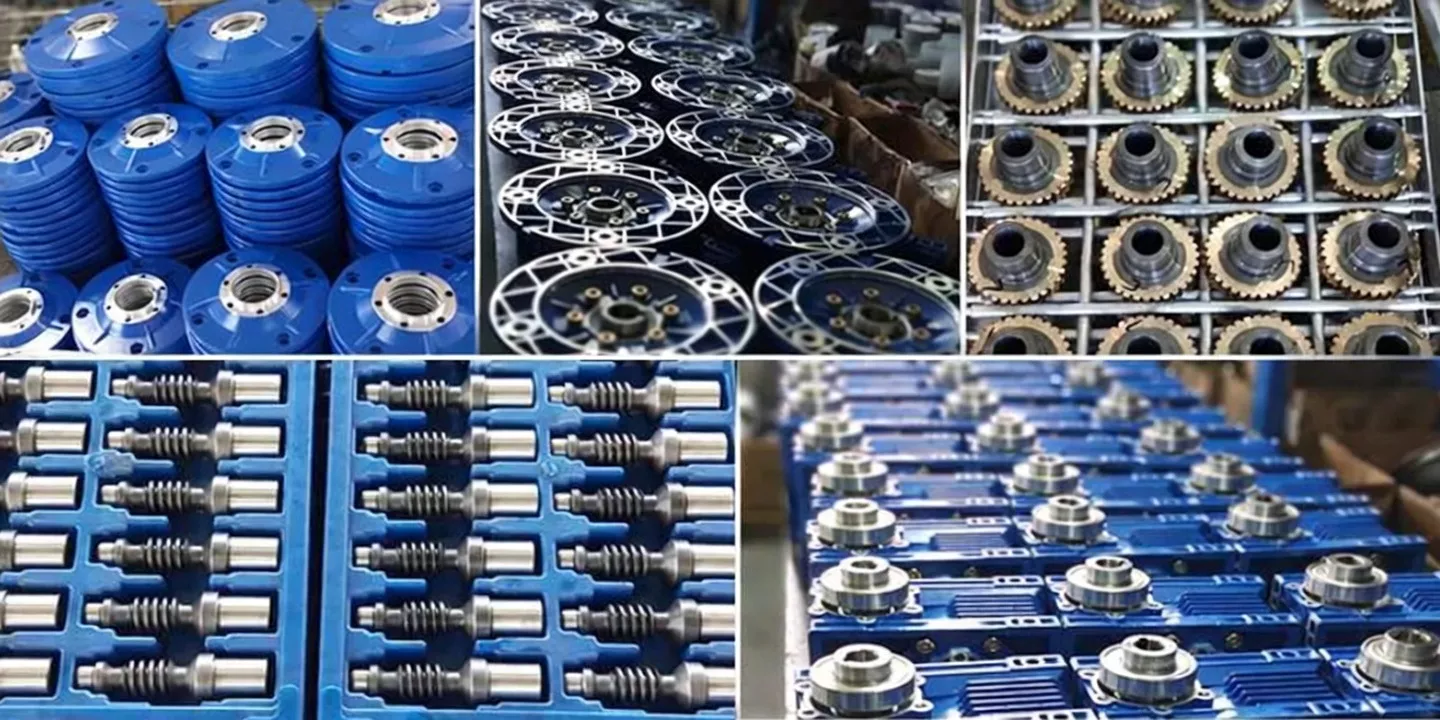
Every unit is bench-tested for noise, vibration, running temperature and oil seal integrity before it leaves the factory, with a test certificate shipped in the documentation pack.
Frequently Asked Questions
Common questions from Australian engineers, procurement managers and maintenance supervisors — answered in detail.
Why use a worm gearbox instead of a planetary on an ASRS hoist?
A worm gearbox offers inherent self-locking (passive brake) that a planetary does not. For hoist duty where the load must be held stationary indefinitely — such as in a storage bin — worm is the safer choice. Planetary is still preferred for extreme duty cycles or where the highest positioning accuracy is required.
What is the positioning backlash of a worm gearbox?
A precision-ground worm and lapped bronze wheel from our range typically delivers 4–10 arc-min of backlash at the output. With a motor-mounted absolute encoder and appropriate control loop, this is sufficient for all common ASRS positioning tasks.
Does the gearbox need a separate brake?
The self-locking worm provides passive hold-back of the load, but codes of practice typically require an independent motor brake as well. Our gearboxes are designed to accept IEC brake-motor assemblies at the input flange.
How do I handle the high duty cycle (S3)?
Size the gearbox on the thermal rating at the effective RMS torque of the cycle, rather than the peak torque. Our sales engineers can run an S3 duty-cycle calculation if you share the velocity profile.
Can the gearbox run in a cold-store (-25 °C) environment?
Yes — with a PAO synthetic gear oil and cold-rated seal elastomers, our units run reliably down to -30 °C with only a brief warm-up on start-up. For colder applications (pharmaceutical -40 °C cold store) a heated oil sump may be required.
Is the gearbox compatible with my motor encoder?
Yes. The motor encoder feeds the control loop directly; the gearbox is in the mechanical path only. Choose a gearbox with tight backlash (<10 arc-min) so the motor's positioning accuracy is preserved at the output.
Talk to an Engineer About Your Automated Storage & Retrieval Hoist Project
Send us your duty data sheet and we will return a sized, priced selection with lead-time indication — no obligation.