
Worm Gearbox for Center Pivot Irrigation — Built for Australia’s Harshest Operating Conditions
Center pivot irrigation — those distinctive rotating sprinkler arms that draw green circles across the Australian outback — is the largest mechanised irrigation method used on Murray–Darling farms, Mallee almond orchards and Ord River cotton fields. Each wheeled tower along the pivot arm is driven by a compact worm reducer that creeps the pivot through its circle at a few metres per minute, 24 hours a day during irrigation season. Those gearboxes must survive mud, water spray, UV, dust and heat, while never being touched for servicing.
Our heavy-duty speed reducers for center pivot service are engineered to meet the specific duty of creep-speed walking drives: high output torque at very low output rpm, continuous S1 duty during irrigation season, and the ability to sit idle for months between seasons without seizing. We supply worm gear units Australia farmers have relied on for a decade, with cast iron housings, high-IP sealing and grease-packed bearings that shrug off every irrigation cycle.
Australian Application Detail: Center Pivot Irrigation
At each tower of a center pivot, an electric gearmotor (typically 0.37 kW to 1.5 kW) drives the two wheels of that tower through a worm gearbox and a chain or shaft coupling. The walk speed is slow — perhaps 1.5 metres per minute at the outer tower of a 400-metre pivot — which means the worm gearbox runs at an output RPM of around 0.5 to 2 rpm. The torque demand on soft ground is high, particularly when the pivot is restarting after rain and the wheels are bogged.
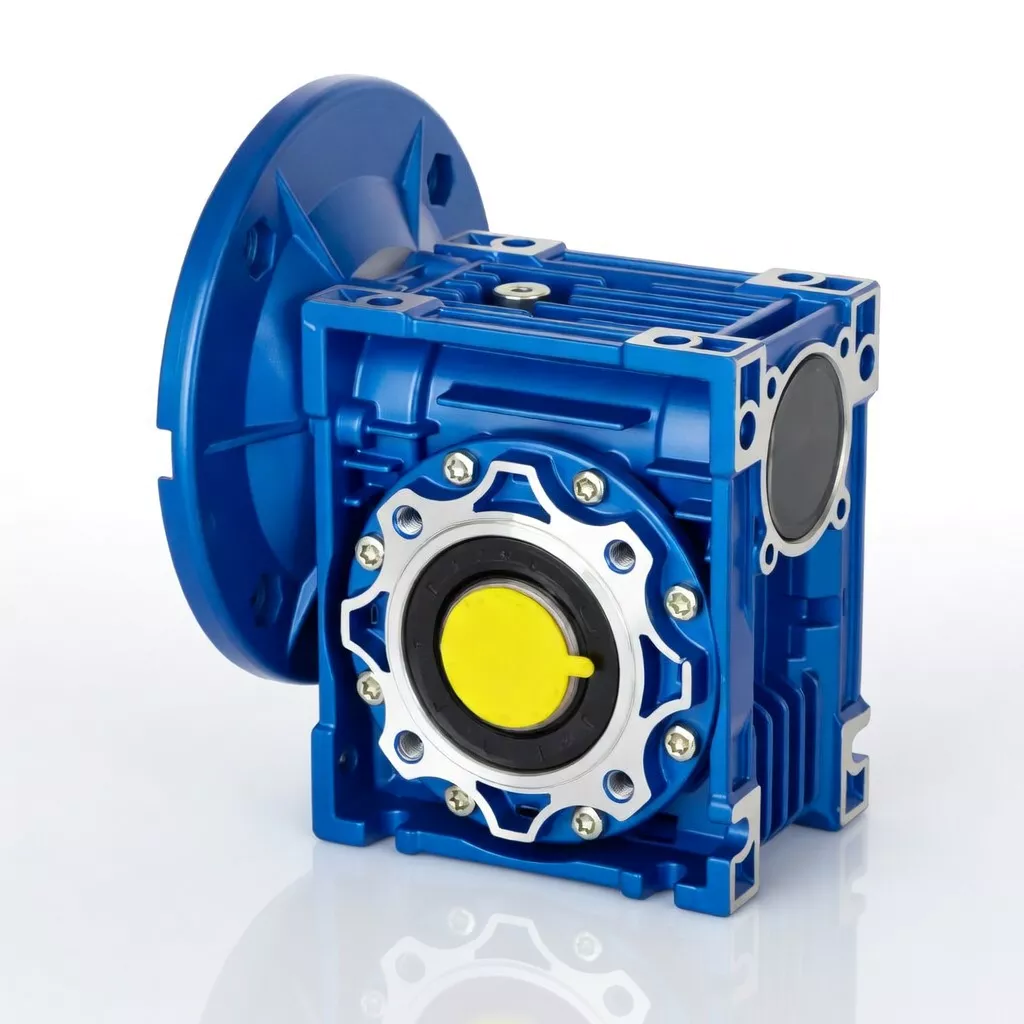
The housing is cast iron or steel, with a high ingress-protection rating (typically IP67) because water spray and mud splashing are unavoidable. The worm gear unit is fitted with grease-lubricated heavy bearings and uses a high-viscosity gear oil formulated for long drain intervals. The output shaft is protected by a double-lip seal with a grease-purge fitting. The housing paint is UV-stable — important because pivot gearboxes sit in direct sun for a decade or more.
Core Material Stack
cast iron or steel housing with high ingress protection against water, mud and fine dust.
Keyword focus: worm gearbox for center pivot irrigation Australia.
International & Australian Compliance
Our gearboxes are designed, manufactured, tested and certified against the standards your site-acceptance tests will reference.
Technical Specifications & Selection Guide
Use this data as your first-pass selection table. Service factor, ambient temperature, and duty cycle should always be reviewed with our application team for a binding specification.
| Parameter | Specification / Range |
|---|---|
| Ratio Range | 30:1 to 60:1 |
| Output Torque | 200 Nm to 900 Nm per tower |
| Input Power | 0.37 kW to 1.5 kW |
| Walking Speed | 0.3–3 m/min at outer tower |
| Housing Material | Cast iron or steel, UV-stable paint |
| Mounting | Foot or flange to tower frame |
| Sealing | Double-lip with grease purge |
| Protection | IP67 standard |
Case Studies from Australian Sites
These are real Australian deployments where our worm gear reducers solved documented site problems. Names and exact locations are withheld for commercial confidentiality.
Equipment: 600 m center pivot, 8 towers
Challenge: OEM wheel gearboxes failed annually due to water ingress.
Our response: Retrofitted IP67-rated replacement units with double-lip seals across all towers.
Outcome: Zero gearbox failures for three consecutive seasons.
Equipment: 400 m pivot, 6 towers
Challenge: Pivot bogged down during wet commissioning, stalling multiple gearboxes.
Our response: Upgraded to higher torque size 90 units with synthetic gear oil.
Outcome: Pivot walked out of all mud events under its own power.
Equipment: 300 m pivot, 5 towers
Challenge: Gearbox output shafts corroded from fertigation chemicals.
Our response: Specified stainless steel output shafts and upgraded paint system.
Outcome: No shaft corrosion at 30-month inspection.
Equipment: 1.2 km pivot, 16 towers
Challenge: Long pivot meant replacement logistics were costly.
Our response: Supplied identical units across all towers with standardised mounting, enabling easy on-farm change-out.
Outcome: Spare parts inventory reduced by 60 %; MTTR dropped to under 4 hours.
Equipment: 500 m pivot, 7 towers, remote location
Challenge: Long drain intervals desired due to remote site.
Our response: PAG synthetic fill and high-capacity sumps rated for 10,000 hours of operation.
Outcome: Oil changes moved to every second season, reducing service travel costs.
If your center pivot irrigation project needs a tailored solution, contact our technical team — they will size, price and quote a matched worm reducer within one business day.
Why Partner With Us
If you are new to specifying worm gear units, here is the shortest possible case for working with our team.
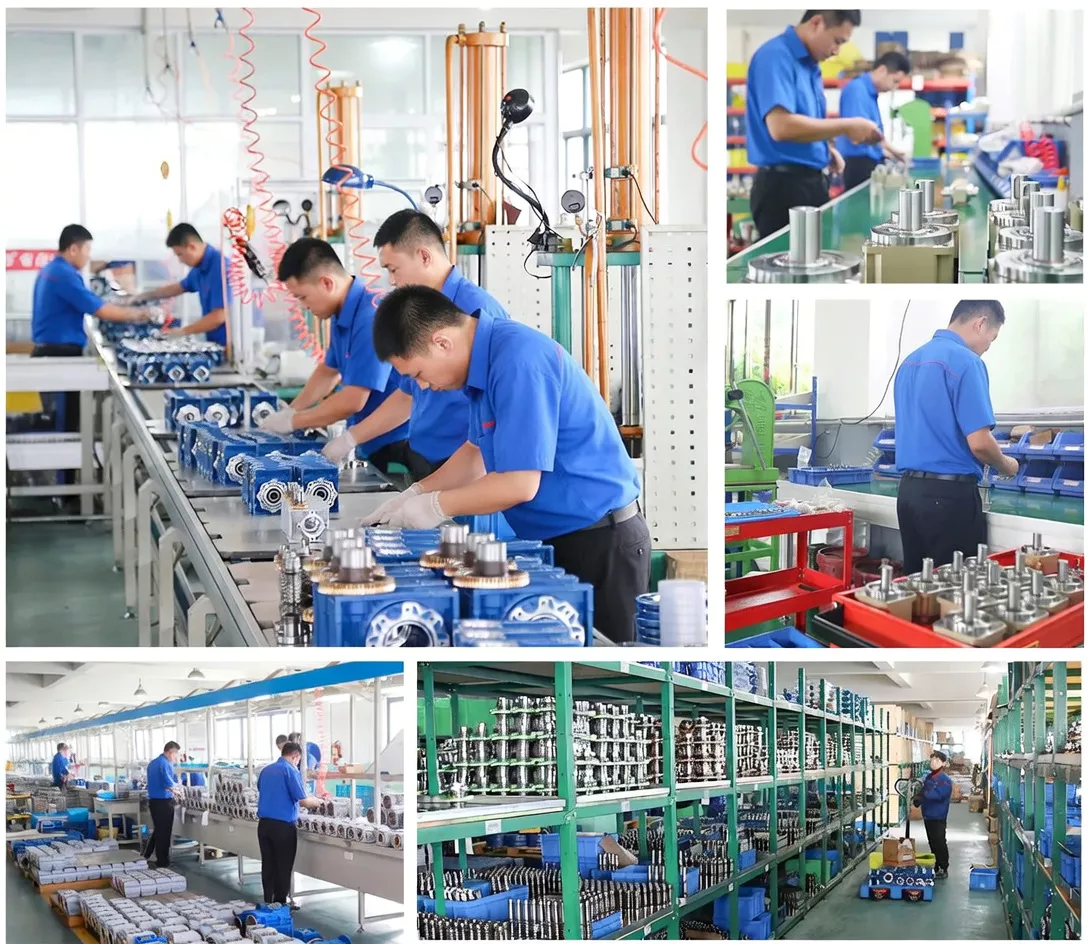
Four generations of worm gear production know-how, with a dedicated engineering team serving mining, agriculture, food, water and construction clients across Australia.
Australia-timezone engineering support via phone, email and video call, with selection calculators, drawing packs and installation guides available on request.
Non-standard shaft geometries, flange drillings, housing paint systems, and torque-arm designs are routine — our engineers will match your exact mechanical interface.
Direct-from-factory pricing with logistics to any Australian capital and major regional centre, competitive against premium European brands while meeting the same specifications.
Regular sea-freight consolidation to Sydney, Melbourne, Brisbane, Perth and Adelaide, with in-country distribution partners for same-week delivery on stocked sizes.
Every unit is bench-tested for noise, vibration, running temperature and oil seal integrity before it leaves the factory, with a test certificate shipped in the documentation pack.
Answers to Common Questions
Six detailed answers to the questions we are asked most often about this application.
Q: How much torque does each tower gearbox need?
A: The outer towers of long pivots carry the highest torque because they travel further per revolution. A typical outer tower on a 400 m pivot requires 400–600 Nm at the wheel, which corresponds to a size 75 or size 90 worm gearbox depending on the wheel diameter.
Q: Do all the towers need the same gearbox?
A: For a uniform irrigation pattern, yes — each tower’s gearbox must be matched so that the pivot travels at a consistent angular velocity across its length. Mixing ratios would make the pivot ‘kink’ and stress the pipeline.
Q: How is the gearbox protected against rain and mud?
A: We use IP67-rated shaft seals with an external grease-purge facility. The gearbox housing is painted with a UV-stable paint that tolerates a decade of outdoor exposure. A desiccant breather is often specified to keep condensation out of the oil during off-season.
Q: What do I do if a gearbox fails mid-season?
A: Our center pivot gearboxes are designed as drop-in replacements for the common OEM models. Mounting dimensions, shaft sizes and flange patterns match the Valley, Reinke and Zimmatic standards, so change-out can be done in under an hour by one person.
Q: Can the gearbox reverse direction?
A: Yes — all worm gearboxes are bi-directional. Pivots reverse at the end-of-run tower, and our units are designed for equal-duty forward and reverse operation.
Q: What’s the expected service life of a pivot worm gearbox?
A: In a properly specified Australian installation we see 10–15 years of service with annual oil changes and 5-yearly grease purges. A good pivot gearbox outlasts many of the pivot’s wear parts.
Next Steps
Whether you need a single replacement unit or a site-wide specification, our application engineers are ready to help.