
Worm Gearbox for Grain Auger: Engineered for Australian Duty
From Wimmera wheat silos to the Darling Downs sorghum farms, the grain auger is the most common piece of powered handling equipment on any Australian grain operation. Mounted on a trailer for field duty, or fixed to a silo for unload, it runs through summer heat, winter dust storms, grain moisture and stubble dust alike. The worm reducer on the auger takes everything these conditions throw at it — and if it fails, harvest stops. In a country where the harvest window is weeks not months, reliability is economics.
Our worm gear reducer Australia range for grain handling is built with the farmer in mind: lightweight enough for a trailer auger yet tough enough for continuous silo-to-truck loading in January heat. Cast iron housings or lightweight aluminium bodies, UV-resistant paint finishes, dust-tight seals and an oversized sump all contribute to a gearbox that runs season after season without fuss. Our heavy-duty speed reducers meet the service-factor demands of surge-loading a grain column at 200 tph.
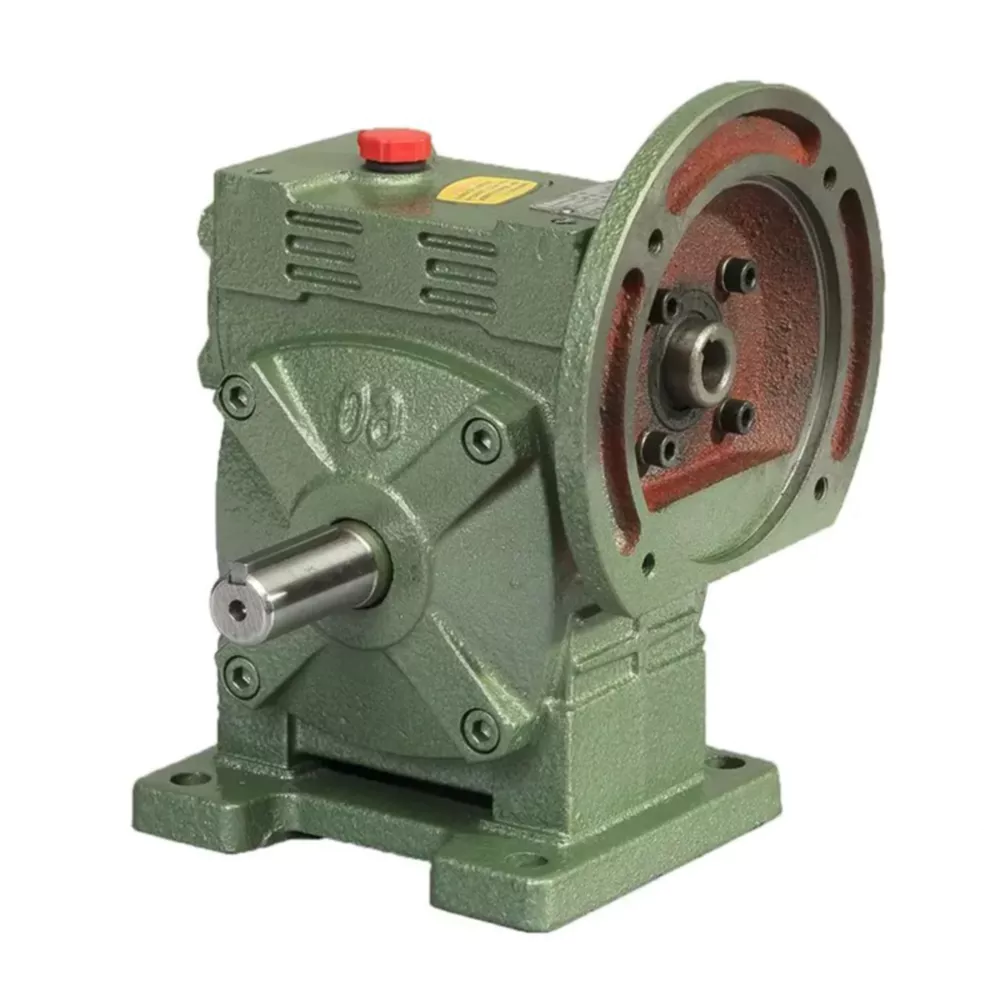
Typical worm gearbox configuration for grain auger duty
How the Grain Auger Drives Your Operation
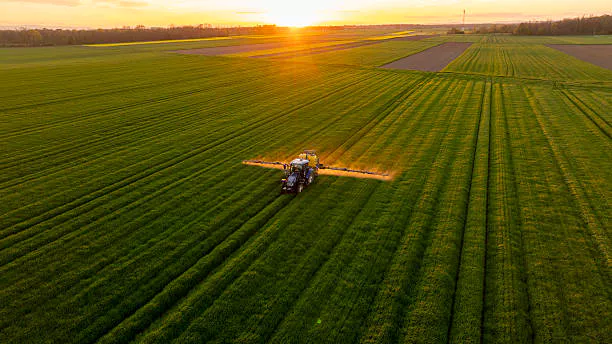
A grain auger runs a helical flighting inside a steel tube, powered by an electric or hydraulic motor through a compact worm gear reducer. On a trailing auger, the gearbox sits in the hopper end, drives the flighting shaft, and takes axial thrust back from the grain column. On a silo unload auger, the gearbox is typically mounted below the hopper and drives the auger through a flexible coupling that accommodates vibration from unloading.
The housing is cast iron (with a lightweight aluminium option for trailer augers) finished with a UV-resistant outdoor paint system. The worm is hardened and ground steel running against a tin bronze wheel. Dust-tight shaft seals — typically a combination of a labyrinth pre-seal and an FKM lip seal — keep grain dust out of the oil, which is critical because grain dust is hygroscopic and will rapidly degrade mineral lubricants. Where augers operate in high-moisture conditions (post-harvest wet grain, silage), we specify synthetic PAG oil for long drain intervals.
Construction: cast iron or lightweight aluminium alloy housing with UV-resistant and dust-tight sealing. This material stack is the foundation of the reducer’s long service life on Australian sites.
Keyword focus: worm reducer for grain auger Australia.
Technical Specifications & Selection Guide
The table below captures the core selection parameters. For a detailed thermal rating or a custom output configuration, reach out to our engineering desk.
| Parameter | Specification / Range |
|---|---|
| Ratio Range | 10:1 to 60:1 |
| Output Torque | 80 Nm to 2,500 Nm |
| Input Power | 0.75 kW to 22 kW |
| Input Shaft | IEC B5 / B14 or hydraulic motor interface |
| Output Shaft | Solid Ø25–Ø60 mm or hollow bore |
| Housing Material | Cast iron or die-cast aluminium |
| Sealing | FKM double-lip with labyrinth |
| Protection | IP66, UV-resistant external paint |
Compliance & Quality Standards
Every unit we ship into Australia is built against a documented quality system and marked against the standards your plant auditors will look for.
For a broader overview of our capabilities, explore worm reducer options across the full range, or review our full range of worm gear motors for related product families.
Australian Case Studies
These are real Australian deployments where our worm gear reducers solved documented site problems. Names and exact locations are withheld for commercial confidentiality.
Equipment: Silo unload auger, 11 kW drive
Pain point: Dust ingress destroyed OEM gearbox seals within 14 months.
Solution: Supplied size 90 cast-iron worm reducer with labyrinth pre-seal and synthetic oil.
Result: Seal life extended to 5+ seasons without replacement.
Equipment: Portable 10-inch trailer auger, 7.5 kW drive
Pain point: Previous lightweight gearbox overheated during 40 °C harvest days.
Solution: Replaced with aluminium housing and oversized sump; added PAG oil.
Result: Zero heat-related stoppages across the 2024 harvest.
Equipment: Feed silo discharge auger, 3 kW drive
Pain point: Auger frequently restarted under load, tripping the thermal overload.
Solution: Upgraded to higher service factor gearbox (size 75, SF 2.0) with upgraded input coupling.
Result: Operation is now reliable and the feed schedule is no longer disrupted.
Equipment: Portable auger, 5.5 kW hydraulic drive
Pain point: Hydraulic motor coupling caused shaft misalignment stressing the output shaft.
Solution: Supplied aligned SAE-A flange coupling with flex insert and upsized output shaft.
Result: Shaft now survives full season without fatigue cracks.
Equipment: Pellet conveying auger, 9 kW drive
Pain point: Dusty environment contaminated breather and degraded oil.
Solution: Fitted desiccant breather and moved it above a splash shield.
Result: Oil condition remained acceptable over the full 12-month service cycle.
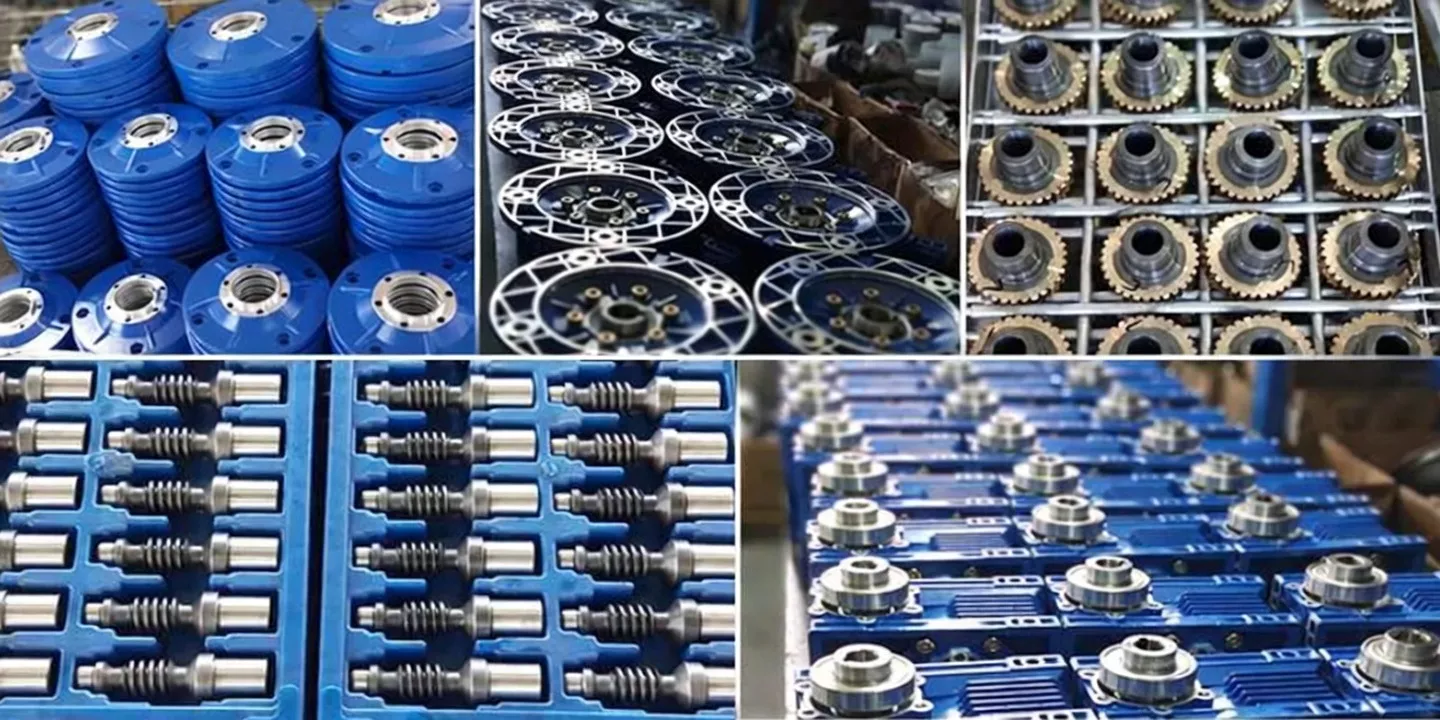
Six Reasons Australian Engineers Specify Our Gearboxes
We have spent decades building gearboxes that survive Australian service. This is what that experience buys you.
Four generations of worm gear production know-how, with a dedicated engineering team serving mining, agriculture, food, water and construction clients across Australia.
Australia-timezone engineering support via phone, email and video call, with selection calculators, drawing packs and installation guides available on request.
Non-standard shaft geometries, flange drillings, housing paint systems, and torque-arm designs are routine — our engineers will match your exact mechanical interface.
Direct-from-factory pricing with logistics to any Australian capital and major regional centre, competitive against premium European brands while meeting the same specifications.
Regular sea-freight consolidation to Sydney, Melbourne, Brisbane, Perth and Adelaide, with in-country distribution partners for same-week delivery on stocked sizes.
Every unit is bench-tested for noise, vibration, running temperature and oil seal integrity before it leaves the factory, with a test certificate shipped in the documentation pack.
Frequently Asked Questions
Common questions from Australian engineers, procurement managers and maintenance supervisors — answered in detail.
What size worm reducer suits a 10-inch grain auger?
A 10-inch auger typically runs at 300–500 rpm on the flighting. With a 7.5 kW motor at 1,450 rpm, you’ll need a ratio of roughly 1:3 to 1:5 — in most cases this is achieved with a belt drive plus a compact worm reducer, or a single reducer of about size 75 at 20:1.
Can a worm gearbox handle a hydraulic motor input?
Yes. We offer hydraulic motor adapters on most frame sizes, with SAE-A or SAE-B flange patterns. This is a popular option on trailer-mounted augers in Australian farming operations.
How often should I change the oil?
On a grain auger gearbox running with mineral oil, every 2,000 hours or once a year, whichever comes first. With PAG synthetic oil this extends to every 8,000 hours, which for most farm augers is a 5-season interval.
Do I need synthetic oil for harvest in hot weather?
PAG synthetic oil is strongly recommended for harvest operations above 35 °C ambient. It has a much wider operating temperature window than mineral oil and prevents oxidation during prolonged high-temperature service.
How does the gearbox handle grain blockages?
A jammed flighting represents a stall-torque event. Our gearboxes are rated for momentary overloads up to 2× nominal torque. For repeated blockage risk, we recommend adding a shear pin on the input coupling and an overload-protection relay on the motor.
Can you colour-match the gearbox to my brand?
Yes — for OEM orders we can finish the housing in a custom RAL colour. Contact our team for minimum order quantities.
Talk to an Engineer About Your Grain Auger Project
Send us your duty data sheet and we will return a sized, priced selection with lead-time indication — no obligation.