
Worm Gearbox for Valve Actuator: A Complete Guide for Australian Operators
Pipeline valve actuators are the quiet guardians of Australia’s LNG, water and mining infrastructure. From the Santos GLNG gas fields in Queensland to the Murray–Darling irrigation mainlines, to the process pipework of every refinery and mine site, thousands of manually-assisted and motorised valves rely on a precise, self-locking worm reducer to translate a small input effort into the enormous output torque required to seat a ball, butterfly or gate valve. In high-pressure service, getting the gear ratio, backlash and self-locking characteristic right is everything.
Australian valve service demands more than just torque. Queensland’s LNG infrastructure requires hazardous-area-compatible lubrication. Pilbara pipeline valves sit exposed to 48 °C heat and red dust for 30 years. Water utility valves in Victoria must survive freezing overnight temperatures in the High Country. Our heavy-duty speed reducers for valve actuation are engineered for these extremes, with corrosion-resistant aluminium or cast iron housings, specialised sealed bearings and permanent grease lubrication that never needs changing.
Reliability on a large valve actuator is not luck — it is the cumulative outcome of correct sizing, appropriate materials, sealing suited to the climate, and lubrication matched to duty.
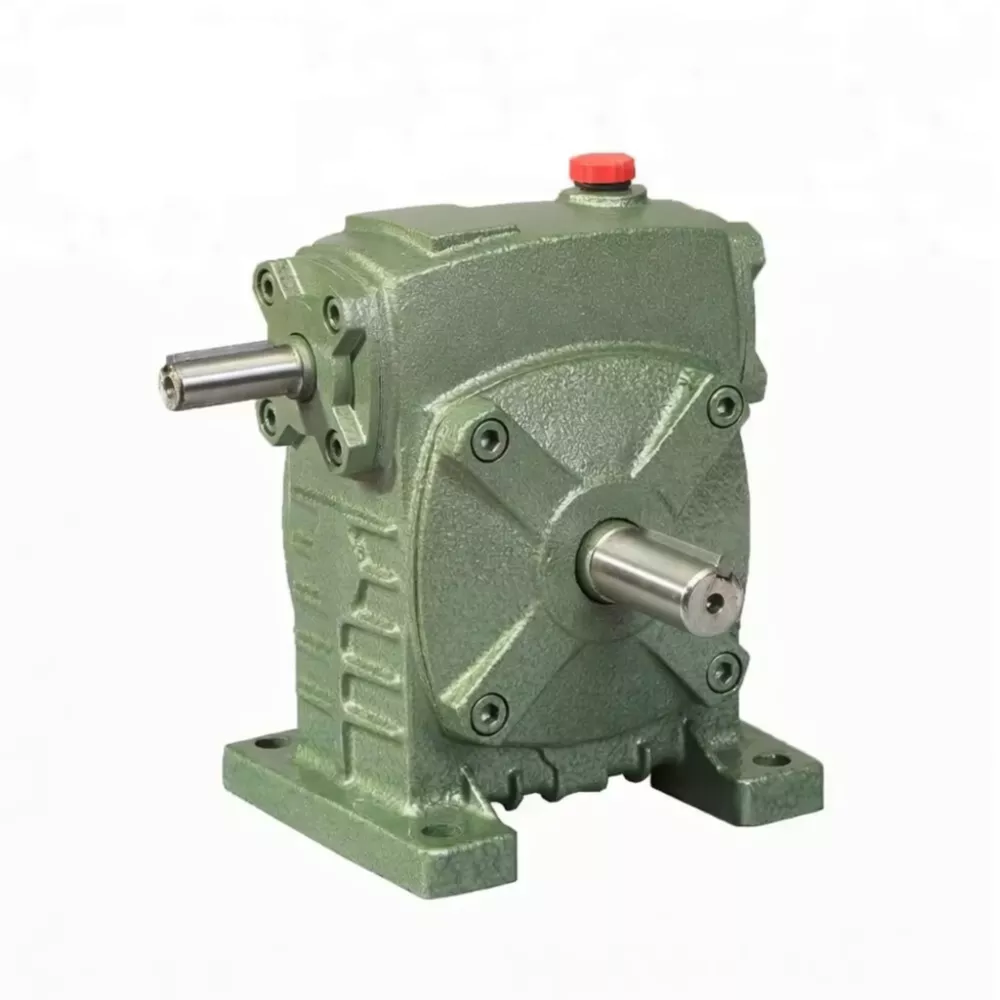
Typical worm gearbox configuration for large valve actuator duty
Understanding the Role of the Worm Reducer in Your Large Valve Actuator
A valve worm gearbox takes an input from either a handwheel, a declutchable motorised actuator (IEC or NEMA flange) or a chain-wheel, and delivers quarter-turn motion through a precision bronze quadrant worm wheel to the valve stem. Ratios from 20:1 to 1,000:1 are possible, which is what allows a human operator to close an 800 mm ball valve against 100 bar line pressure with a handwheel they can turn one-handed. The self-locking characteristic, inherent to all ratios above roughly 25:1, means the valve stays where you leave it.
Housings are cast in marine-grade aluminium bronze or ductile iron and finished with a three-coat epoxy system suitable for C5-M coastal exposure. The worm is a high-carbon alloy steel, hardened and ground, running against a specialised bronze alloy quadrant. Bearings are sealed-for-life taper rollers at the worm, and oil-impregnated sintered bronze bushes at the quadrant — no lubrication, no maintenance, no failure modes. Stop bolts at both ends of travel can be adjusted on-site, and a mechanical position indicator sits atop the housing.

| Key construction: corrosion-resistant aluminium alloy / cast iron housing, specialised bronze alloy worm wheel, high-carbon steel worm. |
Keyword focus: worm reducer for large valve actuator Australia.
Proven Performance — Australian Case Studies
These are real Australian deployments where our worm gear reducers solved documented site problems. Names and exact locations are withheld for commercial confidentiality.
Asset: DN600 ball valve worm actuator, manual override. Problem: Salt air and condensate corroded OEM aluminium actuator bodies within 3 years. Action: Replaced with ductile iron housing with C5-M epoxy and 316 stainless fasteners. Result: No corrosion after 6 years of coastal service.
Asset: DN900 butterfly valve, motorised actuator. Problem: Icing of outdoor actuators caused handwheel seizure during winter. Action: Specified low-temperature grease fill and hermetically sealed housing with heating element mount. Result: Valves cycled reliably through three winter seasons.
Asset: DN1200 gate valve worm actuator, chainwheel input. Problem: Valve stem friction exceeded handwheel rating, making manual closure impossible in the hot sun. Action: Supplied high-ratio (1:400) worm reducer with 300 mm chainwheel and extended stem bore. Result: Valve now closable by a single operator in under 2 minutes.
Asset: DN200 ball valve worm actuator, tamper-proof. Problem: Remote wellheads were subject to unauthorised operation. Action: Fitted lockable handwheel cover with padlock and tamper-evident seal. Result: Compliance audit passed across 40 installations.
Asset: DN400 butterfly valve for seawater intake. Problem: Saltwater ingress corroded internal bronze bushes within 2 years. Action: Upgraded to full duplex stainless steel stem interface with PTFE bushes. Result: Six years in service, no internal wear.
Technical Specifications & Selection Guide
These are the working envelopes our standard range covers. Non-standard bores, specialised flanges, and custom torque-arm geometries are available as an OEM option — just get in touch.
| Parameter | Specification / Range |
|---|---|
| Ratio Range | 20:1 to 1,000:1 (multi-turn variants available) |
| Output Torque | 250 Nm to 40,000 Nm at handwheel; 200,000 Nm at motorised stem |
| Input Interface | Handwheel, chainwheel, IEC / NEMA electric actuator flange |
| Output Interface | ISO 5211 F07–F40 or custom stem bore |
| Housing Material | Aluminium bronze or ductile iron with C5-M epoxy |
| Lubrication | Permanent grease, maintenance-free |
| Travel Stops | Adjustable external stop bolts ±5° |
| Protection | IP67 standard, IP68 sub-sea variants available |
Standards & Certifications
Compliance is non-negotiable on Australian industrial sites. Our units carry the certifications and ingress ratings that site engineers and insurers expect.
You can learn more about us, browse our full range of worm gear motors, or jump straight to the detailed worm reducer page for technical downloads.
What Makes Us the Right Partner
Our Australian customers choose us for a pragmatic set of reasons — here are the six that come up most often.
Four generations of worm gear production know-how, with a dedicated engineering team serving mining, agriculture, food, water and construction clients across Australia.
Australia-timezone engineering support via phone, email and video call, with selection calculators, drawing packs and installation guides available on request.
Non-standard shaft geometries, flange drillings, housing paint systems, and torque-arm designs are routine — our engineers will match your exact mechanical interface.
Direct-from-factory pricing with logistics to any Australian capital and major regional centre, competitive against premium European brands while meeting the same specifications.
Regular sea-freight consolidation to Sydney, Melbourne, Brisbane, Perth and Adelaide, with in-country distribution partners for same-week delivery on stocked sizes.
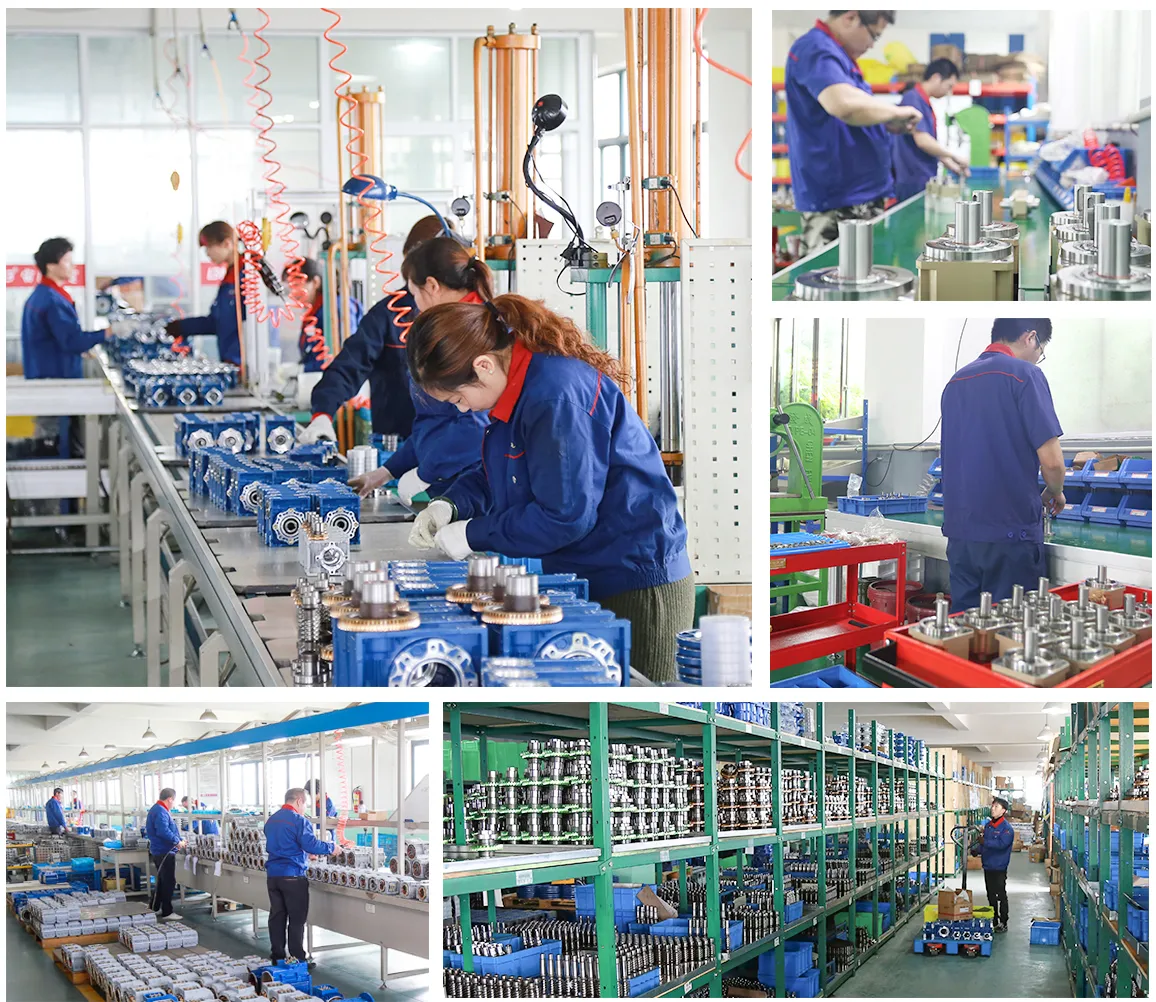
Every unit is bench-tested for noise, vibration, running temperature and oil seal integrity before it leaves the factory, with a test certificate shipped in the documentation pack.
Answers to Common Questions
Six detailed answers to the questions we are asked most often about this application.
Q: Is the valve gearbox self-locking?
A: Yes. All of our valve worm gearboxes with ratios above 25:1 are inherently self-locking, meaning the output cannot drive the input. This keeps the valve position fixed without any external brake.
Q: Can the actuator be motorised later?
A: Yes. Most of our handwheel valve gearboxes ship with an IEC or NEMA flange already machined on the input, so you can bolt on a standard electric actuator at any time without changing the gearbox.
Q: What is the maximum stem torque I can achieve?
A: On the largest multi-turn gearboxes we supply, output torques up to 200,000 Nm are possible with an electric actuator input. For manual-only duty the practical limit is around 40,000 Nm with a 600 mm handwheel.
Q: How do you handle a stem that is not the standard ISO 5211 dimension?
A: We machine a custom stem bore and key to your drawing. Share the stem diameter, key dimensions and required torque and we’ll machine the quadrant bore accordingly.
Q: Is the gearbox suitable for sub-sea installation?
A: We offer IP68 sub-sea variants with pressure-compensated grease fill and duplex stainless housings. These are in service on subsea fibre valves and aquaculture offtake valves around Australia.
Q: How often does the actuator need maintenance?
A: Our valve worm gearboxes are permanently grease-lubricated and designed to be maintenance-free for the life of the valve. A routine 5-yearly inspection and stop-bolt check is all that is typically required. Browse our full range of worm gear motors to see actuator options.
Get the Right Gearbox — First Time
Our team will review your specification, cross-check your service factor, and propose the optimum model — typically within one business day.