
What Is an Oldham Coupling?
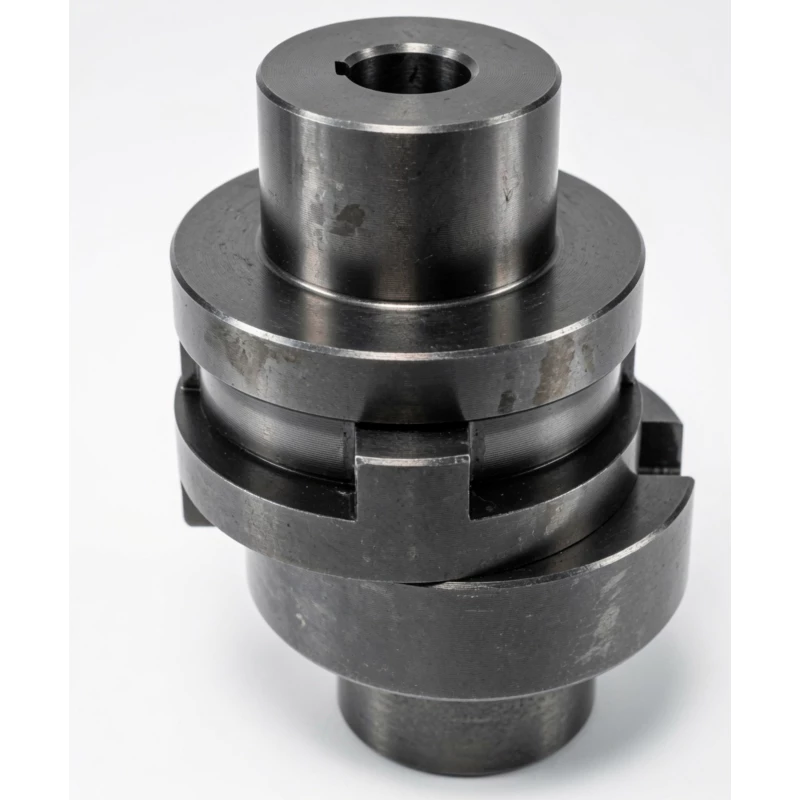
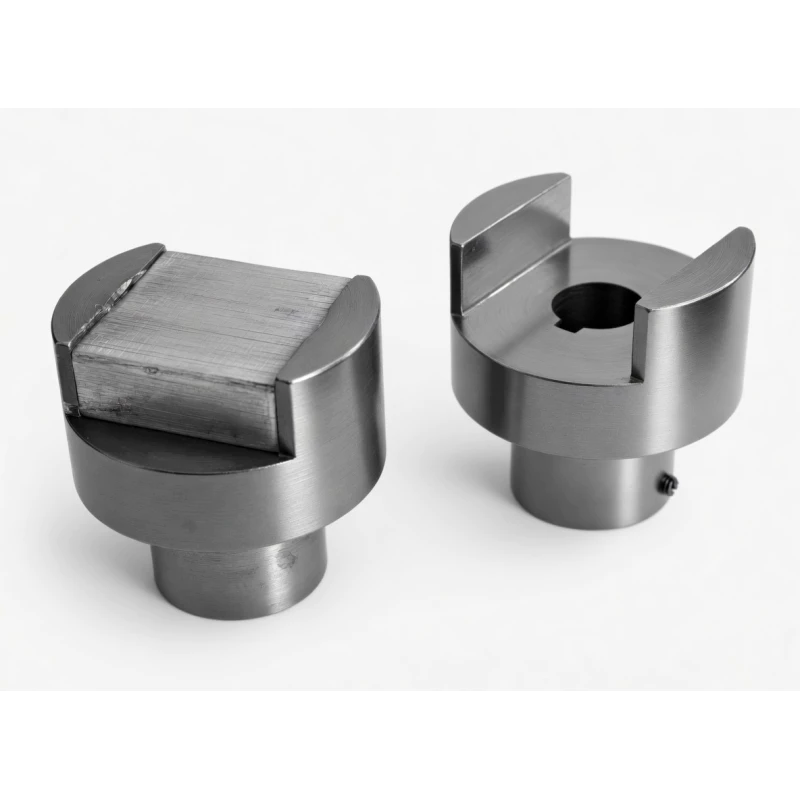
An Oldham coupling is a three-piece flexible mechanical coupling that connects two parallel shafts with lateral offset between them. The assembly consists of two outer hubs — each fixed to one of the rotating shafts — and a central intermediate disc (slider) with perpendicular tongue-and-slot interfaces on each face. As the coupling rotates, the disc slides continuously within the hub slots to absorb any radial (parallel) offset, transmitting torque at a constant 1:1 velocity ratio throughout every revolution.
The Oldham mechanism solves a fundamental real-world problem: perfect shaft alignment between a motor and a load is rarely achieved or permanently maintained. Motor mounting tolerances, thermal expansion, bearing wear, and structural deflection all introduce lateral shaft offset over time. A rigid coupling transmits this offset as a bending moment into shaft bearings and seals, accelerating wear. An Oldham coupling intercepts that offset kinematically at the floating intermediate disc, keeping bearing loads clean and predictable.
What distinguishes the Oldham design from elastomeric couplings is its rigid, zero-backlash torque path. There is no elastic element to fatigue, creep, or change stiffness with temperature — making it the preferred choice wherever precise positioning, constant velocity ratio, electrical isolation, and long service life under shaft misalignment are all simultaneously required.
- ✓Zero backlash — no lost motion between input and output
- ✓True 1:1 constant velocity ratio throughout each revolution
- ✓Large radial (parallel) misalignment tolerance
- ✓Electrical isolation via polymer intermediate disc
- ✓Simple three-piece assembly — disc slides out radially for inspection
- ✓No lubrication required in standard configurations
Browse by Series
Oldham Coupling Series
Select the series that matches your torque range, speed requirement, and hub retention preference. Our team can assist with sizing and specification.
How to Select the Right Oldham Coupling Series
Determine your application's maximum torque including start-up, braking, and shock service factors. Match this to the published maximum torque (not rated torque) of the selected model.
Confirm the application maximum continuous speed does not exceed the published allowable speed for the selected size. Larger frame sizes have lower maximum speeds.
Measure or estimate the radial (parallel) shaft offset and any angular misalignment. Ensure the selected model's compensation values exceed your installation condition.
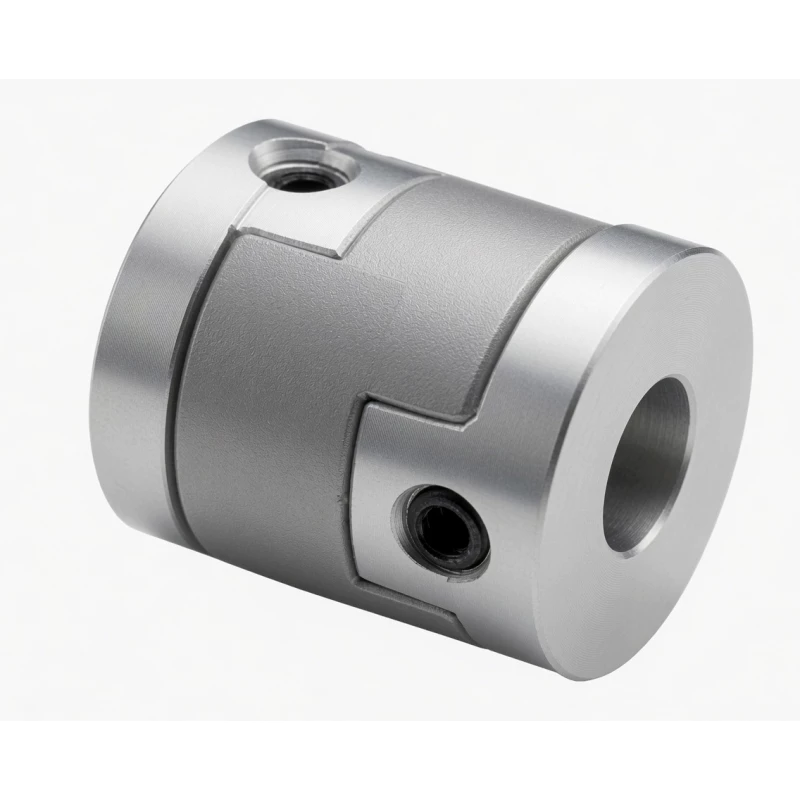
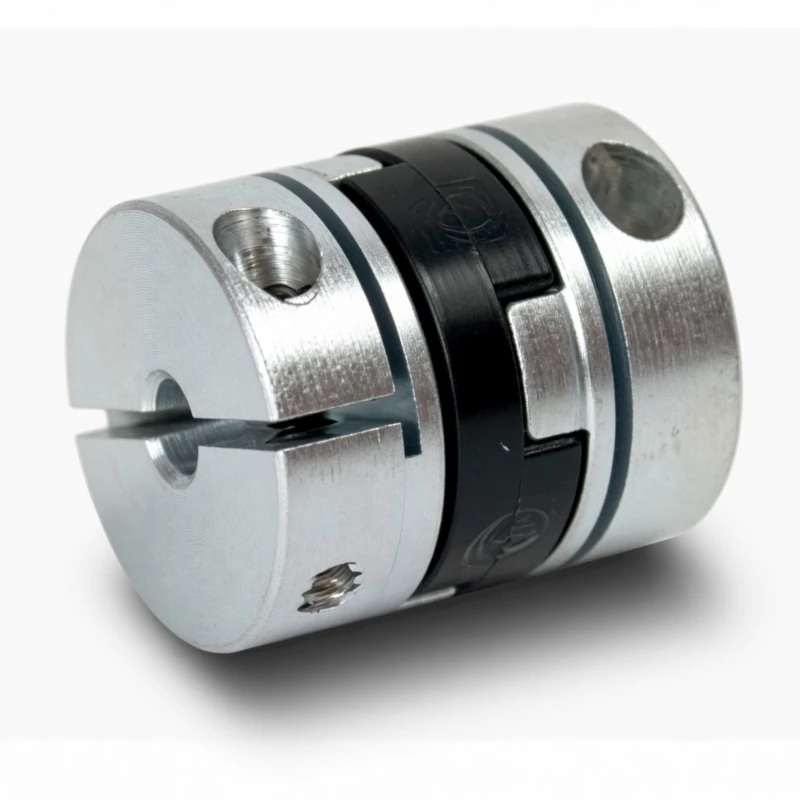
Choose setscrew (GBC6) for compact fixed assemblies, or clamp (GBC6C) for superior shaft grip, non-marking engagement, and applications requiring frequent hub removal without disturbing shaft position.
Specify stainless steel hubs and food-grade disc material for washdown, food processing, or corrosive environments. Standard aluminium alloy suits most dry industrial and automation applications.
Series Comparison at a Glance
Use this table to shortlist the right series before reviewing individual product pages.
| Series | Torque Range | Max Speed | Max Radial Offset | Angular Tolerance | Hub Fixation | Shock Absorption | Best For |
|---|---|---|---|---|---|---|---|
| SL Type | 120–63,000 N·m | 70–250 r/min | Up to 8.0 mm | 0.5° | Keyed bore | No | Heavy industrial drives, pumps, conveyors |
| WH Type | 16–5,000 N·m | Up to 10,000 r/min | Per model | Per model | Keyed bore | Yes | High-speed drives, servo, packaging |
| GBC6 (Setscrew) | 0.7–80 N·m | Up to 9,000 rpm | Up to 3.8 mm | 3.0° (all sizes) | Setscrew | No | Servo, CNC, encoders, 3D printing |
| GBC6C (Clamp) | 0.7–80 N·m | Up to 9,000 rpm | Up to 3.9 mm | 3.0° (all sizes) | Split clamp | No | Servo axes, encoders, frequent maintenance |
Industry Applications Across Australia
Oldham couplings from GBC are specified across a wide range of Australian industries. The combination of zero backlash, generous misalignment tolerance, and electrical isolation makes them a versatile solution from heavy mineral processing through to precision medical instrumentation.
Conveyor drives, screen vibrators, and pump systems in WA and QLD mine sites. SL Type handles foundation settlement and structural deflection without forced realignment downtime.
GBC6 and GBC6C series for servo motor to ball-screw connections in robotics, Cartesian gantries, and linear actuators. Zero backlash preserves positioning accuracy under direction reversal.
Stainless steel hub variants with food-grade intermediate discs for filling lines, packaging drives, and conveyor connections. Compatible with CIP washdown under FSANZ requirements.
Spindle encoder coupling and axis servo motor connections on machining centres and routers. Electrical isolation protects encoder electronics from cutting current paths.
Pump and blower drives at treatment plants across Australia. SL Type tolerates misalignment from concrete pad settlement and pump wear ring clearance changes.
WH and GBC6C series for high-speed packaging lines with frequent start-stop cycles. Shock absorption and clamp hub grip maintain accuracy over tens of millions of reversals.
Pipetting systems, laboratory analysers, and medical imaging positioning drives. GBC6C compact clamp hub is non-marking on precision-ground motor shafts.
Grain augers, irrigation pump sets, and harvesting equipment PTO drives. SL and WH series provide easy intermediate disc replacement during critical crop windows.
Why Australian Engineers Specify GBC Oldham Couplings
Quality systems, technical depth, and local support — not just a product catalogue.
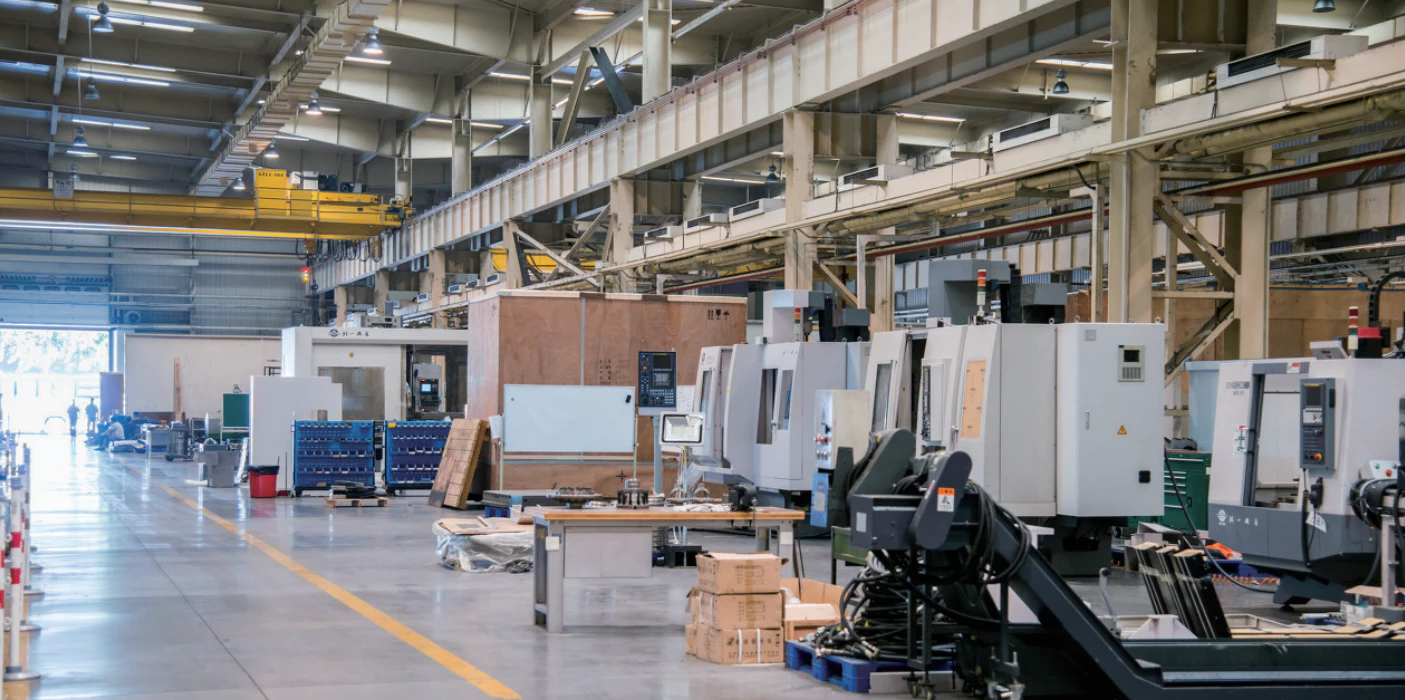
Documented process controls for precision hub bore machining, tongue profile tolerances, and intermediate disc dimensions. CE and RoHS documentation available on request.
Custom bore diameters, metric and imperial keyways, stainless steel hubs, food-grade disc materials, and special surface treatments. Contact our team to discuss your specific requirements.
Application sizing, servo inertia calculations, STEP CAD files, and dimensional drawings — all at no charge. Response within one business day from our Australia-based team.
Looking for other coupling types? Browse the complete GBC coupling range, including jaw couplings, bellows couplings, disc couplings, and grid couplings for all torque classes and applications.
Hub & Intermediate Disc Material Options
Material selection directly affects torsional stiffness, electrical isolation, corrosion resistance, and service life. The right combination depends on your operating environment, speed, and torque profile.
Standard hub material for GBC6 and GBC6C series. Excellent strength-to-weight ratio keeps coupling inertia low — essential for servo applications. Anodised surface provides corrosion resistance in most industrial environments. Hard-coat available for higher surface hardness.
Specified for food processing, pharmaceutical, marine, and chemically aggressive environments. Grade 304 and 316 available. Withstands CIP washdown and alkaline cleaning agents. Note: higher inertia than aluminium — confirm servo inertia ratio before specifying in high-dynamic applications.
Standard disc material across GBC6 and GBC6C series. Lightweight, electrically insulating, and self-lubricating. Protects encoder bearings and servo electronics from stray current paths. Suitable for the rated temperature range of standard automation environments.
Higher rigidity and superior dimensional stability compared to nylon. Maintains consistent tongue-slot clearance in humid environments. Specified for heavier torque loads and extended maintenance intervals. Low moisture absorption. Available on GBC6-32 and larger sizes, and GBC6C-32 and larger.
Frequently Asked Questions
Ready to Specify Your Oldham Coupling?
Send us your shaft diameters, torque, speed, and any misalignment data. Our engineering team will confirm the correct series, size, material, and bore combination — typically within one business day.