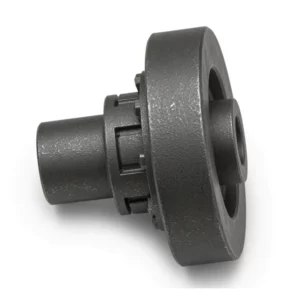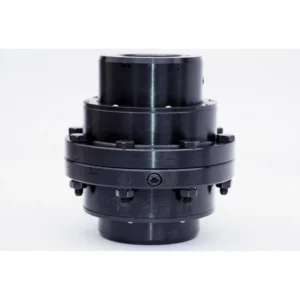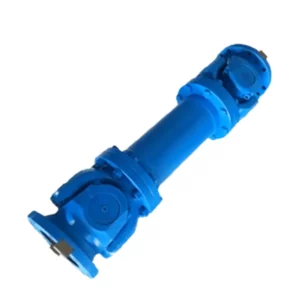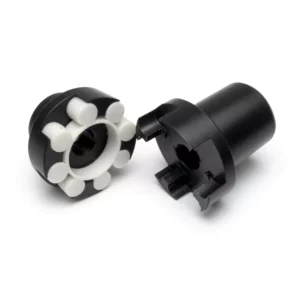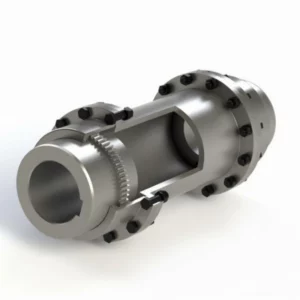
WH Type Oldham Coupling
WH Type Oldham Coupling delivers parallel offset compensation, shock absorption, and cushioning in a single assembly. Nominal torque 16–5,000 N·m, speed up to 10,000 r/min, working temperature -20°C to +70°C. 10 sizes (WH1–WH10), Y-type and J1-type shaft ends available. Stocked and shipped Australia-wide by GBC.
MOQ: 50 pcs. Minimum order value USD 1,500; mixed orders and trial quantities welcome.
WH Type Oldham Coupling — High-Speed Light-to-Medium Torque Transmission with Shock Absorption
The WH Type Oldham Coupling is engineered for torque transmission applications where shaft misalignment compensation, vibration damping, and compact dimensions all matter. With a nominal torque range of 16 to 5,000 N·m and allowable speeds reaching 10,000 r/min on the smallest frame, the WH series bridges the gap between rigid couplings and fully elastomeric designs — delivering the constant-velocity characteristic of a sliding-disc Oldham with the added benefit of cushioning and shock attenuation from its intermediate element. Operating temperature: -20°C to +70°C.
Core Product Parameters at a Glance
What Is an Oldham Coupling?
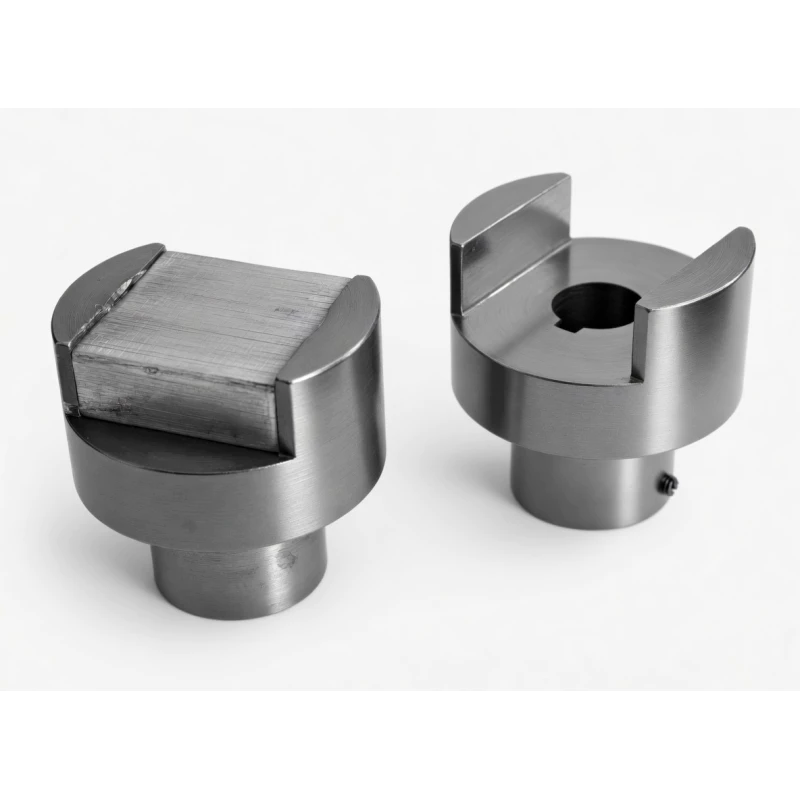
An Oldham coupling is a three-piece mechanical power transmission device designed to connect two parallel shafts that share a common axis but are offset from one another. The assembly consists of two outer hubs — each bored and keyed to one of the rotating shafts — and a central intermediate disc (the slider) that engages both hubs via perpendicular tongue-and-slot interfaces on each face. As the assembly rotates, the intermediate disc slides within these slots to accommodate the lateral offset, transmitting torque with a constant 1:1 velocity ratio regardless of the misalignment present.
The engineering problem the Oldham design resolves is fundamental to rotating machinery: perfect shaft alignment is rarely achieved or maintained in practice. Motor mounting tolerances, thermal expansion, structural deflection under load, and cumulative assembly errors all introduce some degree of parallel offset between connected shafts. A rigid coupling transmits this offset as a bending moment directly into shaft bearings, seals, and couplings — accelerating wear and shortening service life. An Oldham coupling intercepts the offset kinematically at the floating disc, keeping the bearing force path clean.
The WH Type Oldham Coupling extends the classic Oldham concept by selecting an intermediate disc material that also provides vibration damping and cushioning. This makes the WH series distinctly different from purely rigid Oldham designs: it can attenuate shock loads, absorb minor torsional impulses, and reduce noise transmission through the drive train. The result is a coupling that performs well in servo-driven systems where stop-start cycling introduces repeated torque spikes, and in automation lines where adjacent machine vibration would otherwise propagate through a rigid coupling into sensitive instrumentation.
How Does the WH Type Oldham Coupling Work?
The three-piece kinematic mechanism works as follows. Each hub face carries a single raised rectangular tongue machined to close tolerances. The intermediate disc carries two perpendicular slots — one on each face — that receive these tongues as a sliding fit. When the input hub rotates, its tongue pushes the disc in one linear direction. The disc simultaneously slides in the perpendicular direction relative to the driven hub. The net output is pure rotation transmitted at a constant velocity ratio of exactly 1:1. The geometric orbit described by the centre of the disc is a circle with a diameter equal to the radial offset between the two shaft centrelines — the coupling is continuously accommodating this offset without transmitting it as a lateral force.
The WH Type achieves higher allowable speeds than many heavy-duty Oldham designs because its compact geometry keeps the disc mass and orbit radius small — the WH1 operates at up to 10,000 r/min. At these speeds, the centrifugal force acting on the orbiting disc becomes significant, and the close-tolerance fit between tongue and slot is critical to maintaining smooth operation. The intermediate disc material selected for the WH series is engineered to balance sliding wear resistance, shock attenuation, and dimensional stability under repeated thermal cycling across the rated temperature range of -20°C to +70°C.
For applications in servo positioning systems, encoders, and CNC spindle auxiliaries, the constant velocity ratio is particularly important. Any elastic element in the torque path introduces torsional windup — a phase lag between input position command and output shaft position. This appears as a tracking error in closed-loop control systems and limits achievable positioning accuracy. The WH Type's rigid torque path through the tongue-and-slot interface maintains a fixed angular relationship between input and output, preserving positioning fidelity. The cushioning characteristic of the intermediate disc attenuates high-frequency vibration that would otherwise register as noise on encoder feedback signals.
Specifications & Material Options
All published performance parameters and dimensional data for the WH series are shown in the tables below. Use these for initial coupling selection; our engineering team can confirm suitability based on your duty cycle, start-up torque profile, and installation envelope.
WH Type Oldham Coupling — Key Parameters & Main Dimensions (mm)
| Type | Nominal Torque Tn (N·m) | Allowable Speed [n] (r/min) | Bore Dia. d (mm) | Hub Length L (mm) | Dimensions (mm) | Weight (kg) | ||||
|---|---|---|---|---|---|---|---|---|---|---|
| Y-Type L | J1-Type L | D (mm) | D1 (mm) | B (mm) | C (mm) | |||||
| WH1 | 16 | 10000 | 10–14 | 25–32 | 22–27 | 40 | 30 | 52 | 17 | 0.6 |
| WH2 | 31.5 | 8200 | 12–18 | 32–42 | 27–30 | 50 | 32 | 56 | 22 | 1.5 |
| WH3 | 63 | 7000 | 18–22 | 42–52 | 30–38 | 70 | 40 | 60 | 22 | 1.8 |
| WH4 | 160 | 5700 | 20–28 | 52–62 | 38–44 | 80 | 50 | 64 | 22 | 2.5 |
| WH5 | 280 | 4700 | 25–32 | 62–82 | 44–60 | 100 | 70 | 75 | 27 | 5.8 |
| WH6 | 500 | 3800 | 30–45 | 82–112 | 60–84 | 120 | 80 | 90 | 37 | 9.5 |
| WH7 | 900 | 3200 | 40–55 | 112 | 84 | 150 | 100 | 120 | 42 | 25 |
| WH8 | 1800 | 2400 | 50–70 | 112–140 | 84–107 | 190 | 120 | 150 | 52 | 55 |
| WH9 | 3550 | 1800 | 65–85 | 142–172 | 107–132 | 250 | 150 | 180 | 62 | 85 |
| WH10 | 5000 | 1500 | 80–100 | 172–212 | 132–167 | 330 | 190 | 180 | 62 | 120 |
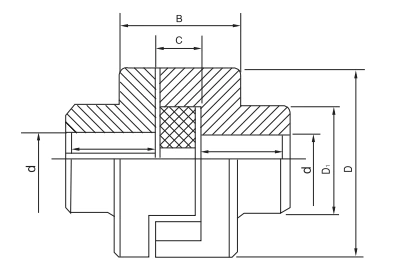
WH Type — Speed & Torque Quick-Reference by Size
| Type | Torque Tn (N·m) | Max Speed (r/min) | Bore Range (mm) | Typical Application Tier |
|---|---|---|---|---|
| WH1 | 16 | 10,000 | 10–14 | High-speed servo / encoder |
| WH2 | 31.5 | 8,200 | 12–18 | Servo & automation |
| WH3 | 63 | 7,000 | 18–22 | CNC & packaging |
| WH4 | 160 | 5,700 | 20–28 | Light industrial drives |
| WH5 | 280 | 4,700 | 25–32 | Pump & conveyor auxiliary |
| WH6 | 500 | 3,800 | 30–45 | Medium industrial |
| WH7 | 900 | 3,200 | 40–55 | Medium-heavy drives |
| WH8 | 1,800 | 2,400 | 50–70 | Heavy process drives |
| WH9 | 3,550 | 1,800 | 65–85 | Heavy industrial |
| WH10 | 5,000 | 1,500 | 80–100 | Heavy process & mill drives |
Material Options
Lightweight, electrically insulating, and naturally self-lubricating. Well suited to the higher-speed smaller WH frame sizes where mass must be minimised. Cost-effective for volume OEM applications in packaging, robotics, and light automation. Operating temperature range aligns well with the WH series rating of -20°C to +70°C.
Higher rigidity and superior dimensional stability compared to nylon. Better suited to larger WH frame sizes where higher torque loads are transmitted and wear resistance over extended maintenance intervals is a priority. Minimal moisture absorption maintains consistent tongue-slot clearance in humid environments such as food processing facilities and water treatment plants.
Standard hub material for the majority of WH Type applications. The strength-to-weight ratio of aluminium alloy keeps coupling inertia low — critical for the high-speed servo and positioning applications where the WH1 through WH4 sizes are most commonly deployed. Anodising and hard-coat options are available for improved surface hardness and corrosion resistance.
Specified for food processing, beverage, pharmaceutical, and marine drive applications where regular washdown with alkaline or acidic cleaning agents is standard practice. Grade 304 and 316 stainless steel options are available. Stainless hubs combined with a food-grade disc material meet the surface hygiene requirements common to FSANZ-compliant Australian food production environments.
Need a heavier-duty coupling for higher torque or greater radial offset? Explore the full GBC coupling range, including the SL Type Oldham series covering torque up to 63,000 N·m.
Industry Applications in Australia
The WH Type Oldham Coupling is found across a wide range of Australian industries where moderate torque, higher speeds, compact dimensions, and a degree of shock absorption are all required together. Below are the sectors our customers most frequently specify this coupling series for.
The WH1 and WH2 sizes are regularly specified in Australian servo axis drives — robotics cells, pick-and-place systems, and linear actuator drives — where shaft speeds up to 10,000 r/min and precise position feedback demand a coupling that transmits constant velocity without introducing backlash or torsional compliance into the control loop.
Tool changer drives, spindle encoder connections, and coolant pump motor couplings in Australian CNC machining centres benefit from the WH series' combination of constant velocity ratio and vibration attenuation. The cushioning characteristic of the intermediate disc reduces high-frequency chatter propagation from cutting forces into adjacent drive train components.
Packaging line drive trains experience repeated start-stop cycles, direction reversals, and varying load profiles throughout a production shift. The WH coupling's shock absorption capability extends the service life of adjacent gearbox and encoder components that would otherwise absorb cyclic impact loads on each reversal.
With stainless steel hub variants and food-grade intermediate discs, the WH series meets the hygiene and corrosion resistance requirements of Australian food and beverage production environments — filling lines, mixing drives, and conveyor motor connections — where washdown procedures are part of every production cycle.
Web tension control in printing and film converting lines is sensitive to any angular velocity variation or shock transmission through coupling components. The WH Type's constant velocity ratio and intermediate disc damping both contribute to smoother web handling and reduced register errors at production speeds.
Irrigation pump motor couplings and grain handling auger drives in Australian agricultural applications benefit from the WH series' tolerance of shaft misalignment introduced by field installation conditions, as well as its ability to attenuate start-up shock loads common in belt-started pump systems.
WH Type Oldham Coupling vs Other Coupling Types
The table below compares the WH Type Oldham Coupling against three coupling types commonly evaluated alongside it in Australian industrial procurement. Use this as a starting point for technology selection; our team can provide application-specific guidance.
| Parameter | WH Oldham Coupling | Jaw Coupling | Bellows Coupling | Disc Coupling |
|---|---|---|---|---|
| Parallel Offset Compensation | Good (by sliding disc) | Limited (0.1–0.5 mm) | Low (0.1–0.3 mm) | Very Low (<0.1 mm) |
| Angular Offset Compensation | Low | Moderate (1°–2°) | Good (1°–3°) | Low (0.5°–1°) |
| Backlash | Near Zero | Low–Moderate | Near Zero | Near Zero |
| Shock Absorption | Yes — disc material | Yes — spider element | Minimal | Minimal |
| Electrical Insulation | Yes (polymer disc) | Yes (spider) | No | No |
| Suitable Speed Range | Up to 10,000 r/min | Up to 6,000 r/min | Up to 10,000+ r/min | Up to 10,000+ r/min |
| Constant Velocity Ratio | Yes — true 1:1 CV | Yes | Yes | Yes |
| Installation & Maintenance | Simple — disc slides out radially | Simple — spider accessible | Moderate | More complex |
| Relative Cost | Moderate | Low | High | High |
Why Source Your WH Type Oldham Couplings from GBC Australia?
Procurement teams and maintenance engineers across Australia specify GBC couplings for three consistent reasons: verified quality systems, flexible custom specification capability, and a local team that responds in plain English when a coupling question arises during a maintenance window. Here is the detail behind each.
WH Type Oldham Couplings are manufactured under an ISO 9001 certified quality management system. Products comply with RoHS directives limiting hazardous substances in electrical and mechanical components. CE conformity documentation is available on request for export and compliance purposes. Material test certificates (MTCs) for steel and stainless steel hubs are available for safety-critical applications.
We support custom bore diameters, keyway profiles (parallel, Woodruff, DIN, and AS/NZS standards), modified hub materials, and surface treatments including hard anodising and electroless nickel plating. Alternative intermediate disc materials — including food-grade variants — are available to order. Minimum order quantity for custom work is 5 pieces. Lead time is typically 7–15 business days from drawing confirmation.
Our Australian-based engineering and sales team responds to all technical and commercial enquiries within one business day. Dimensional drawings, STEP 3D CAD models, and application sizing calculations are provided at no charge. Replacement intermediate discs are stocked for all standard WH sizes, supporting same-week dispatch for planned maintenance and emergency breakdown scenarios.
We supply to all Australian states and territories — NSW, VIC, QLD, WA, SA, TAS, ACT, and NT — via tracked freight with established logistics partners. Standard in-stock orders ship within 2–3 business days. Standard products in original condition can be returned within 30 days. Custom-specification orders are subject to prior approval for return or exchange.
Have a specific application requirement? Our team is ready to assist with coupling selection, sizing confirmation, and custom specification. Contact a GBC coupling specialist today.
Frequently Asked Questions — WH Type Oldham Coupling
Request a Quote or Technical Datasheet for the WH Type Oldham Coupling
Send us your shaft diameter, nominal torque, operating speed, and any misalignment data and our team will confirm the correct WH size and material specification — typically within one business day.
WH Type Oldham Coupling delivers parallel offset compensation, shock absorption, and cushioning in a single assembly. Nominal torque 16–5,000 N·m, speed up to 10,000 r/min, working temperature -20°C to +70°C. 10 sizes (WH1–WH10), Y-type and J1-type shaft ends available. Stocked and shipped Australia-wide by GBC.
MOQ: 50 pcs. Minimum order value USD 1,500; mixed orders and trial quantities welcome.