
Worm Gearbox for Dairy / Beverage Agitator — Built for Australia’s Harshest Operating Conditions
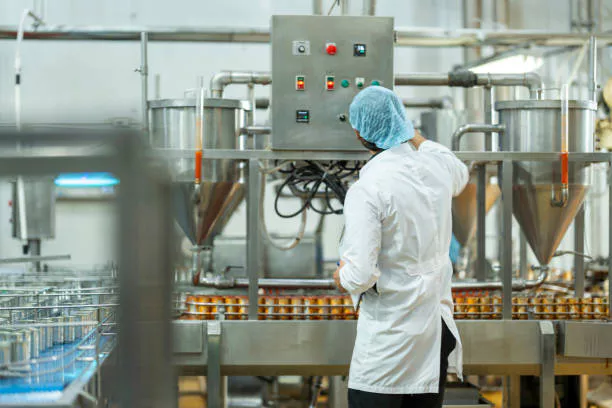
Dairy processing plants and beverage bottlers across Australia run some of the most rigorously audited food plants in the world. Whether it’s a premium infant formula line in Tasmania, a fermented milk plant in Victoria, or a brewery in the Hunter Valley, every agitator above a mixing tank must meet stringent hygienic standards. The worm reducer above that agitator must live in a splash zone, be CIP-compatible, and deliver perfectly steady torque to a tall impeller shaft without imparting contamination or vibration.
Our stainless steel worm reducer range for dairy and beverage agitators goes beyond the standard washdown gearbox. We supply smooth, crevice-free housings with 316 stainless output shafts, polished to the 3A hygienic standard. The lubricant is NSF H1-registered, and the sealing system is designed to prevent both oil leakage downward (into product) and product vapour migration upward (into the gearbox). This level of hygienic engineering is what earns our worm gear units Australia-ready reputation among food plant specifiers.
Australian Application Detail: Dairy / Beverage Agitator
On a top-entry agitator, the worm gearbox is flange-mounted to the tank lid or a support bridge, with its vertical output shaft entering the tank through a sanitary bushing. The impeller is then bolted directly to the shaft. The gearbox runs S1 continuous duty, typically at 40–120 rpm output, and bears the axial thrust of the impeller plus radial load from any hydraulic imbalance.
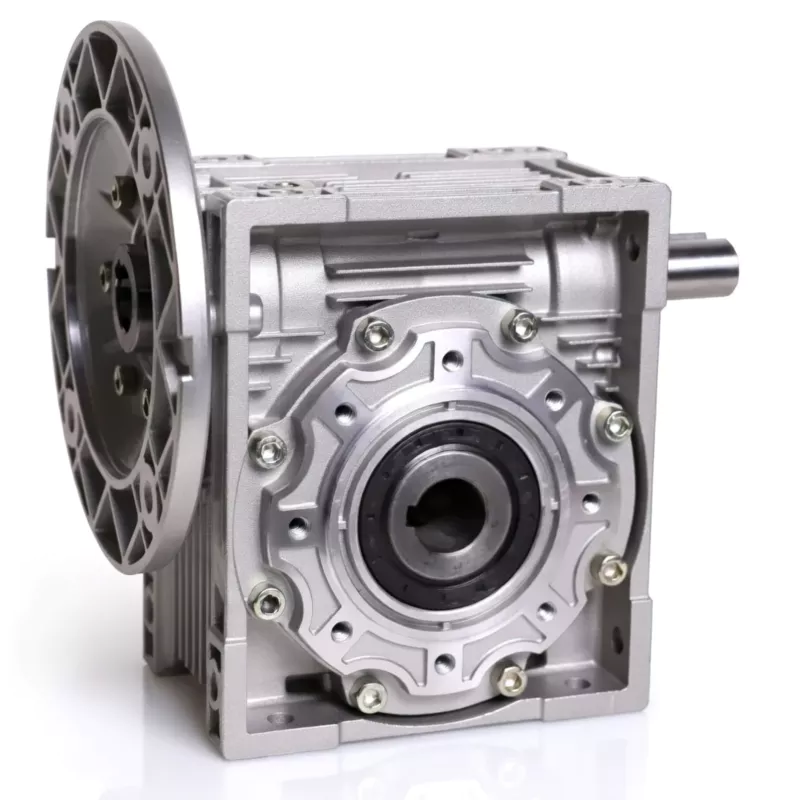
The housing is 316 stainless steel with polished external surfaces and a drainable geometry. The internal gear set is still a carbon steel worm against tin bronze wheel, running in NSF H1 synthetic oil. The output shaft is 316 stainless with a mirror-polished sealing region to minimise bacteria adhesion. The shaft-entry seal is a hygienic design: typically a dry running sealing cartridge with a separate air gap above the product, eliminating the risk of gear oil ever contacting product.
Core Material Stack
stainless steel output shaft and smooth, crevice-free housing design to prevent bacterial colonisation.
Keyword focus: stainless steel worm reducer for dairy agitator.
International & Australian Compliance
Our gearboxes are designed, manufactured, tested and certified against the standards your site-acceptance tests will reference.
Technical Specifications & Selection Guide
Use this data as your first-pass selection table. Service factor, ambient temperature, and duty cycle should always be reviewed with our application team for a binding specification.
| Parameter | Specification / Range |
|---|---|
| Ratio Range | 10:1 to 60:1 |
| Output Torque | 150 Nm to 3,500 Nm |
| Input Power | 0.55 kW to 30 kW |
| Output Shaft Finish | Ra ≤0.4 μm mirror-polished sealing region |
| Housing Material | 316 SS with 3A hygienic finish |
| Seal System | Dry-running hygienic cartridge with air gap |
| Lubrication | NSF H1 PAG synthetic oil |
| Protection | IP69K |
Case Studies from Australian Sites
These are real Australian deployments where our worm gear reducers solved documented site problems. Names and exact locations are withheld for commercial confidentiality.
Equipment: Blending tank agitator, 5.5 kW drive
Challenge: OEM gearbox oil migrated down the shaft, producing a product-quality alert.
Our response: Installed dry-running cartridge seal with air gap design.
Outcome: Zero oil migration incidents over 3 years.
Equipment: Pulp mixing tank agitator, 3 kW drive
Challenge: Standard painted gearbox corroded at the flange-tank interface.
Our response: Replaced with 316 SS hygienic flange gearbox.
Outcome: Corrosion eliminated; passed internal hygiene audit.
Equipment: Fermentation tank agitator, 2.2 kW drive
Challenge: Temperature cycling cracked external paint and allowed moisture ingress.
Our response: Specified 304 SS housing with uncoated surface finish.
Outcome: Maintenance-free over 4 brew seasons.
Equipment: Cream agitator, 7.5 kW drive
Challenge: Churn-induced shock loads caused bearing wear.
Our response: Upgraded to size 110 unit with tapered roller bearings and SF 2.0.
Outcome: Bearing life extended from 14 months to beyond 4 years.
Equipment: Blending tank agitator, 1.5 kW drive, low-speed operation
Challenge: Bronze wheel wear showed up early due to high start-up torque.
Our response: Specified a gearbox with pre-stage helical reducer, lowering worm input speed.
Outcome: Bronze wear rate reduced by 60 %.
If your dairy / beverage agitator project needs a tailored solution, contact our technical team — they will size, price and quote a matched worm reducer within one business day.
Six Reasons Australian Engineers Specify Our Gearboxes
We have spent decades building gearboxes that survive Australian service. This is what that experience buys you.
Four generations of worm gear production know-how, with a dedicated engineering team serving mining, agriculture, food, water and construction clients across Australia.
Australia-timezone engineering support via phone, email and video call, with selection calculators, drawing packs and installation guides available on request.
Non-standard shaft geometries, flange drillings, housing paint systems, and torque-arm designs are routine — our engineers will match your exact mechanical interface.
Direct-from-factory pricing with logistics to any Australian capital and major regional centre, competitive against premium European brands while meeting the same specifications.
Regular sea-freight consolidation to Sydney, Melbourne, Brisbane, Perth and Adelaide, with in-country distribution partners for same-week delivery on stocked sizes.
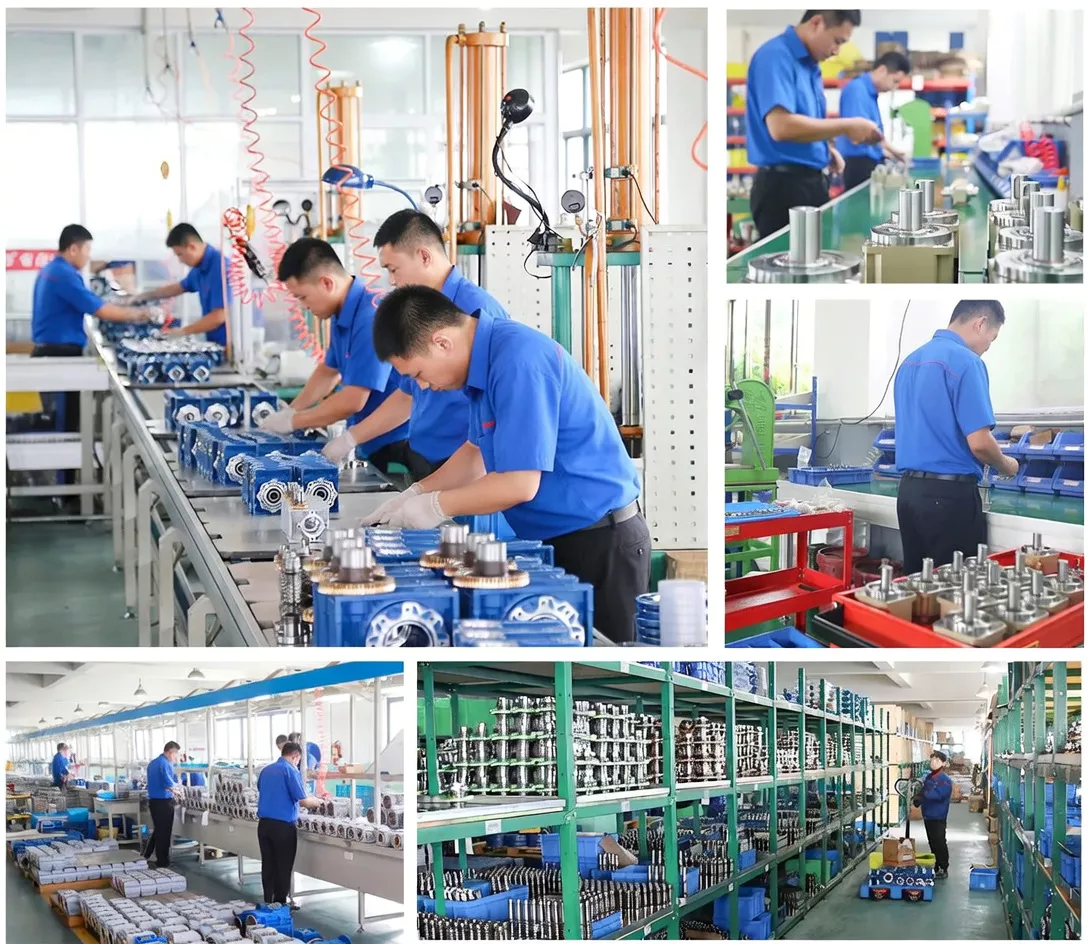
Every unit is bench-tested for noise, vibration, running temperature and oil seal integrity before it leaves the factory, with a test certificate shipped in the documentation pack.
Frequently Asked Questions
Common questions from Australian engineers, procurement managers and maintenance supervisors — answered in detail.
Is the gearbox safe for direct contact with the product?
No gearbox should be in direct product contact — the impeller is. But the shaft-entry seal and the surfaces above it must be hygienic and NSF-compliant. Our designs use a dry-running cartridge seal with an air gap, so there is no credible path for oil to reach the product.
Is NSF H1 oil compatible with my CIP regime?
Yes. NSF H1 PAG synthetic oils tolerate the chlorinated alkaline cleaners and acid rinses used in standard CIP cycles, and the seal elastomers are selected to match. Always check specific chemical compatibility with your CIP supplier.
Can the gearbox run vertically or horizontally?
Both orientations are available. Vertical top-entry is the most common for tank agitators. Horizontal-mount units are used on paddle or rake agitators in larger vessels.
What is the maximum shaft length I can use?
With our integrated taper-roller thrust bearing package, impeller shafts up to 3 metres long can be supported without an intermediate bearing. Longer shafts require an additional steady.
Is the gearbox quiet enough for a bottling hall?
Yes. Our precision-ground worm gear sets typically run at 60–68 dB(A) at 1 m, which is below most ambient noise levels in a working food plant.
Can you supply 3A-certified documentation?
We can supply material certificates (PMI reports), surface finish reports, and NSF H1 lubricant documentation. Full 3A certification of individual units is done by the integrator at the system level — we will provide all supporting documents.
Next Steps
Whether you need a single replacement unit or a site-wide specification, our application engineers are ready to help.