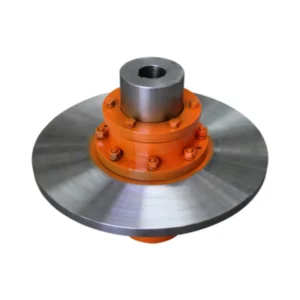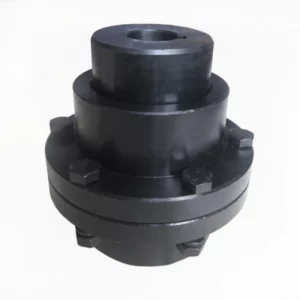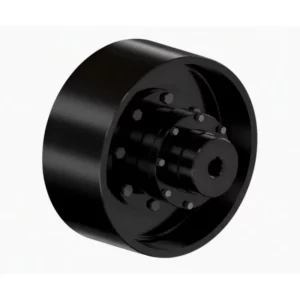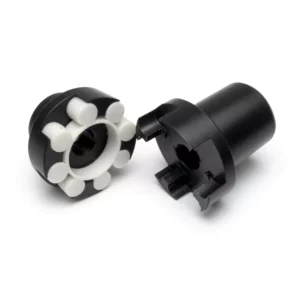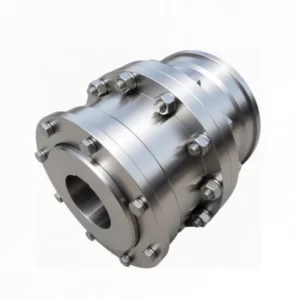
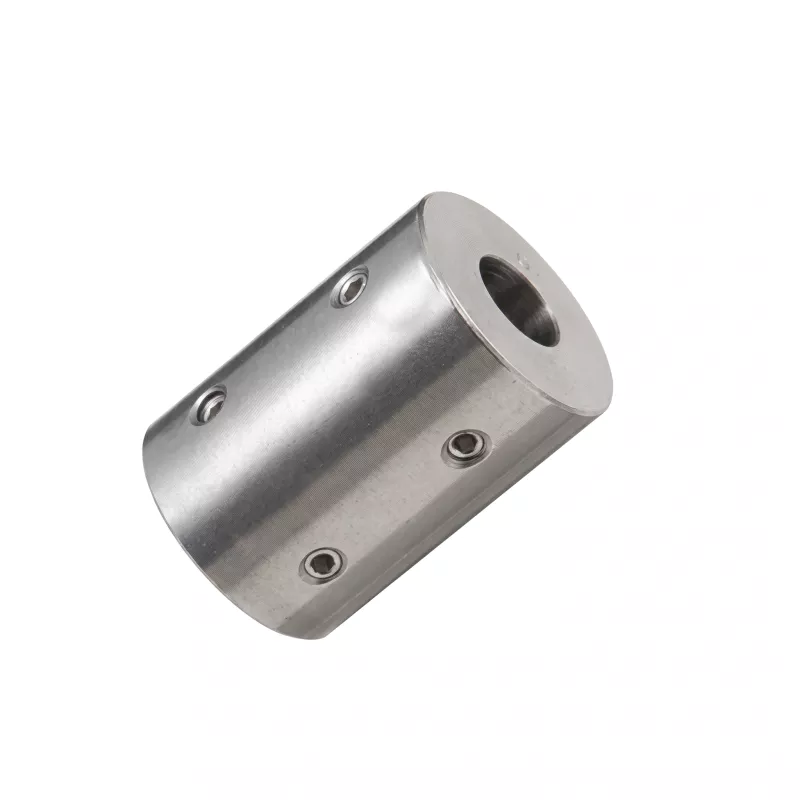
GT Series Sleeve Coupling
GT series sleeve coupling — compact rigid sleeve shaft connector in 22 sizes (GT1 to GT22), bore range 18 to 90 mm. Connects coaxial shafts via key, spline, or taper pin engagement. Maximum operating speed 250 rpm. Ideal for low-speed, light-load, steady-running drives where radial envelope is limited. Material: 35 or 45-gauge steel.
MOQ: 50 pcs. Minimum order value USD 1,500; mixed orders and trial quantities welcome.
GT Series Sleeve Coupling — Rigid Sleeve Shaft Connector, GT1 to GT22
The GT series sleeve coupling is a rigid shaft connector that joins two shafts through a single common sleeve, transmitting torque via pin, key, or spline engagement between the sleeve bore and the shaft surfaces. Covering 22 standard sizes from GT1 (18 mm bore) through to GT22 (90 mm bore), the range suits low-speed, light-load, smooth-running shaft connections where misalignment compensation is not required and where a compact radial envelope is a priority. The sleeve coupling offers no axial, radial, or angular compensation capability — making correct shaft alignment at installation an essential prerequisite for satisfactory service life.
The sleeve coupling's most prominent commercial advantage is its exceptionally small radial footprint relative to the shaft diameter it connects. Because the coupling is a single continuous sleeve rather than two flanged hubs bolted face-to-face, the outer diameter D remains very close to the shaft diameter d — for example, a GT5 coupling connecting 28 mm shafts has an outer diameter of only 45 mm. This compactness makes the GT sleeve series the preferred choice in confined equipment envelopes where larger flanged or flexible couplings would foul adjacent structures.
Torque transmission between sleeve and shaft is achieved by one of three methods depending on the application torque and shaft configuration. Key (keyway) connections are used for moderate torques — the shaft is machined with a keyway and a standard parallel key is fitted into matching keyways in both the shaft and sleeve bore. Spline connections are preferred for heavier torques or where the coupling may need to slide on the shaft during assembly. Taper pin connections transmit lower torques and are suited to shaft diameters of 35 mm and below. When key or spline connections are used, a set screw provides axial retention — for shaft diameters above 60 mm, a hex socket set screw is recommended for improved locking force. When taper pin connections are used, no set screw is required as the pin itself provides both torque transmission and axial location.
Engineering Design Principles and Calculation Basis
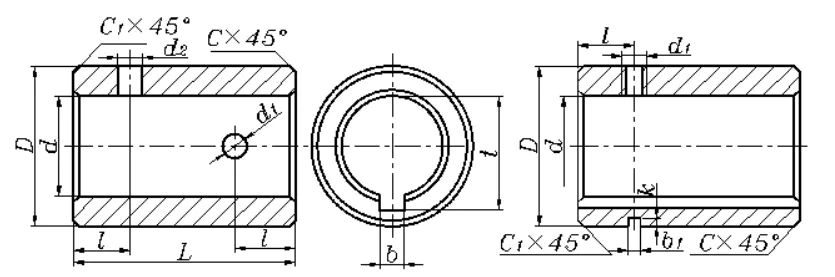
The GT sleeve coupling is designed around two primary stress checks: the shear stress in the sleeve body under torsional loading, and (where taper pins are used) the shear stress in the taper pin cross-section. The sleeve shear stress check uses the following relationship:
Sleeve Shear Stress (Key or Spline Connection):
τ = 5Tc / [ D³ × (1 − (d/D)&sup4;) ] ≤ [τ] (N/mm²)
Where: Tc = calculated torque (N.mm); D = sleeve outer diameter (mm); d = shaft diameter (mm, or mean spline diameter for spline connections); [τ] = allowable shear stress of sleeve material. For 45-gauge steel sleeves, [τ] = 35 to 40 N/mm².
Taper Pin Shear Stress Check (Taper Pin Connection):
τ = 4Tc / [ π × d&sub1;² × d ] ≤ [τ] (N/mm²)
Where: d1 = taper pin diameter (mm); d = shaft diameter (mm); [τ] = allowable shear stress of pin material = 0.25 × yield strength of pin material (N/mm²).
Additional design constraints applicable to the GT sleeve coupling selection include:
Maximum Operating Speed
The GT sleeve coupling is rated for a maximum working speed of 250 rpm under normal service conditions. For light-load, steady-running applications the speed should generally not exceed 25 r/min as a conservative guideline. No axial, radial, or angular compensation is available, so shaft-to-shaft alignment must be verified before commissioning.
Maximum Shaft Diameter
Shaft diameters are generally kept below 100 mm for GT-type sleeve couplings. For half-cone taper pin connections, shaft diameters should not exceed 35 mm. For full cone taper pin connections, the shaft diameter limit is 35 mm; when using semi-circular taper pin connection, shaft diameter must be below 35 mm.
Torque Transmission Limits by Connection Type
Maximum transmissible torque varies significantly by connection method: spline connection up to 1,000 N.m; parallel key connection up to 5,600 N.m; full cone taper pin connection up to 4,000 N.m; semi-circular taper pin connection up to 450 N.m. The selection of connection type must be matched to the calculated design torque of the application.
Shaft-Sleeve Fit and Alignment Precision
The sleeve bore and shaft are typically fitted to H7/k6 tolerance to ensure a degree of centring precision and to facilitate coupling disassembly when required. This interference-side clearance fit maintains concentricity under load without requiring separate alignment devices, provided the connected shafts are accurately aligned at installation.
Material Specifications
GT sleeves are manufactured from 35-gauge steel or 45-gauge steel as standard. Larger sizes may also be produced in cast iron. When spline connections are used, the sleeve material should be heat-treated to a minimum hardness of 240 HBS to ensure adequate spline flank wear resistance. Set screw and taper pin lengths are matched to the sleeve outer diameter.
Assembly and Disassembly Considerations
Unlike flanged couplings, the GT sleeve coupling requires the shaft to be moved axially for installation and removal. The coupling sleeve must slide along the shaft axis to clear one shaft end during disassembly. This constraint must be accounted for in the equipment design — adequate axial clearance beyond the sleeve length L must be available on at least one shaft for service access.
Technical Specifications — GT Series Sleeve Coupling, GT1 to GT22
| Type | Bore d (H7) mm | OD D (mm) | Length L (mm) | d1 (mm) | d2 (mm) | l (mm) | k (mm) | b1 (mm) | b (c10) mm | t Basic (mm) | t Dev. (mm) | C (mm) | C1 (mm) | Weight (kg) | Set Screw | Taper Pin | Pin Hole (mm) |
|---|---|---|---|---|---|---|---|---|---|---|---|---|---|---|---|---|---|
| GT1 | 18 | 32 | 50 | M6 | 4 | 12 | 2 | 1 | 6 | 20.8 | ±0.1 | 1 | — | 0.17 | M6×12 | 4×32 | 27 |
| GT2 | 20 | 35 | 50 | 12 | 22.8 | 0.252 | 4×35 | 30 | |||||||||
| GT3 | 22 | 38 | 60 | 15 | 24.8 | 0.274 | 4×38 | 32 | |||||||||
| GT4 | 25 | 42 | 75 | M8 | 5 | 18 | 2.5 | 1.2 | 8 | 28.3 | ±0.1 | 1.5 | 2 | 0.48 | M8×12 | 5×40 | 35 |
| GT5 | 28 | 45 | 80 | 20 | 31.3 | 2 | 0.611 | 5×45 | 38 | ||||||||
| GT6 | 30 | 48 | 90 | 22 | 33.3 | 2 | 0.77 | 6×45 | 41 | ||||||||
| GT7 | 32 | 52 | 95 | M10 | 6 | 24 | 3 | 1.6 | 10 | 35.3 | 2 | 2.5 | 0.985 | M10×16 | 6×50 | 41 | |
| GT8 | 35 | 56 | 105 | 26 | 38.3 | 1.23 | 6×55 | 47 | |||||||||
| GT9 | 38 | 62 | 115 | 28 | 41.3 | 1.6 | 8×60 | 54 | |||||||||
| GT10 | 40 | 62 | 120 | 8 | 30 | 12 | 43.3 | ±0.2 | 2.5 | 1.63 | 8×60 | 54 | |||||
| GT11 | 42 | 70 | 120 | 30 | 45.3 | 1.765 | 8×70 | 62 | |||||||||
| GT12 | 45 | 70 | 130 | 32 | 48.8 | 2.22 | 10×70 | 62 | |||||||||
| GT13 | 48 | 70 | 140 | 35 | 14 | 51.8 | 2.25 | M10×18 | 10×70 | 62 | |||||||
| GT14 | 50 | 80 | 150 | 40 | 53.8 | 3.62 | 10×80 | 71 | |||||||||
| GT15 | 55 | 90 | 165 | M10 | 10 | 40 | 3 | 1.6 | 16 | 59.3 | ±0.2 | 2.5 | 3 | 3.145 | 10×90 | 71 | |
| GT16 | 60 | 90 | 180 | 45 | 18 | 64.4 | 4.96 | M10×18 | 12×90 | 81 | |||||||
| GT17 | 65 | 100 | 200 | 12 | 50 | 69.4 | 5.88 | 12×100 | 91 | ||||||||
| GT18 | 70 | 100 | 220 | 55 | 20 | 74.9 | 6.85 | 12×100 | 91 | ||||||||
| GT19 | 75 | 110 | 220 | M12 | 16 | 55 | 3.6 | 2.2 | 79.9 | ±0.2 | 2.5 | 3 | 8.76 | M12×22 | 12×110 | 100 | |
| GT20 | 80 | 120 | 240 | 60 | 22 | 85.4 | 12.19 | 16×120 | 110 | ||||||||
| GT21 | 85 | 120 | 270 | 65 | 90.4 | 3 | 3 | 16.64 | 16×120 | 110 | |||||||
| GT22 | 90 | 130 | 270 | 65 | 25 | 95.4 | 17.12 | 16×130 | 120 |
All dimensions in mm. Bore tolerance H7. Keyway slot b tolerance c10. Set screw and taper pin sizes shown are for standard configurations. Weight values based on 45-gauge steel construction at minimum bore diameter. Non-standard bore diameters and custom sleeve lengths available on request.
How to Select the Correct GT Sleeve Coupling Size
Proper GT sleeve coupling selection follows a straightforward process balancing shaft diameter, torque requirement, and connection type:
Step 1 — Determine Shaft Diameter
Identify the shaft diameter (d) on both drive and driven sides. The GT sleeve coupling accommodates the same bore diameter at both ends; if the two shafts differ in diameter, a stepped bore sleeve must be specified to order. Select the GT size whose d (H7) column matches your shaft diameter.
Step 2 — Calculate Design Torque
Apply a service factor to the nominal drive torque (Tc = K × T, where K is the application service factor). For steady-running light loads, K = 1.0 to 1.25. For moderate shock or reversing loads, K = 1.5 to 2.0. Verify the selected sleeve size satisfies the sleeve shear stress calculation shown above.
Step 3 — Select Connection Type
For shaft diameters up to 35 mm with moderate torques, a taper pin connection is simplest. For higher torques or larger shaft diameters, specify key (parallel key) or spline connection. Confirm the connection type torque limit matches the design torque from Step 2.
Step 4 — Verify Speed Rating
Confirm that the operating speed does not exceed 250 rpm (conservative guideline: 25 r/min for light-load steady-run applications). The GT sleeve coupling has no speed-related dynamic balancing — for higher-speed applications, flanged rigid or flexible couplings are more appropriate selections.
Typical Application Sectors for GT Sleeve Couplings in Australian Industry
The GT sleeve coupling's characteristic combination of compact radial size, zero-backlash torque transmission, and low-cost construction makes it a standard solution across several sectors of Australian industry where low-speed, smooth-running drives are common:
Pump and Compressor Auxiliary Drives
Low-speed transfer pumps, chemical dosing pump drives, and lube oil circulation systems in Queensland and Western Australian mining operations and oil and gas facilities regularly use GT sleeve couplings on small-bore shaft connections where installation envelope is limited and operating speed is below 200 rpm.
Agricultural Machinery and Irrigation Equipment
Irrigation pump drives, grain auger conveyors, seed drill shafts, and fertiliser spreader drives in New South Wales and Victoria agricultural regions use GT couplings for their low cost, interchangeability, and ease of on-farm maintenance. The straightforward taper pin or key connection suits on-site workshop assembly without specialised tooling.
Textile and Light Manufacturing
Winding machines, loom beam drives, label printing press feed rolls, and packaging line conveyors commonly deploy smaller GT sizes (GT1 through GT8) in their sub-drive shaft connections. The compact outer diameter allows multiple drive shafts to run in close proximity within the machine frame.
Timber and Wood Processing
Saw bench feed rolls, veneer lathe drives, timber kiln fan shafts, and log deck conveyors in South Australian and Tasmanian timber processing facilities use mid-range GT sizes (GT10 through GT16) for their robust one-piece construction and resistance to contamination by sawdust and wood chip in the drive environment.
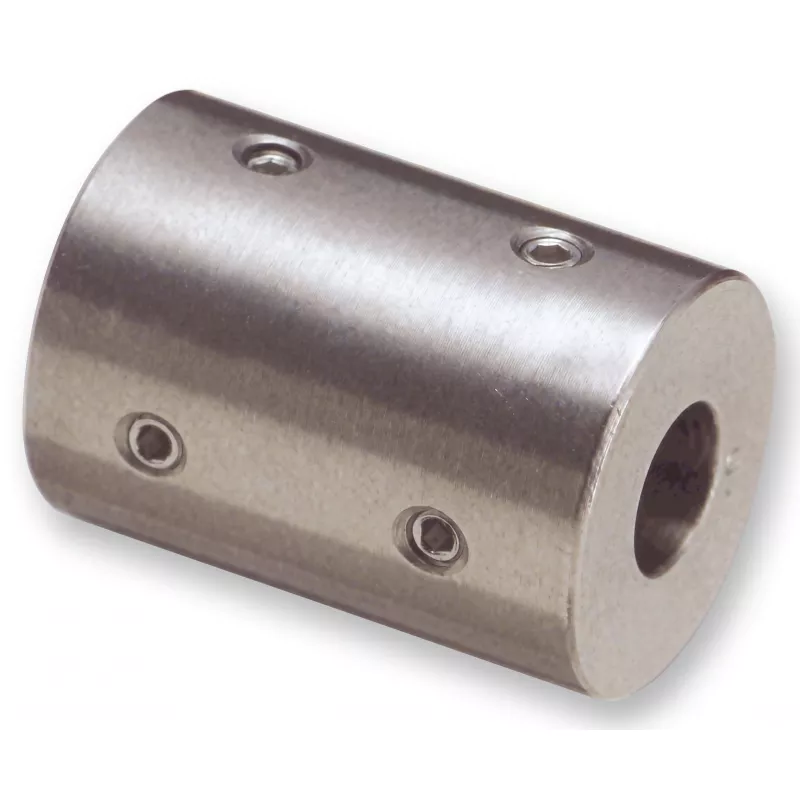

GT sleeve couplings are turned from bar stock or forgings on CNC lathes, with the bore machined to H7 tolerance and the keyway broached to c10 tolerance in a single fixturing cycle to ensure concentricity between bore and keyway. Taper pin holes are drilled and reamed after bore machining. For other rigid coupling options suited to higher speeds or larger torque capacities, see our complete rigid coupling range or browse the full couplings catalogue.
Customer Reviews and Project Case Studies
★★★★★
Australia — Irrigation Pump Station Upgrade, New South Wales
Industry: Agricultural Irrigation | Application: GT12 sleeve couplings, 45 mm bore, transfer pump drives running at 80 rpm
"We purchased forty GT12 sleeve couplings for a bulk pump station upgrade across our irrigation network. Bore machining was accurate — all bores gauged within 0.01 mm of nominal. We fitted them with standard parallel keys and M10 set screws and they have run through three full irrigation seasons without any loosening or shaft fretting. Very good value."
— Maintenance Supervisor, Riverina Irrigation District
★★★★★
Germany — Packaging Machine Sub-Drive, Bavaria
Industry: Packaging Machinery | Application: GT6 and GT8 sleeve couplings, 30 mm and 35 mm bores, feed roller drives
"We use GT-series sleeve couplings throughout our packaging machine sub-drives precisely because of their small outer diameter. In our machine frame, we have seven drive shafts running in parallel at 150 mm centre spacing — no flanged coupling would physically fit. GT couplings solve this completely. Quality consistent across all batches ordered."
— Machine Design Engineer, Bavarian Packaging Equipment Manufacturer
★★★★☆
Australia — Timber Mill Feed Conveyor, Tasmania
Industry: Timber Processing | Application: GT14 and GT15 sleeve couplings, 50 mm and 55 mm bores, log deck conveyor drives at 45 rpm
"Fitted GT14 and GT15 couplings to our log deck conveyor drives as part of a general refurbishment. The one-piece sleeve construction handles the sawdust environment much better than the old split-type couplings we were using — no debris ingress into the coupling. Running well after twelve months of continuous production use."
— Workshop Manager, Tasmanian Hardwood Mill
★★★★★
India — Textile Loom Drive Upgrade, Gujarat
Industry: Textile Manufacturing | Application: GT4 and GT5 sleeve couplings, 25 mm and 28 mm bores, rapier loom warp beam drives
"Ordered 200 sets of GT4 and GT5 sleeve couplings for a complete loom drive replacement programme across two weaving sheds. The couplings arrived correctly dimensioned and were a direct fit to our existing shaft specifications. Pricing was very competitive for the quantity. No quality issues across the entire batch — would reorder without hesitation."
— Mechanical Engineer, Gujarat Textile Manufacturing Group
Frequently Asked Questions
Can a GT sleeve coupling connect two shafts of different diameters?
The standard GT sleeve coupling has a single bore diameter throughout its length, designed for two shafts of identical diameter. To connect shafts of different diameters, a stepped bore sleeve must be specified to order, with the two bore diameters and their respective engagement lengths clearly stated at enquiry stage.
What is the maximum operating speed for GT sleeve couplings?
The GT sleeve coupling is intended for low-speed applications with a maximum working speed of 250 rpm. For very light, smooth-running loads, speeds should generally not exceed 25 r/min as a conservative starting point. The coupling has no dynamic balancing provision and is not suitable for high-speed or variable-speed drive applications — for those, flanged rigid or flexible couplings are the appropriate selection.
Which connection method should I choose — key, spline, or taper pin?
Taper pin connections suit shaft diameters up to 35 mm and moderate torques (up to 4,000 N.m for full cone, 450 N.m for semi-circular pin). Parallel key connections cover the majority of general industrial applications up to 5,600 N.m. Spline connections are used where the coupling must slide axially on the shaft during assembly, with a torque limit of 1,000 N.m. A set screw provides axial retention for key and spline connections; taper pin connections are self-retaining.
Does GT sleeve coupling installation require axial shaft movement?
Yes. The GT sleeve must be slid axially along one shaft to clear the shaft end during assembly and disassembly. Adequate axial clearance — at minimum equal to the sleeve length L — must be available beyond the coupling on at least one shaft. This is a key design constraint that should be addressed at the equipment layout stage. Where axial movement is not possible, the JQ clamping coupling is the more suitable alternative.
What material is used and can material certificates be provided?
Standard GT sleeves are machined from 35-gauge or 45-gauge steel bar stock. Larger sizes may be available in cast iron on request. When spline connections are specified, the sleeve is heat-treated to a minimum hardness of 240 HBS for spline flank wear resistance. Material test certificates and CMM dimensional inspection reports are available on request for B2B supply agreements and engineering specifications requiring documented material traceability.
Order GT Sleeve Couplings for Your Drive Application
We supply GT series sleeve couplings to B2B customers across Australia's agricultural, manufacturing, timber, and process industries. All 22 standard sizes from GT1 to GT22 are available from stock. Custom bore machining, stepped bore configurations for different shaft diameters, taper or parallel key preparation, and material test certificates are all available to order. Contact our team for sizing assistance, volume pricing, and delivery lead times.
GT series sleeve coupling — compact rigid sleeve shaft connector in 22 sizes (GT1 to GT22), bore range 18 to 90 mm. Connects coaxial shafts via key, spline, or taper pin engagement. Maximum operating speed 250 rpm. Ideal for low-speed, light-load, steady-running drives where radial envelope is limited. Material: 35 or 45-gauge steel.
MOQ: 50 pcs. Minimum order value USD 1,500; mixed orders and trial quantities welcome.