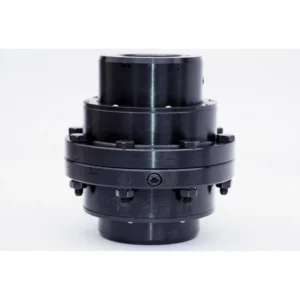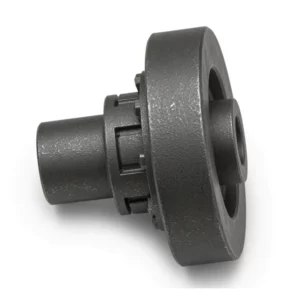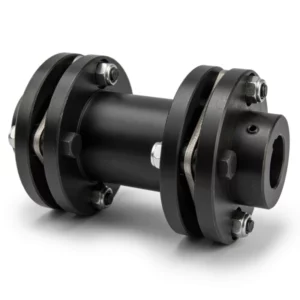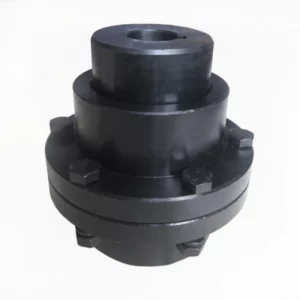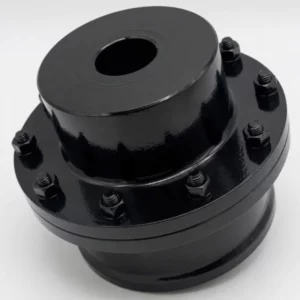
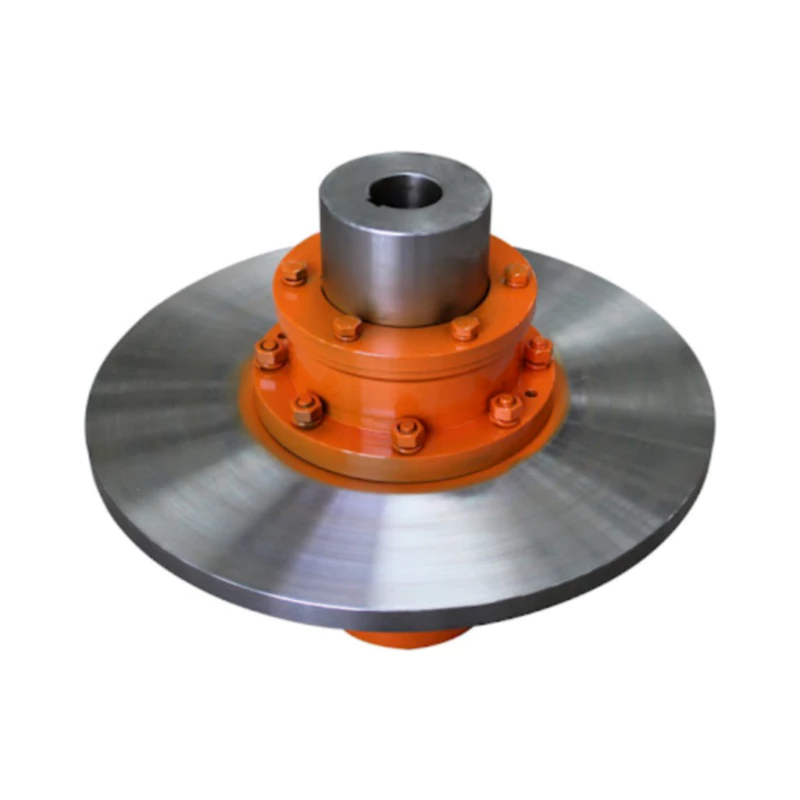
WGP Drum Shape Gear Coupling with Brake Disc
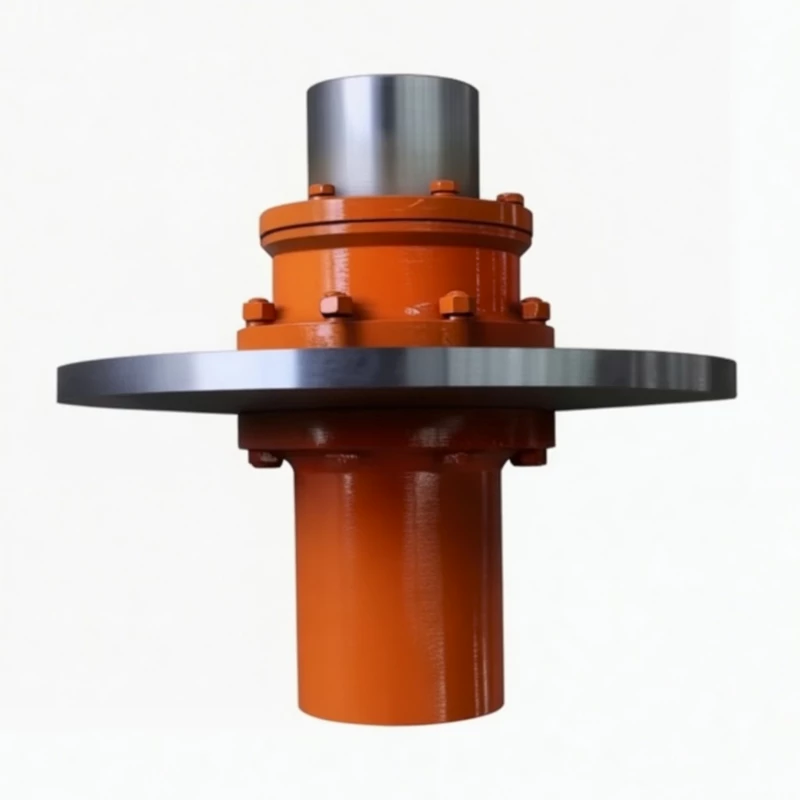
WGP drum shape gear coupling with integral flat brake disc for caliper brakes per JB/T7001. 14 sizes, 710 N·m to 160,000 N·m, up to 4000 RPM. Brake disc D0 315–1000 mm, independently replaceable. Y, J1, Z1 bores. Ideal for crane travel drives, VFD hoists, and conveyor emergency stops.
MOQ: 50 pcs. Minimum order value USD 1,500; mixed orders and trial quantities welcome.
WGP Drum Shape Gear Coupling with Brake Disc — Caliper Brake Type
Crowned-tooth gear coupling with an integral flat brake disc for caliper disc brakes. Two functions in one unit: precision torque transmission plus a replaceable disc braking surface. Factory direct to Australia.
Product Overview
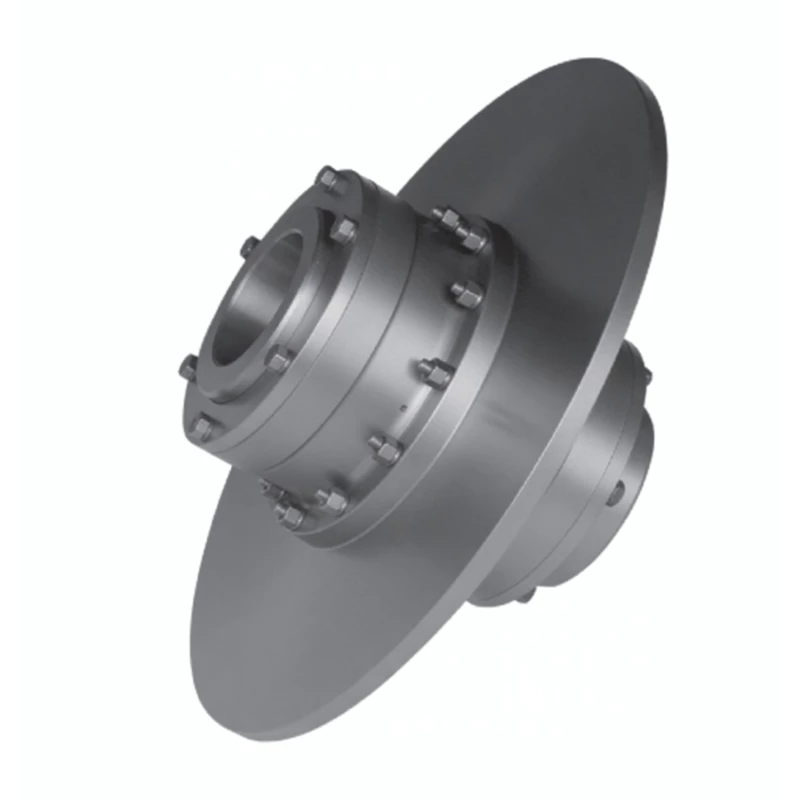
The WGP drum shape gear coupling with brake disc is a dual-function power transmission component that combines a crowned-tooth gear coupling with an integral flat brake disc designed for caliper-type disc brakes. Conforming to JB/T7001, the WGP is the member of the WG coupling family chosen when caliper disc braking — rather than shoe braking — is required at the drive shaft.
The defining feature of the WGP is its flat, replaceable brake disc. Unlike the WGZ (which carries a cylindrical drum for shoe brakes) or the NGCL (a drum for shoe brakes with a different base coupling design), the WGP's flat disc is purpose-built for the clamping action of a caliper brake assembly. This makes the WGP the natural choice for crane travel motions, hoist drives with variable speed control, precision positioning drives, and any application where disc brakes are preferred over shoe brakes for their faster response, more consistent braking torque, and better heat dissipation characteristics.
GBC manufactures and exports WGP couplings factory-direct to Australian crane OEMs, materials handling equipment suppliers, and industrial machine builders, with full material traceability documentation and ISPM-15 compliant packing for smooth Australian customs clearance.
Technical Definition and Working Principle
What the WGP Is and How It Differs
The WGP consists of two main assemblies: the crowned-tooth gear coupling body (identical in principle to the WG base series) and a bolted-on flat brake disc. The gear coupling transmits torque through two crowned gear meshes. The brake disc — a flat, annular steel plate with precisely machined braking surfaces on both faces — provides the friction interface for a caliper disc brake assembly that clamps against the disc to decelerate or hold the drive train.
The critical distinction from the WGZ (cylindrical drum) and NGCL (integral brake drum) types is the disc geometry. A flat disc allows a floating caliper to apply even clamping pressure across the full friction pad contact area, generating consistent braking torque that is relatively insensitive to minor disc runout. Cylindrical shoe brakes, by contrast, are more sensitive to drum eccentricity and require periodic shoe adjustment as the lining wears. Disc brakes also dissipate heat more effectively because both faces of the disc are exposed to cooling air during rotation.
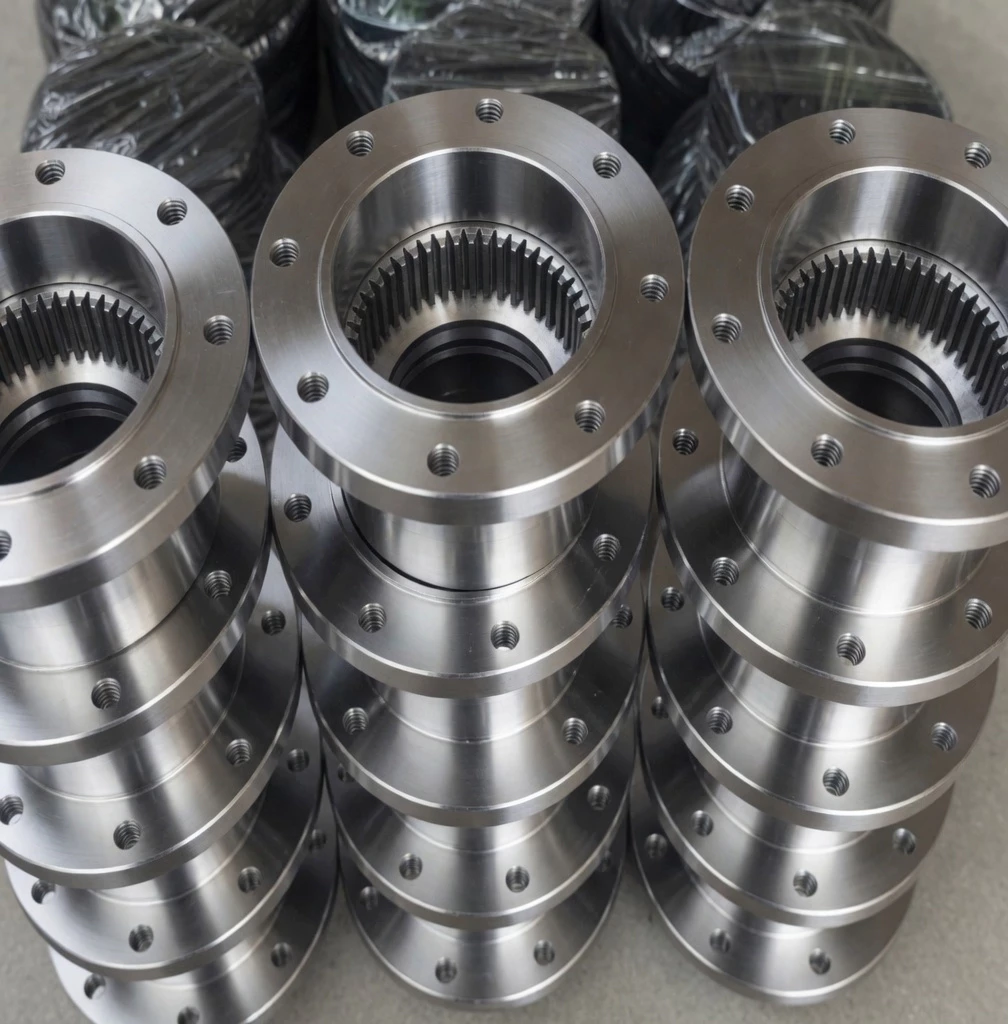
The gear coupling element uses the same crowned tooth geometry as the WG base series — the barrel-shaped external tooth profile that creates a self-centring Hertzian contact ellipse regardless of shaft misalignment. This eliminates the destructive edge loading that occurs in straight-tooth couplings under misalignment, extending tooth life and protecting adjacent bearings from misalignment-induced cyclic radial forces.
The Brake Disc — Replaceable Wear Component
The WGP brake disc bolts onto the coupling half hub using high-strength fasteners. It is a separate, replaceable component — when the disc surface wears beyond the serviceable limit (indicated by the wear scale machined into the disc hub), the disc is unbolted and replaced without disturbing the coupling hubs or requiring shaft alignment correction. Each WGP size accepts multiple standard disc diameters (D0 options), allowing the brake disc size to be matched to the required braking torque without changing the coupling size.
The disc geometry parameters — D0 (outer diameter), T (disc thickness), K (hub height), and S (maximum caliper clearance D5MAX) — are standardised to match common caliper brake assemblies used in the Australian crane and materials handling industry. When selecting a caliper brake to match a WGP coupling, specify D0 as the disc diameter and S as the minimum caliper mounting clearance.
Crowned Tooth Geometry and Misalignment Compensation
The WGP's gear coupling element accommodates angular misalignment of 1.0 to 1.5 degrees per mesh, radial parallel offset, and axial displacement through the axial sliding of the crowned teeth within the outer sleeve. The axial displacement capability is particularly important when the caliper brake is applied — brake clamping generates a small axial thrust on the disc and hub. The WGP's crowned tooth mesh absorbs this axial reaction within the gear clearance, preventing it from being transmitted to motor or gearbox bearings as an axial loading event.
Comparison with Other Coupling and Brake Combinations
| Feature | WGP (this product) | WGZ (shoe brake) | WG (no brake) | Jaw Coupling |
|---|---|---|---|---|
| Braking Component | Flat disc — caliper brake | Cylindrical drum — shoe brake | None | None |
| Brake Wear Component Replacement | Disc replaceable without coupling removal | Drum integral; shoes replaced at brake | N/A | N/A |
| Braking Response Speed | Fast — caliper engages instantly | Moderate — shoe pivot geometry | N/A | N/A |
| Heat Dissipation | Excellent — both disc faces cooled | Good — drum exposed to air | N/A | N/A |
| Crowned Tooth Gear Mesh | Yes — 1.0–1.5 deg tolerance | Yes — 1.0–1.5 deg tolerance | Yes — 1.0–1.5 deg tolerance | Up to 1 deg (elastomer) |
| Preferred Application | Crane travel, VFD-controlled hoists, precision positioning | Heavy hoisting, mine winders, large cranes | Standard horizontal drives | Light–medium duty |
WGP in the WG Family — Choosing the Right Variant
The WGP is one of five variants in the WG coupling family. All share the same crowned gear mesh core. The table below clarifies where the WGP fits and when to choose each variant.
| Factor | WG | WGP | WGC | WGZ | WGT |
|---|---|---|---|---|---|
| Standard | JB/T8854.2 | JB/T7001 | JB/T7002-93 | JB/T7003-93 | JB/T7004 |
| Braking Feature | None | Flat disc — caliper | None | Drum — shoe brake | None |
| Shaft Orientation | Horizontal | Horizontal | Vertical | Horizontal | Horizontal |
| Intermediate Shaft | No | No | No | No | Yes |
| Sizes Available | 24 | 14 | 14 | 14 | 24 |
| Choose When... | Standard horizontal, no brake | Caliper disc brake required; VFD drives; precise stopping | Vertical shaft drives | Heavy hoisting; shoe brake system | Distant shafts; axle withdrawal needed |
Specifications & Size Matrix — WGP1 to WGP14
All specifications are from the WGP catalogue per JB/T7001. Dimensions in millimetres. D0 lists the available brake disc diameter options for each coupling size. Weight and inertia are calculated without the brake disc; add brake disc values separately from the disc table below.
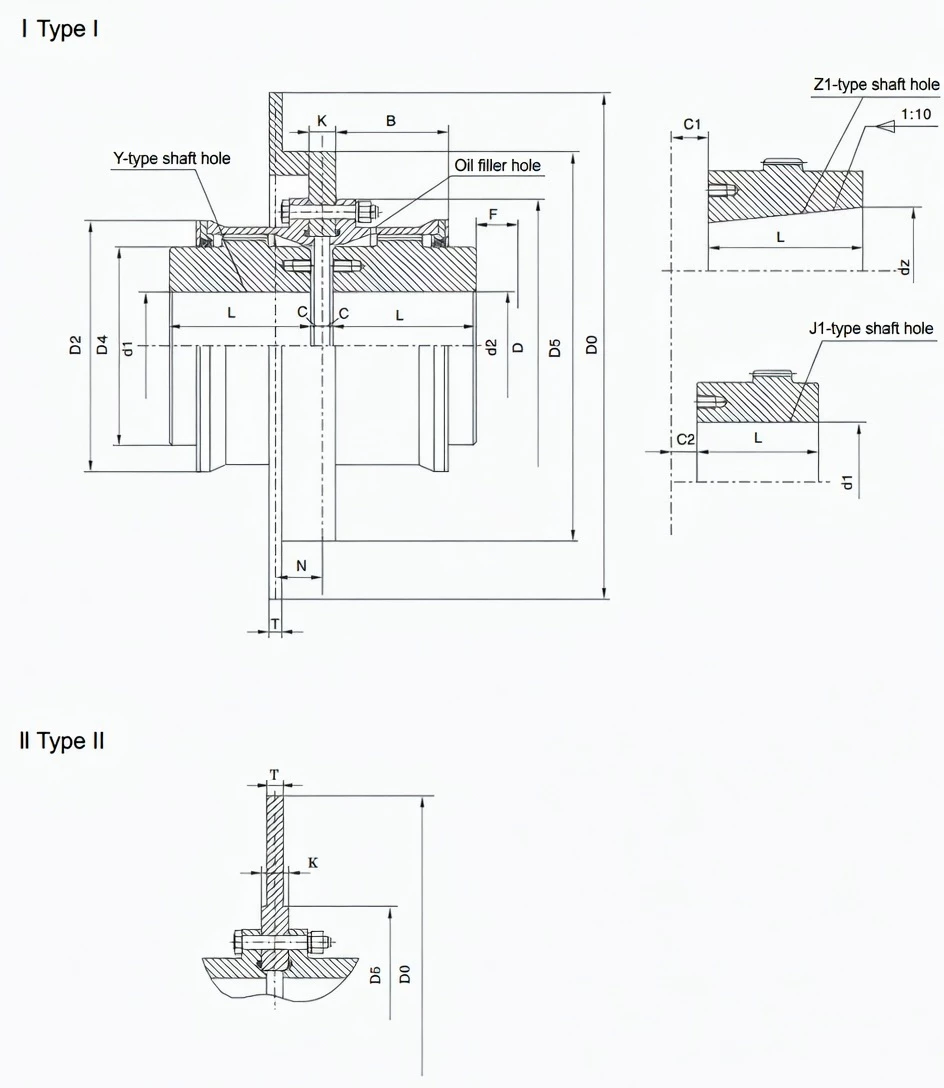
WGP1 – WGP14 Coupling Specifications
| Type | Torque (N·m) |
Speed (rpm) |
Bore d1,d2,dz (mm) |
Y | J1, Z1 | D0 Options (mm) |
D | D2 | D4 | B | F | N | Inertia (Kg·m²) |
Weight (Kg) |
Lubricant (Kg) |
|---|---|---|---|---|---|---|---|---|---|---|---|---|---|---|---|
| WGP1 | 710 | 4000 | 12 – 42 | 32–112 | –/44/84 | 315 | 122 | 98 | 60 | 58 | 30 | 38 | 0.0078 | 5.62 | 0.11 |
| WGP2 | 1250 | 4000 | 22 – 56 | 52–112 | –/60/84 | 315 | 150 | 118 | 77 | 68 | 30 | 38 | 0.022 | 9.62 | 0.12 |
| WGP3 | 2500 | 3550 | 22 – 63 | 52–142 | –/60/107 | 355 | 170 | 140 | 90 | 80 | 30 | 49 | 0.047 | 16.6 | 0.20 |
| WGP4 | 4500 | 2500 | 30 – 80 | 82–172 | –/84/132 | 400 / 450 / 500 | 200 | 160 | 112 | 90 | 30 | 45 | 0.098 | 25.3 | 0.28 |
| WGP5 | 7100 | 2500 | 30 – 90 | 82–172 | –/84/132 | 400 / 450 / 500 | 225 | 180 | 128 | 100 | 30 | 45 | 0.174 | 34.7 | 0.45 |
| WGP6 | 10000 | 2000 | 32 – 100 | 82–212 | –/107/167 | 450 / 500 / 560 / 630 | 245 | 200 | 145 | 112 | 30 | 44 | 0.293 | 51.3 | 0.65 |
| WGP7 | 14000 | 1700 | 32 – 110 | 82–212 | –/107/167 | 450 / 500 / 560 / 710 | 272 | 230 | 160 | 122 | 30 | 44 | 0.530 | 68.0 | 0.80 |
| WGP8 | 20000 | 1700 | 55 – 125 | 112–212 | –/107/167 | 500 / 560 / 630 / 710 | 290 | 245 | 176 | 136 | 30 | 44 | 0.71 | 79 | 0.95 |
| WGP9 | 25000 | 1600 | 65 – 140 | 142–252 | 107/202 | 560 / 630 / 710 / 800 | 315 | 265 | 190 | 140 | 30 | 58 | 1.05 | 106.5 | 1.30 |
| WGP10 | 40000 | 1600 | 75 – 160 | 142–302 | 107/242 | 630 / 710 / 800 | 355 | 300 | 225 | 165 | 30 | 58 | 1.74 | 159.0 | 1.60 |
| WGP11 | 56000 | 1400 | 85 – 180 | 172–302 | 132/242 | 710 / 800 / 900 | 412 | 345 | 256 | 180 | 40 | 58 | 3.67 | 215.0 | 2.00 |
| WGP12 | 80000 | 1400 | 120 – 200 | 212–352 | 167/282 | 710 / 800 / 900 | 440 | 375 | 288 | 207 | 40 | 58 | 6.40 | 303.0 | 3.40 |
| WGP13 | 112000 | 1400 | 140 – 220 | 252–352 | 202/282 | 800 / 900 | 490 | 420 | 320 | 235 | 50 | 58 | 10.45 | 291.0 | 4.40 |
| WGP14 | 160000 | 1200 | 160 – 260 | 302–410 | 242/330 | 900 / 1000 | 545 | 462 | 362 | 265 | 50 | 65 | 17.48 | 523.0 | 6.60 |
Notes: Weight and inertia are calculated without the brake disc — add brake disc values from the table below. The C, C1, C2 axial clearance values vary by D0 selected; base table value plus K/2 for the chosen disc. N = S – K/2 (value shown is for maximum D0 for that coupling size).
Brake Disc Specifications — D0 Parameters and Weight
| D0 Brake Disc Diameter (mm) |
T Thickness (mm) |
K Hub Height (mm) |
S — D5MAX (mm) |
Disc Weight I (Kg) |
Disc Weight II (Kg) |
Inertia I (Kg·m²) |
Inertia II (Kg·m²) |
Compatible WGP Sizes |
|---|---|---|---|---|---|---|---|---|
| 315 | 15 | 10 | 42 | 8.5 | 6.7 | 0.116 | 0.110 | WGP1, WGP2 |
| 355 | 15 | 10 | 54 | 11.4 | 9.9 | 0.192 | 0.178 | WGP3 |
| 400 | 15 | 14 | 54 | 15.2 | 12.4 | 0.320 | 0.287 | WGP4, WGP5 |
| 450 | 15 | 16 | 54 | 19.7 | 15.6 | 0.550 | 0.462 | WGP4, WGP5, WGP6, WGP7 |
| 500 | 15 | 18 | 54 | 25.0 | 20.0 | 0.830 | 0.712 | WGP4, WGP5, WGP6, WGP7, WGP8 |
| 560 | 15 | 18 | 54 | 30.7 | 25.6 | 1.280 | 1.127 | WGP6, WGP7, WGP8, WGP9 |
| 630 | 15 | 20 | 54 | 38.8 | 33.0 | 2.060 | 1.826 | WGP6, WGP8, WGP9, WGP10 |
| 710 | 15 | 20 | 54 | 46.5 | 39.4 | 3.320 | 2.912 | WGP7, WGP8, WGP9, WGP10, WGP11, WGP12 |
| 800 | 15 | 24 | 70 | 67.8 | 52.7 | 5.870 | 4.810 | WGP9, WGP10, WGP11, WGP12, WGP13 |
| 900 | 15 | 24 | 70 | 86.6 | 70.3 | 9.300 | 7.852 | WGP11, WGP12, WGP13, WGP14 |
| 1000 | 20 | 30 | 80 | 128.8 | 115.1 | 17.400 | 15.65 | WGP14 |
Note: D5MAX (S) is the maximum outer diameter of the caliper brake body that can be accommodated at the given D0. Disc weights shown are for Type I and Type II caliper configurations. Bolts connecting disc to coupling must be Grade 8.8 minimum.
Custom Bore, Non-Standard D0, and Special Disc Configurations Available
Need a non-standard shaft bore, a D0 not listed in the catalogue, or a disc surface treatment for high-temperature or corrosive environments? Our engineering team accommodates custom specifications. Send your caliper brake model and shaft drawing for a comprehensive assessment within 24 hours.
Industries & Applications in Australia
The WGP is the coupling of choice wherever a caliper disc brake is specified on a horizontal shaft drive. In Australia, disc brake systems are increasingly preferred over shoe brakes in new installations for their lower maintenance requirements, consistent braking torque regardless of ambient temperature, and compatibility with VFD-controlled drive systems that require smooth, controlled deceleration rather than binary apply/release braking.
Overhead Crane Travel and Hoist Drives
Equipment: Bridge travel drives, crab travel drives, hoist drum drives on EOT cranes, ladle cranes, coil transfer cranes, gantry cranes.
Australian steelworks, aluminium smelters, and automotive plants operate overhead cranes where load positioning accuracy is critical. The WGP's caliper disc brake delivers precise, repeatable stopping positions that shoe brakes cannot match — particularly on VFD-controlled bridge travel drives where the brake must hold position accurately after a ramp-down stop. The replaceable brake disc eliminates the need for crane downtime simply to re-face a worn braking surface.
Mining Conveyor Drives with Emergency Stop
Equipment: Overland conveyor head drives, stacker-reclaimer slew drives, bucket wheel drives, transfer tower drives requiring controlled emergency stops.
Australian mine sites in the Pilbara and Bowen Basin are required by AS 1755 to provide emergency stopping capability on conveyors above certain speed and load thresholds. WGP couplings with caliper disc brakes provide the required emergency stopping force while their crowned tooth gear element compensates for the foundation settlement misalignment that is endemic on long overland conveyors. Learn more about our full industrial coupling range.
Port and Bulk Materials Handling
Equipment: Ship loader travel drives, stacker-reclaimer travel and luff drives, container terminal gantry travel drives, portal crane travel motions.
Port equipment at facilities in Newcastle, Hay Point, Dampier, and Fremantle operates in marine environments where disc brakes outperform shoe brakes due to their reduced sensitivity to saltwater contamination and humidity. Disc brakes maintain consistent pad-to-disc clearance regardless of lining swell caused by moisture absorption — a significant advantage on travel drives that may stand idle for extended periods between vessel arrivals.
General Industrial Drives with Controlled Stopping
Equipment: Packaging line drives, paper mill drives, process line drives, test bench drives, mixing and reactor drives requiring emergency stop.
Across general manufacturing facilities in Victoria, NSW, and South Australia, WGP couplings serve drive trains where a caliper disc brake provides both service braking and emergency stop capability in a compact package. The disc brake's faster response versus shoe brakes reduces stopping distance under emergency conditions — directly supporting machine safety system compliance.
VFD-Controlled and High-Cycle Brake Drives
Equipment: Multi-speed crane drives, variable-speed conveyor systems, dynamic braking test rigs, load cycle simulation drives.
As VFD adoption accelerates across Australian industry, the demand for braking systems compatible with controlled deceleration profiles is increasing. The WGP's flat disc allows caliper brakes to modulate braking force continuously — unlike shoe brakes that typically operate in a binary apply/release mode. This makes the WGP the natural choice for drives where the VFD ramps the motor down to near-zero speed and the mechanical brake holds the final stopped position, a sequence that repeats hundreds of times per shift in high-cycle crane applications.
Technical Advantages — Why Crowned Tooth Outperforms Straight Tooth
Higher Misalignment Tolerance — Especially Important on Australian Mining Sites
Australian mining site foundations on expansive clay soils in the Pilbara and Hunter Valley experience ground movement of 2–5 mm per year, translating to angular shaft misalignment that grows progressively over time. The WGP's crowned tooth profile continuously accommodates 1.0–1.5 degrees of angular misalignment without any increase in tooth contact stress. A straight-tooth coupling in the same application generates destructive edge loading beyond 0.3–0.5 degrees — a threshold that remote-site conveyor drives typically exceed within 6–12 months of installation. When this misalignment is combined with frequent brake applications, the cyclic stress reversal on straight-tooth edge contacts accelerates failure dramatically. The WGP eliminates this compounded failure mode.
Longer Service Life Under Shock Loads and Brake Events
Crane drives experience simultaneous peak torque loading — when a heavy load is picked or a bridge decelerates rapidly — and brake clamping stress. The WGP's crowned teeth distribute these combined peak stresses as Hertzian contact ellipses rather than edge-concentrated line contacts, significantly reducing maximum tooth surface stress. In Australian steelworks crane applications, WGP-type crowned disc coupling units consistently outlast straight-tooth equivalents by 2–3x in tooth service life under identical braking frequency and torque conditions.
Reduced Bearing Loads
When a caliper disc brake applies to a WGP coupling, the clamping force generates a small axial thrust and bending moment at the coupling hub. In a straight-tooth coupling, this braking reaction is transmitted fully to motor and gearbox bearings as additional axial and radial loading. The WGP's crowned tooth accommodates axial brake reaction through the mesh sliding clearance, and minimises bending moment transmission through its self-centring contact geometry — protecting bearings from the incremental loading events that accumulate into premature fatigue failure on high-cycle brake drives.
Lower Maintenance Frequency — Replaceable Disc Plus Lubrication Port
The WGP offers two independent maintenance advantages. First, the replaceable brake disc means disc wear does not require coupling disassembly or shaft realignment. The disc is unbolted, replaced, and rebolted in a fraction of the time a shoe brake drum refacing requires. Second, the built-in lubrication port allows tooth mesh re-lubrication without disassembly, at 6–12 month intervals. For Australian crane operators performing both tasks on the same scheduled outage, total brake-coupling maintenance time is typically 60–70% less than for shoe-brake drum coupling alternatives.
Suitable for High-Speed Applications
WGP1 and WGP2 are rated to 4000 RPM — allowing direct connection to standard IEC 4-pole motors running at 50 Hz. The flat disc geometry of the WGP is inherently better balanced than a cylindrical drum at high speeds, generating less vibration excitation at elevated RPM. For VFD-controlled drives that operate across a wide speed range, the WGP maintains dynamic stability from zero to maximum speed without requiring rebalancing as disc wear occurs within normal service limits.
Manufacturing & Quality Assurance
Manufacturing Process
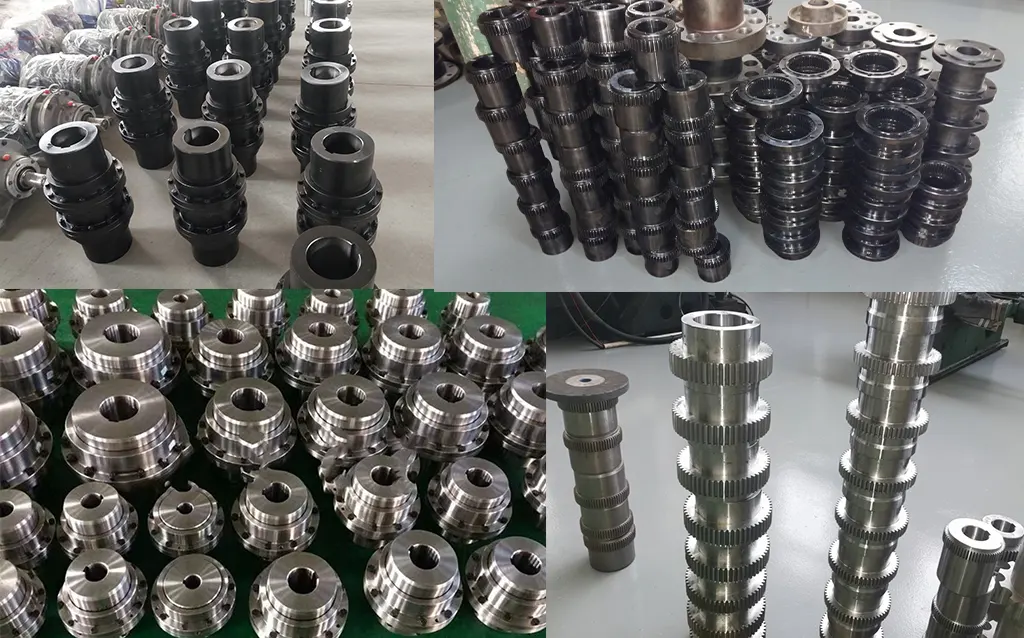
WGP couplings and brake discs are manufactured from forged alloy steel blanks — 42CrMo4 for WGP8 and above, 45# carbon steel for smaller sizes. The coupling crowned teeth are CNC hobbed to DIN Class 7 accuracy. Tooth flanks are carburised and quenched to HRC 58–62 surface hardness with HRC 30–35 core hardness. The brake disc is a separate forging, machined to flat disc parallelism within 0.05 mm across the braking face width, with surface roughness of Ra 1.6–3.2 micrometres for consistent caliper pad wear-in. The disc hub bolt circle is drilled and tapped after final disc machining to ensure dimensional accuracy of the coupling-disc interface.
Each WGP coupling and its matched brake disc are dimensionally verified as a system before dispatch — coupling concentricity, disc flatness, and bolt circle register are all measured and recorded. This system-level inspection ensures the disc runs true within the caliper clearance, preventing vibration from disc runout that would accelerate pad wear and generate unacceptable structure-borne noise.
Quality Control Flow
Certifications
ISO 9001:2015 certification covers the complete WGP manufacturing and inspection process. CE marking applies to applicable sizes. Products are manufactured to JB/T7001 standard. Every shipment includes material mill certificates with heat number traceability, heat treatment records, Rockwell hardness test certificates for gear teeth and disc faces, disc flatness measurement records, and dimensional inspection reports. For Australian crane applications subject to AS 4991 or crane OEM quality plan requirements, our documentation package is structured to support third-party engineering audits.
Why Source Your WGP Couplings from GBC?
Australian Crane and Safety Standards Awareness
We understand AS 4991, AS 1418 series, and the caliper brake selection requirements relevant to Australian crane buyers. Our engineering team can discuss D0 brake disc selection in the context of the braking torque calculations required by these standards, and provide documentation to support OEM engineering sign-off.
15+ Years Exporting to Australia
Since 2010 GBC has supplied WGP couplings and the full WG family to Australian crane OEMs, materials handling equipment builders, and port equipment suppliers. We have delivered to every major Australian state and port. ISPM-15 packing and AQIS compliance is standard on every export order.
English-Speaking Engineering Team
Our engineers respond in technical English, review caliper brake and coupling system drawings, confirm D0 disc selection against braking torque requirements, and verify bore compatibility with your motor and gearbox data sheets. We have experience with Australian crane engineering vocabulary and the calculation conventions used by local mechanical engineers.
Flexible MOQ — From Single Pieces
WGP couplings are available from a single piece, including replacement brake discs as standalone spares. Standard items ship within 15–20 working days; replacement discs for standard D0 sizes typically ship within 7–10 working days from finished goods stock.
OEM & Custom Capability
Non-standard D0 diameters, alternative disc thicknesses, hardened and ground disc surfaces, special bore configurations, and modified hub bolt patterns are all achievable to customer drawings. Custom WGP variants for Australian crane OEMs are typically produced with drawing-to-delivery lead times of 20–30 working days. Contact us with your drawing.
Full WG Family — One Supplier
As the manufacturer of the complete WG family (WG, WGP, WGC, WGZ, WGT), GBC supplies all variants from a single source. Projects requiring WGP on hoist drives and WG on travel drives are handled with one engineering team, one procurement order, and one combined documentation package.
Application Case Studies
Case 1: Steelworks Ladle Crane Hoist Upgrade — NSW
Customer Profile: A major integrated steelworks in the Illawarra operating six ladle cranes lifting 80–130 tonne molten steel ladles, each with VFD-controlled hoist drives.
Challenge: The existing drum-and-shoe brake coupling arrangement was generating inconsistent stopping positions after VFD ramp-down. Shoe brakes were applying unevenly due to thermal expansion of the drum surface, causing positioning errors of 15–25 mm at the ladle set-down point and requiring operator correction adding 8–12 seconds per cycle.
Solution: We supplied 6x WGP11 couplings (56,000 N·m, 140 mm bore, D0 = 800 mm) matched to the existing caliper brake actuators. The flat disc geometry eliminated the thermal runout issue causing inconsistent shoe brake contact.
Result: Ladle set-down positioning accuracy improved to within 3–4 mm immediately. The 8–12 second correction step was eliminated, improving throughput by approximately 4%. Brake inspection interval extended from 3 months to 12 months, reducing annual maintenance access events on each crane from 8 to 2.
Case 2: Port Container Terminal Travel Drive — Melbourne
Customer Profile: A container terminal at the Port of Melbourne operating 12 rubber-tyred gantry (RTG) cranes with VFD-controlled bridge travel drives.
Challenge: Drum brake couplings on the bridge travel drives were experiencing premature lining wear during Melbourne's wet winters — moisture absorption in the shoe linings was closing the effective brake gap, causing drag braking and lining wear rates 3–4x higher in winter than summer. Each replacement required taking the RTG out of service for a half-shift.
Solution: We supplied 12x WGP7 couplings (14,000 N·m, 90 mm bore, D0 = 500 mm). The disc brake geometry is not affected by moisture-related lining swell, eliminating the seasonal wear variation entirely.
Result: Brake-related maintenance events dropped from an average of 3.8 per crane per year to 0.7 per crane per year. The seasonal brake drag complaint was eliminated. Estimated total maintenance saving across the 12-crane fleet: AUD $180,000 over the first two years.
Case 3: Aluminium Smelter Overhead Crane — Queensland
Customer Profile: A Queensland aluminium smelter operating pot room overhead cranes for anode replacement and metal tapping, performing 600–800 brake cycles per shift at ambient temperatures exceeding 60 degrees Celsius at crane level.
Challenge: Existing drum shoe brake assemblies were experiencing thermal fade — as drum temperature rose through a shift, effective brake force decreased by up to 25%, requiring operators to compensate manually. This was a safety concern under the site's crane management procedure.
Solution: We supplied 8x WGP9 couplings (25,000 N·m, 110 mm bore Z1 taper, D0 = 710 mm) with high-temperature rated caliper brake pads for continuous operation to 200 degrees Celsius. The disc brake's open geometry dissipates heat from both disc faces during rotation, keeping working temperature lower than an enclosed drum at equivalent braking energy.
Result: Thermal fade was eliminated. Brake performance measurements at end of shift showed less than 3% torque variation from start-of-shift baseline, versus 18–25% with the previous drum shoe arrangement. The safety observation was formally closed after the first month. The cranes have since completed 30 months without brake-related safety observations or unplanned stoppages.
Frequently Asked Questions
What is a WGP drum shape gear coupling?
The WGP is a crowned-tooth gear coupling (JB/T7001) with an integral flat brake disc for caliper-type disc brakes. It simultaneously transmits torque and provides a precision-machined flat disc surface for the caliper brake assembly. Available in 14 sizes from WGP1 (710 N·m) to WGP14 (160,000 N·m), with brake disc diameters D0 from 315 mm to 1000 mm.
What is the difference between WGP and WGZ?
The WGP has a flat brake disc for caliper disc brakes. The WGZ has a cylindrical brake drum for shoe brakes. Disc brakes (WGP) offer faster response, better heat dissipation, more consistent braking torque in wet or high-temperature conditions, and compatibility with VFD-controlled drives. Shoe brakes (WGZ) typically provide higher braking torque per unit of actuator force and are preferred for heavy hoisting applications where large braking torque is the primary design requirement.
How do I select the right D0 brake disc diameter?
The required D0 is determined by the braking torque calculation: braking torque = caliper clamping force x pad friction coefficient x D0/2 x number of pad contact faces. Larger D0 generates greater braking torque from the same clamping force. Each WGP coupling size supports multiple D0 options — for example WGP9 accepts D0 of 560, 630, 710, or 800 mm. The WGP size is selected first based on transmission torque, then D0 is chosen to meet the required braking torque. Our engineering team can perform this calculation with your application data.
Can the WGP brake disc be replaced as a standalone spare?
Yes. The brake disc is a bolted-on component that can be replaced independently of the coupling hubs. When ordering a replacement disc, specify the WGP size and D0 diameter. We supply replacement discs as standalone items with the same dimensional inspection records as new coupling assemblies. Replacement discs for standard D0 sizes are typically available within 7–10 working days.
What does the N dimension represent in the WGP specification?
N is the axial distance from the coupling face to the nearest edge of the caliper mounting clearance envelope (N = S - K/2). It defines where the caliper brake body must be positioned relative to the coupling flange face — critical for crane structural designers specifying the caliper mounting bracket position. The N value shown in the main table corresponds to the maximum D0 for that WGP size; for smaller D0 options, recalculate using N = S(for that D0) - K(for that D0)/2.
What documentation is available for Australian crane compliance?
We provide material mill certificates with heat traceability, heat treatment records, hardness test certificates for gear teeth and brake disc faces, disc flatness measurement records, and dimensional inspection reports. For Australian crane OEM quality plans or third-party engineering audits under AS 4991 and AS 1418, our documentation package addresses material traceability, dimensional verification, and heat treatment compliance requirements. Contact our team for a documentation preview before placing your order.
Specify Your WGP Coupling and Brake Disc
Tell us your transmission torque, required braking torque, shaft bore dimensions, and caliper brake model. Our engineering team confirms the right WGP size and D0 disc diameter, and provides a competitive factory-direct quotation within 24 hours — including brake disc weight and inertia data for your system dynamics calculation.
|
English-speaking engineering team
|
sales@australia-drive.com
GBC — Factory-direct WGP drum shape gear couplings with brake disc for Australian crane, conveyor, and industrial applications since 2010.
WGP drum shape gear coupling with integral flat brake disc for caliper brakes per JB/T7001. 14 sizes, 710 N·m to 160,000 N·m, up to 4000 RPM. Brake disc D0 315–1000 mm, independently replaceable. Y, J1, Z1 bores. Ideal for crane travel drives, VFD hoists, and conveyor emergency stops.
MOQ: 50 pcs. Minimum order value USD 1,500; mixed orders and trial quantities welcome.