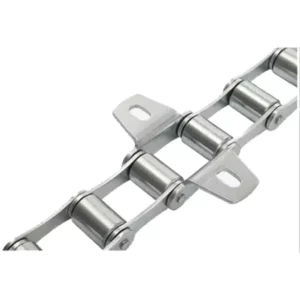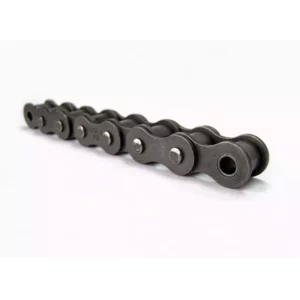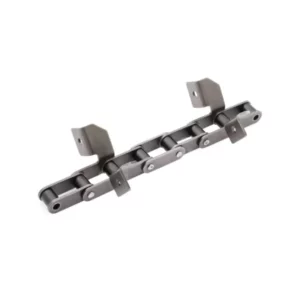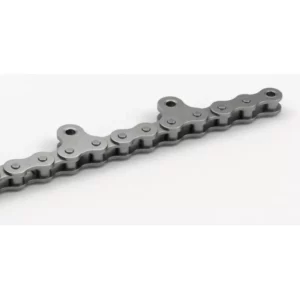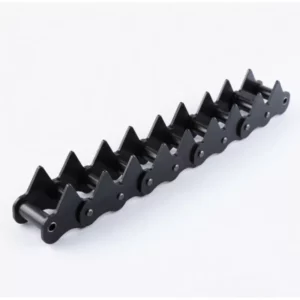
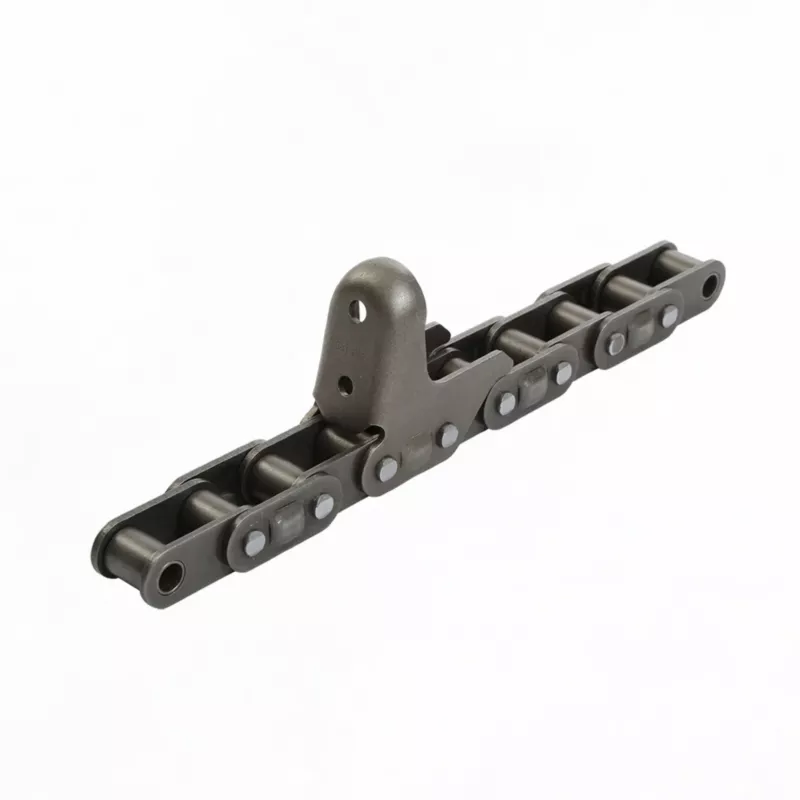
C Type Steel Agricultural Chains
Engineered for extreme Australian farming conditions, our C Type Steel Agricultural Chains feature a straight-sidebar design to prevent crop jamming. Built with carbonitrided pins for ultimate “Red Dust” abrasion resistance and 40°C+ thermal stability, these heavy-duty chains deliver unmatched reliability for your combine harvesters, balers, and precision seeders.
MOQ: 10 pcs. Minimum order value USD 1,500; mixed orders and trial quantities welcome.
🚜 Heavy-Duty C Type Steel Agricultural Chains: Engineered for Extreme Australian Farming Conditions
In the vast, unforgiving expanses of the Australian agricultural landscape, machinery is pushed beyond the limits of standard engineering. From the seemingly endless horizons of the Western Australian Wheatbelt to the tough, sun-baked soils of Queensland's Darling Downs, farming equipment operates in an environment globally recognized as one of the most abrasive and thermally demanding on Earth. During the critical, short-window harvest seasons, mechanical downtime is not merely a logistical annoyance; it is a severe financial liability. At the core of these massive harvesting and planting operations lies the drivetrain. When you need to transmit extreme torque through environments choked with crop residue, silica sand, and blistering heat, standard industrial chains simply disintegrate. This is exactly where our engineered C Type Steel Agricultural Chains step in to bridge the gap between theoretical specifications and paddock reality.
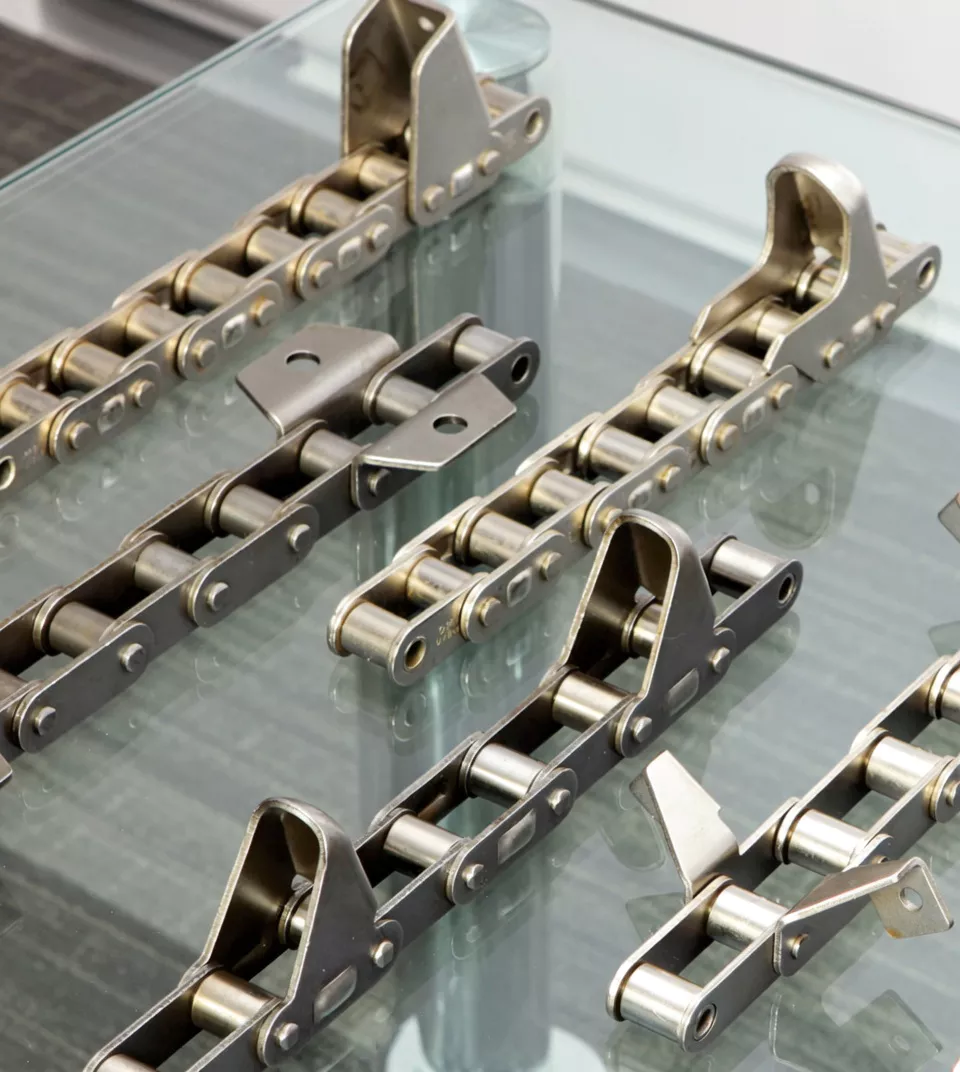
Distinct from conventional ANSI standard roller chains, the CA-series (C Type) agricultural chain is purpose-built with a highly optimized "straight-sidebar" geometry. This critical architectural difference eliminates the figure-eight "waisted" design found in industrial chains, actively preventing the accumulation of tough crop stalks, clay, and red dust within the drive mechanism. Whether deployed as heavy-duty combine harvester chains in a Class 9 machine or as the primary metering drive in a precision air seeder, our CA-series chains maintain impeccable pitch accuracy and ultimate tensile strength. They are engineered to survive sustained operation in 40°C+ ambient temperatures while resisting the severe abrasive wear caused by the Australian continent's signature silicate soils. The following technical documentation details the metallurgical superiority, dimensional precision, and proven operational pedigree of these essential agricultural machinery parts.
📊 Module ①: Technical Specifications & Dimensional Engineering
Flawless mechanical integration begins with uncompromising dimensional tolerance. An agricultural chain must engage perfectly with the sprocket teeth to distribute load evenly and prevent accelerated wear patterns. The data tabulated below represents the precise engineering metrics of our C Type agricultural chains, encompassing popular series such as the CA550, CA620, and the specialized 38 series. Every dimension is strictly controlled under our quality assurance protocols to guarantee 1:1 OEM drop-in replacement capability.
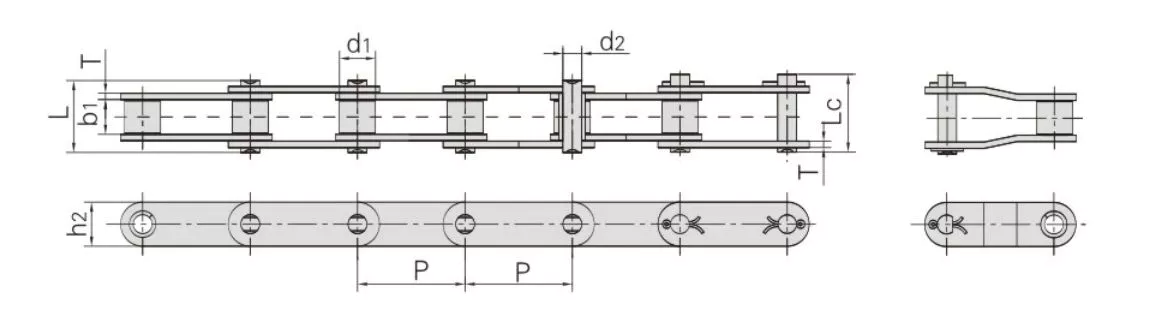
| Chain No. | Pitch (P) mm |
Roller Dia. (d1 max) mm |
Width b/w Plates (b1 min) mm |
Pin Dia. (d2 max) mm |
Pin Length (L max) mm |
Pin Length (Lc max) mm |
Plate Depth (h2 max) mm |
Plate Thick. (T max) mm |
Ultimate Tensile (Q min) KN |
Weight/Meter (q) kg/m |
|---|---|---|---|---|---|---|---|---|---|---|
| CA550 | 41.4 | 16.70 | 20.10 | 7.16 | 34.8 | 37.4 | 19.05 | 2.65 | 40.0 | 1.90 |
| CA550/S55 | 41.4 | 17.78 | 21.60 | 7.16 | 36.7 | 39.3 | 19.05 | 2.65 | 40.0 | 2.09 |
| CA555 | 41.4 | 16.70 | 12.70 | 7.16 | 29.7 | 32.4 | 19.05 | 2.65 | 50.0 | 1.83 |
| CA550HD | 41.4 | 16.70 | 19.50 | 8.28 | 35.8 | 38.5 | 20.10 | 3.05 | 42.1 | 2.05 |
| CA550R | 41.4 | 16.87 | 19.10 | 8.28 | 35.6 | 38.5 | 20.20 | 3.05 | 42.0 | 2.11 |
| CA550V | 41.4 | 17.78 | 22.23 | 8.28 | 39.0 | 42.0 | 20.20 | 3.05 | 42.1 | 2.37 |
| CA550RV | 41.4 | 16.87 | 19.81 | 8.28 | 39.0 | 42.0 | 20.20 | 3.50 | 50.0 | 2.39 |
| CA557 | 41.4 | 17.78 | 20.40 | 7.92 | 37.1 | 39.7 | 23.10 | 3.05 | 62.0 | 2.52 |
| CA620 | 42.01 | 17.91 | 14.50 | 7.16 | 42.3 | 45.0 | 19.05 | 3.25 | 39.1 | 2.49 |
| CA2801 | 30.0 | 15.88 | 19.05 | 8.28 | 35.6 | 38.5 | 19.05 | 3.25 | 47.1 | 2.50 |
| 38.1R | 38.1 | 15.88 | 19.10 | 6.92 | 33.4 | 36.2 | 17.20 | 2.60 | 30.0 | 1.72 |
| 38.4R | 38.4 | 15.88 | 19.05 | 6.92 | 33.4 | 36.2 | 17.20 | 2.50 | 33.0 | 1.69 |
| 38.4V | 38.4 | 15.88 | 18.00 | 6.92 | 33.8 | 36.25 | 17.20 | 3.05 | 40.0 | 1.84 |
| 38.4VB | 38.4 | 15.88 | 19.05 | 8.28 | 35.6 | 38.8 | 20.50 | 3.05 | 42.1 | 2.19 |
Deep Dive Engineering: The CA550 vs. CA550HD Variant
While operating on the same 41.4mm pitch standard, the mechanical demands of a tailings elevator differ drastically from those of a heavy-duty feeder house. The standard CA550 employs a 7.16mm pin, providing a reliable 40.0 KN of tensile strength—perfect for medium-load material transport. However, the CA550HD (Heavy Duty) is architected for immense shock loads. By increasing the pin diameter to 8.28mm and the side plate thickness to 3.05mm, the cross-sectional area bearing the shear load is vastly increased. This allows the HD variant to absorb sudden torque spikes without requiring modifications to the existing machine sprockets, acting as the ultimate upgrade for broadacre harvesting equipment.
🚜 Module ②: Application Guide - Where Power Meets Soil
Agricultural machinery kinematics are exceptionally complex. A C Type steel chain is rarely asked to perform in a sterile, static environment. Instead, it must execute flawless power transmission amidst violent vibrations, particulate ingress, and irregular mechanical impacts. Here is how our CA series drives the heartbeat of modern farming:
-
🌾 1. Combine Harvesters (The Core Application)
Primary Locations: Feeder houses, clean grain elevators, and tailings elevators.
The Engineering Challenge: In these zones, the chain does not merely rotate; it actively drags tons of biological material via bolted-on flights. If crop material wedges into the housing, the drive shaft applies an instantaneous, catastrophic reverse torque.
The Solution: The CA550 and CA620 series utilize the straight sidebar design. This geometry denies stalks and stems a pinch-point, ensuring fluid material flow. Furthermore, their extreme ultimate tensile strength ensures that under peak stall conditions, the chain refuses to snap, safeguarding the internal threshing components.
-
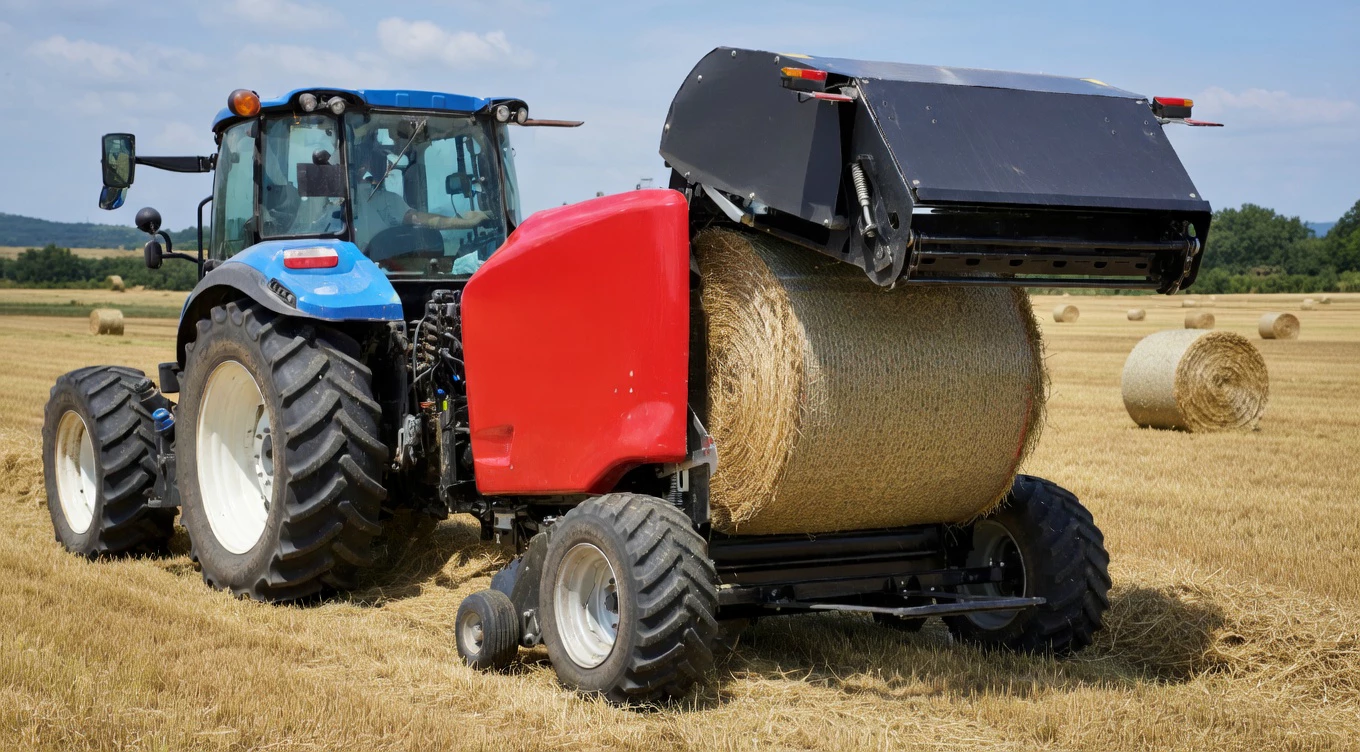
🚜 2. Round & Square Balers
Primary Locations: Pick-up header drives and main chamber roller drive systems.
The Engineering Challenge: Forage density varies wildly. As the baler ingests large, irregular windrows, the drivetrain is subjected to violent "snap loads" and severe mechanical whiplash.
The Solution: Utilizing the CA557 chain—which undergoes intense pre-stretching protocols—eliminates initial run-in elongation. This guarantees that even under relentless pulsating loads, the chain remains perfectly tensioned, eliminating the risk of skipping teeth and preserving the synchronization of the baling chamber.
-
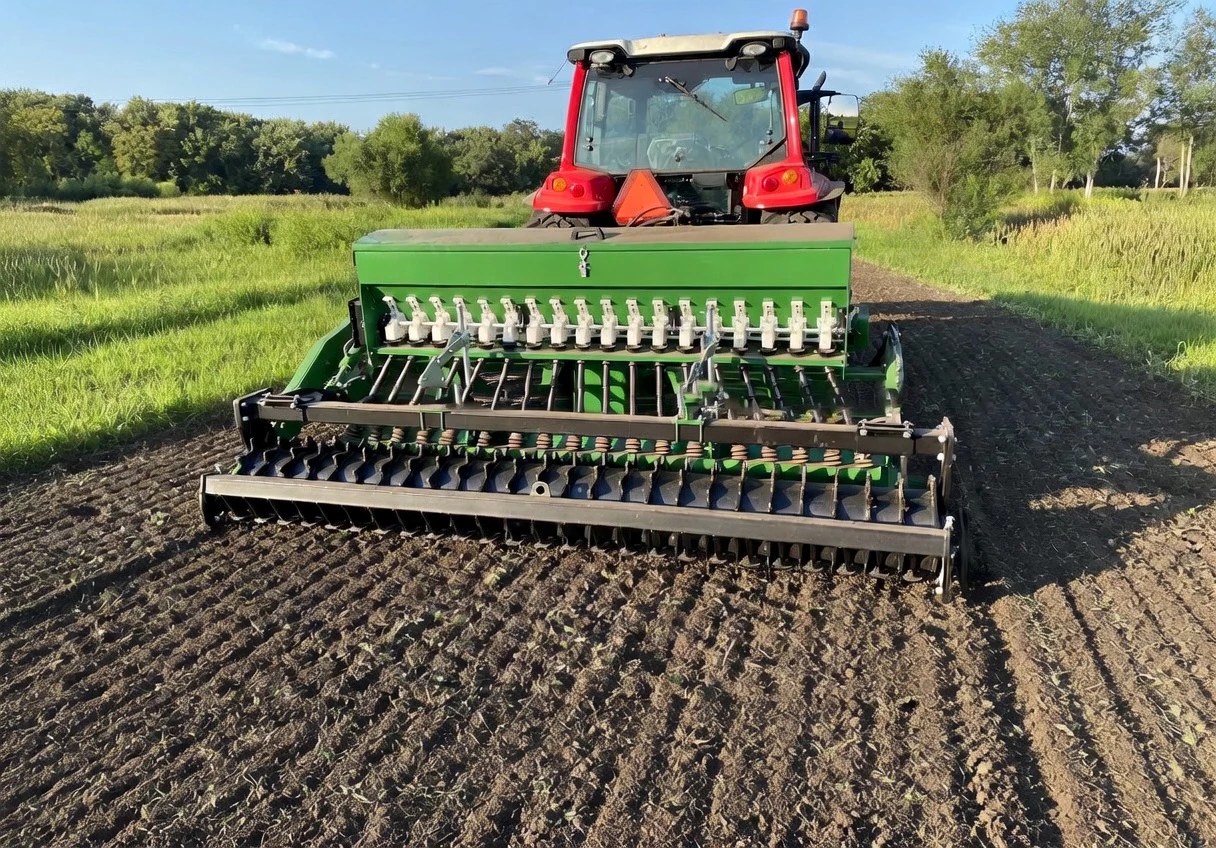
🌱 3. Precision Seeders & Fertilizer Spreaders
Primary Locations: Ground-drive metering systems and fertilizer bin floor conveyors.
The Engineering Challenge: A seeder's drive chain directly dictates the seed drop spacing. Any mechanical backlash (play) due to internal wear results in uneven crop emergence. For spreaders, the environment is highly corrosive due to nitrogen and phosphate compounds.
The Solution: Our micro-tolerance manufacturing of the pin and bush interface ensures near-zero backlash. For caustic fertilizer environments, we apply advanced zinc-plated or Dacromet surface treatments to lock out chemical pitting while maintaining structural integrity.
-
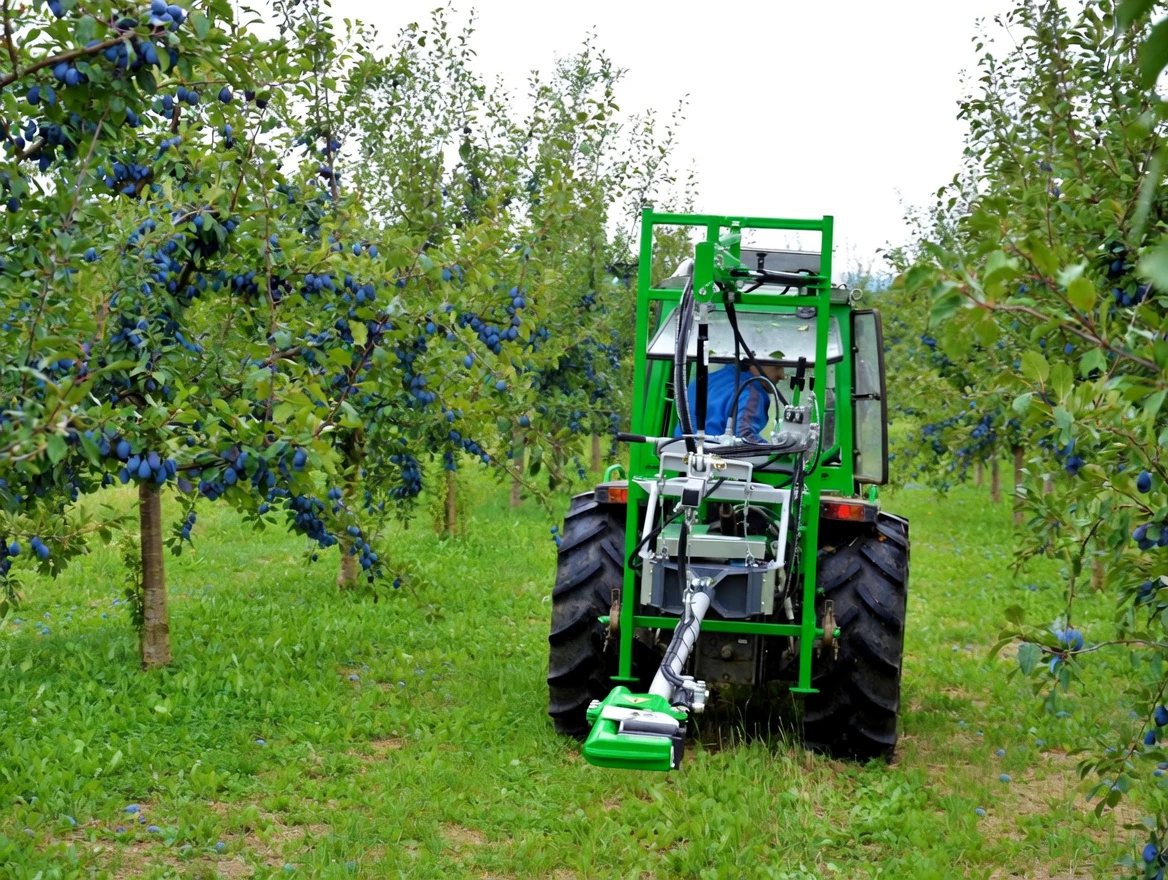
🌳 4. Orchard Tree Shakers & Heavy Mowers
Primary Locations: Eccentric vibratory drives and rotary cutter PTO transfers.
The Engineering Challenge: Ultra-high frequency vibration is the enemy of steel, causing micro-fractures in the side plates that rapidly propagate into catastrophic metal fatigue failure.
The Solution: Deploying the 38.4V series with cold-extruded plate holes and 100% full-coverage shot peening. This bombardment introduces a layer of compressive residual stress to the steel surface, exponentially increasing the chain's resistance to high-cycle fatigue.
🇦🇺 Module ③: Australia Market Suitability - Forged for the Outback
Agricultural standards developed in the mild climates of Europe or North America frequently fail when subjected to the brutal realities of Australian farming. Our engineering teams have conducted extensive field research across the continent—from the arid plains of South Australia to the massive broadacre properties in New South Wales—to develop a chain that is definitively "Aussie-Hardened."
🏜️ 1. Defeating "Red Dust" Abrasive Wear
Australia's famous red soil is laden with microscopic silica crystals. When this dust penetrates the clearance between a chain's pin and bush, it combines with internal lubricants to form a devastatingly effective "grinding paste." This paste rapidly machines away the steel, causing the chain to elongate long before its time. To combat this, our CA series pins are forged from 30CrMnTi alloy steel and subjected to a deep carbonitriding heat treatment. This metallurgical process achieves a surface hardness of HRC 58-62, creating an impenetrable shield against silica cutting forces, while preserving a ductile, shock-absorbing core.
🔥 2. Thermal Stability for 40°C+ Continuous Operation
During the peak of the Australian summer harvest, ambient temperatures regularly exceed 40°C. Inside the enclosed housing of a combine harvester, friction elevates the operating temperature of the chain up to 80°C. Under these thermal loads, inferior steel can undergo unintended annealing, losing its temper and softening. Our chains utilize an automated, continuous isothermal quenching process that locks in the martensitic microstructure. This guarantees that the steel maintains its ultimate tensile strength and dimensional stability, hour after grueling hour in the scorching heat.
🚜 3. Complete OEM Compatibility Matrix
Our C Type Agricultural Chains are manufactured in strict accordance with ANSI B29.1 and ISO 487 global transmission standards. This guarantees them as flawless, drop-in replacement parts for the vast majority of heavy machinery operating across Australian paddocks.
| Machinery Brand | Commonly Supported Platforms | Compatible Chain Series |
|---|---|---|
| John Deere | S-Series Combines, STS Harvesters, MaxEmerge Planters | CA550, CA550HD, CA557 |
| Case IH | Axial-Flow Combines (150/250 series), Early Riser Seeders | CA620, CA555, 38.4V |
| New Holland | CR Revelation Headers, BigBaler & Roll-Belt Series | CA550R, CA550V |
| MacDon | FD/D Series Draper Headers | CA550, 38.4VB |
| Horwood Bagshaw | Air Seeders & Broadacre Tillage Equipment | CA2801, CA550 |
Mechanic's Pro-Tip: To verify your replacement part, simply use a vernier caliper to measure the center-to-center distance between two adjacent pins on your worn chain. This measurement is your Pitch (P). Cross-reference this alongside the inner width (b1) with our specification chart above to guarantee a 100% perfect fit.
⚙️ Module ④: The Technical Edge - Quantifiable Superiority
We do not deal in marketing fluff. Our product superiority is anchored in measurable engineering data, massive manufacturing scale, and rigorous third-party certifications. When you install our chains, you are leveraging decades of industrial metallurgy expertise.
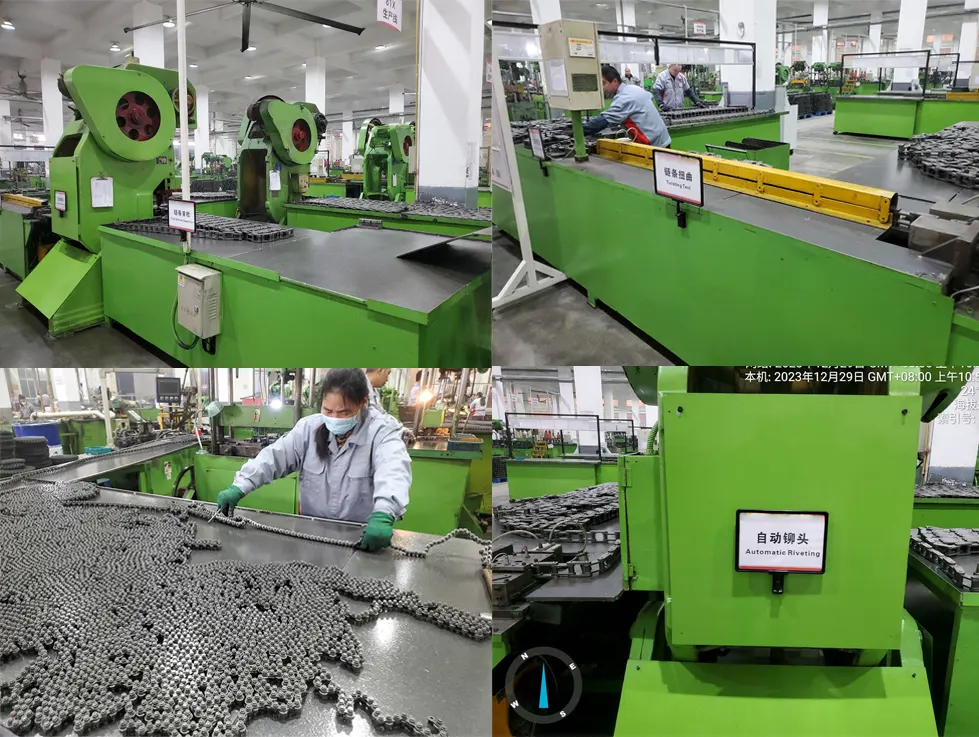
- Certified Industrial Integrity: Our manufacturing complexes operate under strict ISO 9001:2015 quality management frameworks. Furthermore, every production batch is independently audited and fatigue-tested by SGS to validate our tensile load claims before export.
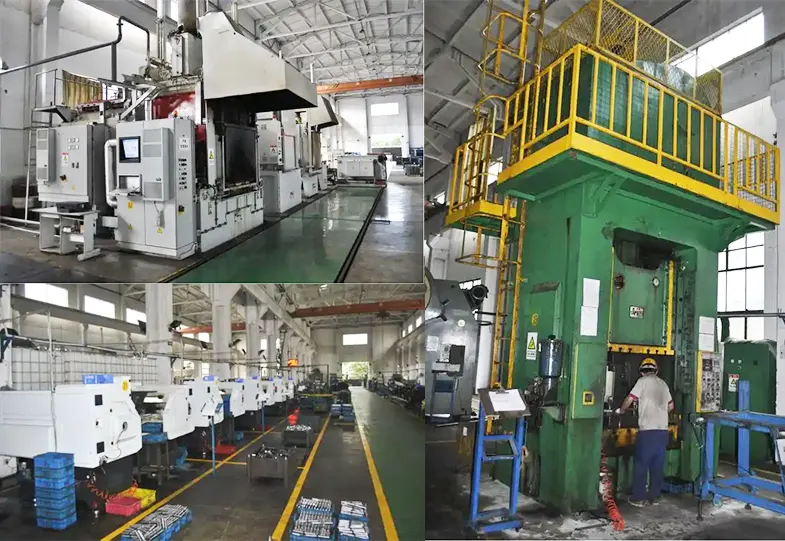
- Massive Supply Chain Capacity: Utilizing fully automated stamping, heat-treating, and assembly lines, we achieve a daily production output of 50,000 links. This immense capacity ensures that we maintain deep buffer stocks to immediately service urgent harvest-season breakdowns across the Australian continent.
- Comprehensive OEM/ODM Capabilities: Farming equipment evolves rapidly. Our engineering division goes beyond standard catalogs to offer bespoke customization. Whether you require a non-standard pitch, specially welded flight attachments for a custom conveyor, or advanced anti-corrosion treatments (such as Nickel-plating or Dacromet coatings) for chemical resistance, we deliver blueprint-accurate solutions.
- Proprietary Pre-Stretching Protocols: This is a critical differentiator. Post-assembly, every length of our agricultural chain is mounted on a hydraulic tensioning rig and subjected to a static load equal to at least 1/3 of its ultimate breaking strength. This process forcibly seats the pins and bushes, entirely eliminating the "break-in stretch" that plagues inferior chains and forces operators to constantly adjust tensioners.
- Local Timezone Engineering Support: World-class hardware requires world-class support. We eliminate the frustration of international procurement by providing dedicated technical support aligned with AEST (Australian Eastern Standard Time) 9:00–17:00. From wear analysis to cross-referencing obscure machinery manuals, our engineers are on standby.
🌍 Module ⑦: Global Case Studies - Proven in the Dirt
Theoretical specifications are useless unless they translate to paddock performance. Here is how our CA-series chains are securing harvests for high-volume agricultural operations across the globe:
🌍 Australia (Western Australia) | Large-Scale Grain Contractor
Operational Scenario: Running a fleet of six John Deere S780s harvesting wheat non-stop. Operating in extremely dry conditions with highly abrasive silica sand.
Customer Quote: "The abrasive WA dust usually eats our feeder chains alive. Switching to these CA550HD chains drastically reduced our mid-season tensioning. We finished the 6-week harvest without a single snapped link. Incredible durability."
⭐⭐⭐⭐⭐
🌍 Australia (Queensland) | High-Volume Sorghum & Sugar Farm
Operational Scenario: Utilizing Case IH combines in high-heat, high-humidity environments dealing with notoriously tough, stalky crop residue.
Customer Quote: "When dealing with heavy sorghum crops, the torque on the elevators is massive. The straight sidebar design of the CA620 means the stalks don't jam in the chain. It’s saved us countless hours of unblocking the machine."
⭐⭐⭐⭐⭐
🌍 USA (Midwest - Iowa) | OEM Precision Seeder Manufacturer
Operational Scenario: Sourcing high-precision drive chains for their next-generation pneumatic seed metering units.
Customer Quote: "Precision is everything in our planters. The dimensional consistency across a 50-meter roll of the CA2801 chain is the tightest we've measured. It entirely eliminates seeding skips caused by chain slack and backlash."
⭐⭐⭐⭐⭐
🌍 Germany (Bavaria) | Agricultural Aftermarket Distributor
Operational Scenario: Bulk importing chains to service the massive European Krone and Claas harvesting machinery repair sector.
Customer Quote: "The metallurgical test reports matched our independent lab tests perfectly. The ISO standard compliance is flawless. Supplying 50,000 links on such short notice is a testament to their manufacturing scale."
⭐⭐⭐⭐⭐
🌍 South Africa (Free State) | Commercial Maize Producer
Operational Scenario: Heavy-duty maize harvesting in extreme heat with high levels of particulate dust and rough terrain.
Customer Quote: "Heat and dust are our biggest enemies. These chains are the only ones we've used that don't develop 'stiff links' after long days in the sun. The heat treatment on the pins makes a massive difference."
⭐⭐⭐⭐⭐
⚙️ Module ⑧: Integrated Drivetrain Optimization (Related Products)
The first law of mechanical engineering regarding power transmission is simple: Never install a premium, brand-new chain onto a heavily worn sprocket!
As sprockets wear, the teeth develop a "hooked" profile. This distorted geometry forcibly alters the pitch of any new chain it engages with, effectively tearing the chain apart and reducing its operational lifespan by up to 50% within a matter of hours. To achieve 100% power transmission efficiency and maximum fatigue life, we strongly advocate for a complete drivetrain overhaul.
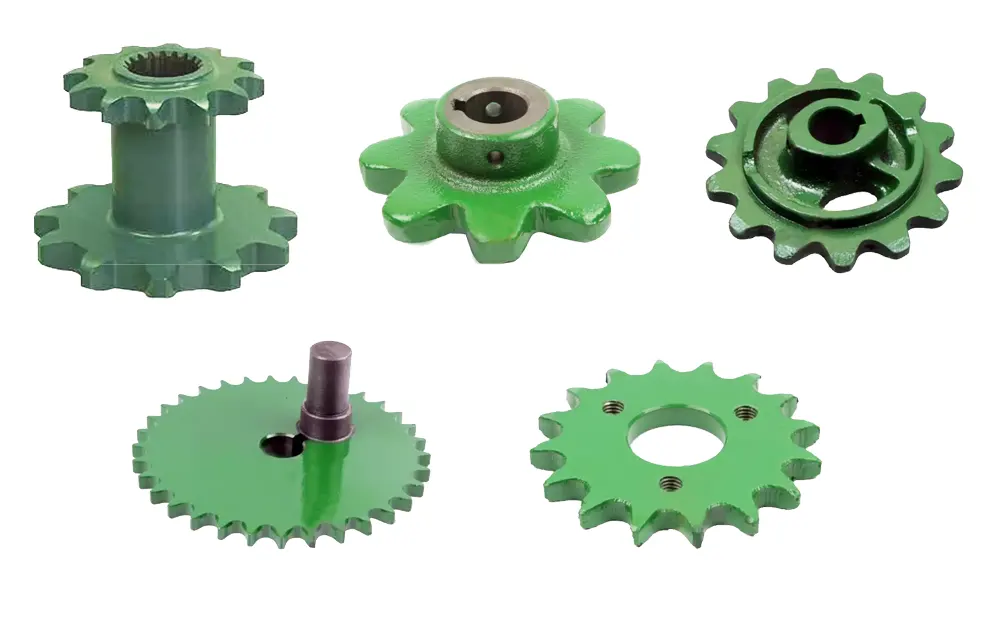
Induction-Hardened Agricultural Sprockets
Our precision-machined sprockets undergo localized induction hardening, calibrating the tooth surface hardness to perfectly match the metallurgical profile of our CA series chain rollers. This synchronized metallurgy eliminates uneven sheer forces and prevents accelerated cutting wear. We stock an exhaustive inventory of teeth configurations, bore sizes, keyways, pulleys, and idler gears.
👉 Explore our complete drivetrain solutions to maximize your machinery's lifespan:
Visit our comprehensive catalog here: agricultural sprockets.
❓ Module ⑨: Interactive Engineering FAQ
1. What is the fundamental difference in materials and design between a C-Type (CA series) chain and standard industrial A/B roller chains?
2. I operate a vintage Horwood Bagshaw seeder. Can you manufacture custom, non-standard pitch chains?
3. Are your manufacturing processes compliant with Australian machinery safety and import standards?
4. How do you prevent the new CA550HD chain on my combine from constantly stretching and requiring tensioner adjustments?
5. The chains on my fertilizer spreaders rust out and snap rapidly. Do you offer specialized material solutions?
🚀 Module ⑩: Action Center - Secure Your Harvest Today
Eliminate Downtime. Upgrade Your Machinery's Drivetrain.
The harvest window waits for no one. Do not allow subpar transmission components to become the weak link in your agricultural profitability. As a leading supplier to the global agricultural machinery sector, we provide the industrial-grade, Aussie-hardened solutions you need. Contact our engineering team today for technical drawings and bulk pricing.
We respond to all technical and pricing inquiries within 24 business hours (AEST).
Learn more about our manufacturing facilities: Company Profile | Return to Home
Engineered for extreme Australian farming conditions, our C Type Steel Agricultural Chains feature a straight-sidebar design to prevent crop jamming. Built with carbonitrided pins for ultimate “Red Dust” abrasion resistance and 40°C+ thermal stability, these heavy-duty chains deliver unmatched reliability for your combine harvesters, balers, and precision seeders.
MOQ: 10 pcs. Minimum order value USD 1,500; mixed orders and trial quantities welcome.