B Type Large Bore Flexible Jaw Coupling
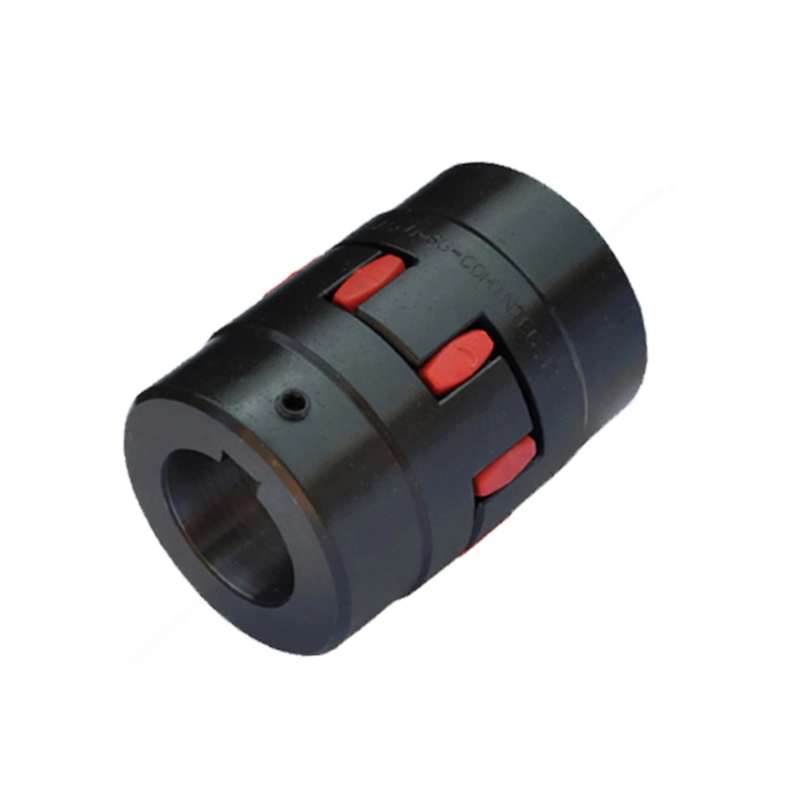
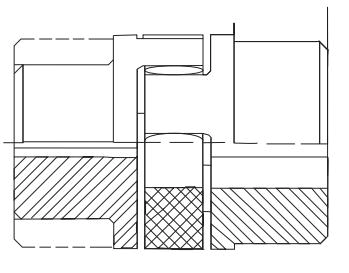
The B Type Large Bore Flexible Jaw Coupling uses steel hub sleeves to accommodate bore diameters up to Ø220 mm, making it the preferred choice for heavy-load drive units including hoists, rolling mills, and construction machinery. Nominal torque ranges from 10 to 18,650 N·m with a compact, low-inertia design that shares the standard A Type spider element.
MOQ: 50 pcs. Minimum order value USD 1,500; mixed orders and trial quantities welcome.
B Type Large Bore Flexible Jaw Coupling
Steel-sleeved heavy-duty jaw coupling engineered for hoists, rolling mills, and construction machinery — handling bore diameters up to Ø220 mm at torques up to 18,650 N·m.
Why Choose the B Type Over a Standard Jaw Coupling?
When shaft diameters exceed the bore capacity of standard cast-iron jaw coupling hubs, the B Type Large Bore Flexible Jaw Coupling provides the solution. By integrating precision steel sleeves into the hub body, the B Type achieves bore capacities up to Ø220 mm — making it particularly well suited to the large-shaft drives found in hoisting equipment, rolling mills, and heavy construction machinery.
Despite its heavy-duty capability, the B Type retains the same compact, low-inertia profile as the A Type. The outer dimensions and spider interface are compatible across corresponding size designations, meaning engineering teams can select the appropriate hub style based on bore requirement alone — simplifying procurement and spare parts management.
The polyurethane spider element provides torsional flexibility, damping cyclic torque pulses generated by reciprocating or variable-load drives while simultaneously accommodating shaft misalignment within specified limits. Hardness options of 92 ShA (standard) and 98 ShA (high-torque, +70% torque capacity) allow the same hub assembly to serve a broader range of load conditions.
Engineering Advantages of the B Type Design
Steel Sleeve Hub Construction
The steel sleeve allows a larger bore to be machined within the same outer hub diameter, without the wall-thickness limitations imposed by cast iron or aluminium. This is the defining difference from the A Type and the reason the B Type is specified for heavy-load drive units.
Suitable for Larger Installation Apertures
The B Type is dimensioned for installation locations where the available aperture is larger than standard — such as machine frames sized for future capacity expansion. This avoids the need for adapter plates or housing modifications.
Compact Design, Low Moment of Inertia
Despite the step up in bore capacity, the B Type's rotational inertia remains low relative to its torque rating — an important consideration for drives with frequent start-stop cycles or rapid load reversals.
Shared Spider Inventory with A Type
The elastomeric spider is common across A and B Type hubs of the same size designation. Plants running both hub types carry a single spider SKU per size — reducing spare parts inventory value and simplifying maintenance scheduling.
Misalignment Tolerance
The elastomeric spider accommodates radial, angular, and axial misalignment, protecting connected gearboxes, bearings, and motor windings from stresses that would otherwise result from minor shaft alignment errors during installation or thermal growth during operation.
Custom Bore & Keyway to Specification
As with all GBC jaw coupling models, bore diameter and keyway configuration are machined to customer drawings. Metric, imperial, and spline bore profiles are available. Bore tolerances are held to H7 as standard.
B Type Series — Technical Specifications
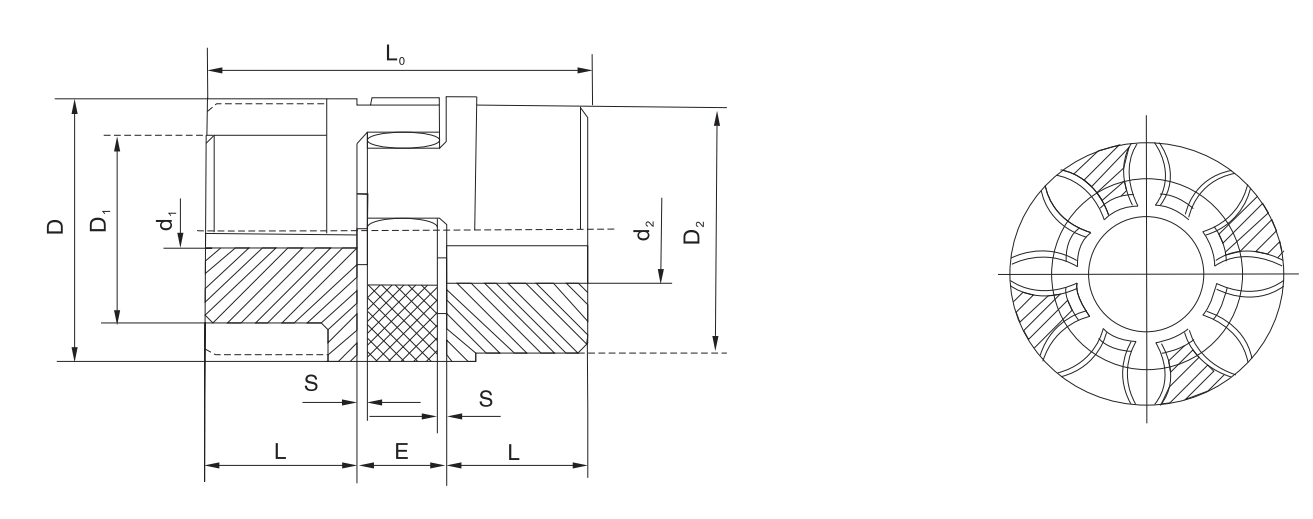
| Model | Nom. Torque (N·m) | Max Speed (rpm) | Bore d₁,d₂ (mm) | L (mm) | L₀ (mm) | D (mm) | Weight (kg) |
|---|---|---|---|---|---|---|---|
| TS19B | 10 | 19000 | 6–25 | 25 | 66 | 40 | 0.328 |
| TS24B | 35 | 14000 | 8–35 | 30 | 78 | 55 | 0.68 |
| TS28B | 95 | 11800 | 10–40 | 35 | 90 | 65 | 1.16 |
| TS38B | 190 | 9500 | 12–48 | 45 | 114 | 80 | 2.27 |
| TS42B | 265 | 8000 | 14–55 | 50 | 126 | 95 | 3.57 |
| TS48B | 310 | 7100 | 15–60 | 56 | 140 | 105 | 4.80 |
| TS55B | 410 | 6300 | 20–70 | 65 | 160 | 120 | 7.87 |
| TS65B | 625 | 5600 | 22–75 | 75 | 185 | 135 | 10.89 |
| TS75B | 1280 | 4750 | 30–90 | 85 | 210 | 160 | 17.73 |
| TS90B | 2400 | 3750 | 40–100 | 100 | 245 | 200 | 29.60 |
| TS100B | 3300 | 3350 | 50–110 | 110 | 270 | 225 | 43.0 |
| TS110B | 4800 | 3000 | 60–125 | 120 | 295 | 255 | 58.6 |
| TS125B | 6650 | 2650 | 60–145 | 140 | 340 | 290 | 88.4 |
| TS140B | 8600 | 2350 | 60–165 | 155 | 375 | 320 | 120.8 |
| TS160B | 12800 | 2000 | 80–190 | 175 | 425 | 370 | 179.1 |
| TS180B | 18650 | 1800 | 85–220 | 195 | 475 | 420 | 261.0 |
Industries & Applications
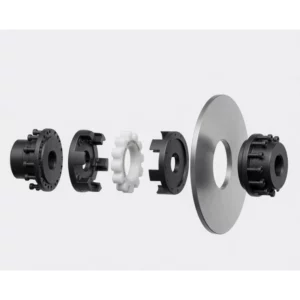
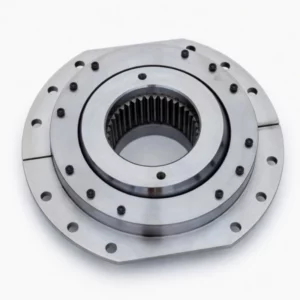
The B Type's steel sleeve and extended bore capacity position it as the coupling of choice wherever heavy shafts and high cyclic loads are the norm. Explore the complete GBC couplings catalogue for flanged, double-elastomer, and brake-disc variants suited to other heavy-duty configurations.
Hoisting & Lifting Equipment
Bridge cranes, overhead hoists, and mining winders transmit high torque through large-diameter drum shafts. The B Type's extended bore capacity and steel sleeve durability make it the preferred coupling for these demanding duty cycles.
Rolling Mills
Steel, aluminium, and copper rolling mills subject drive shafts to severe reversing torque and shock loading. The B Type absorbs peak torque spikes through the elastomeric spider while the steel sleeve resists the high clamping forces needed on large-bore keyway fits.
Construction Machinery
Concrete mixers, tower crane slewing drives, and piling rigs operate under variable and shock loading conditions in harsh outdoor environments. The polyurethane spider resists oil, grease, and moisture ingress, and its failure mode is progressive rather than sudden — providing a safety margin not offered by rigid couplings.
Heavy Conveyor Drives
Long overland conveyors, underground mine belt drives, and port shiploaders use large-diameter gearbox output shafts that fall outside the bore range of standard jaw couplings. The TS125B through TS180B models are regularly specified on these systems.
Customer Reviews & Case Studies
Australia — Mining & Minerals Processing
A hard-rock gold mine in Western Australia replaced forged-steel jaw couplings on six underground hoist drum drives with TS140B units. The steel sleeve hubs accommodated the 160 mm drum shaft diameter, and the elastomeric spider reduced shock transmission to the hoist motor by a measurable margin during emergency stop cycles. After 14 months of continuous operation, no spider replacement had been required.
★★★★★
"Handles the shock loads from emergency stops without complaint. Solid product."
United Kingdom — Steel Production
A steel strip rolling mill in South Wales specified TS180B couplings on three roughing stand drives. The 220 mm bore capacity accommodated the existing roll neck shaft diameter without requiring costly shaft modification. The shared spider inventory with existing A Type couplings on auxiliary drives reduced the site's coupling spare parts holding by consolidating to a single spider SKU per size.
★★★★★
"The shared spider spec with our A Type units saved us a significant inventory cost."
Canada — Port & Material Handling
A bulk materials terminal on the St. Lawrence Seaway fitted TS110B couplings to ship unloader belt drive gearboxes. Operating in sub-zero winter temperatures, the polyurethane spiders maintained flexibility and torque transmission without the brittleness observed with rubber elements in previous coupling designs. The terminal reported zero cold-weather coupling failures across two winter seasons.
★★★★☆
"First couplings we've used that don't go hard in a Canadian winter. Impressed."
Japan — Construction Machinery OEM
A major construction equipment manufacturer based in Osaka integrated TS75B and TS90B couplings into the slewing drive assemblies of a new concrete pump truck platform. The compact dimensions of the B Type allowed the coupling to fit within the existing driveline envelope, and the OEM confirmed dimensional repeatability across three production batches met their tolerance requirements.
★★★★★
"Consistent dimensions batch to batch — important for our assembly line tolerance stack-up."
Frequently Asked Questions
For applications requiring misalignment compensation beyond the B Type's capacity, consider the S Type Dual Elastomer Flexible Jaw Coupling, which uses a three-piece double-elastomer structure to accommodate significantly larger installation misalignment.
Sourcing B Type Jaw Couplings for Heavy-Duty Applications?
GBC supplies B Type large bore flexible jaw couplings to mining operators, OEM machine builders, and industrial distributors throughout Australia and internationally. Provide your shaft diameter, torque requirement, and application details — our engineering team will confirm the correct model and machining specification within one business day.
The B Type Large Bore Flexible Jaw Coupling uses steel hub sleeves to accommodate bore diameters up to Ø220 mm, making it the preferred choice for heavy-load drive units including hoists, rolling mills, and construction machinery. Nominal torque ranges from 10 to 18,650 N·m with a compact, low-inertia design that shares the standard A Type spider element.
MOQ: 50 pcs. Minimum order value USD 1,500; mixed orders and trial quantities welcome.