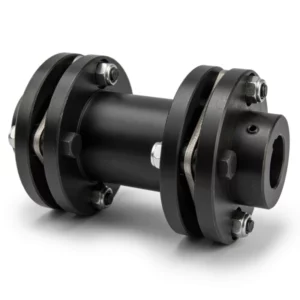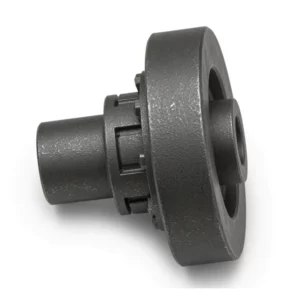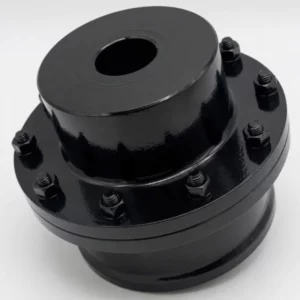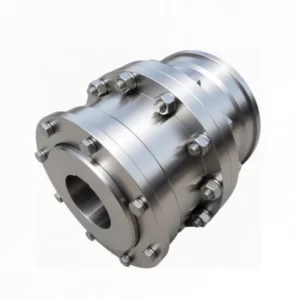
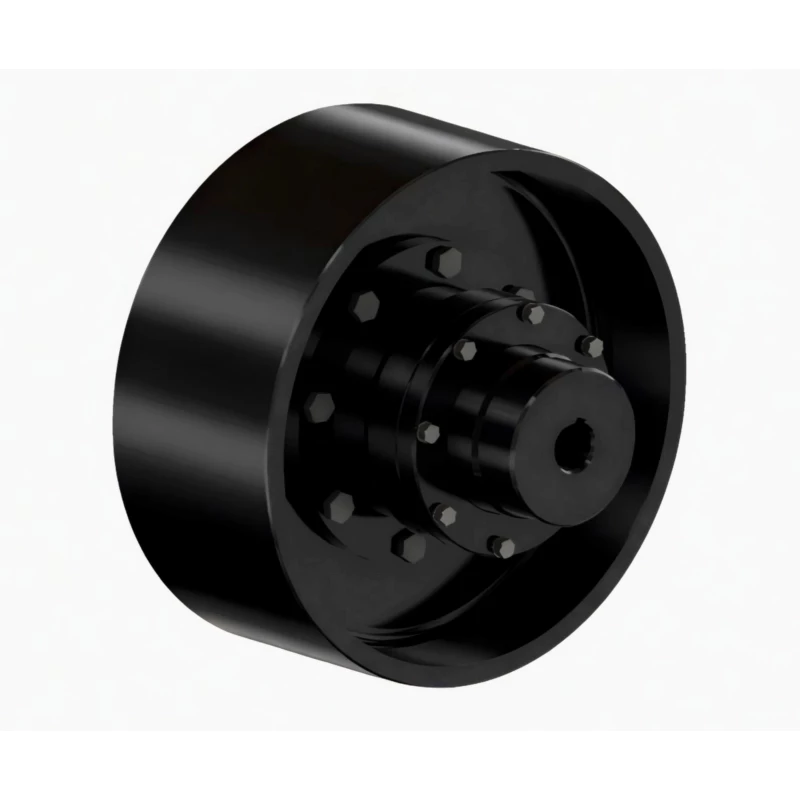
WGZ Drum Shape Gear Coupling with Brake Drum
WGZ drum shape gear coupling with integral cylindrical brake drum for shoe brakes per JB/T7003-93. 14 sizes, 710 N·m to 160,000 N·m, up to 4000 RPM. Brake drum D0 160–800 mm. Y, J1, Z1 bores. Preferred for heavy crane hoists, mine auxiliary drives, inclined conveyor emergency stops, and spring-applied brake systems.
MOQ: 50 pcs. Minimum order value USD 1,500; mixed orders and trial quantities welcome.
WGZ Drum Shape Gear Coupling with Brake Drum — Shoe Brake Type
Crowned-tooth gear coupling with an integral cylindrical brake drum for shoe brakes. High braking torque in a compact package — the preferred brake coupling for heavy hoisting, crane drives, and large conveyor emergency stops. Factory direct to Australia.
Product Overview
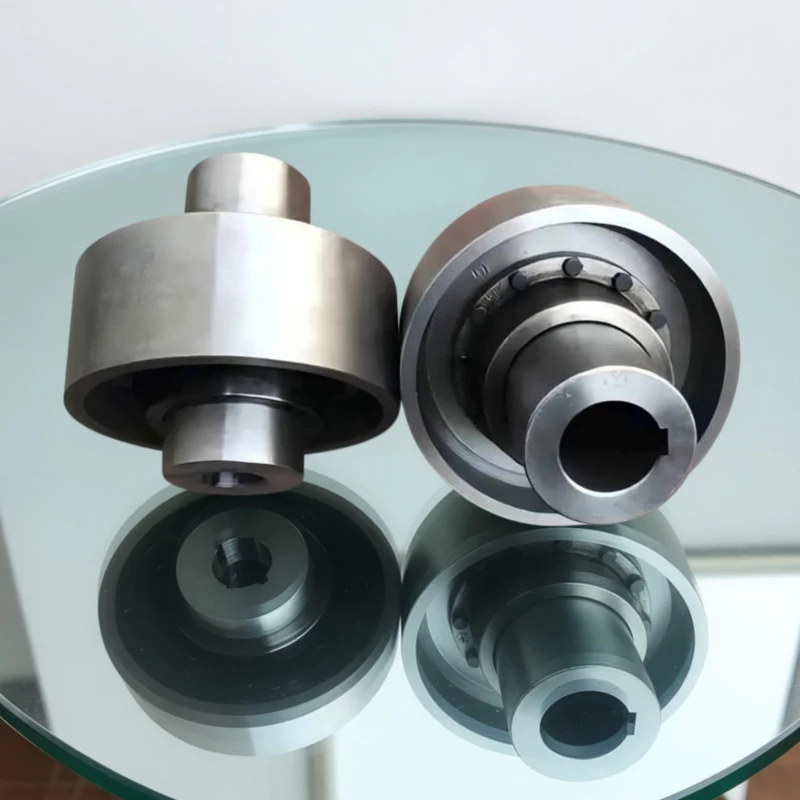
The WGZ drum shape gear coupling with brake drum is a heavy-duty power transmission component that integrates a crowned-tooth gear coupling with a machined cylindrical brake drum for shoe brake systems. Conforming to JB/T7003-93, the WGZ is the member of the WG coupling family selected when a shoe brake — rather than a disc caliper brake — is specified at the drive shaft. It is the preferred brake coupling for heavy hoisting drives, large crane travel and hoist systems, mine auxiliary drives, and industrial conveyor emergency stop applications where shoe brakes deliver the highest braking force per unit actuator size.
The WGZ's defining feature is its integral cylindrical brake drum. Unlike the WGP's flat disc, which generates braking force through caliper pad clamping, the WGZ drum provides a full-circumference cylindrical surface against which shoe brake pads press radially inward. This geometry allows shoe brakes to develop substantially higher braking torque from a given actuator force — a critical advantage on large crane hoists and conveyor emergency stops where the braking torque requirement may be several times the transmission torque.
GBC manufactures and exports WGZ couplings factory-direct to Australian crane manufacturers, mining equipment builders, materials handling OEMs, and plant maintenance teams, with full material traceability documentation and ISPM-15 compliant packing.
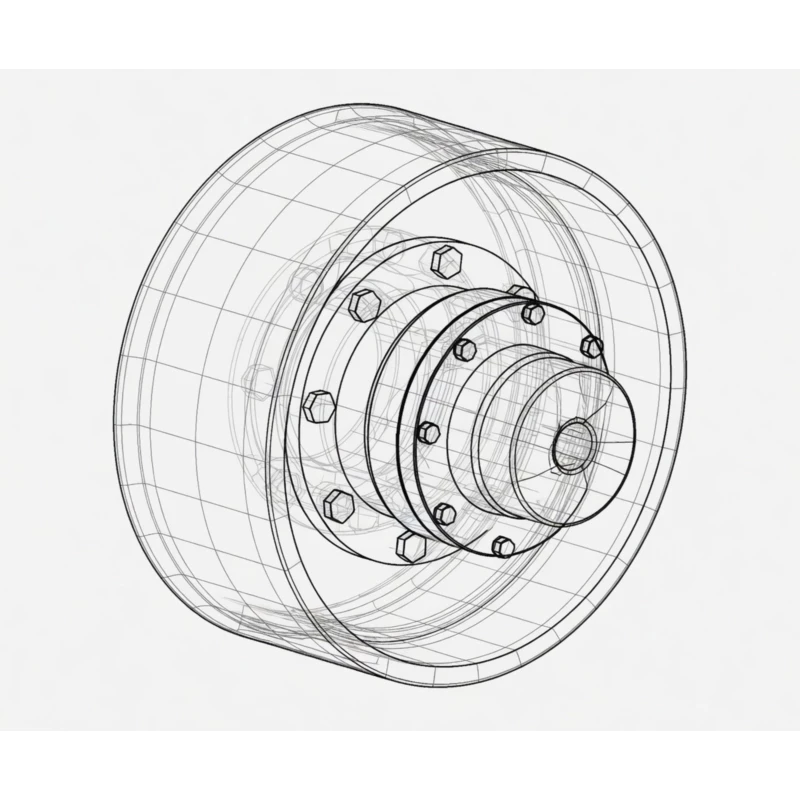
Specifications & Size Matrix — WGZ1 to WGZ14
All specifications are from the WGZ catalogue per JB/T7003-93. Dimensions in millimetres. Weight and inertia are calculated at maximum shaft hole diameter, Y type bore, without the brake drum — add drum values from the brake drum table below. The C, C1, C2 axial clearance values in the following table are for the maximum D0 for each size; for smaller D0 options, add K/2 for the chosen drum to the base table values.
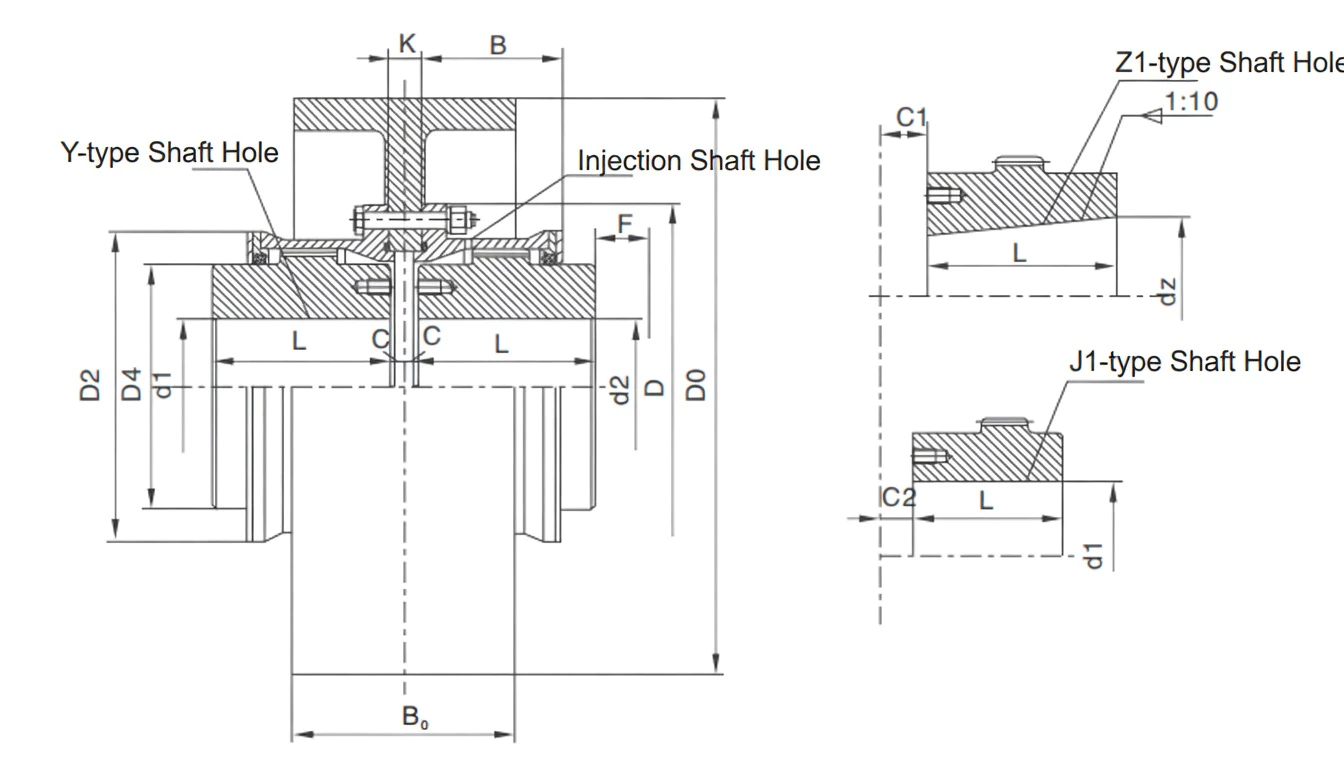
WGZ1 – WGZ14 Coupling Specifications
| Size | Torque (N·m) |
Speed (rpm) |
Bore d1,d2,dz (mm) |
Y bore length |
J1,Z1 length |
D0 Options (mm) |
D | D2 | D4 | B | F | Inertia (Kg·m²) |
Weight (Kg) |
|---|---|---|---|---|---|---|---|---|---|---|---|---|---|
| WGZ1 | 710 | 4000 | 12 – 42 | 32–112 | –/44/84 | 160 / 200 / 250 | 122 | 98 | 60 | 58 | 30 | 0.0078 | 5.62 |
| WGZ2 | 1250 | 4000 | 22 – 56 | 52–112 | –/60/84 | 200 / 250 / 315 | 150 | 118 | 77 | 68 | 30 | 0.022 | 9.65 |
| WGZ3 | 2500 | 4000 | 22 – 63 | 52–142 | –/60/107 | 200 / 250 / 315 | 170 | 140 | 90 | 80 | 30 | 0.047 | 16.5 |
| WGZ4 | 4500 | 3000 | 30 – 80 | 82–172 | –/84/132 | 250 / 315 / 400 | 200 | 160 | 112 | 90 | 30 | 0.098 | 25.3 |
| WGZ5 | 7100 | 3000 | 30 – 90 | 82–172 | –/84/132 | 315 / 400 | 225 | 180 | 128 | 100 | 30 | 0.174 | 34.7 |
| WGZ6 | 10000 | 3000 | 32 – 100 | 82–212 | –/107/167 | 315 / 400 | 245 | 200 | 145 | 112 | 30 | 0.29 | 51.3 |
| WGZ7 | 14000 | 2500 | 32 – 110 | 82–212 | –/107/167 | 400 / 500 | 272 | 230 | 160 | 122 | 30 | 0.53 | 68 |
| WGZ8 | 20000 | 2500 | 55 – 125 | 112–212 | –/107/167 | 400 / 450 | 290 | 245 | 176 | 136 | 30 | 0.71 | 79 |
| WGZ9 | 25000 | 2000 | 65 – 140 | 142–252 | 107/202 | 400 / 500 / 630 | 315 | 265 | 190 | 140 | 30 | 1.05 | 106.5 |
| WGZ10 | 40000 | 2000 | 75 – 160 | 142–302 | 107/242 | 400 / 500 / 630 | 355 | 300 | 225 | 165 | 30 | 1.74 | 159 |
| WGZ11 | 56000 | 1700 | 85 – 180 | 172–302 | 132/242 | 500 / 630 / 710 | 412 | 345 | 256 | 180 | 40 | 3.67 | 215 |
| WGZ12 | 80000 | 1700 | 120 – 200 | 212–352 | 167/282 | 500 / 630 / 710 | 440 | 375 | 288 | 207 | 40 | 6.4 | 303 |
| WGZ13 | 112000 | 1700 | 140 – 220 | 252–352 | 202/282 | 630 / 710 | 490 | 425 | 320 | 235 | 50 | 10.45 | 391 |
| WGZ14 | 160000 | 1500 | 160 – 260 | 302–410 | 242/330 | 710 / 800 | 545 | 462 | 362 | 265 | 50 | 17.48 | 523 |
Notes: Weight and inertia do not include the brake drum — add drum values from table below. Max Z1 taper bore diameter is 220 mm. C, C1, C2 values: add K/2 for the chosen D0 to base table values. Y bore length range shown; J1 and Z1 lengths are different — refer to dimensional drawing.
Brake Drum Specifications — D0 Parameters, Weight, and Inertia
| D0 Brake Drum Diameter (mm) |
T — Drum Width (mm) |
K — Hub Height (mm) |
Drum Weight (Kg) |
Drum Inertia (Kg·m²) |
Compatible WGZ Sizes |
|---|---|---|---|---|---|
| 160 | 70 | 6 | 2.83 | 0.014 | WGZ1 |
| 200 | 85 | 8 | 5.20 | 0.043 | WGZ1, WGZ2, WGZ3 |
| 250 | 105 | 10 | 10.1 | 0.128 | WGZ1, WGZ2, WGZ3, WGZ4 |
| 315 | 135 | 12 | 17.2 | 0.354 | WGZ2, WGZ3, WGZ4, WGZ5, WGZ6 |
| 400 | 170 | 14 | 33.4 | 1.11 | WGZ4, WGZ5, WGZ6, WGZ7, WGZ8, WGZ9, WGZ10 |
| 500 | 210 | 18 | 56.3 | 3.07 | WGZ7, WGZ8 (450 only), WGZ9, WGZ10, WGZ11 |
| 630 | 265 | 22 | 101.3 | 8.55 | WGZ9, WGZ10, WGZ11, WGZ12, WGZ13 |
| 710 | 300 | 22 | 145.8 | 15.52 | WGZ11, WGZ12, WGZ13, WGZ14 |
| 800 | 340 | 26 | 203.0 | 26.76 | WGZ14 |
Note: Drum weights and inertia values are for the drum component only. C, C1, C2 clearance values in main table are for maximum D0 per size; for other D0 options add K/2 from this table. Max taper bore dz (Z1 type) is 220 mm per JB/T7003-93.
Custom Bore, Non-Standard D0, and Special Drum Surface Treatments Available
Need a non-standard bore, a drum diameter or width outside the catalogue range, or a hardened drum surface for high-wear applications? GBC accommodates custom specifications to drawing. Send your shoe brake model, required braking torque, and shaft drawing for an engineering assessment within 24 hours.
Technical Definition and Working Principle
The WGZ — Shoe Brake Drum Integrated with Crowned-Tooth Coupling
The WGZ consists of two elements working in combination: the WG-series crowned-tooth gear coupling body and an integral cylindrical brake drum. The coupling half carries the brake drum as an extended hub — the drum outer surface is the braking interface, and the same hub carries the external crowned gear teeth that mesh with the outer sleeve's internal straight teeth for torque transmission.
When the shoe brake actuator applies, the brake shoe pads press against the drum's outer cylindrical surface over an arc contact angle. The friction force between pads and drum generates a braking torque opposing shaft rotation. The braking torque developed is proportional to the drum radius (D0/2), the total pad normal force, and the friction coefficient between pad and drum — and because the cylindrical geometry allows a wide pad contact arc (typically 60–120 degrees per shoe), shoe brakes on large drums generate very high braking torque from modest actuator forces. This is the physical advantage of shoe brakes over caliper disc brakes for heavy-duty hoisting: the torque arm is the full drum radius, and the contact area per shoe is far larger than a disc brake pad.
The gear coupling element functions identically to the WG base series — two crowned tooth meshes provide angular, radial, and axial misalignment compensation. When the shoe brake engages, the braking reaction moment at the drum hub is transmitted into the shaft through the coupling bore. The WGZ's crowned teeth absorb any axial component of this braking reaction through the tooth mesh axial sliding clearance, preventing it from being transmitted to motor or gearbox bearings as an additional axial thrust event.
WGZ vs WGP — Shoe Drum vs Caliper Disc: Choosing the Right Brake Type
The selection between WGZ (shoe brake) and WGP (disc caliper brake) is one of the most practically significant decisions in the design of a braked drive system. The rule of thumb is straightforward: choose WGZ when maximum braking torque from minimum actuator size is the primary requirement; choose WGP when fast response, consistent braking in wet or hot conditions, and compatibility with VFD-controlled drives are the priorities. For heavy hoisting and conveyor emergency stops where the braking torque must be several times the drive torque, the WGZ's shoe drum geometry is technically superior.
WGZ vs NGCL and NGCLZ — Similar Drums, Different Base Couplings
Both WGZ and NGCL/NGCLZ carry cylindrical brake drums for shoe brakes per JB/T7003-93. The WGZ uses the WG coupling body — a compact, high-speed crowned-tooth design that supports Y, J1, and Z1 bores and speeds up to 4000 RPM. The NGCL and NGCLZ use a different, purpose-built coupling body with a different flange geometry, optimised specifically for mine hoist and crane hoist drives where the coupling must connect to a separate drum shaft. If your application requires an intermediate shaft (spacer) between the coupling and the driven machine — common on mine hoist layouts where the hoist drum is separated from the gearbox by several hundred millimetres — the NGCLZ is the correct choice. For standard close-coupled horizontal drives requiring a shoe brake, the WGZ is the more versatile option.
Crowned Tooth Geometry and Misalignment Compensation
The WGZ gear coupling element accommodates angular misalignment of 1.0 to 1.5 degrees per mesh, radial parallel offset, and axial displacement through the axial sliding of crowned teeth within the outer sleeve. On braked drives, the additional stress of repeated brake application cycles is superimposed on the transmission torque loading. The WGZ's crowned tooth distributes peak loads from both transmission and braking as Hertzian contact ellipses rather than edge-concentrated line contacts, significantly extending tooth life compared to straight-tooth equivalents under the same combined loading conditions.
Comparison with Other Coupling and Brake Combinations
| Feature | WGZ (this product) | WGP (disc / caliper) | WG (no brake) | Jaw Coupling |
|---|---|---|---|---|
| Braking Component | Cylindrical drum — shoe brake | Flat disc — caliper brake | None | None |
| Braking Torque per Actuator Force | High — wide arc contact area | Moderate — pad contact area | N/A | N/A |
| Performance in Dusty Conditions | Good — drum rotation expels dust | Good | N/A | N/A |
| Brake Response Speed | Moderate — shoe pivot travel | Fast — caliper clamps instantly | N/A | N/A |
| Crowned Tooth Gear Mesh | Yes — 1.0–1.5 deg tolerance | Yes — 1.0–1.5 deg tolerance | Yes — 1.0–1.5 deg tolerance | Up to 1 deg (elastomer) |
| Preferred Application | Heavy hoisting, mine hoists, large cranes, emergency stop conveyors | VFD drives, crane travel, precise positioning | Standard horizontal drives | Light–medium duty |
WGZ in the WG Family — Selecting the Right Variant
The WGZ is one of five variants in the WG coupling family. The table below shows where the WGZ fits relative to its family members and when to choose it.
| Factor | WG | WGP | WGC | WGZ | WGT |
|---|---|---|---|---|---|
| Standard | JB/T8854.2 | JB/T7001 | JB/T7002-93 | JB/T7003-93 | JB/T7004 |
| Braking Feature | None | Flat disc — caliper | None | Cylindrical drum — shoe brake | None |
| Shaft Orientation | Horizontal | Horizontal | Vertical | Horizontal | Horizontal |
| Intermediate Shaft | No | No | No | No | Yes |
| Max Speed | 7500 rpm (WG1) | 4000 rpm | 7500 rpm (WGC1) | 4000 rpm (WGZ1–3) | 7500 rpm (WGT1) |
| Sizes Available | 24 | 14 | 14 | 14 | 24 |
| Choose When... | Standard horizontal, no brake | Caliper disc brake; VFD drives | Vertical shaft drives | Maximum braking torque; shoe brake system; heavy hoisting | Distant shafts; axle withdrawal needed |
Industries & Applications in Australia
The WGZ is specified wherever a shoe brake system is used on a horizontal drive train and the engineer needs a coupling that integrates the brake drum directly into the drive shaft coupling. In Australia, shoe brake systems remain the preferred choice for heavy crane hoisting, emergency stop conveyor drives, and large industrial drives where the highest possible braking torque per unit size is required — and where the simplicity and robustness of shoe brakes in dusty, hot, or wet environments is valued over the precision response of caliper disc brakes.
Overhead Crane Hoist Drives — Heavy Lifting Applications
Equipment: EOT crane hoist drum drives, ladle crane hoists, coil storage crane hoists, shipyard gantry crane hoist drives, overhead bridge crane hoist mechanisms.
For the heaviest overhead crane hoists in Australian steelworks, shipyards, and heavy fabrication facilities, shoe brakes on the WGZ coupling provide the high braking torque needed to hold suspended loads safely when the hoist motor is de-energised. The shoe brake's large contact arc on the WGZ drum generates substantially more holding torque per unit actuator force than a caliper disc brake — a practical advantage when the load to be held may be 50–150 tonnes and the braking torque must provide a safety factor of 1.5–2.0 times the rated lowering torque.
Mining Auxiliary Hoists and Winder Drives
Equipment: Auxiliary shaft hoists, ore pass tippler drives, skip hoist auxiliary drives, service cage winders in underground mines across WA, QLD, and NSW.
Australian underground mining operations use WGZ-type brake drum couplings extensively on auxiliary hoist drives where the primary safety braking system uses shoe brakes per AS 3533 hoist regulations. The WGZ's shoe drum geometry meets the high braking torque requirements of mining hoist standards while the WG-series crowned-tooth coupling element absorbs the shaft misalignment that develops between hoist drum shaft and gearbox output shaft as the headframe structure flexes under load. Explore our complete range of industrial gear couplings for mining applications.
Emergency Stop Conveyor Drives
Equipment: High-angle inclined conveyor head drives, steep conveyor emergency stop systems, inclined belt conveyor drives where runback prevention is critical.
High-angle inclined conveyors in Australian quarries, coal mines, and mineral processing plants require reliable emergency stopping capability to prevent belt runback — the catastrophic reversal of a loaded inclined belt when the drive motor trips. WGZ brake drum couplings with shoe brakes are specified on these drives because the shoe brake's high braking torque can arrest the belt's kinetic energy within a safe stopping distance, preventing material spill and belt damage. The WGZ's crowned tooth simultaneously absorbs the shaft misalignment that occurs as the conveyor structure deflects under the braking reaction load.
Port and Materials Handling Crane Travel Drives
Equipment: Ship-to-shore crane travel drives, bulk materials handling portal crane travel, stacker-reclaimer travel drives with shoe brake emergency stops.
Port equipment at Fremantle, Botany Bay, Port Kembla, and Newcastle includes large gantry and portal cranes fitted with shoe brake systems on their travel drives. The WGZ is specified on these drives where the crane's travel emergency stop must arrest the momentum of a structure weighing hundreds of tonnes — a duty that requires the maximum braking torque a shoe brake system on a compact drum can provide. The WGZ's crowned tooth accommodates the structural misalignment of large portal frames, which deflect measurably under emergency braking loads.
Heavy Industrial Drive Trains Requiring Spring-Applied Brakes
Equipment: Large mixer drives, reactor drives, kiln tyre drives requiring load holding, heavy-duty industrial drives with fail-safe spring-applied shoe brakes.
Spring-applied, power-released shoe brakes are widely used across Australian heavy industry as fail-safe holding brakes — the brake applies automatically when power is removed, ensuring the drive stops safely on power loss. The WGZ is the standard coupling for these drives because the shoe brake's cylindrical drum geometry is mechanically simple, reliable in the fail-safe mode, and does not require close geometric tolerance between brake and coupling that is inherent in caliper disc brake systems. Contact our team to confirm WGZ suitability for your fail-safe brake application.
Technical Advantages — Why Crowned Tooth Outperforms Straight Tooth on Braked Drives
Higher Misalignment Tolerance — Essential on Australian Mining and Port Sites
Australian crane and hoist structures are not perfectly rigid. Under load, crane bridges deflect measurably — large EOT cranes in Australian steelworks can experience beam deflection of 3–5 mm at mid-span under maximum load, translating to angular shaft misalignment at the hoist drive coupling of 0.5–1.0 degrees. On mine headframes, foundation movement and thermal expansion of the steel structure produce gradual but continuous misalignment at the hoist coupling shaft. The WGZ's crowned tooth tolerates 1.0–1.5 degrees of angular misalignment per mesh without any increase in tooth contact stress, absorbing these structural misalignment events throughout each lift cycle. A straight-tooth coupling in the same application generates destructive edge loading at the same misalignment levels, with failure accelerated by each brake application that adds cyclic torque reversal stress to the existing tooth edge contact stress.
Longer Service Life Under Shock Loads and Brake Application Events
Crane hoist drives are among the most demanding applications for gear couplings. Each lift cycle includes a startup torque peak (2–4x rated torque during hoist motor acceleration), a running torque, and a brake application torque reversal when the hoist stops and the brake holds the load. The WGZ's crowned teeth distribute all three of these torque events as Hertzian contact ellipses, with no edge stress concentration. In Australian heavy crane and hoist applications, WGZ-type crowned drum couplings consistently achieve 3–5 times the tooth service life of straight-tooth equivalents under the same combined lifting and braking duty cycle.
Reduced Bearing Loads — Protecting Motor and Gearbox Bearings
When a shoe brake applies to a WGZ drum coupling, the braking reaction torque at the drum hub creates a bending moment that is transmitted through the coupling body to the shaft bearings. In a straight-tooth coupling, this moment is transmitted at full intensity to the adjacent bearings. In the WGZ, the crowned tooth mesh minimises the transmitted bending moment through its self-centring contact geometry, and absorbs the small axial component of the braking reaction through the mesh axial sliding clearance. The result is significantly lower bearing loading during brake events — protecting motor drive-end bearings and gearbox output shaft bearings from the premature fatigue failure that is common on heavy-brake drives using straight-tooth couplings.
Lower Maintenance Frequency — Built-In Lubrication Port
The WGZ gear coupling element includes the standard WG-series built-in lubrication port, allowing re-lubrication without disassembly at 6–12 month intervals. For crane and hoist drives — which are often accessed via elevated platforms with permit-to-work controls — the ability to re-lubricate the coupling without disassembly dramatically reduces the maintenance access time and safety exposure per service interval. The brake drum surface must be kept lubricant-free, but the coupling body lubrication circuit is sealed from the brake drum contact surface, preventing cross-contamination during normal re-lubrication procedures.
Suitable for High-Speed Applications
WGZ1, WGZ2, and WGZ3 are rated to 4000 RPM, allowing connection to standard IEC 4-pole motors on 50 Hz supplies. At higher speeds, the cylindrical drum geometry of the WGZ is well-balanced and generates minimal vibration contribution from the brake drum mass — provided the drum is machined to the specified runout tolerances. For drives operating above 2500 RPM, our engineering team recommends confirming dynamic balance of the assembled WGZ-plus-drum system where the combined assembly inertia is significant relative to the drive system critical speed.
Manufacturing & Quality Assurance
Manufacturing Process
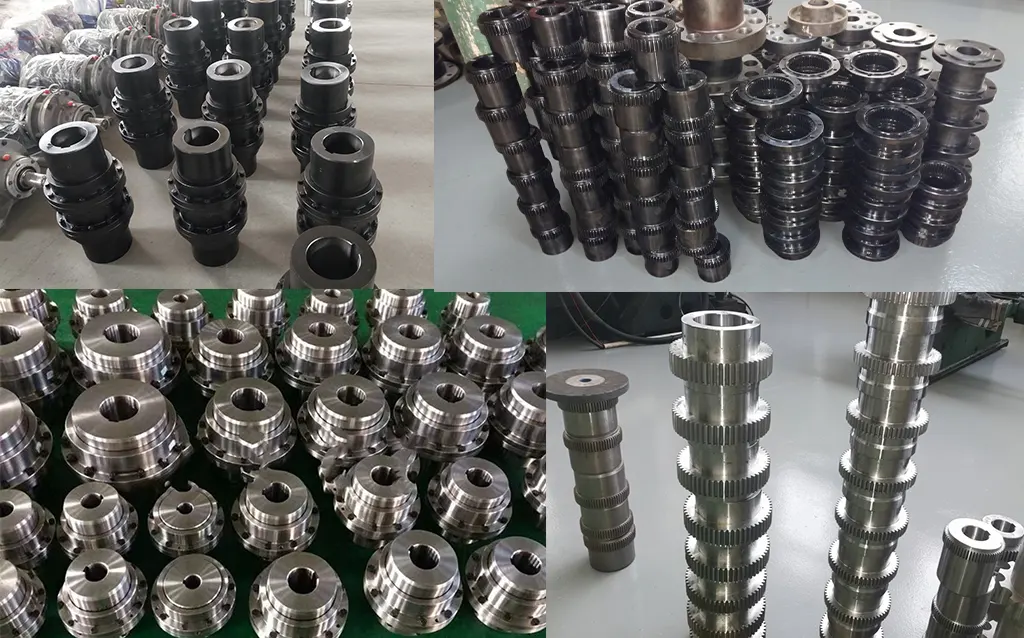
WGZ couplings and brake drums are manufactured from forged alloy steel blanks. The coupling body uses 42CrMo4 (WGZ8 and above) or 45# carbon steel for smaller sizes. The brake drum is separately forged from 45# carbon steel or nodular cast iron depending on size, and machined to a drum outer surface cylindricity of 0.05 mm or better, with surface roughness of Ra 3.2–6.3 micrometres for optimal shoe lining wear-in and long-term uniform wear. The drum outer surface is the critical braking interface and is machined last in the production sequence to ensure final dimension accuracy is not affected by upstream machining distortions.
The coupling crowned teeth are CNC hobbed to DIN Class 7 accuracy. Tooth flanks are carburised and quenched to HRC 58–62 surface hardness with HRC 30–35 core hardness. Each WGZ coupling body is dimensionally verified against the matched drum hub bore and bolt circle before dispatch to confirm the coupling-drum interface concentricity — essential for keeping drum runout within limits that prevent vibration during brake engagement.
Quality Control Flow
Certifications
ISO 9001:2015 quality management certification covers the full WGZ manufacturing and inspection process. CE marking applies to applicable sizes. Products are manufactured to JB/T7003-93. Every shipment includes material mill certificates with heat traceability, heat treatment records, Rockwell hardness test certificates for gear teeth and drum surface, drum cylindricity measurement records, and dimensional inspection reports. For Australian crane and hoist applications requiring documentation compliant with AS 4991 or AS 1418 quality plan requirements, our documentation package is structured to address these standards.
Why Source Your WGZ Couplings from GBC?
Australian Crane and Hoist Standards Knowledge
We understand AS 1418 (Cranes and Hoists), AS 4991 (Hoisting Equipment), and AS 3533 (Amusement rides and devices, but shared hoist safety principles) braking torque requirements. Our engineering team can confirm WGZ selection against the braking torque safety factors required by these standards and provide documentation to support crane OEM engineering sign-off.
15+ Years Exporting to Australia
GBC has supplied WGZ couplings and the full WG coupling family to Australian crane OEMs, mining equipment manufacturers, and materials handling companies since 2010. Every export order includes ISPM-15 timber packing for clean biosecurity clearance and our shipping documentation is structured for straightforward Australian customs entry.
English-Speaking Engineering Team
Our engineers communicate in technical English, review crane hoist and conveyor drive drawings, confirm D0 drum diameter selection against braking torque calculations, and verify bore specifications against your motor and gearbox shaft data sheets. We are familiar with Australian crane engineering terminology and the braking torque safety factor conventions used by local crane designers.
From Single Units to Project Quantities
WGZ couplings are available from a single unit for emergency replacement through to full project quantities. Single-unit emergency orders receive the same technical documentation as large project orders. Standard sizes ship within 15–20 working days ex-works. Custom bores or non-standard drum configurations add 5–15 working days depending on complexity.
OEM and Custom Brake Drum Configurations
Non-standard drum diameters, widths outside the standard range, hardened and ground drum surfaces, and modified hub configurations for specific shoe brake assemblies are achievable to customer drawings. Australian crane OEMs have used GBC for custom WGZ configurations on repeat orders. Contact us with your brake model and shaft drawing.
Complete WG Family — One Supplier
As the manufacturer of WG, WGP, WGC, WGZ, and WGT, GBC supplies all variants from a single source. Projects requiring WGZ on hoist drives and WG or WGT on travel drives are handled through one engineering team, one procurement process, and one documentation set — simplifying crane OEM supply chains significantly.
Application Case Studies
Case 1: Steel Mill Ladle Crane Hoist — NSW Hunter Valley
Customer Profile: A structural steel fabrication facility in the Hunter Valley operating four overhead ladle cranes, each lifting 40–60 tonne steel coils and structural sections, hoist drives rated 90 kW with spring-applied shoe brake systems.
Challenge: The existing straight-tooth gear couplings with welded-on brake drums were failing every 8–10 months due to tooth edge loading from the crane bridge deflection misalignment. Each coupling failure required a 36-hour crane outage for replacement — a significant production impact in a facility where crane availability was directly linked to steel processing throughput. The maintenance manager noted that the worst-performing crane had an 18 mm mid-span bridge deflection under maximum load, which the straight-tooth coupling was not tolerating.
Solution: We supplied 4x WGZ10 couplings (40,000 N·m, 130 mm bore, D0 = 500 mm) replacing the original straight-tooth drum couplings. The WGZ10's crowned tooth accommodates the 0.8-degree angular misalignment generated by bridge deflection without edge loading.
Result: In 28 months since installation, no coupling failures have occurred across all four cranes. Coupling inspection at 12 months showed negligible tooth wear on all four units. The estimated saving from four avoided 36-hour outages per year across four cranes at AUD $12,000 per outage in production loss: AUD $192,000 over the period, representing a return on investment of over 25x the coupling purchase cost.
Case 2: Inclined Conveyor Emergency Stop Drive — Queensland Coal Mine
Customer Profile: A coal mine in the Bowen Basin operating a 32-degree inclined conveyor carrying ROM coal from the pit to the surface processing facility, drive rated 250 kW with AS 1755-compliant emergency stop shoe brake system.
Challenge: The conveyor's existing brake drum coupling was a straight-tooth design that had failed twice in 18 months during high-load emergency stop tests — a regulatory requirement under Queensland Coal Board inspection. Each failure occurred at the coupling tooth-to-drum hub junction, where the combined transmission torque and emergency brake reaction torque exceeded the straight-tooth coupling's capacity under the misalignment conditions of the inclined conveyor structure.
Solution: We supplied a WGZ11 coupling (56,000 N·m, 150 mm bore, Z1 taper, D0 = 630 mm) specified with Z1 taper bore to eliminate fretting at the motor shaft connection under the cyclic torque reversals of the emergency stop test regime. The D0 = 630 mm drum provided the required braking torque with the existing shoe brake actuator, confirmed by calculation against the conveyor's kinetic energy and stopping distance requirement.
Result: The WGZ11 has completed eight consecutive quarterly emergency stop tests over 24 months without any coupling-related failure or indication. The mine's engineering team noted that the Z1 taper bore specification eliminated the micro-fretting wear at the shaft bore that was visible on the failed straight-tooth coupling after each emergency stop event. The conveyor has maintained 100% AS 1755 compliance since installation.
Case 3: Ship-to-Shore Crane Travel Drive — Port of Fremantle, WA
Customer Profile: A container terminal at the Port of Fremantle operating six ship-to-shore container cranes, each with portal-mounted travel drives rated 45 kW per bogie with spring-applied shoe brake emergency stops.
Challenge: The crane travel drives were experiencing premature coupling wear that the terminal's maintenance team could not explain — the drives had been correctly aligned at installation and there were no indications of structural misalignment. Root cause analysis eventually identified that the issue was the marine salt-air environment causing corrosion of the straight-tooth coupling contact surfaces between re-lubrication intervals, and the corrosion-softened tooth surfaces were wearing more rapidly under the torque reversals of the emergency brake application tests.
Solution: We supplied 12x WGZ4 couplings (4,500 N·m, 70 mm bore, D0 = 315 mm) with marine-grade stainless steel hardware and a corrosion-inhibiting EP grease pre-fill suitable for continuous salt-air exposure. The WGZ's crowned tooth profile, with its larger contact ellipse area, is more tolerant of minor surface corrosion between lubrication intervals than the edge-concentrated contact of a straight-tooth coupling.
Result: The 12 replacement WGZ units have operated for 30 months in the Fremantle marine environment with no tooth wear detected at the 12-month and 24-month inspections. The terminal extended the re-lubrication interval from 3 months (previous specification) to 8 months based on corrosion protection performance of the marine-grade grease fill. The overall maintenance cost for travel drive couplings across the six-crane fleet reduced by an estimated AUD $48,000 per year.
Frequently Asked Questions
What is a WGZ drum shape gear coupling with brake drum?
The WGZ (JB/T7003-93) is a crowned-tooth gear coupling with an integral cylindrical brake drum for shoe brakes. It simultaneously transmits torque and provides a cylindrical drum surface for shoe brake pads to engage. Available in 14 sizes from WGZ1 (710 N·m) to WGZ14 (160,000 N·m), with brake drum diameters D0 from 160 mm to 800 mm. Y, J1, and Z1 shaft bores are supported.
What is the difference between WGZ and WGP?
The WGZ has a cylindrical drum for shoe brakes, which provide high braking torque per unit actuator force and are preferred for heavy hoisting and emergency stop applications. The WGP has a flat disc for caliper disc brakes, which offer faster response, better heat dissipation, and compatibility with VFD-controlled drives. Choose WGZ when maximum braking torque is the priority; choose WGP when braking response speed and VFD compatibility are the priorities.
How do I select the brake drum diameter D0?
The braking torque = shoe clamping force x friction coefficient x D0/2 x contact arc factor. Larger D0 generates greater braking torque from the same shoe actuator. Each WGZ size accepts multiple D0 options — for example WGZ11 accepts 500, 630, or 710 mm. Select the WGZ size based on transmission torque first, then choose D0 to meet the required braking torque with your specific shoe brake actuator. Our engineering team can perform this calculation with your actuator force and friction coefficient data.
What is the difference between WGZ and NGCL or NGCLZ?
Both use cylindrical brake drums for shoe brakes. The WGZ uses the WG coupling body — higher speed, Y/J1/Z1 bores, more versatile for general industrial applications. NGCL and NGCLZ use a different coupling body specifically designed for mine hoist and crane hoist flange connections, with different dimensional geometry. NGCLZ also adds an intermediate shaft spacer for distant-shaft hoist configurations. For general industrial brake drum applications, WGZ is the standard choice; for mine hoist-specific layouts, NGCL or NGCLZ may be more appropriate.
Can the WGZ accommodate Z1 conical taper bores?
Yes. The WGZ supports Z1 taper bores (1:10 taper) on one or both shaft ends, up to a maximum bore diameter of 220 mm per JB/T7003-93. The Z1 taper bore provides a keyless, self-centering shaft connection that eliminates fretting corrosion at the bore-to-shaft interface under cyclic torque reversal loading — a common failure mode on emergency brake drives where the torque reversal stress at the shaft-bore interface exceeds the keyway fretting fatigue limit over thousands of brake cycles.
How do C, C1, and C2 dimensions change with different D0 selections?
The base C, C1, and C2 values in the main specification table are for the maximum D0 available for each WGZ size. For a smaller D0 selection, add K/2 (where K is the drum hub height for the chosen D0 from the brake drum table) to the base C, C1, and C2 values. This adjustment accounts for the different axial position of the drum flange interface when a smaller drum is used. The N dimension (shoe brake clearance position) is calculated as N = S - K/2, where S is the D5MAX value for the chosen D0. Our engineering team can provide complete dimensional drawings for any WGZ size and D0 combination on request.
Get Your WGZ Coupling Specified and Quoted
Send us your transmission torque, required braking torque, shoe brake actuator model, shaft bore dimensions, and application description. Our engineering team confirms the right WGZ size and D0 drum diameter, and provides a factory-direct quotation within 24 hours — including drum weight and inertia for your system dynamics calculation.
|
English-speaking engineering team
|
sales@australia-drive.com
GBC — Factory-direct WGZ drum shape gear couplings with brake drum for Australian crane, hoist, conveyor, and industrial brake drive applications since 2010.
WGZ drum shape gear coupling with integral cylindrical brake drum for shoe brakes per JB/T7003-93. 14 sizes, 710 N·m to 160,000 N·m, up to 4000 RPM. Brake drum D0 160–800 mm. Y, J1, Z1 bores. Preferred for heavy crane hoists, mine auxiliary drives, inclined conveyor emergency stops, and spring-applied brake systems.
MOQ: 50 pcs. Minimum order value USD 1,500; mixed orders and trial quantities welcome.