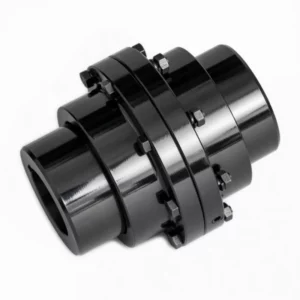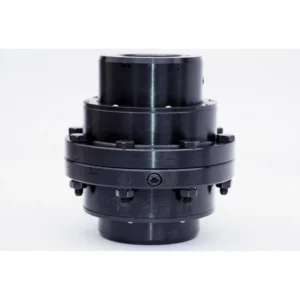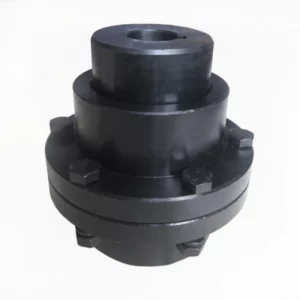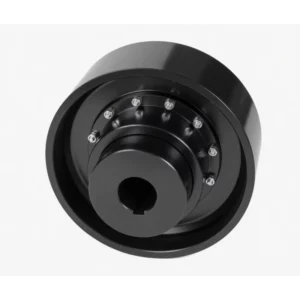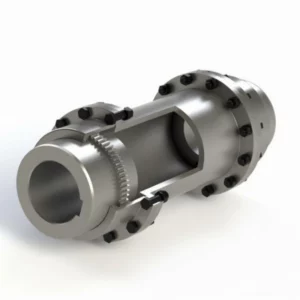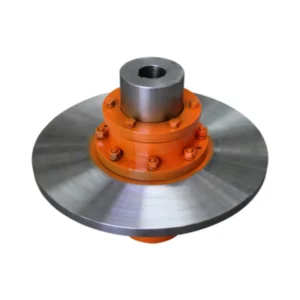
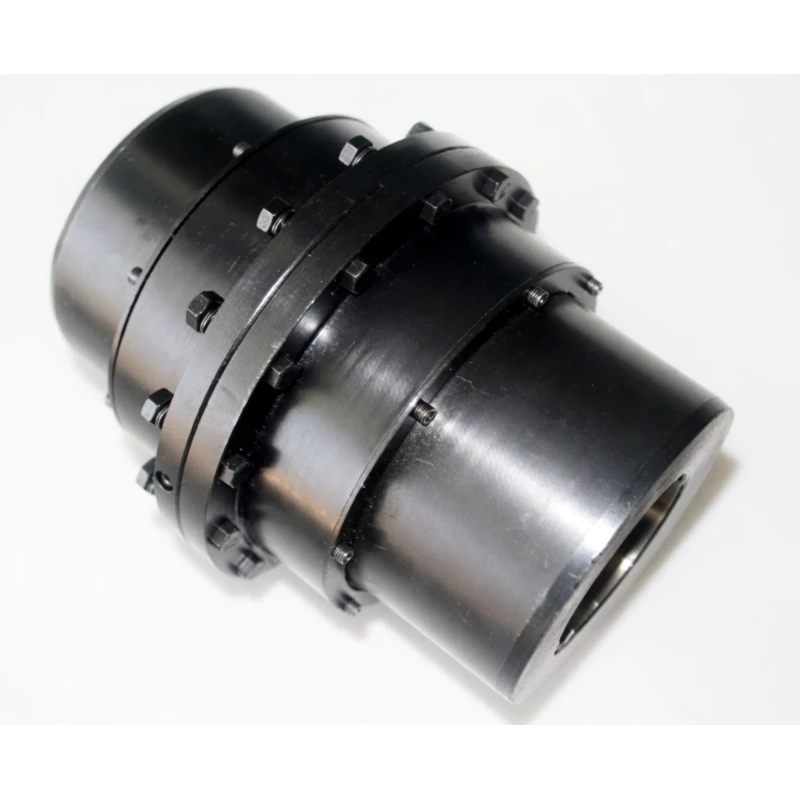
GICL Drum Shape Gear Coupling
The GICL drum shape gear coupling connects two shaft halves via crowned internal and external tooth mesh, delivering rigid, high-torque power transmission with combined angular (1° 30′), radial, and axial misalignment compensation. Available in 30 sizes from GICL1 to GICL30, covering 0.8–3200 kN·m and shaft bores from 16 mm to 630 mm. Ideal for mining, steel, cement, and power generation drives across Australia. Custom bore and OEM configurations available.
MOQ: 50 pcs. Minimum order value USD 1,500; mixed orders and trial quantities welcome.
Product Overview
The GICL drum shape gear coupling is a rigid moveable coupling that uses the mesh of internal and external crowned teeth to connect two shaft halves — delivering reliable, high-torque power transmission with the ability to compensate for angular, radial, and axial shaft misalignment simultaneously.
The defining characteristic of the GICL series is its crowned (drum-shaped) tooth geometry on the outer sleeve. Unlike a straight-tooth gear coupling, this convex tooth profile ensures contact stress is distributed evenly across the full tooth face even under angular displacement, eliminating destructive edge loading and enabling the coupling to handle heavy shock loads without accelerated wear.
GICL drum shape gear couplings are the first choice for heavy horizontal shaft drives in Australian mining, steel, cement, power generation, and bulk material handling plants. GBC has been manufacturing and exporting gear couplings to Australia for over 15 years, with a dedicated English-speaking engineering team supporting local buyers from drawing review through to commissioning.
Specifications & Size Matrix
The GICL series covers 30 size steps from GICL1 to GICL30, accommodating the widest possible range of industrial drives. All dimensional data below is extracted directly from the JB/T8854 catalogue.
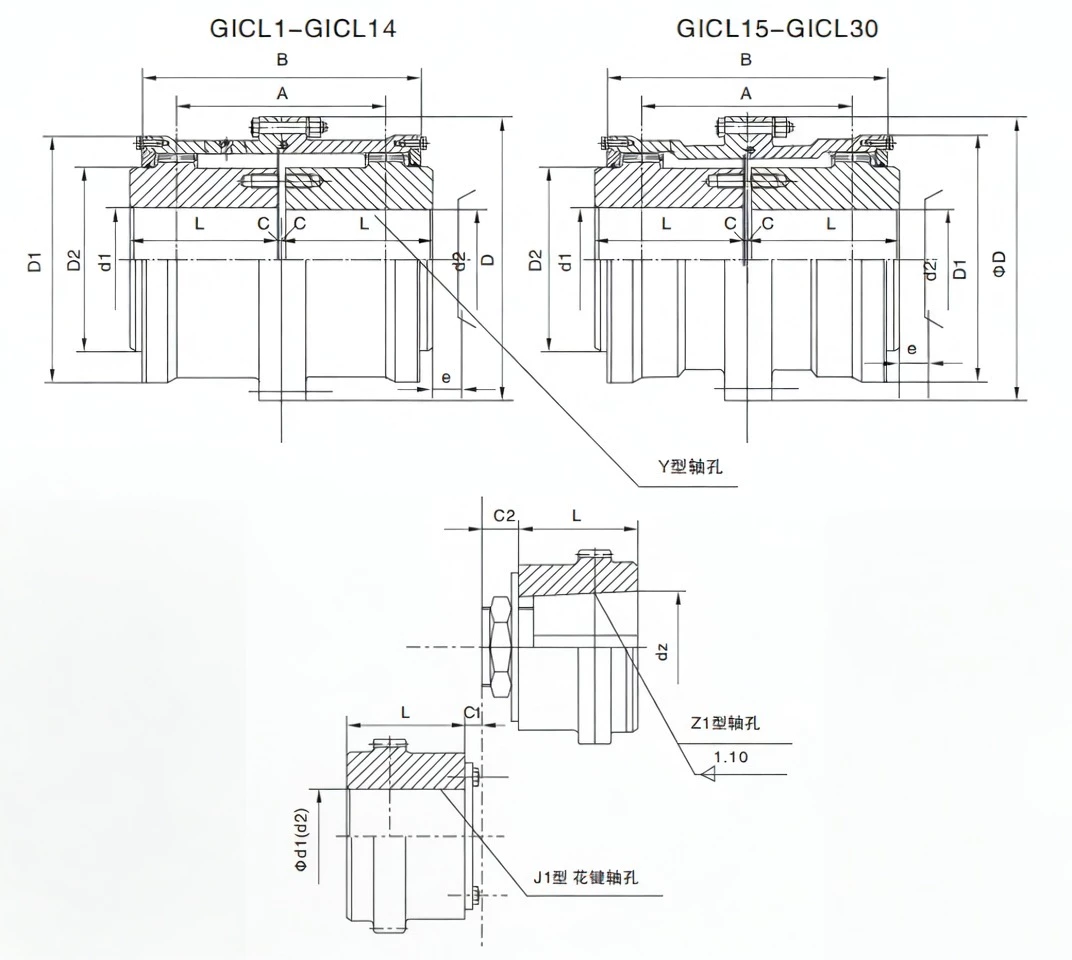
| Type | Torque (kN·m) | Max RPM | Bore d (mm) | L (Y) mm | L (J1/Z1) mm | D mm | D1 mm | D2 mm | A mm | B mm | e mm | Inertia (kg·m²) | Weight (kg) |
|---|---|---|---|---|---|---|---|---|---|---|---|---|---|
| GICL1 | 0.8 | 7100 | 16, 18, 19 | 42 | – | 125 | 95 | 60 | 75 | 115 | 30 | 0.009 | 5.9 |
| 20, 22, 24 | 52 | 38 | |||||||||||
| 25, 28 / 30, 32, 35, 38 | 62 / 82 | 44 / 60 | |||||||||||
| GICL2 | 1.4 | 6300 | 25, 28 | 62 | 44 | 145 | 120 | 75 | 88 | 135 | 30 | 0.02 | 9.7 |
| 30, 32, 35, 38 | 82 | 60 | |||||||||||
| 40, 42, 45, 48 | 112 | 84 | |||||||||||
| GICL3 | 2.8 | 5900 | 30–60 | 82–142 | 60–107 | 170 | 140 | 95 | 106 | 155 | 30 | 0.047 | 17.2 |
| GICL4 | 5.0 | 5400 | 32–70 | 82–142 | 60–107 | 195 | 165 | 115 | 125 | 178 | 30 | 0.091 | 24.9 |
| GICL5 | 8.0 | 5000 | 40–80 | 112–172 | 84–132 | 225 | 183 | 130 | 142 | 198 | 30 | 0.167 | 38 |
| GICL6 | 11.2 | 4800 | 48–90 | 112–172 | 84–132 | 240 | 200 | 145 | 160 | 218 | 30 | 0.267 | 48.2 |
| GICL7 | 15.0 | 4500 | 60–100 | 142–212 | 107–167 | 260 | 230 | 160 | 180 | 244 | 30 | 0.453 | 68.9 |
| GICL8 | 21.2 | 4000 | 65–110 | 142–212 | 107–167 | 280 | 245 | 175 | 193 | 264 | 30 | 0.646 | 83.3 |
| GICL9 | 26.5 | 3500 | 70–125 | 142–212 | 107–167 | 315 | 270 | 200 | 208 | 284 | 30 | 1.036 | 110 |
| GICL10 | 42.5 | 3200 | 80–140 | 172–252 | 132–202 | 345 | 300 | 220 | 249 | 330 | 30 | 1.88 | 157 |
| GICL11 | 60.0 | 3000 | 100–160 | 212–302 | 167–242 | 380 | 330 | 260 | 267 | 360 | 40 | 3.28 | 217 |
| GICL12 | 80.0 | 2600 | 120–180 | 212–302 | 167–242 | 440 | 380 | 290 | 313 | 416 | 40 | 5.08 | 305 |
| GICL13 | 112 | 2300 | 140–200 | 252–352 | 202–282 | 480 | 420 | 320 | 364 | 476 | 40 | 10.06 | 416 |
| GICL14 | 160 | 2100 | 160–220 | 302–352 | 242–282 | 520 | 465 | 360 | 415 | 532 | 40 | 16.774 | 594 |
| Type | Torque (kN·m) | Max RPM | Bore d (mm) | L(Y) mm | L(J1/Z1) mm | D mm | D1 mm | D2 mm | A mm | B mm | e mm | Inertia (kg·m²) | Weight (kg) |
|---|---|---|---|---|---|---|---|---|---|---|---|---|---|
| GICL15 | 224 | 1900 | 190–250 | 352–410 | 282–330 | 580 | 510 | 400 | 429 | 556 | 40 | 26.55 | 783 |
| GICL16 | 355 | 1600 | 200–280 | 352–470 | 282–380 | 680 | 595 | 465 | 501 | 640 | 50 | 52.22 | 1134 |
| GICL17 | 400 | 1500 | 220–300 | 352–470 | 282–380 | 720 | 645 | 495 | 512 | 672 | 50 | 69 | 1305 |
| GICL18 | 500 | 1400 | 240–320 | 410–470 | 330–380 | 775 | 675 | 520 | 524 | 702 | 50 | 96.16 | 1626 |
| GICL19 | 630 | 1300 | 260–340 | 410–550 | 330–450 | 815 | 715 | 560 | 560 | 744 | 50 | 115.6 | 1773 |
| GICL20 | 710 | 1200 | 280–360 | 470–550 | 380–450 | 855 | 755 | 585 | 595 | 786 | 50 | 167.41 | 2263 |
| GICL21 | 900 | 1100 | 300–380 | 470–550 | 380–450 | 915 | 795 | 620 | 611 | 808 | 50 | 215.7 | 2593 |
| GICL22 | 950 | 950 | 340–400 | 550–650 | 450–540 | 960 | 840 | 665 | 632 | 830 | 60 | 278.07 | 3036 |
| GICL23 | 1120 | 900 | 360–420 | 550–650 | 450–540 | 1010 | 890 | 710 | 666 | 870 | 60 | 397.4 | 3668 |
| GICL24 | 1250 | 875 | 380–450 | 550–650 | 450–540 | 1050 | 925 | 730 | 685 | 890 | 60 | 448.1 | 3946 |
| GICL25 | 1400 | 850 | 400–480 | 650 | 540 | 1120 | 970 | 770 | 724 | 930 | 60 | 564.64 | 4443 |
| GICL26 | 1600 | 825 | 420–500 | 650 | 540 | 1160 | 990 | 800 | 733 | 950 | 60 | 637.4 | 4791 |
| GICL27 | 1800 | 800 | 450–530 | 650–800 | 540–680 | 1210 | 1060 | 850 | 739 | 958 | 70 | 866.26 | 5758 |
| GICL28 | 2000 | 770 | 480–560 | 650–800 | 540–680 | 1250 | 1080 | 890 | 805 | 1034 | 70 | 1020.76 | 6232 |
| GICL29 | 2800 | 725 | 500–600 | 650–800 | 540–680 | 1340 | 1200 | 960 | 792 | 1034 | 80 | 1450.84 | 7549 |
| GICL30 | 3200 | 700 | 560–630 | 800 | 680 | 1390 | 1240 | 1005 | 806 | 1050 | 80 | 1947.17 | 9514 |
Note: Angular compensation: 1° 30'. Radial compensation values (Delta Y, mm) by model:
| Model | GICL1 | GICL2 | GICL3 | GICL4 | GICL5 | GICL6 | GICL7 | GICL8 | GICL9 | GICL10 |
|---|---|---|---|---|---|---|---|---|---|---|
| Delta Y (mm) | 1.96 | 2.36 | 2.75 | 3.27 | 3.8 | 4.3 | 4.7 | 5.24 | 5.63 | 6.81 |
| Model | GICL11 | GICL12 | GICL13 | GICL14 | GICL15 | GICL16 | GICL17 | GICL18 | GICL19 | GICL20 |
| Delta Y (mm) | 7.46 | 8.77 | 10.08 | 11.15 | 11.36 | 13.3 | 13.87 | 14.53 | 15.71 | 16.49 |
| Model | GICL21 | GICL22 | GICL23 | GICL24 | GICL25 | GICL26 | GICL27 | GICL28 | GICL29 | GICL30 |
| Delta Y (mm) | 17.02 | 17.28 | 18.06 | 18.6 | 19.4 | 19.92 | 19.92 | 21.1 | 21.1 | 21.7 |
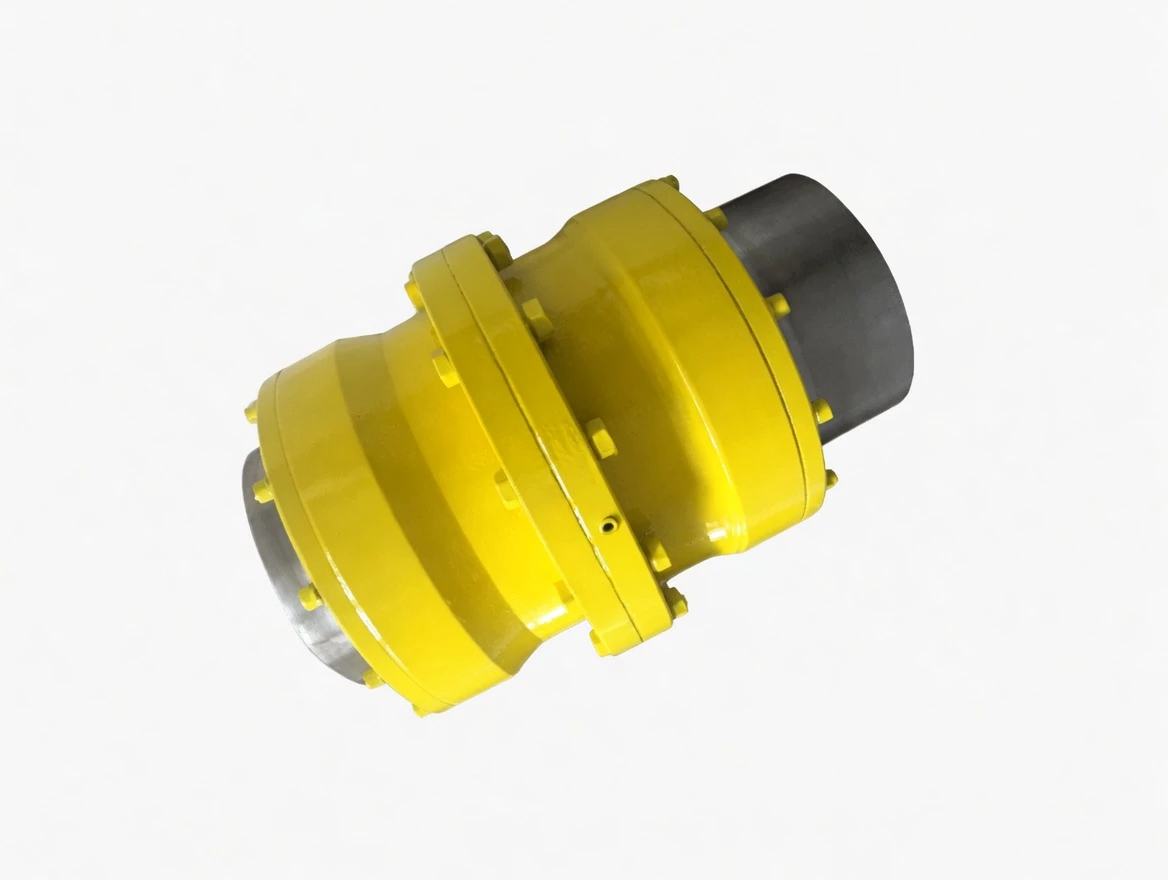
What Is a Drum Shape Gear Coupling — and How Does It Work?
Technical Definition: Crowned Tooth Geometry vs. Straight Tooth
A drum shape (crowned tooth) gear coupling is fundamentally different from a conventional straight-tooth gear coupling. In a straight-tooth design, the tooth flanks are perfectly parallel and flat. The moment any angular or radial shaft displacement occurs, the contact between the inner and outer sleeves shifts entirely to one edge of the tooth — a condition known as edge loading. This concentrates enormous stress into a small area, accelerating fretting wear and dramatically shortening service life.
In the GICL drum shape design, the external sleeve teeth are machined with a convex, barrel-shaped (crowned) profile — the tooth surface bulges outward along its length like the side of a drum. When shaft displacement occurs, the contact point migrates smoothly along this curved surface rather than riding hard to one edge. The result is a far more uniform stress distribution across the full tooth face width, regardless of misalignment angle.
Working Principle: Angular, Radial, and Axial Compensation
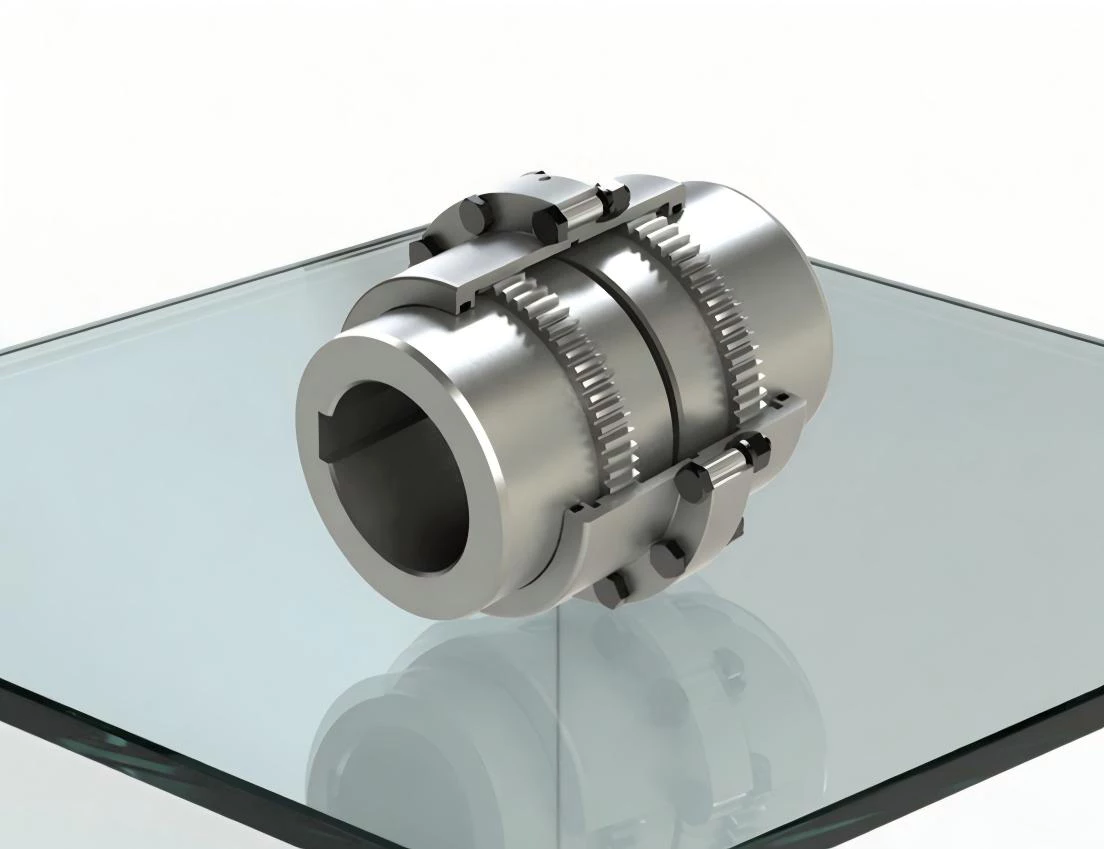
The GICL coupling connects a drive shaft to a driven shaft by meshing a toothed inner sleeve (fixed to each shaft) with an outer gear sleeve (housing the coupling). Power is transmitted through this tooth mesh with high rigidity, while three types of shaft displacement are accommodated simultaneously:
- 1Angular Compensation (up to 1° 30'): The crowned tooth profile allows the two shaft centrelines to form an angle of up to 1.5 degrees without edge loading. This is the primary misalignment mode in heavy industrial drives where thermal expansion or frame deflection causes angular deviation between shafts.
- 2Radial Compensation (Delta Y): Parallel offset between shaft centrelines is compensated by the combined angular deflection of both coupling halves. For GICL1, this is 1.96 mm; for GICL30 it reaches 21.7 mm — critical for large mills where precision alignment is impractical.
- 3Axial Displacement: The tooth mesh allows a controlled degree of axial sliding between inner and outer sleeves, absorbing thermal axial growth of drive components and preventing destructive thrust loads from reaching connected bearings.
Coupling Type Comparison
| Feature | GICL Drum Gear | Jaw Coupling | Disc Coupling | Straight Gear |
|---|---|---|---|---|
| Torque Capacity | Very High (up to 3200 kN·m) | Low–Medium | Medium–High | High |
| Angular Misalignment | 1° 30' (excellent) | 1° (moderate) | 0.5° (limited) | 0.5° (limited) |
| Shock Load Tolerance | Excellent | Moderate (spider absorbs) | Limited | Good |
| High-Speed Suitability | Excellent (up to 7100 RPM) | Good | Excellent | Good |
| Maintenance Requirement | Periodic lubrication | Spider replacement | Very low | More frequent |
| Lubrication Required | Yes | No | No | Yes |
| Best Application | Heavy industrial, mining, steel, power | Light general industry | High-precision servo drives | Heavy drives, alignment-critical |
GICL vs. GICLZ vs. GIICL vs. GIICLZ — Which Type Do You Need?
The drum shape gear coupling family includes four main variants, each suited to a different shaft configuration and misalignment requirement. The table below maps the key differences so you can identify the right type at a glance. Browse our full couplings range for related products.
| Feature | GICL | GICLZ | GIICL | GIICLZ |
|---|---|---|---|---|
| Standard | JB/T8854.2 | JB/T8854.2 | JB/T8854.3 | JB/T8854.3 |
| Structure | Two-half direct connection; compact | Intermediate spacer shaft between halves | Two-half, larger offset capability | Spacer + larger offset |
| Number of Gear Pairs | 2 | 2 | 2 | 2 |
| Radial Misalignment | Standard (1.96–21.7 mm) | Enhanced via longer spacer | Larger Delta Y than GICL | Maximum Delta Y |
| Shaft Separation | Short — close-coupled | Long — shafts far apart | Short–medium | Long — shafts far apart |
| Typical Application | Motors, gearboxes, compressors | Pumps and fans with long shaft spans | Rolling mill, heavy drives | Large rolling mills, major axle drives |
Industries & Applications in Australia
Australian industrial operations face unique challenges — remote sites, harsh environments, long lead times, and the high cost of unplanned downtime. The GICL drum shape gear coupling is engineered to meet these demands head-on across multiple key sectors.
Applications: Ball mills, SAG mills, conveyor drive heads, slurry pumps, apron feeders. The GICL's 1° 30' angular tolerance absorbs the constant frame flex and thermal growth found in large mill drives — eliminating the premature bearing failures that plague straight-tooth couplings on these machines. In remote Australian mining locations where part lead times can exceed four weeks, a longer-lived coupling directly translates to avoided production losses worth tens of thousands of dollars per hour.
Applications: Rolling mill pinion stands, coiler drives, reheat furnace roller tables. Rolling mills generate extreme torsional shock loads each time a billet enters the roll gap. GICL's rigid crowned-tooth construction transmits torque peaks up to the rated limit without the elastomer fatigue that destroys jaw couplings in these applications, while the crowned geometry prevents the edge-load fretting that shortens straight-gear couplings in the same environment.
Applications: Boiler feed pumps, induced draft fans, cooling water pumps, turbine-generator sets. High rotational speeds (up to 7100 RPM for smaller GICL sizes) and continuous heavy-load duty make the GICL the trusted choice where reliability is paramount. The coupling's capacity to absorb thermal axial growth prevents thrust overload on turbine bearings — a known failure mode in coal-fired boiler feed pump trains.
Applications: Kiln drive gearboxes, raw mill drives, bucket elevator heads. Cement plants demand couplings that can tolerate the slow, heavy-start torque of cement kilns (which can reach over 1000 kN·m on large installations) as well as the abrasive environment. GICL couplings in the GICL20–GICL28 range match these drives perfectly, and our sealed housing design keeps grinding dust out of the gear mesh.
Applications: Ship loader drives, stacker-reclaimer slew drives, conveyor tripper drives. Port equipment operates continuously, often in salt air environments. The GICL's all-steel construction (no elastomeric elements to degrade in UV or ozone) and compact sealed design make it a low-maintenance choice for these high-availability applications.
Why Drum Shape vs. Straight Tooth — Technical Advantages Explained
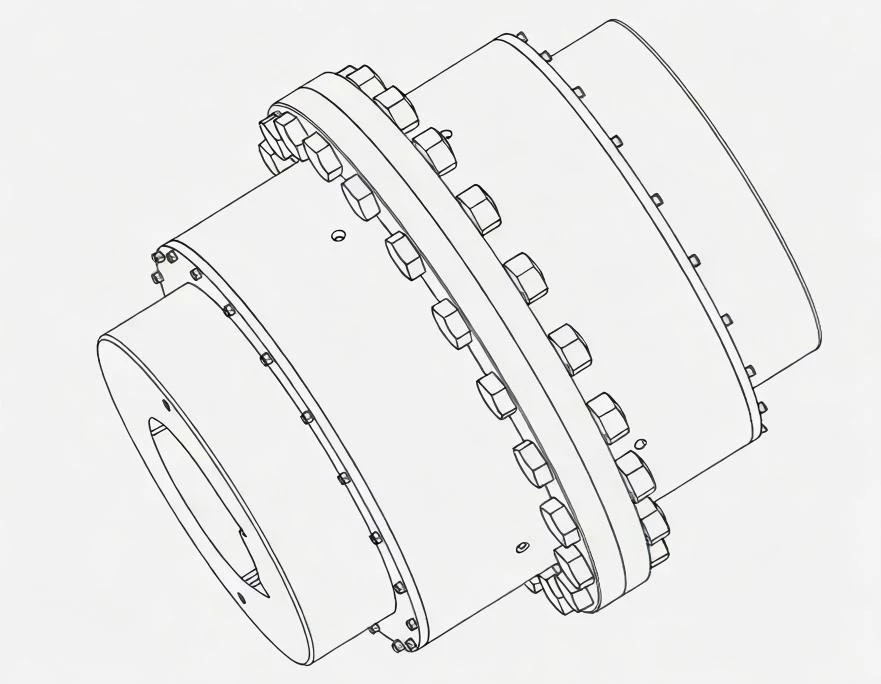
The essential difference between a drum-shape gear coupling and a straight-tooth gear coupling is how contact stress is managed under misalignment. In a straight-tooth coupling, any shaft angle pushes all contact to a thin strip at one edge of the tooth — a stress concentration that can be 5–10 times the average contact stress. In a drum-shape coupling, the crowned profile keeps the contact patch centred and distributed, regardless of operating angle.
Australian mining sites present extreme alignment challenges: SAG mill foundations settle under cyclic loading, conveyor structures flex under load, and extreme temperature swings (from sub-zero winter mornings to 40+°C afternoons in outback WA and NT) cause significant thermal shaft movement. The GICL's 1° 30' angular tolerance — roughly 3x that of a straight-tooth coupling — means the coupling continues to operate safely through these real-world conditions without becoming the failure point. This directly reduces emergency shutdowns at sites where a breakdown can cost $50,000–$200,000 per hour in lost production.
Rolling mills, ball mills, and crusher drives generate sharp torque peaks — sometimes 3–5x the running torque — at start-up and under bite events. Because the GICL's crowned teeth distribute stress across the full tooth face width, the peak Hertzian contact stress remains within the material's fatigue limit even under these transient overloads. Field experience consistently shows GICL couplings outlasting straight-tooth equivalents by 3–5 maintenance intervals on shock-loaded Australian mining and steel plant drives.
Edge loading in a straight-tooth gear coupling generates large radial reaction forces at the coupling end of connected bearings. These forces are transferred directly to motor and gearbox shaft bearings, shortening their L10 life. The GICL's distributed contact geometry dramatically reduces these radial reaction forces — it is common to see motor bearing life double or triple after replacing a worn straight-tooth coupling with an equivalent GICL on the same drive.
On a straight-tooth gear coupling operating under misalignment, fretting wear on the tooth edges is progressive and self-accelerating: worn edges increase misalignment sensitivity, which worsens wear. GICL couplings, by eliminating the fretting mechanism, maintain a stable wear rate throughout their service life. Typical re-lubrication intervals on a well-sealed GICL in a mining application are 12–24 months. The all-metal construction means there are no elastomeric wear elements to replace, and coupling overhaul typically consists only of tooth inspection and re-packing.
The GICL1 runs to 7100 RPM and the GICL10 to 3200 RPM — speeds at which the dynamic balance and mass distribution of the coupling are critical. The GICL's symmetric cylindrical outer sleeve geometry provides inherently good dynamic balance characteristics compared to designs with asymmetric mass distributions. For applications combining high speed with moderate torque (boiler feed pumps, large fans, centrifugal compressors), this makes the GICL the natural choice over a jaw or disc coupling that may not have the torque headroom.
Manufacturing Process & Quality Assurance
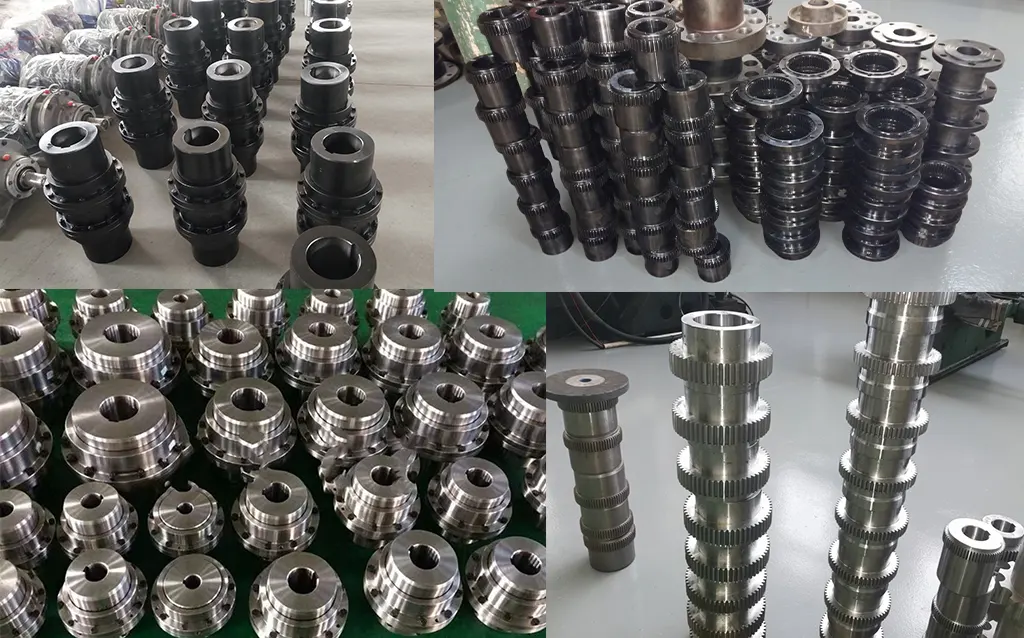
Every GICL drum shape gear coupling that leaves our factory has passed through a controlled, documented manufacturing chain. The following process ensures that Australian customers receive components that perform to the rated specification from day one and maintain that performance over their full service life.
Certifications and Standards: Manufacturing under ISO 9001:2015 QMS. Products conform to JB/T8854 series. Material test reports and dimensional inspection records available for each shipment. For Australian project work requiring documentation packages aligned with AS/NZS standards, our engineering team can prepare the necessary reports and certificates on request.
Why Australian Buyers Choose GBC as Their Gear Coupling Supplier
We understand Australian site conditions — from the extreme heat of Pilbara iron ore operations to the humidity of Queensland coal terminals. Our engineering team reviews your application data against local environmental and operational parameters, not just datasheet torque ratings. We've supplied couplings for AS/NZS-compliant projects requiring full material traceability and inspection records.
GBC has been supplying gear couplings to Australian mining, steel, and industrial customers for over 15 years. We understand Australian import procedures, FIRB requirements, port clearance, and the need for documentation packages that Australian engineering departments actually accept. Our Australian client base includes maintenance contractors, OEM machinery manufacturers, and direct end-user plant operators.
Our sales and application engineers communicate in clear technical English — no translation delays, no ambiguous specifications. When you send a drawing or a coupling application data sheet, you get back a technically considered recommendation within 24 hours, not a product catalogue quote. This matters when you are racing a shutdown window and need rapid decisions.
Procurement managers at large Australian mining groups and sole-trader maintenance contractors both buy from us. Single units are available for urgent maintenance replacement; volume pricing applies from 5 units. We do not impose minimum order quantities that price out legitimate maintenance buyers — if you need one coupling for a shutdown, we will supply it.
Non-standard bore diameters, custom keyway configurations, special shaft-fit tolerances (H7/k6 interference fit, for example), special coatings (phosphate, hot-dip galvanise), extended documentation packages, third-party inspection — all available. If you can draw it, we can make it. Our CNC turning capacity handles shaft bores to 630 mm diameter to micron-level tolerances.
Application Case Studies
Frequently Asked Questions
The GICL drum shape gear coupling connects two shaft halves via crowned internal and external tooth mesh, delivering rigid, high-torque power transmission with combined angular (1° 30′), radial, and axial misalignment compensation. Available in 30 sizes from GICL1 to GICL30, covering 0.8–3200 kN·m and shaft bores from 16 mm to 630 mm. Ideal for mining, steel, cement, and power generation drives across Australia. Custom bore and OEM configurations available.
MOQ: 50 pcs. Minimum order value USD 1,500; mixed orders and trial quantities welcome.