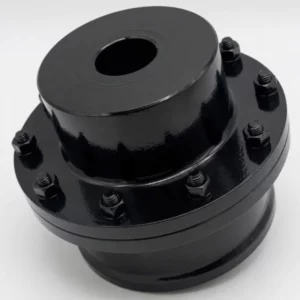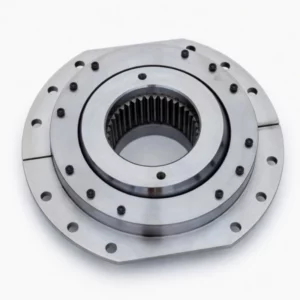
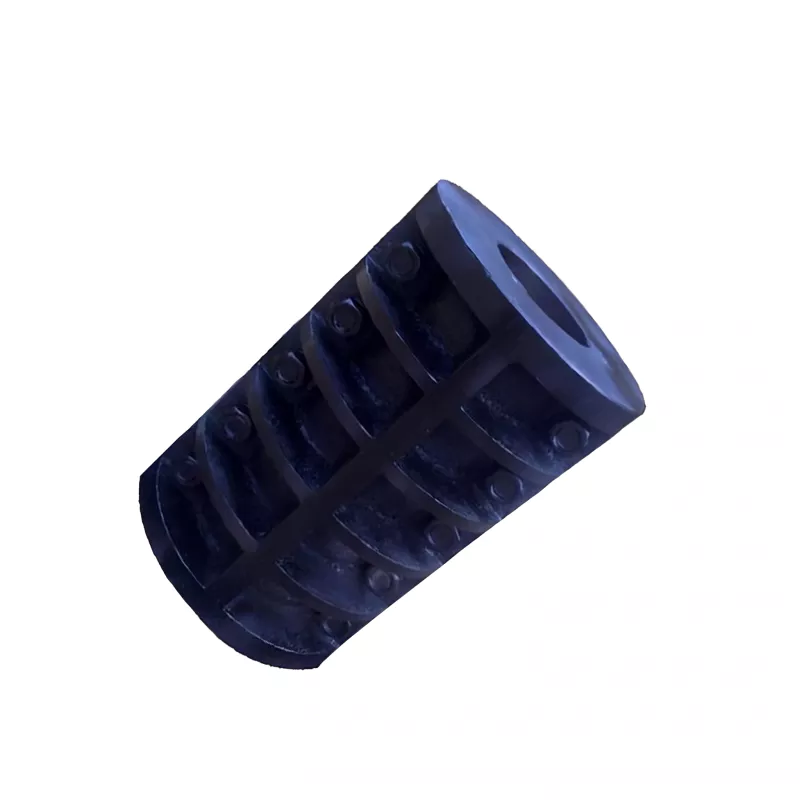
JQ Clamping Coupling
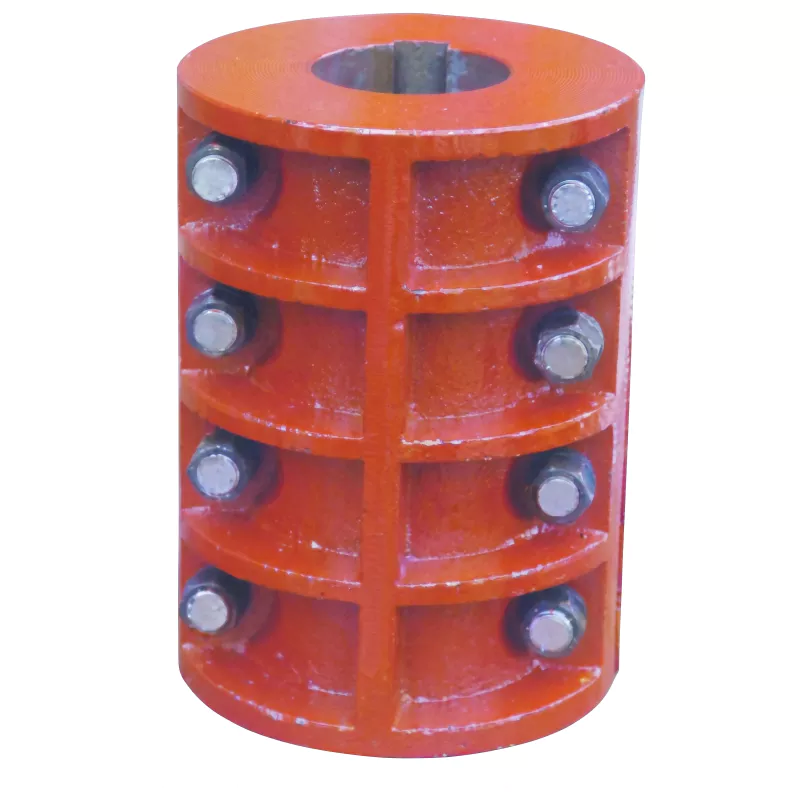
JQ type clamping coupling — split clam-shell rigid shaft connector for reactor stirring shafts and vertical reducer output connections. Bore range 25 to 160 mm, max torque 28,000 N.m across 16 sizes. No axial shaft movement required for installation. Ideal for chemical reactors, pharmaceutical fermenters, and wastewater aerator assemblies.
MOQ: 50 pcs. Minimum order value USD 1,500; mixed orders and trial quantities welcome.
JQ Clamping Coupling — Clamp Shell Rigid Coupling for Reactor Stirrer Shafts
The JQ type clamping coupling — also referred to as a clamp shell coupling or split coupling — is a specialist rigid shaft connector engineered specifically for reactor stirring shaft assemblies and vertical reducer output shaft connections in the chemical, pharmaceutical, and petrochemical processing industries. Unlike conventional flanged couplings that require machined hub flanges and through-bolted connections, the JQ design uses a two-piece clamp shell that wraps around both shaft ends, applying radial clamping force via circumferential bolts to achieve a rigid, zero-backlash torque path.
The primary application driver for the JQ clamping coupling is the reactor stirring shaft. In industrial reactors, the stirring shaft is often too long to manufacture as a single piece, requiring it to be fabricated in two sections. The JQ coupling joins these two sections at the mid-span of the shaft, transmitting the full agitator torque between them without requiring flanges to be welded or machined onto the shaft ends. If a vertical reducer output shaft needs to connect directly to the reactor stirring shaft, the JQ clamping coupling is again the preferred solution — and where non-standard reducer output shaft dimensions are involved, this requirement must be specified at order stage to allow the coupling bore to be machined to the exact non-standard dimension.
The JQ range covers shaft bore diameters from 25mm (JQ-25) through to 160mm (JQ-160), with maximum transmitted torques ranging from 90 N.m for the smallest size up to 28,000 N.m for the largest. The sixteen standard sizes accommodate virtually every reactor agitator shaft dimension encountered in standard chemical plant design, while custom bore options extend the coverage to non-standard shaft diameters as required by specific equipment configurations.
Design Principles and Structural Characteristics
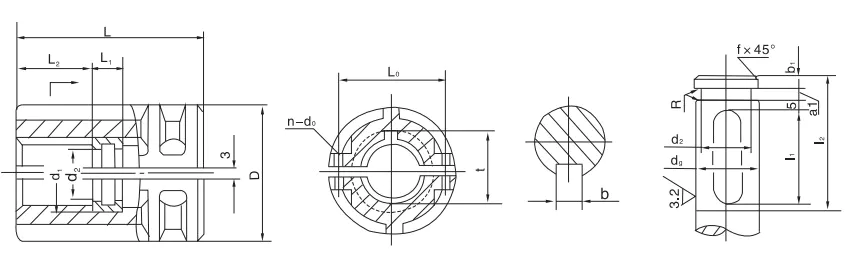
The JQ clamping coupling design achieves its unique combination of rigid torque transmission and installation convenience through several specific structural features:
Split Clamp Shell Construction
The coupling body is split along its centreline into two symmetrical half-shells, allowing it to be installed around existing shafts without requiring the shaft to be withdrawn axially. This feature is particularly valuable in reactor installations where the shaft assembly is often inaccessible from one end, and where the cost of shaft removal would be prohibitive.
Circumferential Clamping Bolt Pattern
Multiple bolts arranged circumferentially around the clamp shell (4–8 bolts depending on size, using M14 to M26 bolt diameters) apply uniform radial pressure on the shaft surface when tightened. The bolt pattern is designed to distribute clamping force evenly, preventing stress concentrations and ensuring consistent grip across the full bore contact area.
Two-Step Hub Bore Design
Each JQ coupling accommodates two shaft ends: the left shaft end occupies length L₁ within the coupling, while the right shaft occupies length L₂. The coupling bore is machined to H8/j7 tolerance (interference-side of clearance fit) to ensure firm shaft engagement when the clamp bolts are tightened, with no separate keyway required as the clamping friction provides the torque transmission path.
Integrated Internal Groove Feature
The internal bore profile includes a relief groove at the shaft joint plane, preventing the coupling from bearing on any shaft end chamfer or radius, and ensuring that the full clamping contact length is utilised on each shaft. The groove dimensions (depth and width) are specified in the technical data table for each size.
Compatible with Non-Standard Shaft Diameters
For applications where the vertical reducer output shaft has a non-standard diameter differing from the standard bore column values, the JQ coupling bore can be supplied unmachined or partially machined to allow final bore cutting in the customer's workshop. This flexibility is critical in retrofit applications where the existing reducer cannot be changed.
No Axial Movement Required for Installation
Because the clamp shell splits radially, the coupling can be installed by placing it around the shaft joint without needing to slide it axially over either shaft end. This makes it uniquely suited to in-situ shaft joining in confined reactor head spaces, and to connecting dissimilar-diameter shafts where axial sliding of a conventional coupling is not practical.
Technical Specifications — JQ Type Clamping Coupling Key Parameters
| Type | Bore dg (H7) mm | Max Torque (N.m) | D (mm) | L (mm) | L₁ (H8/j7) mm | L₂ (mm) | L₀ (mm) | Bolt Pattern n-d₀ | d1 (H₁₁) mm | d₂ (H₁₁) mm | Weight (kg) |
|---|---|---|---|---|---|---|---|---|---|---|---|
| JQ-25 | 25 | 90 | 102 | 130 | 20 | 55 | 64 | 4–14 | 33 | 20 | 4.47 |
| JQ-30 | 30 | 90 | 102 | 130 | 20 | 55 | 64 | 4–14 | 33 | 25 | 4.47 |
| JQ-35 | 35 | 236 | 118 | 162 | 20 | 71 | 80 | 6–14 | 43 | 30 | 7.60 |
| JQ-40 | 40 | 236 | 118 | 162 | 20 | 71 | 80 | 6–14 | 48 | 35 | 7.60 |
| JQ-45 | 45 | 530 | 135 | 190 | 24 | 83 | 94 | 6–14 | 57 | 37 | 10.85 |
| JQ-50 | 50 | 530 | 135 | 190 | 24 | 83 | 94 | 6–14 | 62 | 42 | 10.85 |
| JQ-55 | 55 | 530 | 135 | 190 | 24 | 83 | 94 | 6–14 | 67 | 47 | 10.85 |
| JQ-65 | 65 | 1400 | 172 | 250 | 30 | 110 | 124 | 8–18 | 78 | 55 | 25.06 |
| JQ-70 | 70 | 1400 | 172 | 250 | 30 | 110 | 124 | 8–18 | 83 | 60 | 25.06 |
| JQ-80 | 80 | 2650 | 185 | 280 | 38 | 121 | 138 | 8–18 | 94 | 70 | 30.16 |
| JQ-90 | 90 | 5200 | 230 | 330 | 38 | 146 | 164 | 8–26 | 105 | 80 | 56.38 |
| JQ-95 | 95 | 5200 | 230 | 330 | 38 | 146 | 164 | 8–26 | 110 | 85 | 56.38 |
| JQ-100 | 100 | 5200 | 230 | 330 | 38 | 146 | 164 | 8–26 | 115 | 90 | 56.38 |
| JQ-110 | 110 | 9000 | 260 | 390 | 46 | 172 | 190 | 8–26 | 125 | 100 | 90 |
| JQ-130 | 130 | 15000 | 280 | 440 | 54 | 193 | 210 | 10–(size) | 146 | 118 | 125 |
| JQ-160 | 160 | 28000 | 340 | 500 | 64 | 218 | 280 | 26 | 180 | 144 | 215 |
Applications and Sector Use Cases
The JQ clamping coupling occupies a unique niche in industrial coupling selection, addressing shaft joining scenarios that conventional flanged or keyed couplings cannot accommodate. The following sectors represent the primary Australian and Asia-Pacific markets for this coupling type:
Chemical and Specialty Chemical Production
Reactor agitator shaft mid-span connections are the defining application for the JQ coupling. In Australian chemical plant — including fertiliser production in Queensland, polymer synthesis in Victoria, and specialty chemical facilities in New South Wales — multi-section agitator shafts of 3 to 12 metres in length routinely employ JQ couplings at each shaft joint to avoid the cost and complexity of manufacturing extremely long single-piece shafts.
Pharmaceutical and Biopharmaceutical Manufacturing
Fermentation vessel agitators, mixing tank drives, and bulk active pharmaceutical ingredient (API) reactor shafts all use JQ-type clamping couplings. The absence of a keyway in the standard JQ design — relying instead on friction clamping — means there are no stress-concentrating keyway features on the shaft, which is an advantage in fatigue-sensitive pharmaceutical reactor shaft design.
Food and Beverage Processing
Large-volume mixing vessels in dairy, brewing, and edible oil processing use JQ couplings on vertical agitator shafts. The ability to disassemble and reassemble the coupling in place — without shaft withdrawal — is particularly valued in sanitary processing environments where shaft extraction would require vessel entry and extensive clean-down procedures.
Wastewater Treatment
Aerator shaft assemblies in sequencing batch reactors (SBRs), oxidation ditches, and biological treatment tanks frequently use JQ couplings to join vertical mixer shaft sections. The corrosion-resistant material options and the robust clamping design suit the wet, chemically aggressive environment of municipal and industrial wastewater plant.
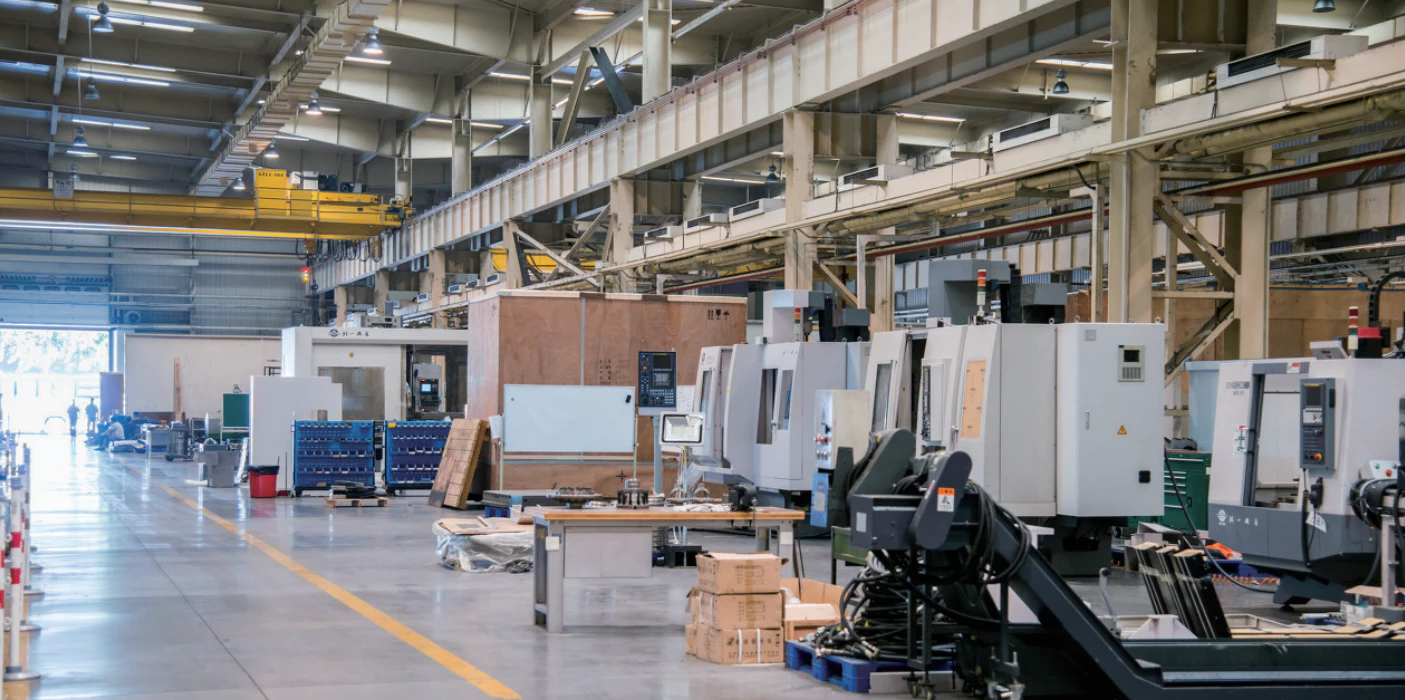
Our facility machines JQ clamping couplings on CNC lathes and boring machines, with the bore H7 tolerance maintained using in-process gauging. All split-face surfaces are precision ground to ensure a clean, flat parting line that maintains bore roundness when the clamp bolts are tightened. For other rigid coupling options, visit our rigid coupling product range. For a complete overview of all coupling types supplied, see the couplings catalogue.
Customer Reviews and Project Case Studies
★★★★★
Australia — Chemical Reactor Agitator Retrofit, Queensland
Industry: Specialty Chemicals | Application: JQ-80 clamping coupling, 2650 N.m, two-section agitator shaft in 15,000L reactor
"We needed to replace worn clamp couplings on a reactor agitator shaft that connects to a vertical gearbox output. The JQ-80 matched our shaft diameter exactly. Bore H7 checked out at 80.015mm — right on tolerance. Reassembly took less than two hours with no shaft removal. Excellent quality and fast delivery from warehouse stock."
— Mechanical Reliability Engineer, Queensland Specialty Chemicals Plant
★★★★★
South Korea — Pharmaceutical Fermentation Vessel, Incheon
Industry: Pharmaceutical Manufacturing | Application: JQ-55 clamping coupling, 530 N.m, API fermentation bioreactor shaft
"We specified JQ clamping couplings for our new 5,000L fermenters specifically to avoid keyway stress risers on the shaft at the coupling location. The bore-only friction clamping design was exactly what our shaft fatigue analysis called for. Three units have been running continuously for over eighteen months without any slip or loosening of the clamp bolts."
— Equipment Engineering Manager, Incheon Pharmaceutical Facility
★★★★☆
Netherlands — Wastewater Treatment Aerator, Rotterdam
Industry: Municipal Wastewater Treatment | Application: JQ-65 clamping coupling, 1400 N.m, vertical aerator mixer shaft
"Good quality clamp couplings for our aerator shaft replacement programme. The split design meant our dive team could replace the couplings without draining the aeration tank — a major operational saving. We have since ordered a further eight units for the same treatment works."
— Operations Manager, Rotterdam Water Services
★★★★★
Australia — Brewing Vessel Agitator, Victoria
Industry: Food and Beverage | Application: JQ-45 clamping coupling, 530 N.m, craft brewing fermentation vessel agitator
"We upgraded our fermentation vessel agitators as part of a capacity expansion. The JQ-45 clamping couplings were ideal because our vessels are installed under a low ceiling — there is no way to slide a conventional coupling into place from above. The split clamp design solved this completely. Very happy with the finish and machining quality."
— Head Brewer and Technical Director, Victorian Craft Brewery
Frequently Asked Questions
Does the JQ clamping coupling require a keyway on the shaft?
No. The standard JQ clamping coupling transmits torque purely through friction generated by the radial clamping force of the bolted shell halves. No keyway is required on the shaft, which eliminates keyway-related stress concentrations and simplifies shaft machining. The coupling can be installed on any smooth shaft without prior shaft modification.
Can the JQ coupling accommodate different bore diameters on each shaft end?
The standard JQ coupling has a single bore diameter designed to accept two shafts of the same diameter. For applications connecting two different-diameter shafts, a stepped bore version can be supplied to order. Please specify both shaft diameters and their respective engagement lengths when enquiring about this custom configuration.
What is the bore tolerance for JQ clamping couplings?
The main bore is machined to H7 tolerance for shaft fit. The inner engagement section is machined to H8/j7 tolerance, providing the interference-side clearance needed for effective friction clamping when the shell bolts are tightened to the specified torque. Material test certificates and dimensional inspection reports are available on request.
What should I specify when ordering for a non-standard reducer output shaft?
Specify the exact output shaft diameter in mm, the required bore tolerance, the shaft engagement length on the reducer end, and any groove or surface finish requirements. Standard bore values in the table are nominal — if your shaft diameter differs, advise at order stage so the bore can be machined exactly to your dimension. This is critical to ensure full clamping effectiveness on non-standard shafts.
How is the JQ clamping coupling installed and removed in the field?
Place the two half-shells around the shaft joint, align the parting line bolt holes, then tighten the bolts to the specified torque in a cross-pattern sequence. No axial shaft movement is required. Removal reverses the process — loosen and withdraw the clamp bolts, then separate the shells radially. The shaft can remain in its bearings throughout, making the JQ ideal for in-situ maintenance in confined reactor head spaces and tanks.
Source JQ Clamping Couplings for Your Reactor or Agitator Project
We supply JQ clamp shell couplings to B2B customers across Australia's chemical, pharmaceutical, food processing, and wastewater sectors. All sixteen standard sizes are available from stock for fast despatch. Custom bore machining, stepped bore configurations for non-standard reducer shafts, and non-standard overall lengths are available to order. Contact our team for sizing assistance, pricing, and lead time confirmation.
JQ type clamping coupling — split clam-shell rigid shaft connector for reactor stirring shafts and vertical reducer output connections. Bore range 25 to 160 mm, max torque 28,000 N.m across 16 sizes. No axial shaft movement required for installation. Ideal for chemical reactors, pharmaceutical fermenters, and wastewater aerator assemblies.
MOQ: 50 pcs. Minimum order value USD 1,500; mixed orders and trial quantities welcome.