
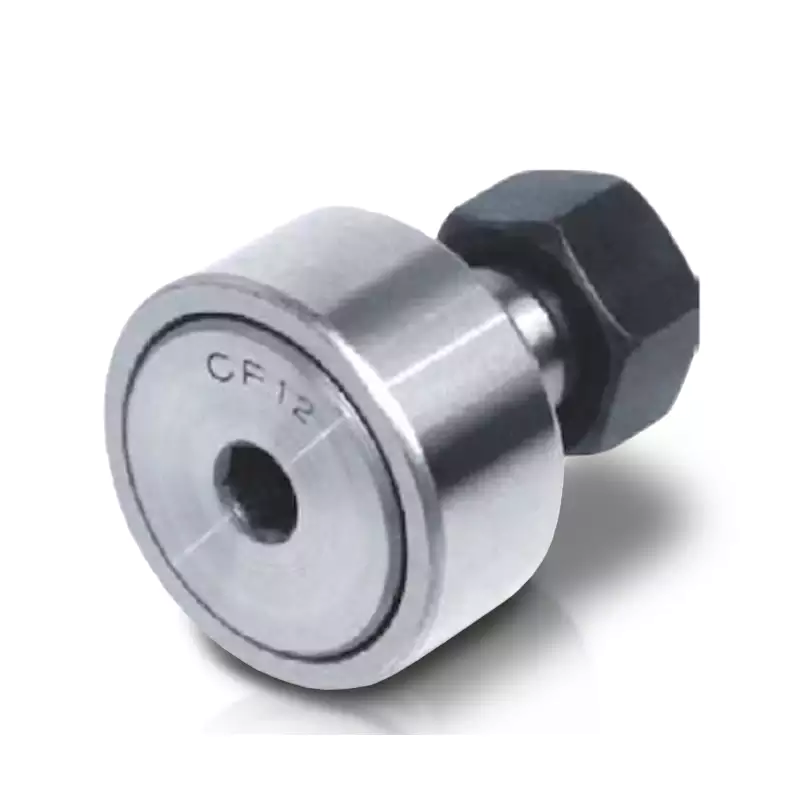
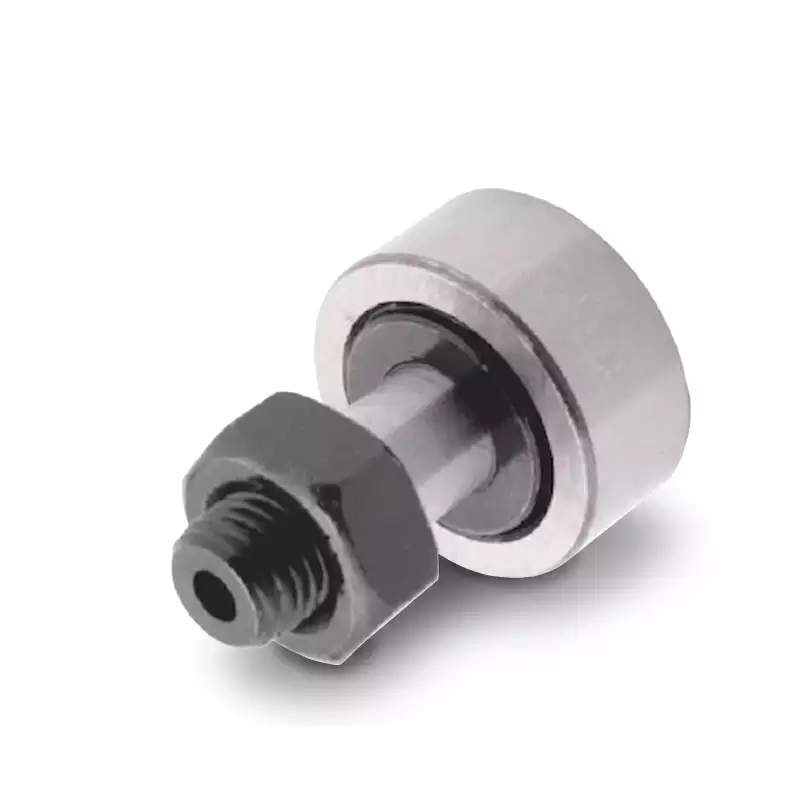
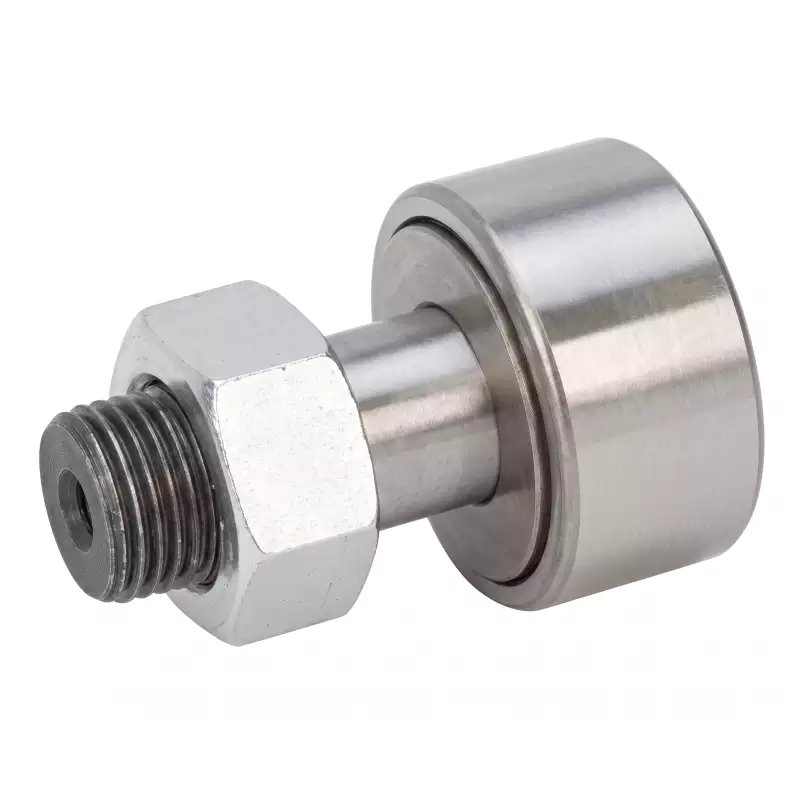
KR KRV Series Cam Follower Needle Roller Bearing — Stud Type Sealed
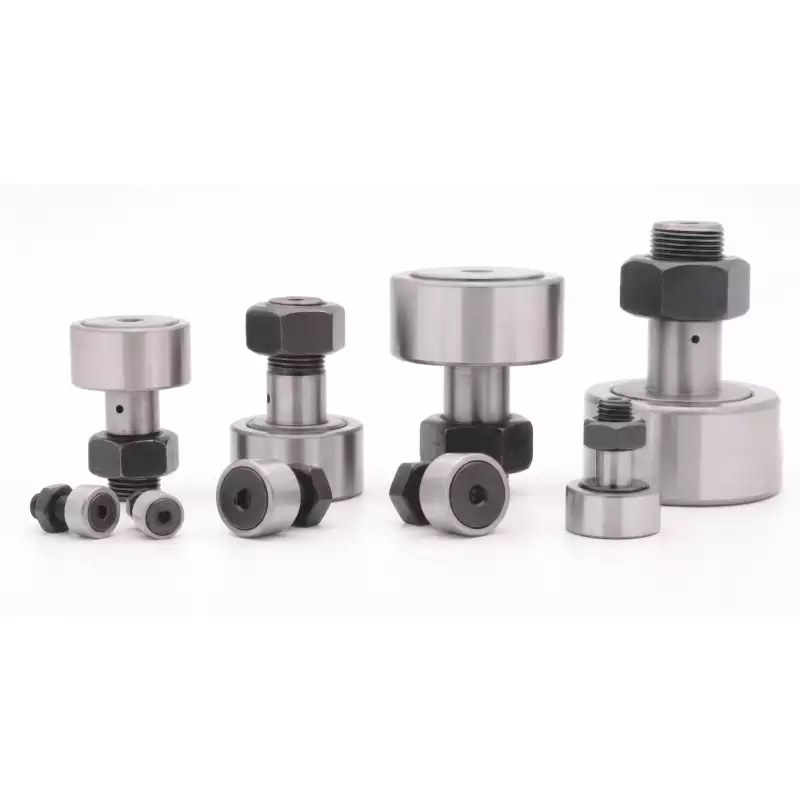
KR/KRV Series stud-type cam follower needle roller bearings. 16 sizes OD 13–90 mm. Dynamic load 280–2,830 N, speed 5,000–29,000 rpm. KR cylindrical outer surface; KRV crowned for misalignment tolerance. GCr15 HRC 58–64. Sealed both ends. Eccentric option available.
MOQ: 50 pcs. Minimum order value USD 1,500; mixed orders and trial quantities welcome.
Needle Roller Bearings › Cam Followers
KR KRV Series Cam Follower Needle Roller Bearing — Stud Type with Full Complement Needles
16 sizes • OD 13–90 mm • Dynamic load 280–2,830 N • Speed 5,000–29,000 rpm
Stud Type
GCr15 HRC 58–64
Sealed Both Ends
Eccentric Option
🆕 Series Overview
The KR/KRV series is a stud-type cam follower needle roller bearing covering 16 outer diameters from 13 mm to 90 mm. The stud body threads directly into the machine structure — no separate housing is required. A full complement of needle rollers between the stud outer surface and the thick-walled outer race delivers high radial load capacity and stiffness relative to the overall envelope.
KR bearings have a cylindrical outer running surface for use on flat or cylindrical cam tracks with accurate parallelism. KRV bearings have a crowned (convex) outer surface that distributes edge loads and accommodates slight angular misalignment between the follower axis and the cam track — the preferred choice wherever track parallelism cannot be maintained within 0.01 mm/100 mm. Eccentric variants (KRE/KRVE) include an offset stud for in-situ preload adjustment without relocating the mounting hole.
📋 Cross-reference: KR/KRV series corresponds to WERB NAKD/NAKDxV designations and IKO CF series. See the full cross-reference table in the specification section.
⚙ Key Design Features
Full Complement Needle Rollers
No cage — needles fill the full bearing circumference, maximising the number of load-carrying rollers and delivering the highest possible radial load capacity for a given envelope size.
Cylindrical vs Crowned Outer Race
KR: cylindrical for accurate parallel tracks. KRV: crowned convex surface accommodates angular misalignment up to ±0.5° and eliminates edge loading on misaligned tracks.
Sealed Both Ends
NBR contact seals on both stud ends retain factory NLGI-2 grease and exclude dust and splash contamination. Re-lubrication via hex socket or grease nipple on the stud.
Eccentric Stud Option (KRE/KRVE)
The stud centreline is offset from the outer race centreline by eccentricity e. Rotating the stud shifts the outer race position by ±e for precise preload adjustment without relocating the mounting hole.
GCr15 Chrome Steel
Outer race and stud manufactured from GCr15 (AISI 52100), through-hardened to HRC 58–64. Needle rollers are precision-ground to ISO tolerance class.
Hexagonal Torque Socket
Hex socket at the stud end for tightening the stud into the mounting thread and for applying the locking wrench when adjusting the eccentric position on KRE/KRVE variants.
WERB / IKO Cross-Reference
Direct dimensional equivalents to WERB NAKD series and IKO CF series cam followers. Stud threads and flats are interchangeable with these standards.
16 Sizes
KR13 to KR90 covering the full range of industrial cam follower applications from light-duty instrument mechanisms to heavy press and transfer line drives.
📋 Complete Specification & Cross-Reference Table — All 16 Models
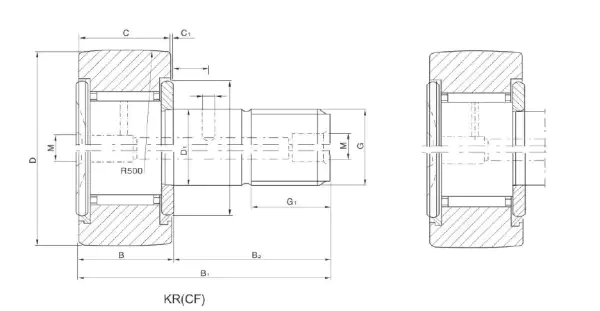
ⓘ D* outer surface can be cylindrical (KR) or spherical/crowned (KRV). Dynamic load C based on 10⁶ revolutions. Eccentric e in mm. Speed limit for grease lubrication. All dimensions in mm unless noted.
| KR | KRV | D* (mm) | C (mm) | D₁ (mm) | G₁ | B max | B₁ max | B₂ (mm) | B₃ (mm) | C₁ | rs min | Eccentric e | Dyn C (N) | Sta Co (N) | Max RPM | Mass (g) | IKO Ref |
|---|---|---|---|---|---|---|---|---|---|---|---|---|---|---|---|---|---|
| KR13 | KRV13 | 13 | 9 | 5 | M5×0.8 | 7 | 10 | 23 | 13 | — | — | 0.25 | 280 | 180 | 29000 | 16 | CF5 |
| KR16 | KRV16 | 16 | 11 | 6 | M6×1 | 8 | 12.2 | 28.2 | 16 | — | — | 0.25 | 270 | 170 | 25000 | 18 | CF6 |
| KR19 | KRV19 | 19 | 11 | 8 | M8×1.25 | 10 | 12.2 | 32.2 | 20 | — | — | 0.25 | 300 | 210 | 20000 | 28 | CF8 |
| KR22 | KRV22 | 22 | 12 | 10 | M10×1.25 | 12 | 13.2 | 36.2 | 23 | — | — | 0.3 | 410 | 320 | 17000 | 44 | CF10 |
| KR26 | KRV26 | 26 | 12 | 10 | M10×1.25 | 12 | 13.2 | 36.2 | 23 | — | — | 0.3 | 410 | 320 | 17000 | 58 | CF10-1 |
| KR30 | KRV30 | 30 | 14 | 12 | M12×1.5 | 13 | 15.2 | 40.2 | 25 | 6 | 0.6 | 0.3 | 590 | 450 | 14000 | 87 | CF12 |
| KR32 | KRV32 | 32 | 14 | 12 | M12×1.5 | 13 | 15.2 | 40.2 | 25 | 6 | 0.6 | 0.35 | 590 | 450 | 14000 | 90 | CF12-1 |
| KR35 | KRV35 | 35 | 18 | 16 | M16×1.5 | 17 | 19.6 | 52.1 | 32.5 | 8 | 0.8 | 0.35 | 850 | 760 | 10000 | 169 | CF16 |
| KR40 | KRV40 | 40 | 20 | 18 | M18×1.5 | 19 | 21.6 | 58.2 | 36.5 | 8 | 0.8 | 0.35 | 1180 | 1220 | 8500 | 247 | CF18 |
| KR47 | KRV47 | 47 | 24 | 20 | M20×1.5 | 21 | 25.6 | 66.1 | 40.5 | 9 | 0.8 | 0.35 | 1630 | 1690 | 7000 | 386 | CF20 |
| KR52 | KRV52 | 52 | 24 | 20 | M20×1.5 | 21 | 25.6 | 66.1 | 40.5 | 9 | 0.8 | 0.35 | 1630 | 1690 | 7000 | 461 | CF20-1 |
| KR62 | KRV62 | 62 | 29 | 24 | M24×1.5 | 25 | 30.6 | 80.1 | 49.5 | 11 | 0.8 | 0.4 | 2160 | 2210 | 6500 | 790 | CF24 |
| KR72 | KRV72 | 72 | 29 | 24 | M24×1.5 | 25 | 30.6 | 80.1 | 49.5 | 11 | 0.8 | 0.4 | 2160 | 2210 | 6500 | 1040 | CF24-1 |
| KR80 | KRV80 | 80 | 35 | 30 | M30×1.5 | 32 | 37 | 100 | 63 | 15 | 1 | 0.5 | 2830 | 3700 | 5000 | 1550 | CF30 |
| KR85 | KRV85 | 85 | 35 | 30 | M30×1.5 | 32 | 37 | 100 | 63 | 15 | 1 | 0.5 | 2830 | 3700 | 5000 | 1740 | CF30-1 |
| KR90 | KRV90 | 90 | 35 | 30 | M30×1.5 | 32 | 37 | 100 | 63 | 15 | 1 | 0.5 | 2830 | 3700 | 5000 | 1950 | CF30-2 |
🔭 Materials & Construction
The outer race and stud are manufactured from GCr15 chrome-bearing steel (AISI 52100 / DIN 100Cr6), through-hardened to HRC 58–64 and finish-ground on all functional surfaces. The thick-walled outer race provides high moment stiffness and resistance to deformation under the concentrated loads characteristic of cam follower applications. Needle rollers are precision-ground to ISO tolerance and surface-hardened to HRC 62–66.
GCr15 Chrome Steel Outer Race
AISI 52100 equivalent. HRC 58–64 throughout. Thick wall for rigidity under concentrated cam loads. Cylindrical (KR) or crowned (KRV) outer surface ground to Ra 0.2 µm.
Hardened Stud
Same GCr15 material, HRC 58–64. Stud thread manufactured to 6g tolerance for reliable engagement. Hex socket for tightening and eccentric adjustment on KRE/KRVE.
NBR Contact Seals
Contact seals on both stud ends rated −20°C to +110°C. Compatible with lithium-complex and polyurea greases. FKM seals available for high-temperature duty above +110°C.
🏭 Typical Applications
Cam & Indexing Mechanisms
KR/KRV followers run directly on hardened cam plates in rotary indexing tables, Geneva mechanisms, and barrel cam drives in assembly automation, eliminating separate housing design.
Transfer Line Guides
Used as track rollers on linear cam channels in automotive transfer line pallet systems, where the stud mounting simplifies the carriage structure and allows rapid roller replacement.
Packaging Machinery
Folding, sealing, and cartoning mechanisms use cam followers extensively for intermittent motion profiles. KRV crowned variants accommodate the slight track misalignment that develops as packaging machine frames flex under cyclic loads.
Textile Machinery
Rapier and gripper drive cams in weaving looms operate at high cycle rates — KR/KRV bearings provide the speed capability and shock resistance required in these high-frequency applications.
('
Printing Presses
Impression cylinder control cams and form roller cams in offset and flexographic presses use stud-type cam followers because the stud mounts directly to the cylinder frame without a housing.
',)
Agricultural Equipment
Baler knotter mechanisms, combine header drives, and seeder metering drives use KR/KRV followers for their dirt tolerance, self-contained stud mounting, and field-replaceable design.
🔧 Installation & Maintenance
🔎 Mounting Thread & Torque
Thread the stud into the mounting hole using the hex socket. Apply thread-locking compound (Loctite 243 or equivalent) if vibration is present. Tighten to the torque specified for the stud thread size — do not overtighten, which can distort the outer race.
🔧 Cam Track Specification
Cam track must be hardened to HRC 58 minimum, surface roughness Ra 0.4 µm or better. Recommended track material is GCr15 (100Cr6) or case-hardened 20CrMnTi. Soft tracks indent rapidly under needle contact loads.
🔁 KRV Alignment Tolerance
KRV crowned outer surface accommodates angular misalignment up to ±0.5° between the stud axis and the cam track running surface. For misalignment exceeding ±0.5°, use a spherical-seat washer under the stud flange or re-align the mounting structure.
⚙ Eccentric Adjustment (KRE/KRVE)
Loosen the locking nut. Rotate the stud body using a spanner on the flats — rotating 180° shifts the follower position by 2e. Apply light preload against the track (just enough to eliminate detectable play). Tighten the locking nut without rotating the stud.
📈 Lubrication
Factory fill is NLGI-2 lithium-complex grease. Re-lubricate via the hex socket or grease nipple at intervals of 500 km of cam travel or 500 hours. Apply grease until slight resistance is felt — overfilling pressurises the seals and accelerates seal wear.
🔒 Seal Inspection
At each re-lubrication, inspect the NBR seals for cracking, extrusion, or contamination ingress. Replace bearings with damaged seals immediately — contaminated grease rapidly accelerates needle roller and outer race wear.
🔎 Selection Guide
Select the KR/KRV model based on required outer diameter (cam follower running surface diameter) and stud thread size. Verify the dynamic load rating C against the equivalent bearing load P using the standard cam follower life equation L = (C/P)³ × 10⁶ revolutions. For combined radial and axial loads, calculate the equivalent radial load using the axial factor X and Y from the technical catalogue.
①
KR vs KRV
Select KR for accurate parallel cam tracks. Select KRV (crowned outer surface) when track parallelism cannot be guaranteed within ±0.5° or when the cam follower must accommodate track deflection under load.
②
Standard vs Eccentric (E)
Select KRE/KRVE when in-situ preload adjustment is required — the eccentric stud shifts the outer race position by ±e without relocating the mounting hole. Essential for zero-backlash cam mechanisms.
③
Calculate Load & Life
Calculate equivalent radial load P from the cam force and geometry. Verify L = (C/P)³ × 10⁶ rev meets the target maintenance interval. If insufficient, select the next larger OD for higher C.
④
Contact Us
MOQ 100 units. Contact our team with cam geometry, load case, speed, and target service life. Eccentric (KRE/KRVE) and special configurations on request.
❓ Frequently Asked Questions
📞 Ready to Order?
MOQ is 100 units per model. Please provide cam geometry, radial load, operating speed, required service life, and mounting thread specification. Eccentric (KRE/KRVE), high-temperature, and stainless steel configurations available on request. All catalogue data is for reference only.
KR/KRV Series stud-type cam follower needle roller bearings. 16 sizes OD 13–90 mm. Dynamic load 280–2,830 N, speed 5,000–29,000 rpm. KR cylindrical outer surface; KRV crowned for misalignment tolerance. GCr15 HRC 58–64. Sealed both ends. Eccentric option available.
MOQ: 50 pcs. Minimum order value USD 1,500; mixed orders and trial quantities welcome.
Related products
-
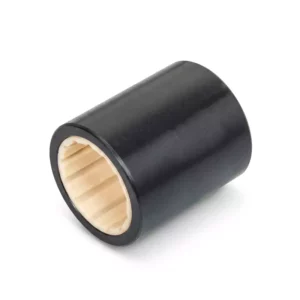
LIN-02 Series Sliding Membrane — Standard Open Type Plastic Linear Bearing
-
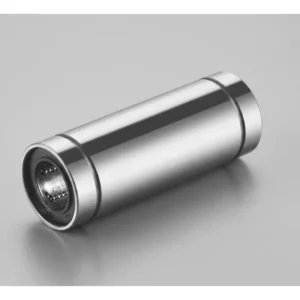
LME Linear Bearing LUU Series — Euro Extended Length Ball Bushing
-
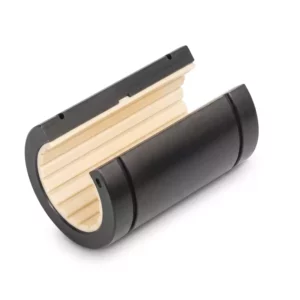
LIN-01RK Series — Open Slot Plastic Linear Bearing with Aluminum Housing
-
LIN-01R Series — Standard Cylindrical Plastic Linear Bearing with Aluminum Housing
-
ST Series — Stroke Bearing Standard Type Linear and Rotary Motion
-
LMES Series — Small Metric Linear Bearing Sealed and Open Type