
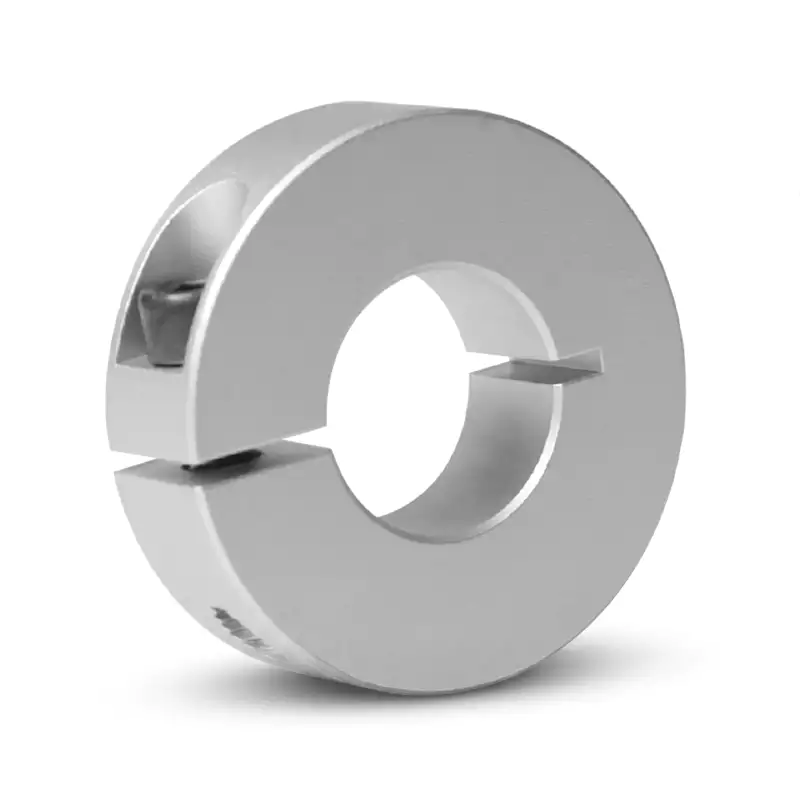
GBC-SCS10 Aluminum Clamp Type Shaft Collar – 10mm Bore
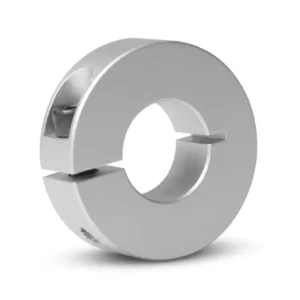
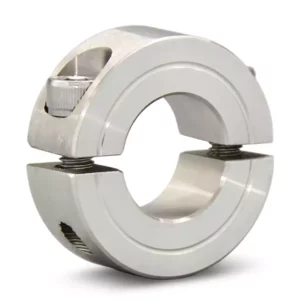
The GBC-SCS10 aluminum clamp-type shaft collar fits 10 mm bore shafts. OD 30 mm, width 10 mm, M4 screw, optional 3 mm keyway. A go-to standard for CNC accessories, 3D printer drive systems, and packaging machinery requiring both axial location and torque retention.
MOQ: 50 pcs. Minimum order value USD 1,500; mixed orders and trial quantities welcome.
10mm Bore Aluminum Clamp Shaft Collar with Optional Keyway – CNC & 3D Printer Standard
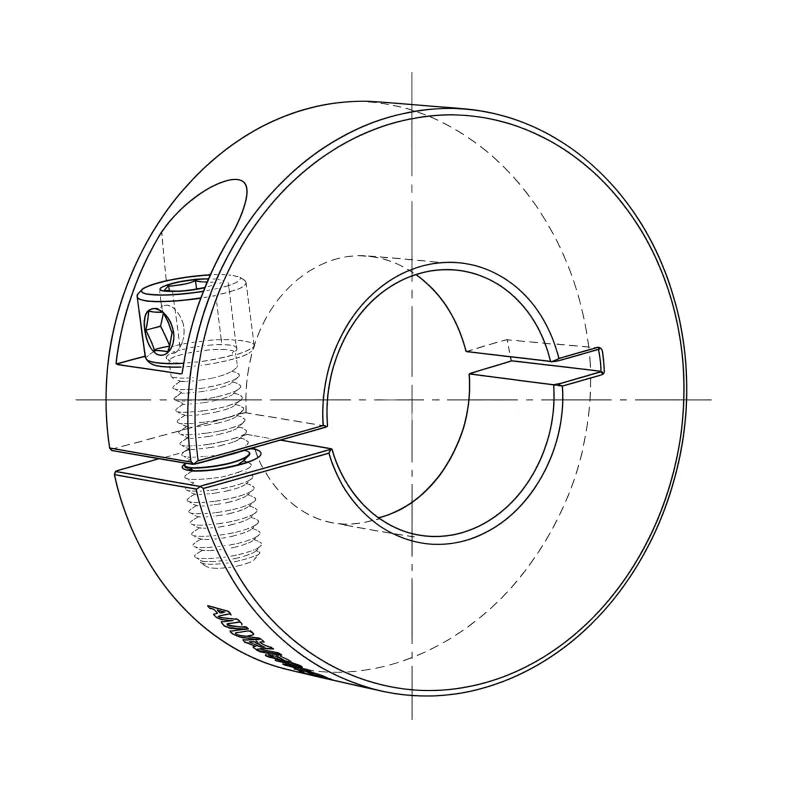
| Parameter | Value | Note |
|---|---|---|
| SKU / Model | GBC-SCS10 | GBC SCS Series |
| Bore Diameter (d) | 10 mm | Nominal; shaft tolerance h6 recommended |
| Outer Diameter (D) | 30 mm | |
| Face Width (B) | 10 mm | |
| Clamping Screw | M4 socket-head cap screw | Hex key driven |
| Slot Width (W) | 1.5 mm | Allows radial flex for clamping |
| Keyway Width (K) | 3 mm | Standard: no keyway; optional on request |
| Material | Aluminium alloy | Lightweight, corrosion-resistant |
| Surface | Natural / anodized on request | |
| MOQ | 100 pcs | Custom drawings accepted |
Product Overview
The GBC-SCS10 is one of the most widely specified shaft collars in light industrial and hobbyist automation, owing to the near-universal prevalence of 10 mm shaft diameters across CNC spindle accessories, 3D printer extruder drives, and compact servo systems. Beyond its 30 mm OD and 10 mm face width, the SCS10 introduces the first keyway option in the SCS series — a 3 mm wide channel that mates with standard DIN 6885 keys to transmit rotational torque in addition to providing axial location. The aluminium alloy body keeps the collar weight under 8 g, ensuring negligible rotational inertia addition on high-speed spindles operating up to 6,000 rpm.
Key Features
Zero Shaft Damage
The split-clamp mechanism distributes clamping force uniformly around the shaft circumference, eliminating the stress concentrations and surface gouging associated with set-screw designs. Shafts can be reused or repositioned without refurbishment.
Aluminium Alloy Construction
The aluminium alloy body provides an excellent strength-to-weight ratio, reducing rotational inertia in dynamic applications while offering natural corrosion resistance in dry industrial environments.
Dual Function: Axial Stop & Locator
Mount a single collar as an end-stop against a bearing or housing shoulder. Alternatively, sandwich a component between two collars to create an adjustable axial position that can be reconfigured without removing the shaft.
Single-Screw Rapid Installation
One M4 socket-head screw closes the collar gap, providing full clamping force in under 60 seconds. No tapping, no adhesive, no shaft modification required — ideal for field installation and iterative prototyping.
Optional Keyway for Torque Locking
A 3 mm keyway channel can be broached on request, enabling the collar to transmit rotational torque in addition to providing axial location — effectively combining two separate components into one.
Typical Application Scenarios
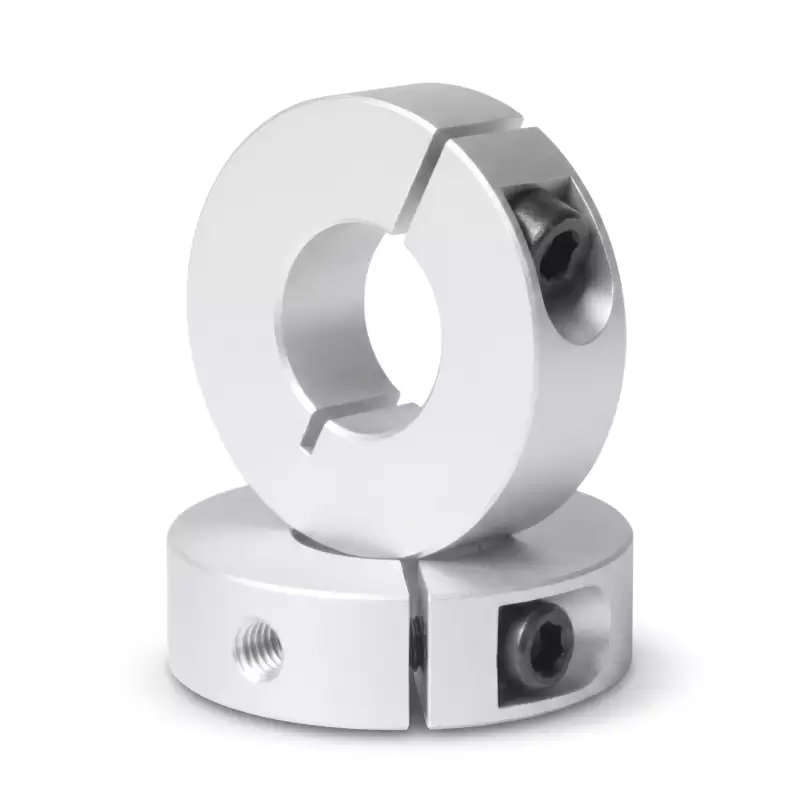
CNC Router Accessory Shafts
Dust-shoe actuator rods and tool-change carousel drives on entry-level CNC routers standardise on 10 mm shafts. The SCS10 provides repeatable axial positioning of cam followers without machined shoulders, enabling fast changeover between tooling configurations.
FDM 3D Printer Extruder Systems
Bowden-drive and direct-drive extruders frequently mount hobbed gears on 10 mm motor shafts. Using the SCS10 with keyway option locks the gear both axially and rotationally, eliminating the cumulative micro-slip that causes under-extrusion over long print runs.
Packaging Machinery Date-Coders
Ink-roller shafts in continuous-feed date-stamp printers use SCS10 collars to set lateral print position. The lightweight aluminium body minimises bearing loads on the slim 10 mm carrier shafts common in this equipment category.
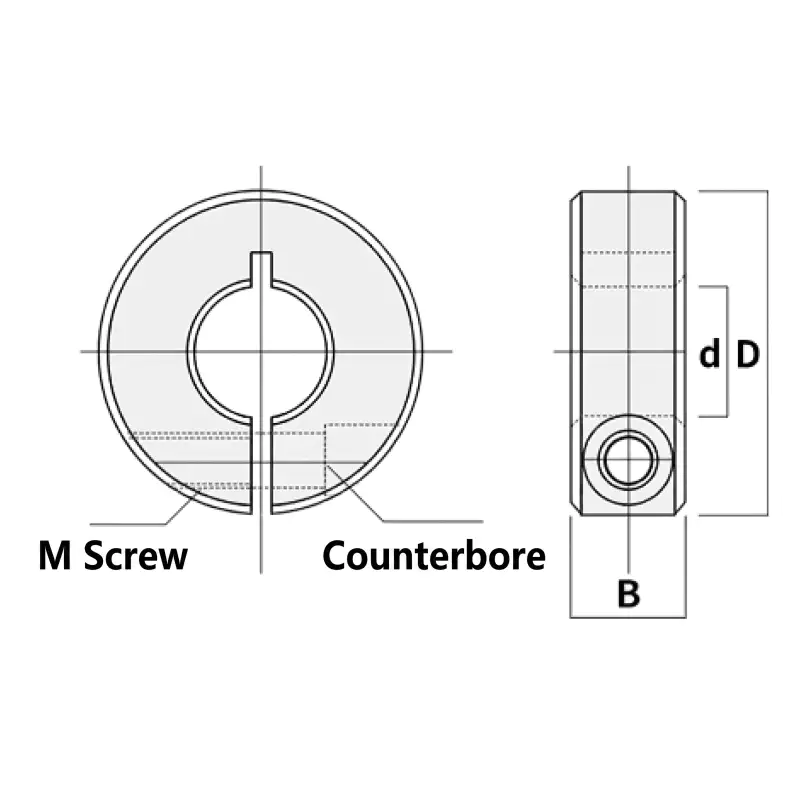
Dimensional Guide
The dimensional drawing above illustrates the three principal measurements: d (bore diameter, 10 mm) defines the shaft fit; D (outer diameter, 30 mm) determines the radial space envelope and clamping surface area; B (face width, 10 mm) sets the axial footprint on the shaft. The slot of width W = 1.5 mm runs the full face width and allows the collar body to flex radially as the clamping screw is tightened. All dimensions follow ISO 286 fits — specify the mating shaft to h6 tolerance for optimal clamping performance.
Custom bore tolerances, OD reductions, alternative slot widths, and surface treatments (hard anodize, black anodize, electroless nickel) are available from GBC. Supply a detailed engineering drawing for quotation.
Model Selection Guide
If you need a plain 8 mm bore without keyway, the GBC-SCS08 is the direct predecessor. For the next standard step with a wider 4 mm keyway, the GBC-SCS12 (12 mm bore, 30 mm OD) is recommended.
| Model | Bore | Position |
|---|---|---|
| GBC-SCS08 | 8mm | ← Smaller |
| GBC-SCS10 | 10 mm | ◀ Current |
| GBC-SCS12 | 12mm | → Larger |
Installation Procedure
- Inspect the shaft: Verify the shaft diameter is within h6 tolerance (10.000 / 9.991 mm) and the surface is clean, degreased, and free of burrs or nicks.
- Position the collar: Slide the GBC-SCS10 onto the shaft to the required axial position. Use a depth gauge or reference stop block to ensure accurate placement before clamping.
- Tighten the clamping screw: Insert the 4 mm hex key and tighten progressively — two or three partial turns, checking position after each turn. Torque M4 screw to 2.5 N·m. When using the keyway version, fit the key before tightening; the key should slide freely into the slot with zero radial play.
- Verify retention: Apply the expected axial load manually and confirm zero movement. For dynamic applications, re-check torque after the first 50 operating cycles as collars may settle slightly during initial clamping.
Frequently Asked Questions
When should I choose the keyway version of the SCS10 over the plain bore?
Can SCS10 handle 6,000 rpm on a balanced shaft?
What is the recommended bore tolerance for SCS10?
Related Products
Complete your shaft assembly with other components from the GBC range:
- GBC-SCS08 – 8mm bore aluminum clamp shaft collar — the next smaller size for tighter bore requirements
- GBC-SCS12 – 12mm bore aluminum clamp shaft collar — the next larger size for increased axial capacity
- Full GBC Shaft Collar Range — browse all bore sizes from 6 mm to 60 mm in the SCS series
Request a Quote or Technical Support
Minimum order quantity is 100 pcs. Custom bore tolerances, keyway options, surface treatments, and non-standard dimensions are available — supply your engineering drawing for a fast quotation from GBC.
The GBC-SCS10 aluminum clamp-type shaft collar fits 10 mm bore shafts. OD 30 mm, width 10 mm, M4 screw, optional 3 mm keyway. A go-to standard for CNC accessories, 3D printer drive systems, and packaging machinery requiring both axial location and torque retention.
MOQ: 50 pcs. Minimum order value USD 1,500; mixed orders and trial quantities welcome.
Related products
-
GBC-SCS60 Aluminum Clamp Type Shaft Collar – 60mm Bore
-
GBC-SCS08 Aluminum Clamp Type Shaft Collar – 8mm Bore
-
GBC-SCS25 Aluminum Clamp Type Shaft Collar – 25mm Bore
-
GBC-SCS16 Aluminum Clamp Type Shaft Collar – 16mm Bore
-
GBC-SCS22 Aluminum Clamp Type Shaft Collar – 22mm Bore
-
GBC-SCS35 Aluminum Clamp Type Shaft Collar – 35mm Bore