
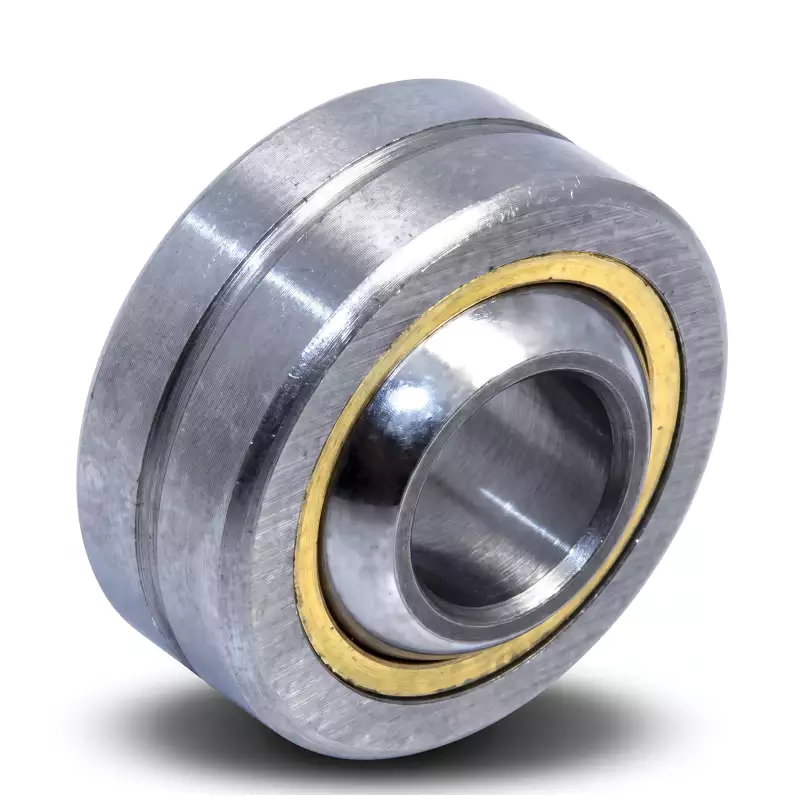
PB Series — Bronze Lined Spherical Plain Bearing Maintenance Required
PB — 13 bore sizes · d 5–30 mm · Bronze liner · Self-aligning · Low speed heavy load.
MOQ: 50 pcs. Minimum order value USD 1,500; mixed orders and trial quantities welcome.
Spherical Plain Bearings › Bronze Lined Type
PB Series — Bronze Lined Spherical Plain Bearing Maintenance Required
13 bore sizes · d 5–30 mm · Bronze liner · Self-aligning · Low speed heavy load
🆕 Series Overview
The PB series spherical plain bearing has a steel outer ring with a bronze (tin-bronze) bushing pressed into the spherical inner bore of the outer ring. The inner ring's spherical outer surface slides directly against the bronze bushing liner. The combination of steel inner ring and bronze outer liner provides the bearing's sliding contact pair — steel against bronze.
Lubrication grooves and oil holes in the outer ring distribute grease across the bronze-steel contact surface. The bronze liner provides wear resistance, shock load tolerance, and self-lubricating properties that make PB bearings suitable for slow-speed, heavy-load, self-aligning applications such as hydraulic cylinder clevis joints, agricultural equipment pivot pins, and low-speed industrial hinge points.
⚙ Key Design Features
Bronze Liner
Tin-bronze bushing pressed into the outer ring's spherical bore. Steel-on-bronze sliding contact provides wear resistance and shock tolerance.
Self-Aligning
Spherical contact accommodates angular misalignment between shaft and housing — essential for pivot joints where alignment cannot be guaranteed.
Lubrication Grooves
Groove and oil holes in the outer ring distribute grease across the full bronze-steel contact surface during re-lubrication.
Shock Load Tolerance
Bronze liner absorbs shock loads better than pure steel-steel contact, making PB suitable for impact-heavy applications such as construction equipment and agricultural machinery.
Self-Lining Capability
Bronze liner has natural self-lubricating properties that reduce friction during the brief periods between re-lubrication cycles.
13 Bore Sizes
5 mm to 30 mm for light to medium industrial pivot and linkage applications.
📋 Complete Specification Table
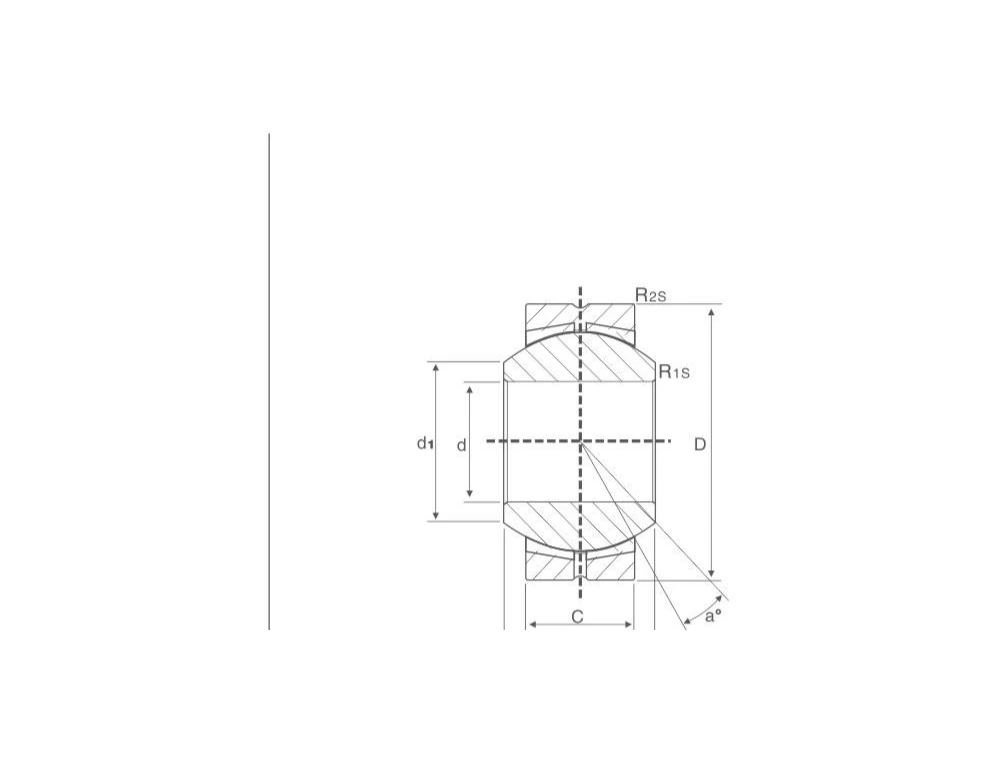
ⓘ Load ratings in kN. d1 = inner ring shoulder diameter. Sliding contact surfaces: Steel (inner ring) / Bronze (liner in outer ring). Dimensions in mm, weight in grams.
| Part Number | d (mm) | D (mm) | B (mm) | C (mm) | d1 (mm) | R1s | R2s | α° | Dyn C (kN) | Sta Co (kN) | Wt (g) |
|---|---|---|---|---|---|---|---|---|---|---|---|
| PB5 | 5 | 16 | 8 | 6 | 7.7 | 0.3 | 0.3 | 13 | 3.3 | 7.8 | 9 |
| PB6 | 6 | 18 | 9 | 6.75 | 9.0 | 0.3 | 0.3 | 13 | 4.3 | 9.8 | 13 |
| PB8 | 8 | 22 | 12 | 9 | 10.4 | 0.3 | 0.3 | 14 | 6.8 | 16 | 24 |
| PB10 | 10 | 26 | 14 | 10.5 | 12.9 | 0.3 | 0.6 | 14 | 10 | 23 | 39 |
| PB12 | 12 | 30 | 16 | 12 | 15.4 | 0.3 | 0.6 | 13 | 13 | 31 | 58 |
| PB14 | 14 | 34 | 19 | 13.5 | 16.9 | 0.3 | 0.6 | 16 | 17 | 40 | 84 |
| PB16 | 16 | 38 | 21 | 15 | 19.4 | 0.3 | 0.6 | 15 | 21 | 50 | 111 |
| PB18 | 18 | 42 | 23 | 16.5 | 21.9 | 0.3 | 0.6 | 15 | 26 | 61 | 160 |
| PB20 | 20 | 46 | 25 | 18 | 24.4 | 0.3 | 0.6 | 15 | 31 | 73 | 210 |
| PB22 | 22 | 50 | 28 | 20 | 25.8 | 0.3 | 0.6 | 15 | 38 | 88 | 260 |
| PB25 | 25 | 56 | 31 | 22 | 29.6 | 0.6 | 0.6 | 15 | 47 | 110 | 390 |
| PB28 | 28 | 62 | 35 | 25 | 32.3 | 0.6 | 0.6 | 15 | 59 | 138 | 530 |
| PB30 | 30 | 66 | 37 | 25 | 34.8 | 0.6 | 0.6 | 17 | 63 | 148 | 610 |
🔄 Interchange / Cross-Reference Table
GBC spherical plain bearings are dimensionally interchangeable with the following major brand designations:
| GBC | SKF | FAG | ELGES | IKO | NTN | NMB |
|---|---|---|---|---|---|---|
| GE..E(S) | GE..E | GE..E | GE..DO | GE..E | SA1~..B | SBH..NS |
| GE..ES 2RS | GE..ES | GE..ES | GE..DO 2RS | GE..ES 2FRS | SA1~..BSS | SBH..S |
| GEG..E(S) | GEH..E | GEH..E | GE..FO | GEG..E | GE..G | — |
| GE..C | GE..C | GE..C | GE..UK | GE..C | SAR1~... | — |
| GE..ET 2RS | GE..TE 2TS | GE..UA 2RS | GE..UK 2RS | GE..ET 2RS | — | — |
| PB | — | — | GE..PB | GEBK..S | PB.. | — |
🔭 Materials & Construction
Outer ring: structural steel with tin-bronze (CuSn8) bushing pressed into the spherical bore. The bronze bushing has lubrication grooves on its OD that align with the outer ring grease holes. Inner ring: 100Cr6 chrome steel, through-hardened to HRC 58–64, with the spherical OD ground to Ra 0.4–0.8 µm. Sliding pair: hardened steel inner ring against tin-bronze bushing.
Tin-Bronze Liner (CuSn8)
Pressed into outer ring spherical bore. Self-lubricating properties. Compatible with mineral and synthetic EP greases.
100Cr6 Inner Ring
Hardened to HRC 58–64. Spherical OD ground to Ra 0.4–0.8 µm as the running surface against bronze liner.
Steel/Bronze Contact Pair
Wear-resistant, shock-tolerant sliding contact. Lower friction than steel-on-steel at low speeds and high loads.
🏭 Typical Applications
Hydraulic Cylinder Clevis
Clevis pin joints at hydraulic cylinder rod and barrel ends require the self-aligning and shock-absorbing properties of bronze-lined spherical plain bearings.
Agricultural Equipment
Linkage pivot pins in ploughs, rippers, and baler mechanisms are classic applications — slow speed, heavy static and shock loads, and dirty conditions.
Construction Machinery
Boom hinge pivot joints, bucket connection pins, and outrigger pad joints in mobile construction equipment use PB bearings for their shock resistance.
Industrial Hinges
Heavy industrial door hinges, valve pivot points, and slow-moving mechanism pin joints use PB bearings for low friction and self-alignment without complex housings.
Mining Equipment
Chute gate pivot joints, vibrating screen support pins, and crusher toggle plate bearings use PB series for shock tolerance in abrasive environments.
Marine Equipment
Tiller bearing joints, hatch hinge pins, and steering mechanism pivots in marine equipment use bronze-lined bearings for their corrosion compatibility and self-aligning function.
🔧 Installation & Maintenance
🔎 Housing Bore
H7 tolerance. Press outer ring into housing using press tool on the outer ring end face. Apply thread-locking compound if the housing is aluminium and operating temperature varies.
🔧 Shaft Tolerance
h6 for press fit; f7 for sliding fit. The inner ring bore is the pivot pin bore — verify pin diameter against specification table.
📈 Initial Lubrication
Apply NLGI-2 EP grease through the oil hole or grease fitting at installation. Purge until grease appears at both ends of the bearing face.
⚙ Re-lubrication Interval
Every 200 hours under continuous use; more frequently in water-exposed or heavily contaminated environments. Use water-resistant EP2 grease in wet conditions.
🌡 Speed Limit
PB bearings are rated for slow oscillating motion and very slow continuous rotation. Maximum surface velocity at the bronze-steel contact: 0.05 m/s. Above this, heat buildup damages the bronze liner.
🔒 Contamination Management
PB bearings tolerate moderate contamination better than ball bearings, but abrasive ingress accelerates bronze liner wear. Add external wiper seals or boots in heavily contaminated environments.
🔎 Selection Guide
Select PB series when the application is a slow-speed, heavy-load pivot joint where shock tolerance and self-alignment are simultaneously required. PB bearings are not suitable for continuous rotation — use GE..ES for rotational applications.
①
Identify Load Type
Confirm slow oscillating or pivoting motion with heavy or shock loads. PB is not for continuous rotation or high speed.
②
Select Bore & Series
Match bore d to pivot pin nominal diameter. Verify outer diameter D fits housing bore. Check B dimension against housing depth.
③
Verify Misalignment Angle
Verify dynamic load rating C ≥ equivalent load. Confirm surface velocity at contact ≤ 0.05 m/s. Check misalignment angle ≤ rated α.
④
Contact Us
MOQ 100 units. Contact our team with bore diameter, load case, misalignment angle, oscillation frequency, and operating environment.
❓ Frequently Asked Questions
📞 Ready to Order?
MOQ is 100 units per model. Provide bore diameter, housing bore, radial and axial loads, misalignment angle, oscillation amplitude and frequency, and operating environment. All catalogue data is for reference only — verify against current drawings before finalising design.
PB — 13 bore sizes · d 5–30 mm · Bronze liner · Self-aligning · Low speed heavy load.
MOQ: 50 pcs. Minimum order value USD 1,500; mixed orders and trial quantities welcome.
Related products
-
LIN-02 Series Sliding Membrane — Standard Open Type Plastic Linear Bearing
-
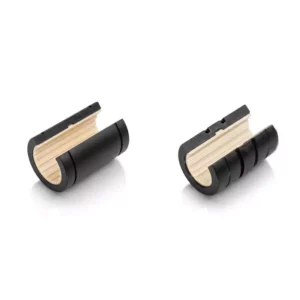
LIN-01K Series Sliding Membrane — Split Type with Keyway Plastic Linear Bearing
-
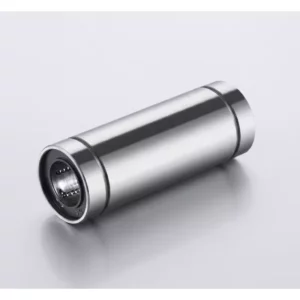
LM Linear Bearing LUU Series — Extended Length Double Sealed Ball Bushing
-
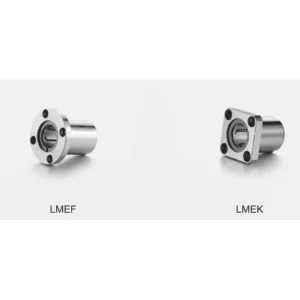
LMEF LMEK Linear Bearing UU Series — Euro Standard Flanged Sealed Ball Bushing
-
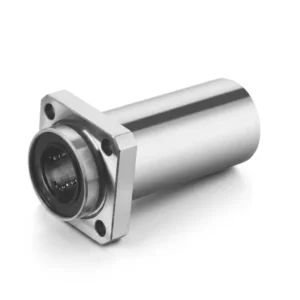
LMHP Linear Bearing LUU Series — Square Flanged Extended Length Ball Bushing
-
LIN-01R Series — Standard Cylindrical Plastic Linear Bearing with Aluminum Housing