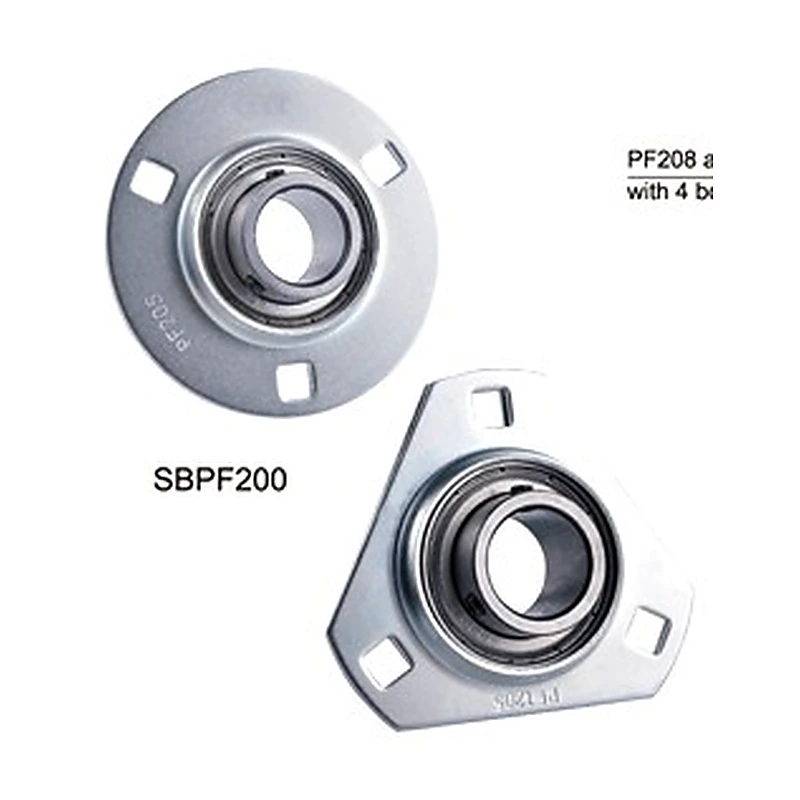
SBPF200 & SBPFT200 Stamped Steel 3-Bolt Flange Bearing Units
SBPF200 and SBPFT200 use the same general light stamped-flange concept as the SAPF/SAPFT family, but the shaft is retained by setscrews. That makes them the more direct choice when a machine already uses UC-style setscrew locking and needs a face-mounted pressed-steel housing.
The catalogue covers 12-60 mm shafts. As with the eccentric-lock version, the larger PF208-212 housings use four bolt holes, so “three-bolt flange” should be treated as a family description rather than a guarantee that every size shares the identical mounting pattern.
For a wider housing comparison, browse the bearings range before finalising the mounting style.
SBPF200/SBPFT200 published technical range
The table below keeps the catalogue values used for this series. Use the model-specific drawing for the final interchange decision; dimensions and suffixes can vary inside a family.
| Specification point | SBPF200/SBPFT200 catalogue data |
|---|---|
| Series / model family | SBPF201-212 / SBPFT201-212 |
| Duty class | Light duty |
| Locking / bearing mounting | Setscrew locking |
| Published shaft range | 12-60 mm |
| Published metric / inch options | 12, 15, 17, 20, 25, 30, 35, 40, 45, 50, 55, 60 mm |
| Housing / mounting style | 3-bolt stamped steel flange; PF208-212 housings use 4 bolt holes |
| Housing construction | Pressed / stamped steel |
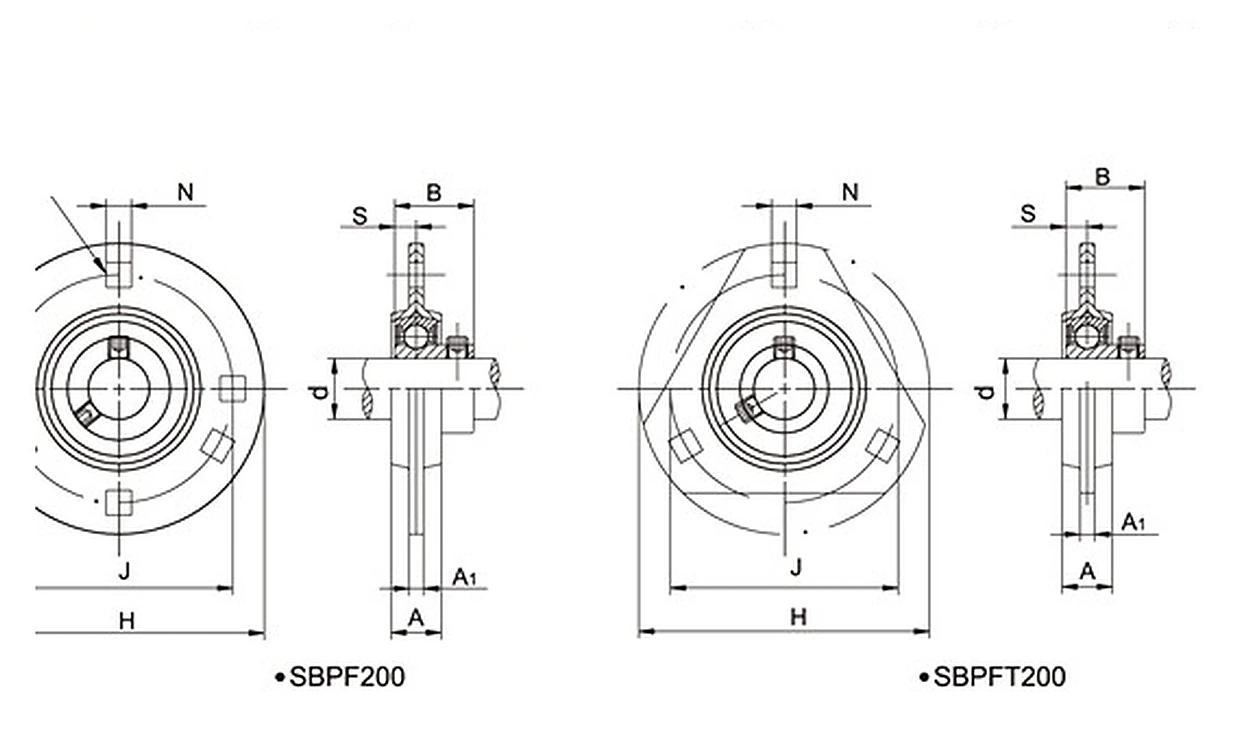
| Catalog dimensional fields | H, J, A, A1, N, B, S, bolt size and weight |
| Published unit weight | Approx. 0.23-2.10 kg |
SBPF/SBPFT and SAPF/SAPFT: same idea, different lock
SBPF/SBPFT is the setscrew version of the broader stamped PF/PFT flange family. SAPF/SAPFT uses eccentric locking. SBPFL/SAPFL is the smaller two-bolt oval flange family, while SBPP/SAPP is the base-mounted pillow-block option.
Where SBPF/SBPFT fits in a light machine
These are application patterns where the housing concept is commonly considered. Final suitability still depends on load, speed, alignment, environment and the machine designer’s requirements.
Light conveyors and roller frames
Setscrew locking and face mounting provide a simple bearing station on fabricated side plates.
Agricultural auxiliary drives
The stamped housing keeps weight down on guards, feeder drives and compact mechanisms.
HVAC and fan equipment
The unit can support shafts through panels where a heavy cast flange is unnecessary.
General OEM machinery
A broad 12-60 mm size range makes the family useful when a machine builder wants one light flange concept across several shaft sizes.
Setscrew locking with a light stamped flange
Setscrew shaft locking
The insert uses direct setscrew retention, distinguishing SBPF/SBPFT from the eccentric SAPF/SAPFT family.
12-60 mm range
Published shaft sizes cover a broad light-duty span from small to medium diameters.
Pressed-steel flange
Low mass and compact packaging suit fabricated machine frames and panels.
PF208-212 use four bolt holes
Exact mounting geometry must be confirmed from the model-specific drawing.
Preventing distortion during installation
Housing alignment should be established first; the shaft lock should not be used to pull the bearing into position.
Even tightening helps keep the pressed flange flat.
If the shaft surface is badly damaged, repair or replace it rather than relying on extra screw force.
SBPF/SBPFT and SAPF/SAPFT can appear very similar on a shelf, so the shaft-retention method should be obvious on inventory records.
Mounting pattern comes before visual similarity
Use the product drawing as the final dimensional authority. The points below are practical filters that help narrow the correct model before a full drawing comparison.
If the old unit uses an eccentric collar, this is not a like-for-like replacement even if the flange fits.
Confirm J/H and the number of bolt holes for the specific model size.
Raised marks or corrosion should be corrected before the new insert is secured.
A flat, rigid face helps prevent the thin housing from twisting as the bolts are tightened.
Send the machine details for a model check
For SBPF200/SBPFT200, send the existing model marking, shaft diameter, mounting dimensions and a photo of the bearing position. GBC can review the information against the published series before quotation. Email: sales@australia-drive.com.