
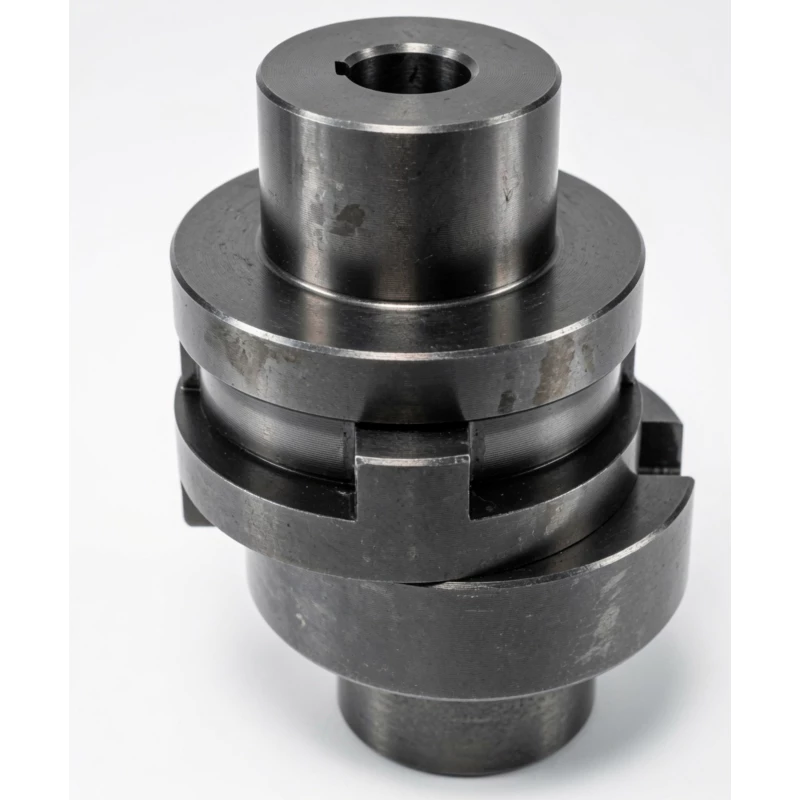
SL Type Oldham Coupling
SL Type Oldham Coupling connects coaxial drive shafts with large radial offset compensation — up to 8.0 mm across 18 sizes (SL70–SL460). Nominal torque 120–63,000 N·m, speed 70–250 r/min. Aluminium alloy or stainless steel hub options. Zero backlash, constant velocity ratio. Stocked and shipped Australia-wide by GBC.
MOQ: 50 pcs. Minimum order value USD 1,500; mixed orders and trial quantities welcome.
SL Type Oldham Coupling — Heavy-Duty Radial Misalignment Compensation for Industrial Drive Systems
Engineered for demanding Australian industrial environments, the SL Type Oldham Coupling delivers reliable parallel misalignment compensation across a nominal torque range of 120 to 63,000 N·m, with operating speeds from 70 to 250 r/min. If you are connecting two coaxial drive shafts and need to absorb significant radial offset without transmitting bending loads to bearings or shafts, this is the coupling series to consider.
Core Product Parameters at a Glance
What Is an Oldham Coupling?
An Oldham coupling is a three-piece mechanical coupling designed to transmit rotary motion between two parallel shafts that are not perfectly aligned. The assembly consists of two metallic hubs — each keyed or clamped to one of the rotating shafts — and a central intermediate disc (also called a slider or middle element) that slides within mating slots machined into each hub face. This sliding cross arrangement allows the centre element to move laterally as the shafts rotate, absorbing radial (parallel) misalignment without generating side-loads on the connected shaft bearings.
The fundamental engineering problem the Oldham design solves is this: in real machinery, perfect shaft colinearity is rarely achievable. Motor mounting tolerances, thermal expansion, foundation settling, and general assembly variation all introduce some degree of parallel offset between coupled shafts. A rigid coupling transmits these offsets directly to bearings, seals, and shaft spigots, accelerating wear and ultimately causing premature failure. An Oldham coupling intercepts that offset at the floating intermediate disc, keeping the force path clean and the bearing loads predictable.
What distinguishes the Oldham design from elastomeric couplings — such as jaw or tyre-type units — is its essentially rigid, zero-backlash torque path. There is no rubber element to fatigue, creep, or change stiffness with temperature. The intermediate disc material (nylon, Delrin/POM, or similar engineering polymer) handles the sliding function without transmitting cyclic bending moments. This makes the Oldham coupling the preferred choice wherever constant velocity ratio, minimal torsional compliance, and long service life under parallel offset are all required simultaneously.
How Does the SL Type Oldham Coupling Work?
The three-piece structure operates on a straightforward kinematic principle. Each hub face carries a single rectangular tongue, and the intermediate disc carries two perpendicular slots — one on each face — that receive these tongues. As the drive hub rotates, its tongue pushes the disc in one linear direction; the disc simultaneously slides in a perpendicular direction relative to the driven hub. The net result is pure torque transfer with the centre of mass of the disc describing a small circular orbit equal in diameter to the radial offset between the shafts. Critically, the angular velocity ratio between input and output remains exactly 1:1 throughout each revolution — this is the constant-velocity (CV) characteristic that defines the Oldham mechanism.
For the SL series, the allowable radial compensation ranges from 0.6 mm on the SL70 up to 8.0 mm on the SL460. Angular misalignment tolerance is 0.5° across the full range. Axial (end-float) compensation varies from 1.2 mm (SL70) to 7.2 mm (SL460), providing flexibility for thermal shaft growth in long spindle applications. Rated torques span from 120 N·m to 63,000 N·m, and allowable speeds range from 70 r/min (SL460) to 250 r/min (SL70 through SL320).
Because the intermediate disc carries the misalignment kinematically rather than elastically, the torsional stiffness of the coupling is high. There is no energy stored in elastic deformation and no phase lag between input and output torque. This characteristic is particularly significant in servo-driven positioning systems, where any elastic windup would appear as a tracking error. The low rotational inertia of the SL series — as low as 0.002 kg·m² on the SL70 — also minimises the reflected inertia presented to servo drives, enabling faster dynamic response and tighter control bandwidths.
Specifications & Material Options
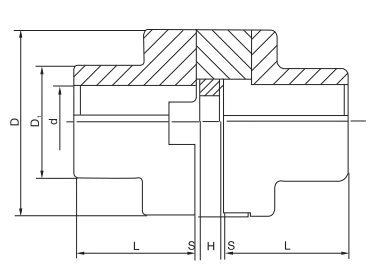
The tables below list all published performance parameters and dimensional data for the SL series. Use these for initial selection; our engineering team can assist with final confirmation based on your application duty cycle and installation envelope.
SL Type Oldham Coupling — Performance Parameters & Main Dimensions (mm)
| Type | Nominal Torque Tn (N·m) | Allowable Speed [n] (r/min) | Bore Dia. d (mm) | D (mm) | D1 (mm) | L (mm) | H (mm) | S (mm) | Rotational Inertia (kg·m²) | Weight (kg) |
|---|---|---|---|---|---|---|---|---|---|---|
| SL70 | 120 | 250 | 15–18 | 70 | 32 | 42 | 14 | 0.5 | 0.002 | 1.5 |
| SL90 | 250 | 250 | 20–30 | 90 | 45 | 52 | 14 | 0.008 | 2.6 | |
| SL100 | 500 | 250 | 36–40 | 110 | 60 | 70 | 19 | 0.026 | 5.5 | |
| SL130 | 800 | 250 | 45–50 | 130 | 80 | 90 | 19 | 0.07 | 10 | |
| SL150 | 1250 | 250 | 55–60 | 150 | 95 | 112 | 19 | 0.14 | 15.5 | |
| SL170 | 2000 | 250 | 65–70 | 170 | 105 | 125 | 24 | 0.25 | 22.4 | |
| SL190 | 3200 | 250 | 75–80 | 190 | 110 | 140 | 29 | 0.5 | 31.5 | |
| SL210 | 5000 | 250 | 85–90 | 210 | 130 | 160 | 33 | 0.9 | 45 | |
| SL240 | 8000 | 250 | 95–100 | 240 | 140 | 180 | 33 | 1.6 | 59.5 | |
| SL260 | 9000 | 250 | 100–110 | 260 | 160 | 190 | 33 | 2 | 76 | |
| SL280 | 10000 | 100 | 110–120 | 280 | 170 | 200 | 33 | 3 | 94.3 | |
| SL300 | 13000 | 100 | 120–130 | 300 | 180 | 210 | 43 | 1.0 | 4.3 | 111 |
| SL320 | 16000 | 100 | 130–140 | 320 | 190 | 220 | 43 | 5.7 | 129 | |
| SL340 | 20000 | 100 | 150 | 340 | 210 | 250 | 48 | 8.4 | 162 | |
| SL360 | 32500 | 100 | 160 | 360 | 240 | 280 | 48 | 19.2 | 258 | |
| SL400 | 38700 | 80 | 170 | 400 | 260 | 300 | 48 | 26.1 | 305 | |
| SL460 | 63000 | 70 | 200 | 460 | 300 | 350 | 58 | 62.9 | 560 |
SL Type Oldham Coupling — Allowable Misalignment Compensation
| Type | Radial Offset delta y (mm) | Angular Offset delta a (°) | Axial Offset delta x (mm) |
|---|---|---|---|
| SL70 | 0.6 | 0.5° | 1.2 |
| SL90 | 0.7 | 1.4 | |
| SL100 | 1.4 | 1.5 | |
| SL130 | 1.8 | 1.8 | |
| SL150 | 2.2 | 2.0 | |
| SL170 | 2.6 | 2.1 | |
| SL190 | 3.0 | 2.2 | |
| SL210 | 3.4 | 2.6 | |
| SL240 | 3.8 | 3.0 | |
| SL260 | 4.0 | 3.4 | |
| SL280 | 4.4 | 3.8 | |
| SL300 | 4.8 | 4.2 | |
| SL320 | 5.2 | 4.6 | |
| SL340 | 6.0 | 5.0 | |
| SL360 | 6.4 | 5.7 | |
| SL400 | 6.6 | 6.4 | |
| SL460 | 8.0 | 7.2 |
Material Options
Lightweight and electrically insulating. Ideal for high-speed lighter-duty applications where cost and mass are priorities. Self-lubricating properties reduce wear between sliding faces.
Higher rigidity and superior wear resistance compared to nylon. Suitable for heavier torque loads and applications where dimensional stability under load is critical. Low moisture absorption maintains consistent clearance over time.
The standard choice for most industrial applications. Excellent strength-to-weight ratio, good machinability for custom bores and keyways, and natural resistance to many industrial environments. Anodising or hard-coat options available.
Specified for food processing, pharmaceutical, marine, and other corrosive environments. Withstands washdown procedures and aggressive cleaning agents. Grade 304 and 316 options available on request.
Industry Applications in Australia
The SL Type Oldham Coupling is in active use across a broad range of Australian industries. Below are the sectors where our customers specify this coupling most frequently, along with the application rationale that drives those decisions.
Conveyor drives, screen vibrators, and pump systems in WA and Queensland mine sites experience significant foundation settlement and structural deflection. The SL series' large radial compensation tolerance keeps drive trains operational during ground movement cycles without forced downtime for realignment.
Stainless steel hub variants with food-grade intermediate discs are fully compatible with CIP cleaning protocols. Common applications include packaging line drives, filling machines, and conveyor motor connections where hygiene compliance and ease of maintenance are mandated by FSANZ and client auditors.
Wet, chemically aggressive environments and heavy shock loads on calendar and winder drives demand coupling components that resist corrosion and absorb misalignment without transferring bearing loads. The SL series handles both requirements in a single, robust assembly.
Pump and blower drive applications at Australian water utilities benefit from the SL coupling's tolerance of motor-to-pump shaft offset introduced by concrete pad settlement and pump wear ring clearance changes. Longer service intervals reduce maintenance overhead at remote treatment sites.
Rolling mill auxiliary drives, straighteners, and shear line drives operate in high-vibration, high-temperature environments. The rigid torque path and absence of elastomeric elements make the SL coupling resistant to thermal degradation that shortens the life of jaw or tyre couplings in these settings.
Grain augers, irrigation pump sets, and harvesting equipment PTO drive trains operating in the Australian agricultural belt benefit from the SL coupling's simple assembly and easy intermediate disc replacement — critical when a crop window is open and downtime cost is measured in tonnes per hour.
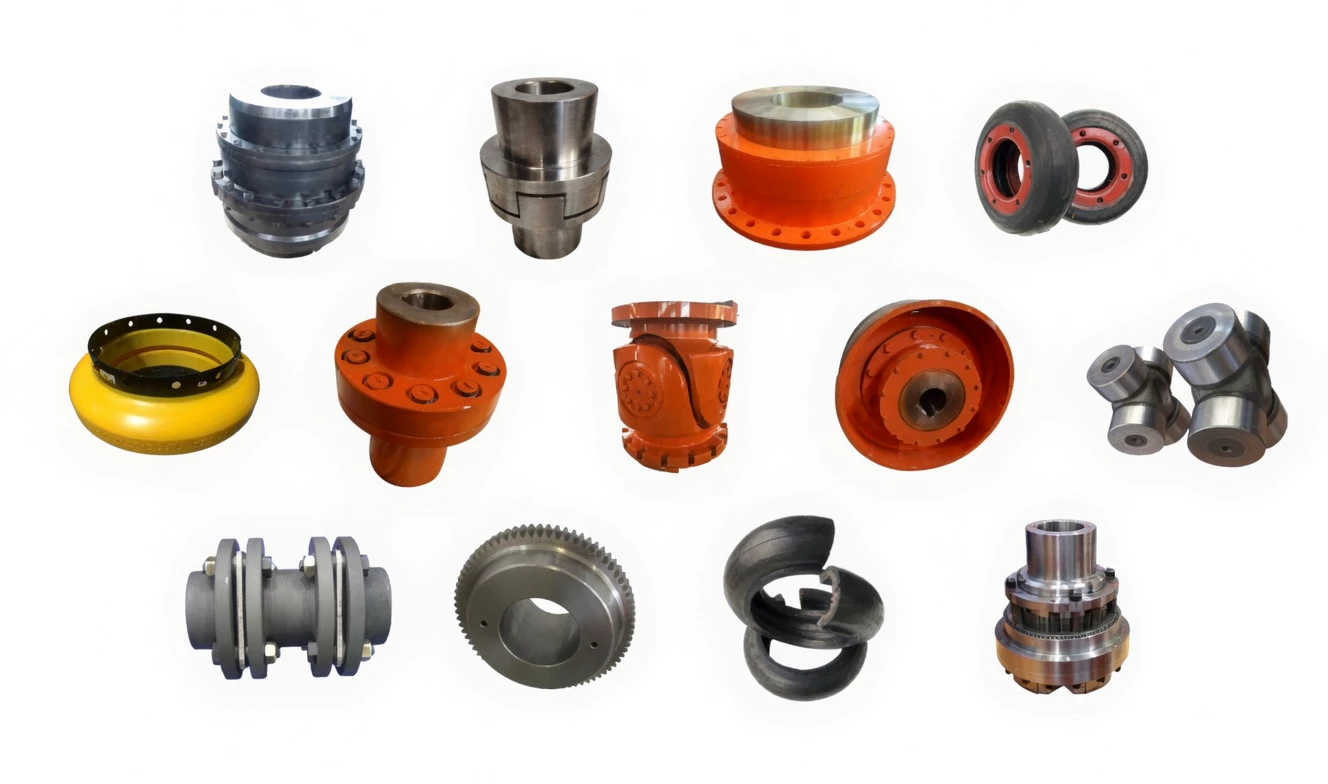
Looking for a different coupling type for your application? Browse the full GBC coupling range to compare jaw, disc, bellows, and grid coupling options across all torque classes.
Oldham Coupling vs Other Coupling Types
Selecting the right coupling type starts with matching the compensation requirement and application duty to the coupling's inherent characteristics. The table below summarises how the SL Type Oldham Coupling compares against three commonly specified alternatives in Australian industrial procurement.
| Parameter | SL Oldham Coupling | Jaw Coupling | Bellows Coupling | Disc Coupling |
|---|---|---|---|---|
| Parallel Offset Compensation | Excellent (up to 8 mm) | Limited (0.1–0.5 mm) | Low (0.1–0.3 mm) | Very Low (<0.1 mm) |
| Angular Offset Compensation | Low (0.5°) | Moderate (1°–2°) | Good (1°–3°) | Low (0.5°–1°) |
| Backlash | Near Zero | Low–Moderate | Near Zero | Near Zero |
| Electrical Insulation | Yes (polymer disc) | Yes (spider) | No | No |
| Suitable Speed Range | 70–250 r/min | Up to 6000 r/min | Up to 10,000+ r/min | Up to 10,000+ r/min |
| Installation & Maintenance | Simple — disc slides out radially | Simple — spider accessible | Moderate | More complex |
| Relative Cost | Moderate | Low | High | High |
| Constant Velocity Ratio | Yes — true 1:1 CV | Yes | Yes | Yes |
Why Source Your Oldham Couplings from GBC Australia?
Sourcing the right coupling is only part of the equation. The supplier's quality system, technical depth, and ability to support custom requirements often determine whether a project stays on schedule and on budget. Here is why procurement teams and maintenance engineers across Australia specify GBC.
Our SL Type Oldham Couplings are manufactured under an ISO 9001 quality management system. Products comply with RoHS directives and are supplied with CE conformity documentation on request. Material test certificates (MTC) for steel and stainless steel hubs are available for critical applications.
We support custom bore diameters, keyway profiles (parallel, Woodruff, DIN, and AS/NZS), special hub materials, surface treatments (hard anodising, electroless nickel plating, black oxide), and modified intermediate disc materials. Minimum order quantity for custom specifications is 5 pieces, with typical lead times of 7–15 business days from drawing approval.
Our Australian-based technical sales team responds to all enquiries within one business day. We provide application sizing assistance, dimensional drawings, 3D CAD models (STEP format), and installation guidance at no charge. Replacement intermediate discs are stocked for all standard sizes for same-week dispatch.
We dispatch to all Australian states and territories — NSW, VIC, QLD, WA, SA, TAS, ACT, NT — with tracked freight via established logistics partners. Standard orders ship within 2–3 business days. Returns are accepted within 30 days for standard products in original condition. Custom-manufactured parts are subject to prior approval.
Ready to discuss your application? Our team is equipped to assist with selection, sizing, and custom specification. Get in touch with a GBC coupling specialist today.
Frequently Asked Questions — SL Type Oldham Coupling
Get a Quote or Technical Datasheet for the SL Type Oldham Coupling
Send us your shaft diameter, torque requirement, and speed, and our engineering team will confirm the correct SL size and material specification — usually within one business day.
SL Type Oldham Coupling connects coaxial drive shafts with large radial offset compensation — up to 8.0 mm across 18 sizes (SL70–SL460). Nominal torque 120–63,000 N·m, speed 70–250 r/min. Aluminium alloy or stainless steel hub options. Zero backlash, constant velocity ratio. Stocked and shipped Australia-wide by GBC.
MOQ: 50 pcs. Minimum order value USD 1,500; mixed orders and trial quantities welcome.
Related products
-
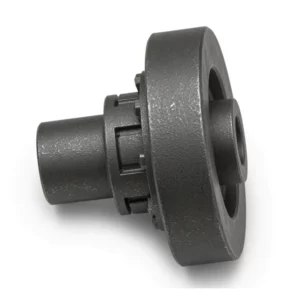
LMZ-II Type Plum Blossom Coupling with Integral Brake Wheel
-
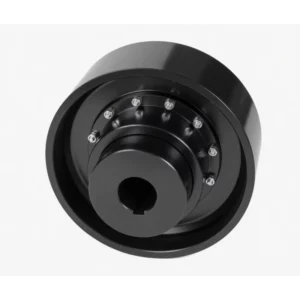
NGCLZ Drum Shape Gear Coupling with Brake Drum | Intermediate Shaft Type
-
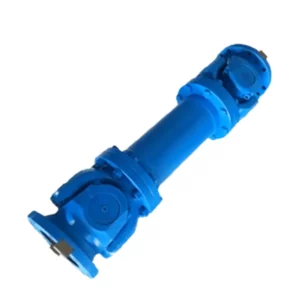
SWP-D Long Non-Flexible Universal Joint Couplings
-
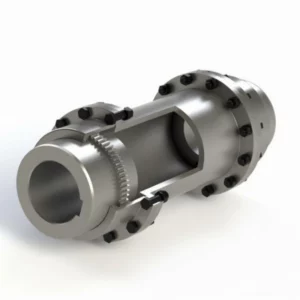
WGT Drum Shape Gear Coupling with Intermediate Sleeve
-
GIICLZ Drum Shape Gear Coupling
-
WGZ Drum Shape Gear Coupling with Brake Drum