GBC7C Series Clamp Type Rigid Coupling
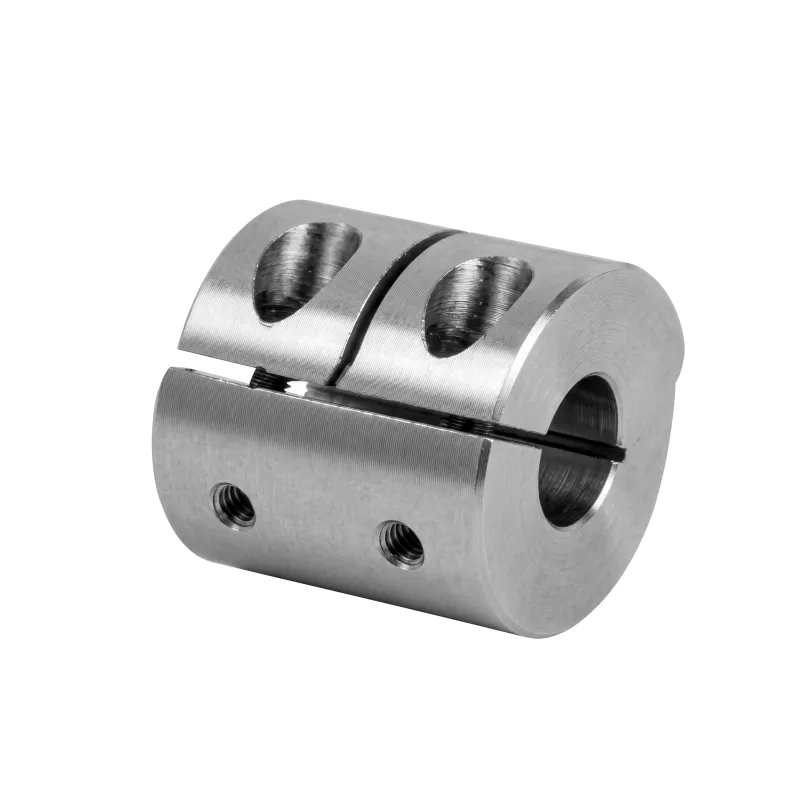
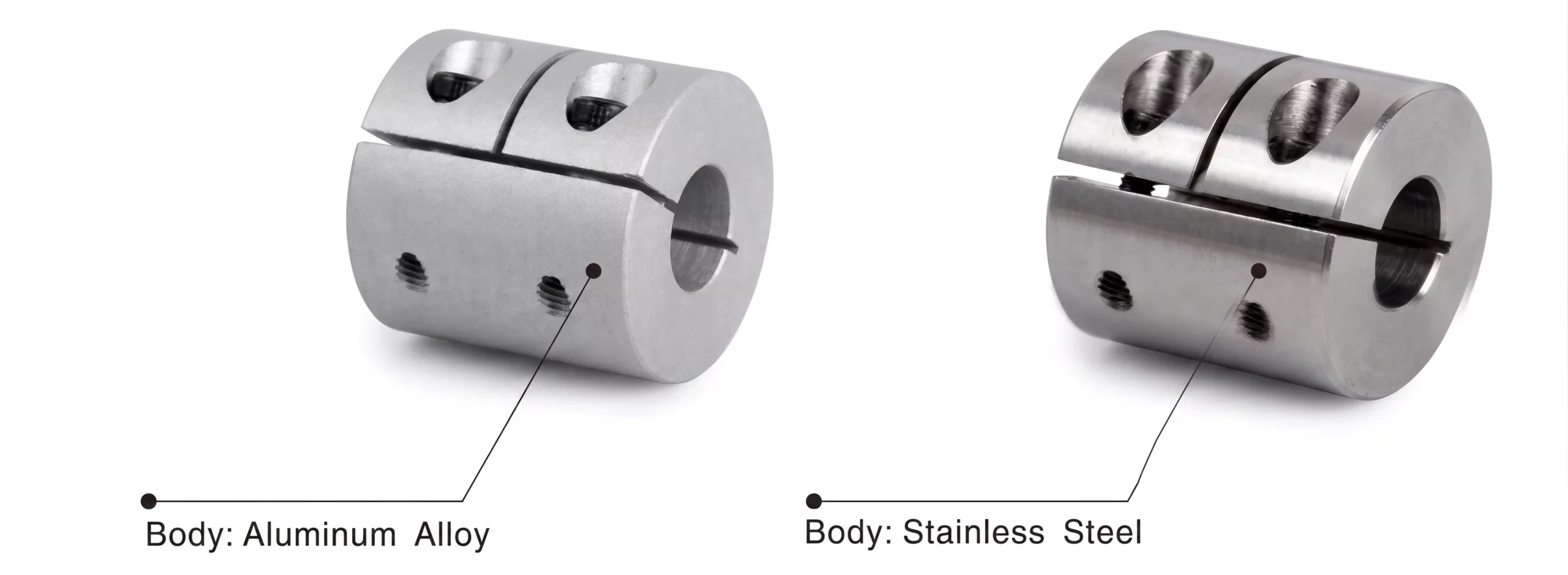
The GBC7C Series Clamp Type Rigid Coupling is a split-collar micro rigid coupling that transmits torque without marking shaft surfaces. Available in aluminium alloy and stainless steel with outside diameters from 16 mm to 32 mm, it suits servo systems, encoders, food processing, and clean-room environments where shaft integrity and rapid changeover are essential.
MOQ: 50 pcs. Minimum order value USD 1,500; mixed orders and trial quantities welcome.
GBC7C Series Clamp Type Rigid Coupling — Zero-Marking Split-Collar Shaft Connector for Precision Drives
The GBC7C Series Clamp Type Rigid Coupling is a high-precision split-collar micro coupling that transmits torque without marking or deforming shaft surfaces. Using a circumferential clamping bolt arrangement, the GBC7C achieves uniform radial pressure across the bore, delivering exceptional concentricity and shaft retention. Bore diameters range from 5 mm to 14 mm across four outside diameter sizes (16, 20, 25, and 32 mm). Both aluminium alloy (GBC7C) and stainless steel (SGBC7C) bodies are offered. View our complete rigid coupling range or explore all coupling solutions.
Design Advantages
- Clamp fixation applies uniform radial force — no shaft surface damage or indentation
- Split-collar body allows rapid shaft installation and removal without special tools
- Ultra-low moment of inertia supports high-response servo and stepper drive systems
- Available in lightweight aluminium alloy and corrosion-resistant stainless steel
- Bore range from 5 mm to 14 mm covers common micro shaft standards
- Rigid one-piece torque path eliminates angular or axial compliance for precise positioning
- Compatible with standard metric bore combinations and custom mismatched bore configurations
Dimensions & Specifications
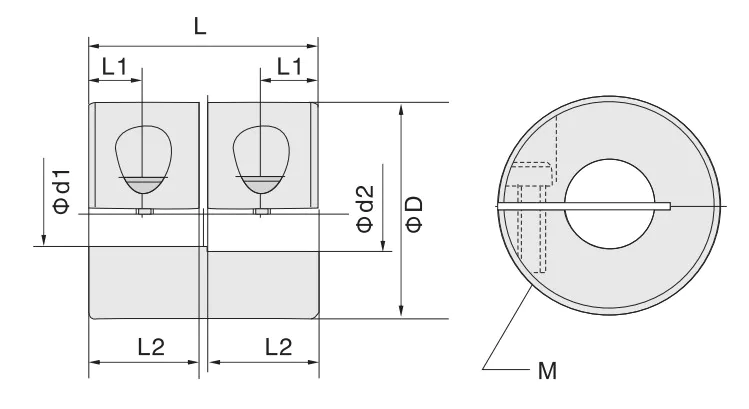
Dimensional Table — GBC7C (Aluminium) & SGBC7C (Stainless Steel)
| Model | Bore d1/d2 (mm) | ΦD (mm) | L (mm) | L1 (mm) | L2 (mm) | M | Wrench Torque (N·m) |
|---|---|---|---|---|---|---|---|
| GBC7C-16 | 5 6 | 16 | 16 | 3.75 | 7.5 | M3 | 1 |
| GBC7C-20 | 6 8 | 20 | 20 | 4.75 | 9.5 | M3 | 1 |
| GBC7C-25 | 8 10 | 25 | 25 | 6 | 12 | M4 | 1.5 |
| GBC7C-32 | 10 12 14 | 32 | 32 | 7.75 | 15.5 | M4 | 2.5 |
| SGBC7C-16 | 5 6 | 16 | 16 | 3.75 | 7.5 | M3 | 1 |
| SGBC7C-20 | 6 8 | 20 | 20 | 4.75 | 9.5 | M3 | 1 |
| SGBC7C-25 | 8 10 | 25 | 25 | 6 | 12 | M4 | 1.5 |
| SGBC7C-32 | 10 11 12 14 | 32 | 32 | 7.75 | 15.5 | M4 | 2.5 |
Performance Specifications
| Model | Rated Torque (N·m) | Max Torque (N·m) | Max Speed (rpm) | Moment of Inertia (kg·m²) | Mass (g) |
|---|---|---|---|---|---|
| GBC7C-16 | 0.3 | 0.6 | 7,300 | 2.9 × 10⁻&sup7; | 8.2 |
| GBC7C-20 | 0.5 | 1 | 5,400 | 8.6 × 10⁻&sup7; | 14.5 |
| GBC7C-25 | 1 | 2 | 4,000 | 2.6 × 10⁻⁶ | 2.8 |
| GBC7C-32 | 2 | 4 | 3,600 | 7.0 × 10⁻⁶ | 50 |
| SGBC7C-16 | 0.3 | 0.6 | 7,300 | 7.9 × 10⁻&sup7; | 21 |
| SGBC7C-20 | 0.5 | 1 | 5,400 | 2.3 × 10⁻⁶ | 40 |
| SGBC7C-25 | 1 | 2 | 4,000 | 7.2 × 10⁻⁶ | 79 |
| SGBC7C-32 | 2 | 4 | 3,600 | 2.4 × 10⁻⁶ | 158 |
Moment of inertia and mass figures are based on the maximum shaft bores.
How to Order — Part Number Guide
The GBC7C part number structure is: [S]GBC7C-[OD]-[d1][d2]
- No S prefix = Standard aluminium alloy body
- S prefix = Stainless steel body (e.g., SGBC7C)
- OD = Outside diameter in mm (16, 20, 25, or 32)
- d1/d2 = Bore diameters in mm at each end
Example: GBC7C-20-0608 = Aluminium alloy, OD 20 mm, d1 bore 6 mm, d2 bore 8 mm.
Ideal Applications
Encoder & Feedback Device Coupling
The clamp-type design allows precise encoder shaft coupling without shaft surface damage, maintaining signal integrity across millions of positioning cycles.
Food Processing & Packaging Equipment
SGBC7C stainless steel clamp couplings meet hygiene requirements for food-contact drive systems, supporting frequent washdown without corrosion risk.
Semiconductor & Electronics Manufacturing
Clean-room-compatible aluminium GBC7C couplings are used in wafer handling and PCB assembly machines where particle generation from setscrew marking is unacceptable.
Textile & Printing Machinery
The zero-marking clamp mechanism allows frequent shaft adjustment during press or loom setup, reducing maintenance downtime and preserving shaft reusability.
Our Manufacturing Facility
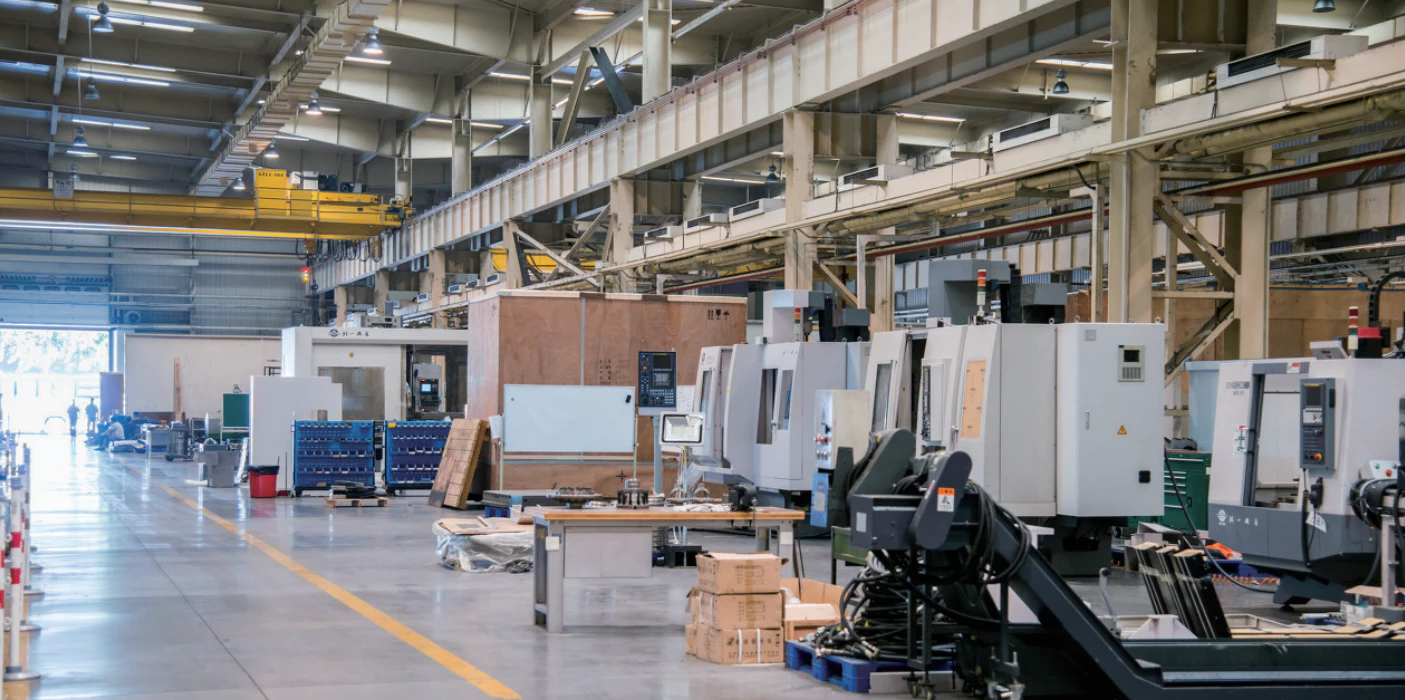
GBC7C Series couplings are produced on advanced CNC turning and milling centres under strict quality control protocols. Each unit undergoes dimensional verification of bore diameter, outer diameter, and bore concentricity before despatch. Our manufacturing processes are certified to international quality management standards, ensuring consistent product performance across large procurement volumes.
Customer Reviews & Case Studies
★★★★★
Australia — Food Packaging OEM
We fitted SGBC7C-25 stainless clamp couplings across our entire servo-driven packaging line. Washdown cycles three times daily over 18 months have not produced any corrosion or performance degradation. The clamp design also makes shaft changes during product changeovers significantly faster.
★★★★★
South Korea — Semiconductor Equipment
We evaluated several brands of micro rigid couplings for our Class 100 clean-room wafer handler. The GBC7C-20 aluminium clamp coupling was selected due to its zero shaft-marking characteristic. Positional accuracy has been consistently within 2 arc-seconds across 14 months of operation.
★★★★☆
United Kingdom — Precision Textile Machinery
GBC7C-32 couplings replaced an older setscrew design on our loom drive shafts. The clamp mechanism allows us to reuse shaft components across machine rebuilds, yielding measurable savings in spare parts cost. Technical support from the supplier was thorough.
★★★★★
Australia — Laboratory Automation
Our diagnostic instrument uses SGBC7C-16 stainless couplings on the sample carousel drive. The 16 mm outer diameter fits within tight chassis constraints, and the clamp fixation has withstood over two million cycles without any measurable shift in angular position.
Frequently Asked Questions
How does clamp-type fixation differ from setscrew fixation?
The clamp fixation in the GBC7C applies a uniform circumferential clamping force by tightening the clamping bolt, spreading the retention load evenly around the bore and avoiding localised surface indentation. Setscrew fixation applies concentrated point-contact pressure that can leave permanent marks on the shaft and make later removal more difficult.
Can the GBC7C be used in food-grade or washdown environments?
The stainless steel SGBC7C is the recommended option for food processing, pharmaceutical, and washdown environments. The aluminium GBC7C is better suited to dry, clean, or indoor environments.
What bore combinations are available for each GBC7C size?
GBC7C-16 supports bores from 5 and 6 mm; GBC7C-20 from 6 and 8 mm; GBC7C-25 from 8 and 10 mm; GBC7C-32 aluminium from 10, 12, and 14 mm; SGBC7C-32 stainless additionally accommodates 11 mm. Custom bore combinations within each size range are available on request.
What is the maximum speed for the GBC7C Series?
GBC7C-16 achieves a maximum of 7,300 rpm. GBC7C-20 is rated to 5,400 rpm, GBC7C-25 to 4,000 rpm, and GBC7C-32 to 3,600 rpm. Operating beyond rated speed may introduce vibration or reduce service life.
Is the GBC7C suitable for high-precision encoder connections?
Yes, this is one of the primary design applications for the GBC7C. The uniform clamping force avoids shaft surface distortion that could create runout at the encoder, and the rigid body ensures no angular compliance introduces position error. The bore can be released cleanly during maintenance without damaging the encoder shaft.
Partner with Us for B2B Supply of GBC7C Clamp Couplings
We work with machine builders, system integrators, and industrial distributors across Australia and internationally to supply GBC7C and SGBC7C clamp-type rigid couplings in standard and custom configurations. Volume pricing, technical documentation, and sample units are available on request.
The GBC7C Series Clamp Type Rigid Coupling is a split-collar micro rigid coupling that transmits torque without marking shaft surfaces. Available in aluminium alloy and stainless steel with outside diameters from 16 mm to 32 mm, it suits servo systems, encoders, food processing, and clean-room environments where shaft integrity and rapid changeover are essential.
MOQ: 50 pcs. Minimum order value USD 1,500; mixed orders and trial quantities welcome.