
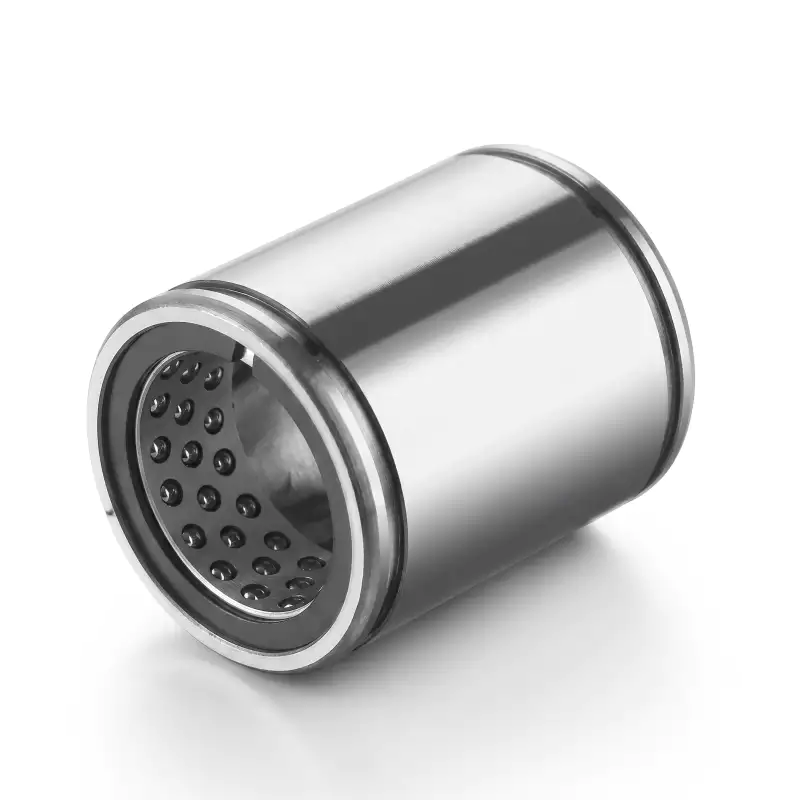
ST Series — Stroke Bearing Standard Type Linear and Rotary Motion
ST — 15 bore sizes · 3-row ball circuit · Combined linear and rotary motion.
MOQ: 50 pcs. Minimum order value USD 1,500; mixed orders and trial quantities welcome.
Linear Bearings › Special Series
ST Series — Stroke Bearing Standard Type Linear and Rotary Motion
15 bore sizes · 3-row ball circuit · Combined linear and rotary motion
🆕 Series Overview
The ST series stroke bearing is a combined linear and rotary motion bearing that enables simultaneous axial travel along the shaft and rotation around the shaft axis. Unlike a standard linear ball bearing which constrains rotation, the ST series allows both motions independently — making it essential for applications involving helical motion, cam-following mechanisms, spring-return actuators, or any system where the guided element must both slide and rotate on the same shaft.
The standard ST series uses three rows of balls arranged to support radial loads during both linear and rotary motion simultaneously. All models can be nickel-plated on request for corrosion resistance. The maximum stroke is defined by the loaded zone length — exceeding this limit causes ball circuit overrun and must be avoided in all applications.
⚙ Key Design Features
Combined Linear + Rotary Motion
Unique design allows simultaneous linear travel along the shaft axis and rotation around the shaft axis — a capability not available in standard linear ball bearings.
3-Row Ball Circuit
Three ball rows distributed around the circumference support radial loads in all directions during both linear and rotary motion simultaneously.
Nickle-Plated Option
All ST models can be supplied with nickel plating for enhanced corrosion resistance in humid or mildly corrosive environments.
Defined Maximum Stroke
Each model has a rated maximum stroke (listed in the specification table). The stroke must not be exceeded to prevent ball circuit overrun.
GCr15 Chrome Steel
Through-hardened to HRC 58–64 for both linear and rotary wear resistance. Surface ground to Ra 0.4 µm on shaft-contact surfaces.
15 Bore Sizes
Available from 6 mm to 100 mm bore, covering the full range of industrial shaft diameters requiring combined motion guidance.
📋 Complete Specification Table
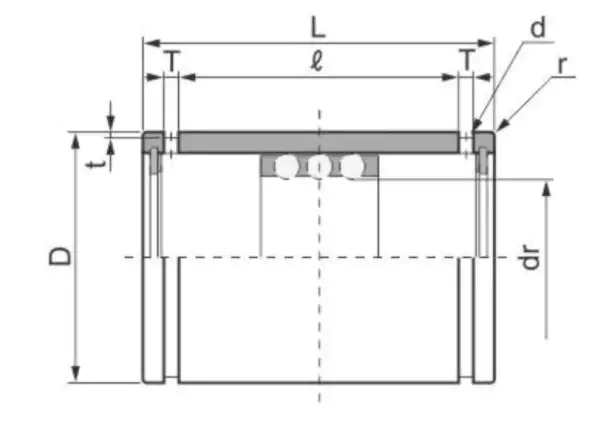
ⓘ Maximum stroke in mm. Dynamic and static load ratings in N. Weight in g. Shaft tolerance h6/h7 HRC 60+. All dimensions in mm.
| Model | Max Stroke (mm) | Ball Rows | Shaft dr (mm) | OD D (mm) | Length L (mm) | Dynamic C (N) | Static Co (N) | Weight (g) |
|---|---|---|---|---|---|---|---|---|
| ST 6 | 20 | 3 | 6 | 12 | 20 | 147 | 216 | 8.9 |
| ST 8 | 24 | 3 | 8 | 15 | 24 | 245 | 343 | 15.6 |
| ST 10 | 30 | 3 | 10 | 19 | 30 | 461 | 637 | 28.8 |
| ST 12 | 32 | 3 | 12 | 23 | 32 | 813 | 1070 | 42 |
| ST 13 | 32 | 3 | 13 | 23 | 32 | 813 | 1070 | 39.8 |
| ST 16 | 40 | 3 | 16 | 28 | 37 | 990 | 1180 | 71 |
| ST 20 | 50 | 3 | 20 | 32 | 45 | 1170 | 1260 | 99 |
| ST 25 | 50 | 3 | 25 | 37 | 45 | 1330 | 1530 | 117 |
| ST 30 | 82 | 3 | 30 | 45 | 65 | 2990 | 3140 | 205 |
| ST 35 | 92 | 3 | 35 | 52 | 70 | 3140 | 3530 | 329 |
| ST 40 | 108 | 3 | 40 | 60 | 80 | 4120 | 4800 | 516 |
| ST 50 | 138 | 3 | 50 | 72 | 100 | 5540 | 6910 | 827 |
| ST 60 | 138 | 3 | 60 | 85 | 100 | 5980 | 8230 | 1240 |
| ST 80 | 132 | 3 | 80 | 110 | 100 | 7840 | 12200 | 2050 |
| ST 100 | 132 | 3 | 100 | 130 | 100 | 6430 | 14700 | 2440 |
🔭 Materials & Construction
ST series stroke bearings are manufactured from GCr15 chrome-bearing steel (AISI 52100), through-hardened to HRC 58–64. Both the ball tracks for linear travel and the cylindrical running surfaces for rotary motion are precision-ground. The outer race is protected against rust by a phosphate coating as standard, with nickel plating available on request. The ball retainer is glass-fibre-reinforced nylon (PA66-GF30). All models are supplied pre-greased with NLGI-2 lithium-complex grease.
🏭 Typical Applications
Cam-Follower Mechanisms
ST bearings enable the combined linear extension and rotational indexing motion required in cam-driven assembly machines and rotary transfer systems.
Spring-Return Actuators
Pneumatic and mechanical spring-return actuators often require the actuator rod to rotate during retraction to reset a detent or cam — the ST series accommodates this without a separate rotary joint.
Precision Adjusters
Fine-adjustment screws and micrometer-head mechanisms in optical and metrology equipment use stroke bearings to provide smooth combined linear and rotary positioning.
Pick-and-Place Heads
Rotary-linear pick-and-place heads in SMT assembly machines use ST series bearings to combine vertical linear travel with rotational part orientation in a single axis.
🔧 Installation & Maintenance
🔎 Shaft Specification
Ground to h6/h7 tolerance, HRC 60+ hardness, Ra 0.4 µm. Both the cylindrical surface quality and hardness affect rotary motion performance as well as linear travel.
🔧 Stroke Limit Compliance
Programme the motion controller to stay within the maximum stroke listed in the specification table. Mechanical hard stops should be set 2–3 mm inside the rated stroke limit as a safety margin.
📈 Lubrication
NLGI-2 grease for both linear and rotary modes. Re-lubricate every 300 km of combined linear travel (more frequently than standard linear bearings due to the additional rotary wear component).
⚙ Housing Alignment
Ensure the housing bore is aligned with the shaft within 0.02 mm/100 mm. Misalignment introduces side loading that is particularly damaging in combined-motion bearings where the ball tracks must accommodate two motion directions.
🔎 Selection Guide
Select the ST series when the application requires simultaneous linear and rotary motion on the same shaft. If only linear motion is needed, use the standard LM...UU series instead. Confirm the maximum stroke does not exceed the rated value for the selected bore size. If load calculations using the standard 3-row ST rating produce insufficient life, upgrade to the ST...B heavy-duty 6-row series.
①
Identify Application Type
Confirm that combined linear and rotary motion is genuinely required. If only linear motion is needed, the LM...UU series provides higher load ratings for the same bore.
②
Select Bore & Model
Match bore to shaft nominal diameter. Verify maximum stroke requirement against the specification table.
③
Verify Load & Life
Calculate L10 using C and equivalent radial load P. If insufficient, upgrade to ST...B heavy duty series for the same bore.
④
Contact Us
MOQ 100 units. Contact our team with engineering drawings specifying bore, housing, load case, stroke, and target life.
❓ Frequently Asked Questions
📞 Ready to Order?
MOQ is 100 units per model. Provide engineering drawings with bore, housing bore tolerance, load case, stroke, speed, and target service life. All catalogue data is for reference only.
ST — 15 bore sizes · 3-row ball circuit · Combined linear and rotary motion.
MOQ: 50 pcs. Minimum order value USD 1,500; mixed orders and trial quantities welcome.
Related products
-
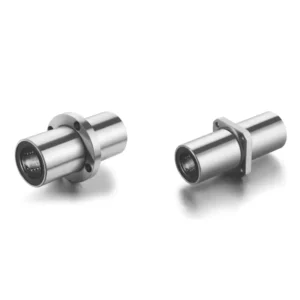
LMEFC LMEKC Linear Bearing UU Series — Euro Flanged Sealed Ball Bushing with Locking Screw
-
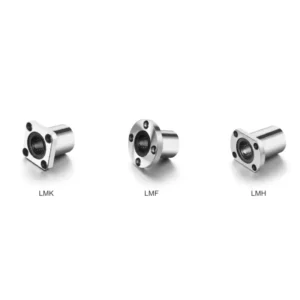
LMF LMK LMH Linear Bearing UU Series — Standard Flanged Sealed Ball Bushing
-
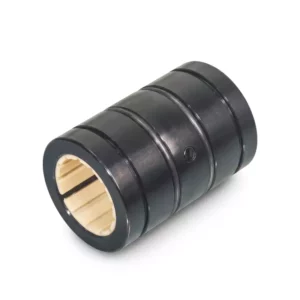
LIN-01RS Series — Cylindrical Plastic Linear Bearing with Aluminum Housing Short Type
-
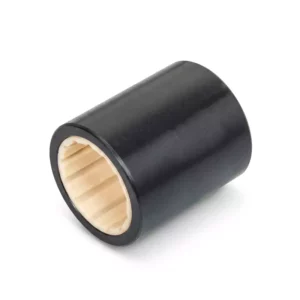
LIN-02 Series Sliding Membrane — Standard Open Type Plastic Linear Bearing
-
LME Linear Bearing LUU Series — Euro Extended Length Ball Bushing
-
KH Series — Mini Pressing Bush Linear Bearing