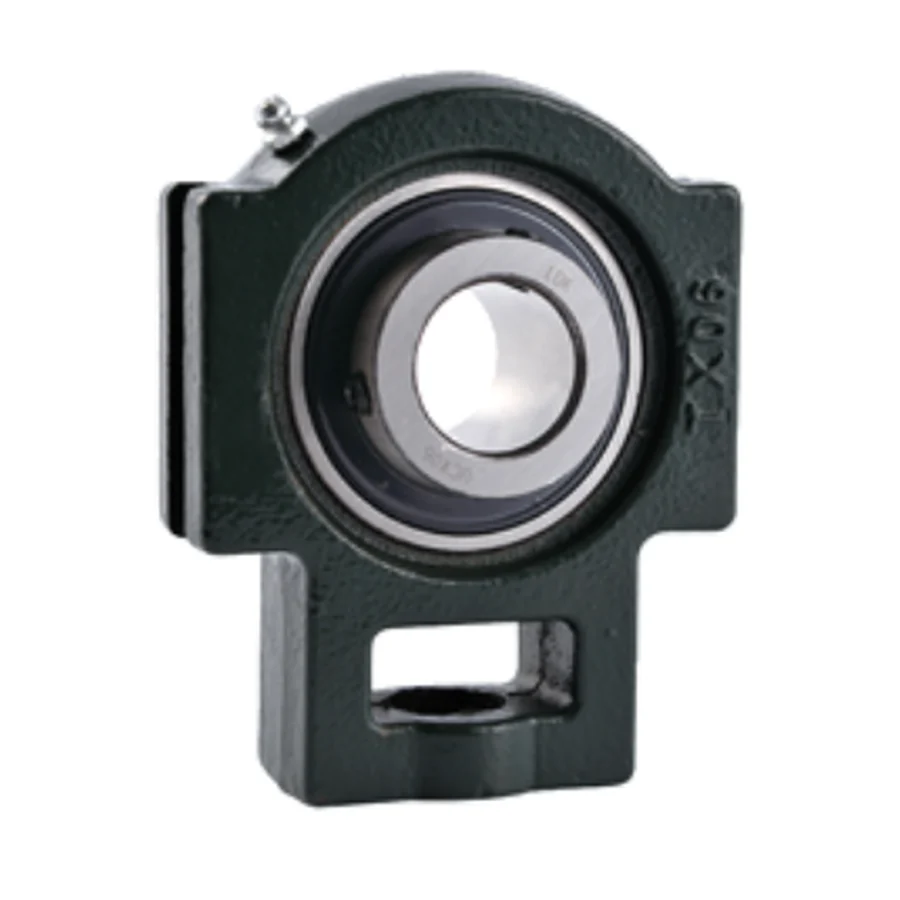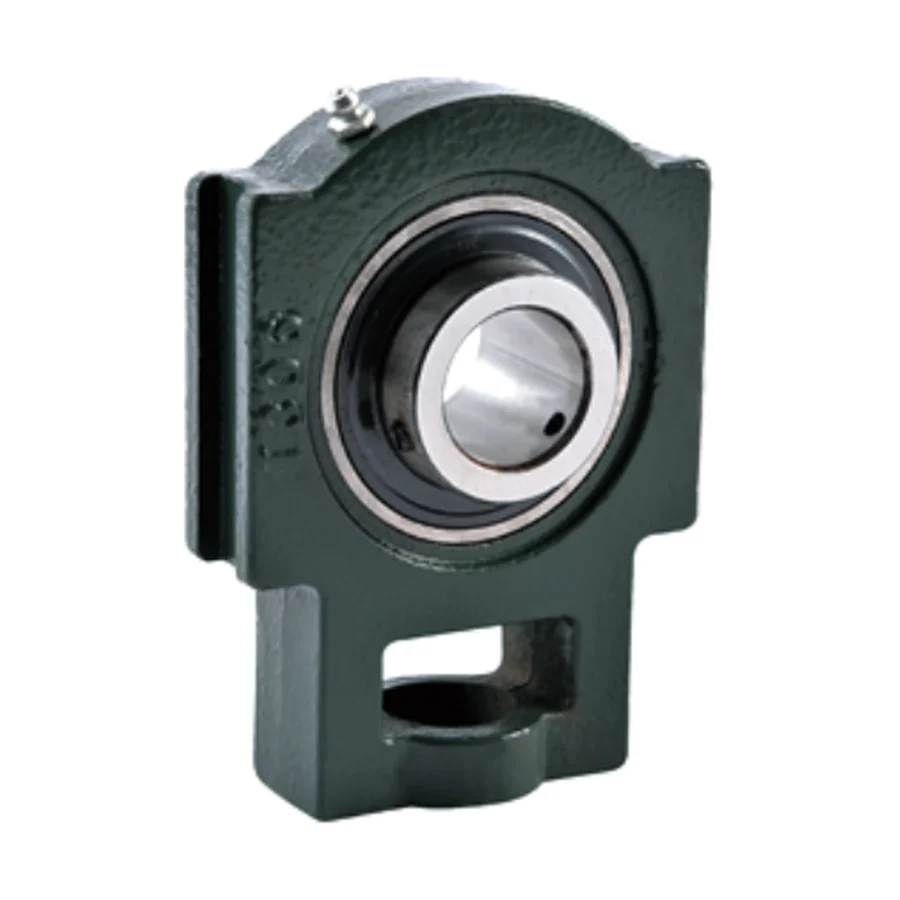
Take Up Bearing Units

Slotted take-up frame with N1×N2 travel · Belt & chain drive tensioning · Setscrew, eccentric collar, concentric collar & adapter sleeve · Standard, medium & heavy duty · Shaft bore 12–140 mm

4
Locking Styles
12 mm
Min. Bore
140 mm
Max. Bore
80 mm
Max. N2 Travel
Bearings › Take Up Bearing Units
Select by: 🔧 Setscrew 🔄 Eccentric Collar ⇄ Concentric Collar 🔒 Adapter Sleeve ⚙ Heavy Duty ▭ Wider Slot

A take-up unit combines a mounted bearing with a slotted cast iron housing that slides along a frame rail driven by an adjusting screw. The slot travel (N2 dimension) allows the bearing centreline to be moved after installation to tension a belt, chain, or timing drive without removing the shaft. Once the correct tension is set the housing is locked by tightening the frame bolts through the slot. The UC insert bearings used in standard and medium duty take-up units are interchangeable with the equivalent pillow block (UCP200/UCP300), 4-bolt flange (UCF200/UCF300), and 2-bolt oval flange (UCFL200/UCFL300) housings for the same bore size — one insert type across all mounting formats on the same machine.

Setscrew Locking Take Up Units

Dual 120° setscrew with wide inner ring UC insert — bidirectional, standard operating speeds. Three duty ratings cover the full load range. The standard UCT200 and wider-slot UCST200 use the same UC insert and are interchangeable with pillow block and flange units for the same bore; UCTX00 and UCT300 step up to higher-rated inserts for elevated belt tensions.
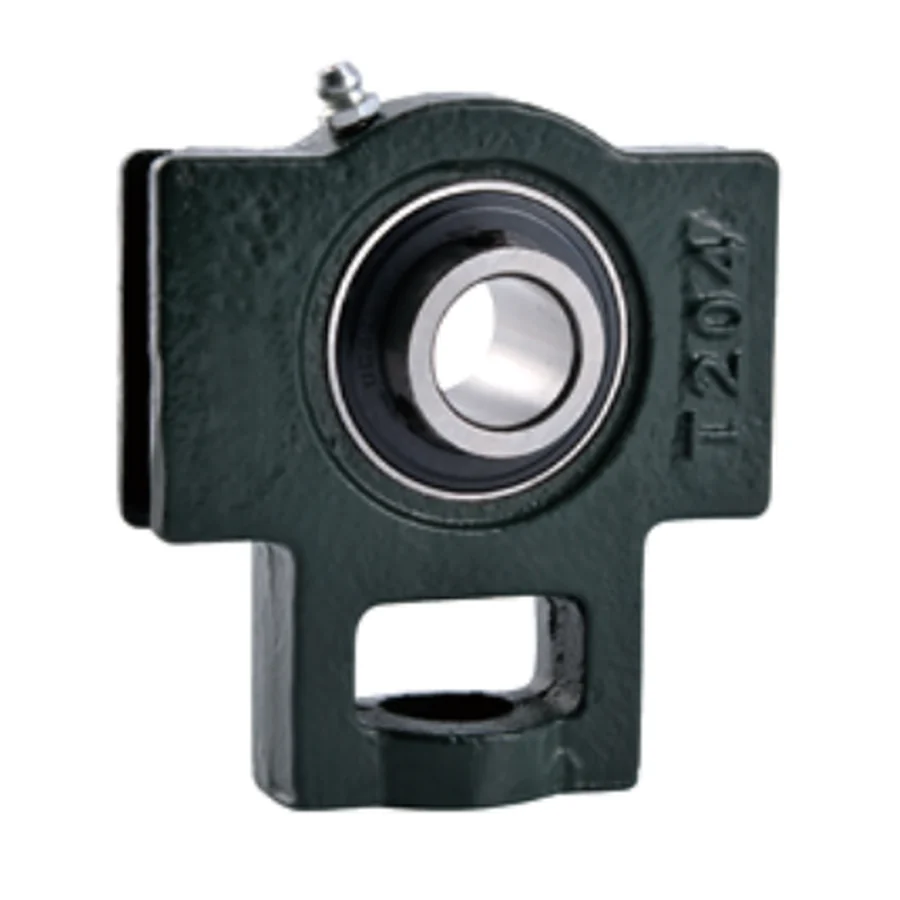
UCT200 series take-up bearing unit standard duty setscrew locking cast iron belt tensioning
Setscrew

UCT200 Series

Standard Duty

d 12–90 mm · 19 sizes

Same UC insert as UCP200 · Metric & inch bore · N1×N2 slot travel · UCWT201–203 compact variant

UCST200 series take-up bearing unit wider slot housing setscrew locking restricted access tensioning
Setscrew — Wider Slot

UCST200 Series

Standard Duty — Wider Slot Housing

d 12–60 mm · 9 sizes

A1 slot 13.5–27 mm vs UCT200 12–22 mm · More bolt-head clearance for restricted-access tensioning positions

UCTX00 series take-up bearing unit medium duty heavier housing setscrew locking cast iron
Setscrew — Medium Duty

UCTX00 Series

Medium Duty

d 25–85 mm · 13 sizes

Heavier housing cross-section · Higher-rated UCX insert · For elevated belt tension applications beyond UCT200 capacity

UCT300 series heavy duty take-up bearing unit cast iron setscrew locking 25 to 140mm mining conveyor
Setscrew — Heavy Duty

UCT300 Series

Heavy Duty

d 25–140 mm · 21 sizes

Maximum take-up load capacity · UC300 insert · Metric bore only · UCT328=83.2 kg, N2=80 mm travel

Eccentric Collar Locking Take Up Units

Self-tightening collar that grips progressively under unidirectional shaft rotation. On conveyors and drives that run in one direction continuously, the eccentric collar provides more reliable long-term shaft retention than setscrew under sustained belt tension and frame vibration. Take-up frame dimensions match UCT200 for equivalent bore sizes — insert-only upgrade without changing the frame.
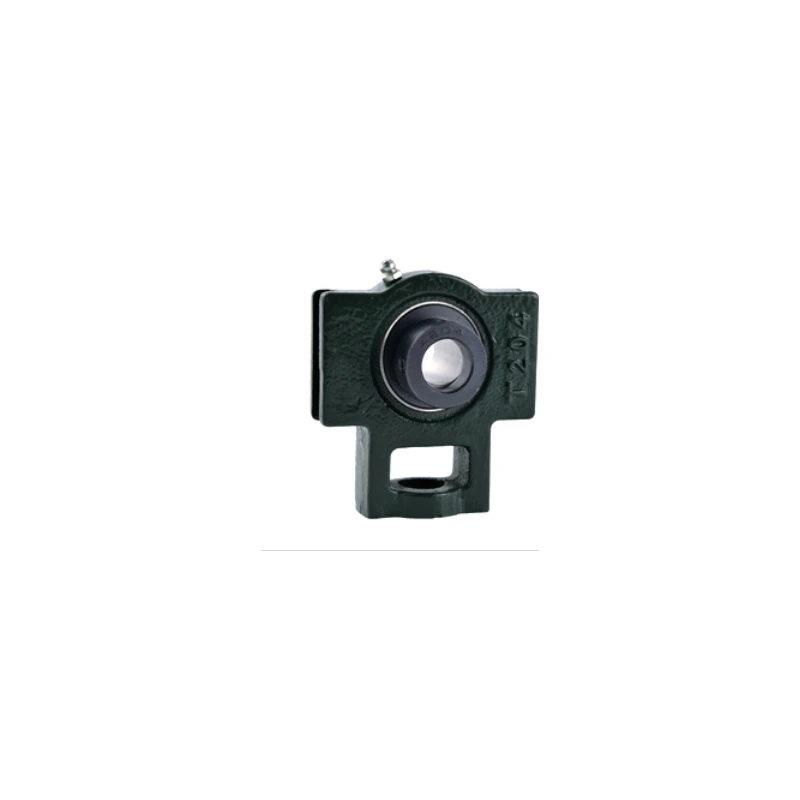
NAT200 series take-up bearing unit eccentric locking collar standard duty cast iron unidirectional conveyor
Eccentric Collar

NAT200 Series

Standard Duty — Eccentric Collar

d 12–85 mm · 16 sizes

Self-tightening under unidirectional rotation · NAT201S–203S slim variant · Unidirectional drives only

Concentric Collar Locking Take Up Units

360° uniform shaft contact with no eccentric mass — fully bidirectional and suitable for high-speed drives. Releases symmetrically in both directions: correct for reversing conveyors, servo-controlled tension systems, and any take-up position where the drive jogged or reversed during maintenance.
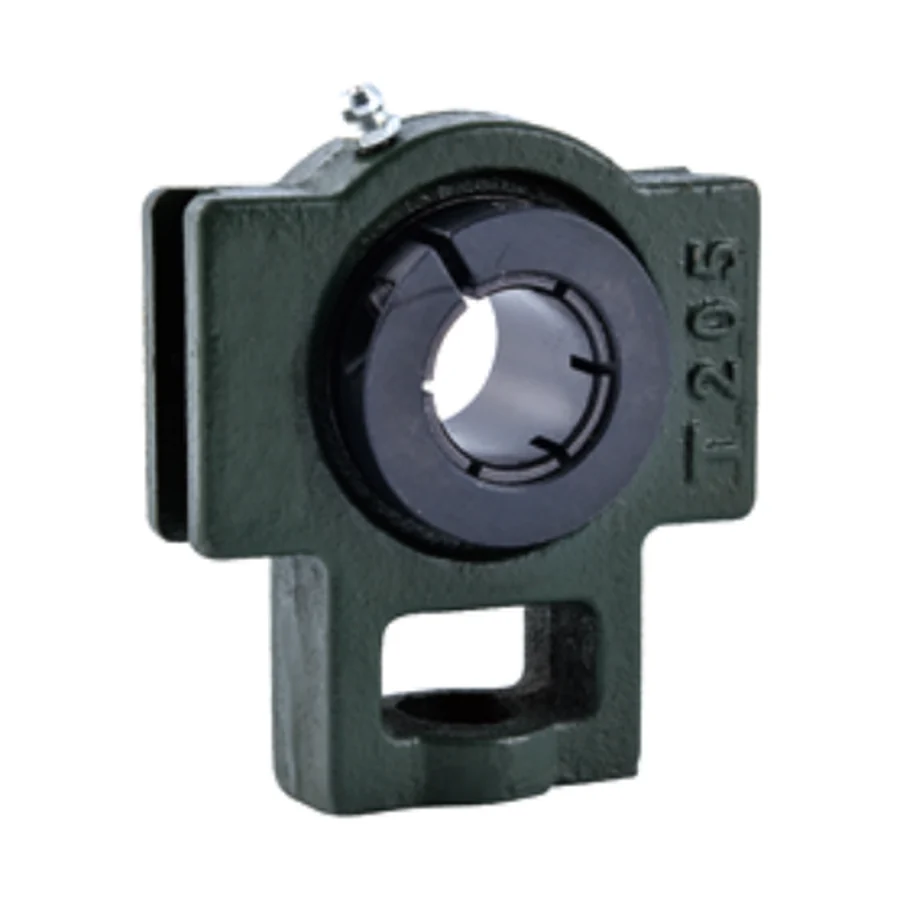
UET200 series take-up bearing unit concentric locking collar standard duty cast iron bidirectional high speed
Concentric Collar

UET200 Series

Standard Duty — Concentric Collar

d 20–60 mm · 9 sizes

360° bidirectional · No imbalance mass · High-speed and reversing take-up drive positions

Adapter Sleeve Locking Take Up Units

1:12 tapered bore with H-series adapter sleeve — no shaft surface damage on installation or removal. In take-up applications this matters especially because the shaft is periodically released and retightened as belt tension is adjusted: repeated setscrew tightening at the same position progressively marks the shaft, while the adapter sleeve releases and re-locks without any shaft surface contact.
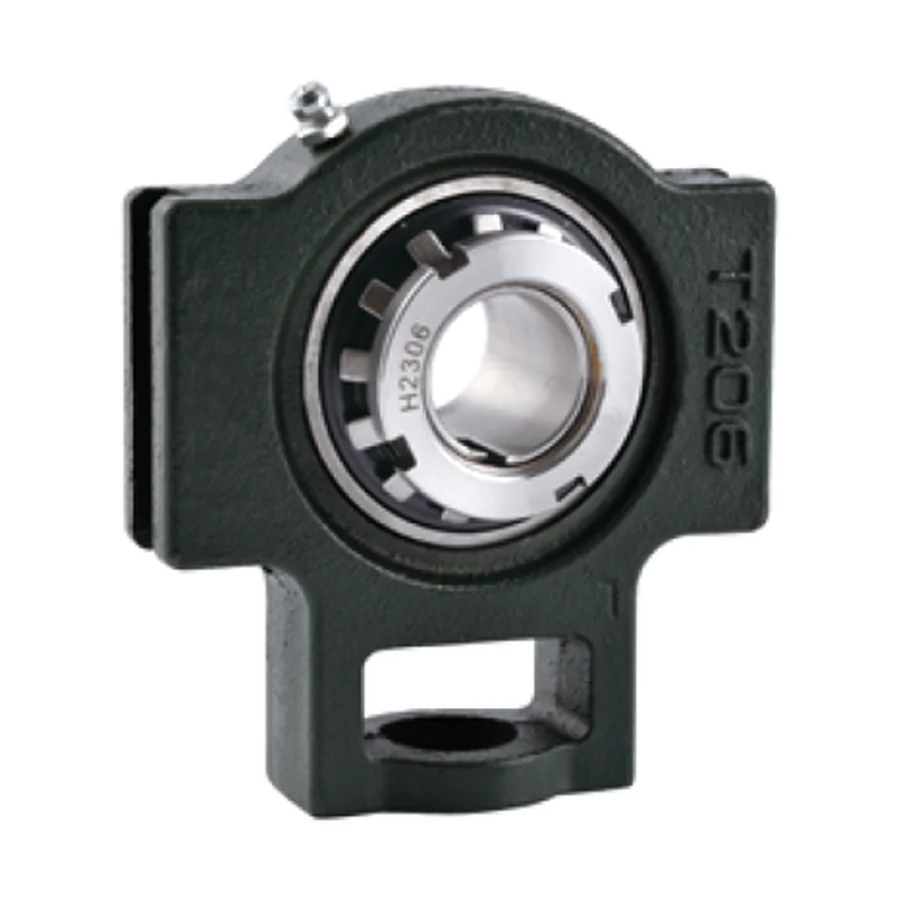
UKT200+H series take-up bearing unit tapered bore adapter sleeve locking cast iron no shaft damage
Adapter Sleeve

UKT200+H Series

Standard Duty — Adapter Sleeve

d 20–75 mm · 12 sizes

No shaft surface damage · HS/HA/HE sleeve variants · Ideal for repeated tensioning adjustments on rough-turned shafts

Understanding Take-Up Frame Dimensions

Take-up units introduce several dimensions not found in pillow block or flange unit tables. Understanding them is essential for frame design and tensioning calculation.

Dimension Name Description
N1 Slot width The narrow dimension of the slot hole that the frame bolt shank passes through. The housing slides along the bolt inside this slot.
N2 Slot arc length (travel) Total housing travel available for tensioning adjustment. The tensioning screw moves the housing through this range. UCT300 range: 36 mm (UCT305) to 80 mm (UCT328).
L Overall frame length Total length of the take-up housing including the slot. Used for machine frame cutout and clearance design.
L1 Housing width across slots Width of the bearing housing body measured across the two slot centres. Used to determine the frame rail spacing.
L2 Slot centre spacing Centre-to-centre distance between the two slots along the frame rail axis.
L3 Housing body length Length of the bearing housing body (not including the slot extensions). Used for clearance to adjacent drive components.
H / H1 / H2 Heights H = total frame height. H1 = bearing centreline height above base. H2 = housing upper profile height. Used for frame rail height and clearance above the mounting surface.
A1 Slot body width Width of the slot opening in the housing body. UCST200 has a wider A1 than UCT200 to provide more spanner clearance at the frame bolt head during tensioning.

Series Selection Matrix

Identify the correct series by locking mechanism, duty rating, and bore range. Click the series name to view the full specification table.

Series Duty Locking Direction Bore Key Differentiator
UCT200StandardSetscrewBidirectional12–90 mmMost widely used take-up · UC insert interchangeable with UCP200/UCF200/UCFL200 · UCWT compact variant
UCST200StandardSetscrewBidirectional12–60 mmWider A1 slot for bolt-head spanner access in restricted-access frame positions
NAT200StandardEccentric collarUnidirectional12–85 mmSelf-tightening under rotation · more secure than setscrew under sustained vibration · unidirectional only
UET200StandardConcentric collarBidirectional20–60 mm360° bidirectional · no imbalance mass · reversing drives and high-speed take-up positions
UKT200+HStandardAdapter sleeveBidirectional20–75 mmNo shaft surface damage · safe for repeated tensioning adjustments · HS/HA/HE sleeve variants
UCTX00MediumSetscrewBidirectional25–85 mmHeavier housing · higher-rated UCX insert · when UCT200 L10 life is insufficient under belt tension
UCT300HeavySetscrewBidirectional25–140 mmMaximum take-up load capacity · UC300 insert · metric bore only · UCT328=83.2 kg, N2=80 mm

Frequently Asked Questions

▶ What is the difference between a take-up unit and a pillow block?

A pillow block (UCP200) has a fixed base that bolts directly to the machine frame — the bearing position is fixed once installed. A take-up unit (UCT200) has a slotted frame that allows the housing to be slid along the frame rail by a tensioning screw, moving the shaft centreline to tension a belt or chain without removing the shaft. The UC insert bearing, setscrew locking, and bore options are identical between UCP200 and UCT200 — inserts are fully interchangeable for the same bore size.

▶ Can I use the same insert bearing in UCT200, UCP200, UCF200, and UCFL200?

Yes. The UC series wide inner ring insert is identical for equivalent bore sizes across all four housing formats: UCT200 (take-up), UCP200 (pillow block), UCF200 (4-bolt square flange), and UCFL200 (2-bolt oval flange). Stocking one UC insert type covers all standard-duty mounted bearing positions on the same machine.

▶ What is N2 and how do I use it to size a take-up frame?

N2 is the slot arc length — the maximum distance the housing can travel along the frame rail from one end of the slot to the other. It represents the total tensioning adjustment range available. When designing a take-up frame, allow N2 clearance beyond the nominal bearing position in the take-up direction, plus additional clearance for initial installation misalignment. For example, UCT208 (40 mm bore) has N2=49 mm; UCT310 (50 mm bore, heavy duty) has N2=61 mm.

▶ When should I choose NAT200 eccentric collar over UCT200 setscrew for a take-up position?

Choose NAT200 when the conveyor or drive runs in one direction continuously and the take-up frame is subject to sustained vibration from the belt load. The eccentric collar self-tightens under shaft rotation, providing a grip that increases with operating load — on high-vibration frames this prevents the incremental loosening that setscrew units can experience over extended service intervals. NAT200 must not be used on reversing drives: the collar releases when the shaft rotates opposite to the collar lock direction. For reversing take-up positions, use UCT200 setscrew or UET200 concentric collar.

▶ Why is the adapter sleeve particularly valuable in take-up applications?

In a take-up unit, the shaft is periodically released and retightened as belt tension is adjusted over the service life. Each time a setscrew take-up unit is re-tensioned, the setscrew tightens against the same shaft position, progressively creating fretting damage and eventually preventing reliable re-locking. The UKT200+H adapter sleeve releases completely from the shaft on disassembly — the shaft surface is never contacted by the sleeve during release — so repeated tensioning adjustments over years of service leave the shaft surface undamaged and immediately reusable.

▶ What is the difference between UCT200 and UCST200?

UCT200 and UCST200 are dimensionally identical in all frame parameters (N1, N2, L, L1, L2, L3, H, H1, H2, A, A2, B, S) and use the same UC insert bearing. The only difference is the A1 dimension — the width of the slot opening in the housing body. UCST200 has a wider A1 (13.5–27 mm depending on bore size) versus UCT200 (12–22 mm). This wider slot provides more clearance for the frame bolt head and spanner during tensioning adjustment in installations where the machine frame or guard structure leaves minimal access at the bolt position. For standard installations with unobstructed bolt access, UCT200 is the correct choice.

Ready to Order?

Provide shaft diameter, bore type (metric or inch), drive direction, required slot travel (N2), duty rating, and quantity. New-client samples available at sample pricing. Multi-model orders from USD 1,500 accepted. Engineering drawings required before order confirmation — catalogue dimensions for reference only.