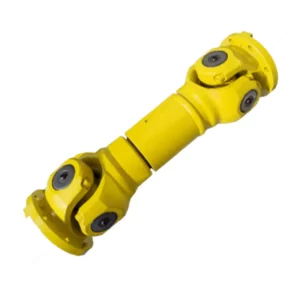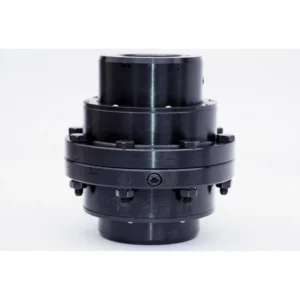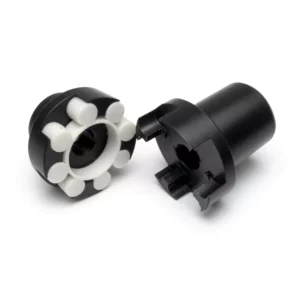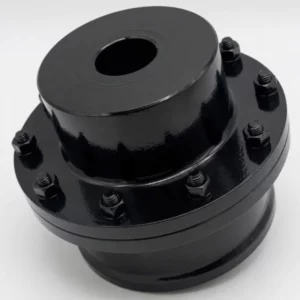
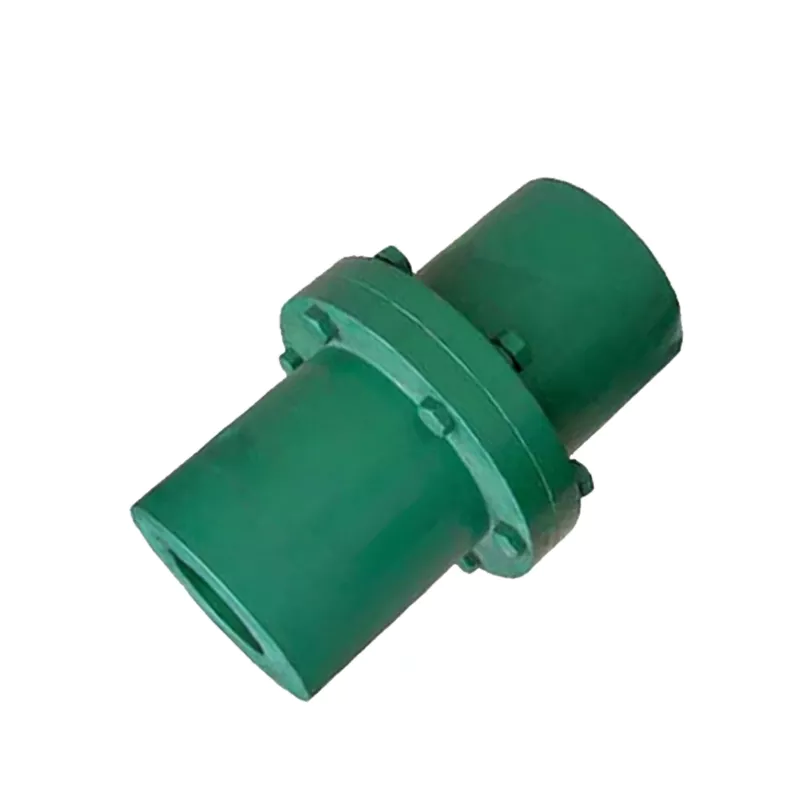
YL/YLD Flanged Coupling
GB 5843-86 standard YL/YLD flanged rigid coupling for coaxial cylindrical shaft connections. Transmits nominal torque from 10 to 20,000 N.m across 18 sizes. YL type suits standard drives; YLD type adds precision alignment tenon for high-speed applications. Available in cast iron and cast steel with H7-tolerance keyway bores to GB 3852-1997.
MOQ: 50 pcs. Minimum order value USD 1,500; mixed orders and trial quantities welcome.
The YL and YLD flanged couplings are precision-engineered rigid shaft connectors manufactured to the National Standard GB 5843-86 of the People's Republic of China. Designed specifically for connecting two coaxial cylindrical shafts within a drive train, these couplings transmit nominal torque ranging from 10 N.m all the way up to 20,000 N.m, making them one of the most versatile rigid coupling families available for industrial power transmission in Australia and across global markets.
The YL type features a standard flanged configuration ideal for straightforward shaft-to-shaft connections, while the YLD variant incorporates an alignment tenon that provides positive centring between the two coupling halves during assembly. This distinction makes the YLD series particularly favoured in high-speed applications and precision machinery where shaft alignment is critical to bearing life and overall drivetrain longevity. Both types share identical bolt circle dimensions, outer diameters, and shaft hole specifications — the only structural difference being the alignment feature on the YLD.
Shaft hole keyway forms and dimensions conform to GB 3852-1997, ensuring full interchangeability with standard shaft and hub assemblies throughout Australia's mining, water treatment, agricultural, and manufacturing sectors. The marking convention follows the standard format — for example: YL5–JA30X60/J1B28X44 GB5843-86 — clearly identifying the coupling series, size, shaft hole type, diameter, and hub length for each half.
Structural Features and Design Advantages
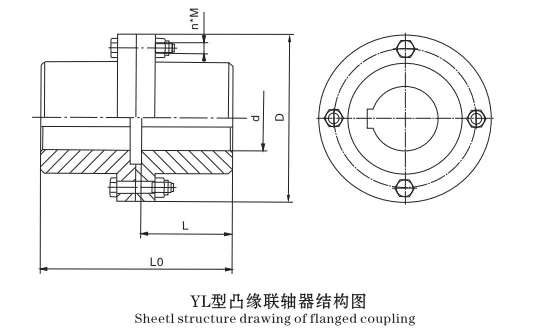
The YL/YLD flanged coupling family incorporates several design features that have made it the go-to rigid coupling solution across diverse industrial sectors:
Zero Backlash Torque Transmission
The rigid flanged construction eliminates any rotational play between connected shafts, delivering precise one-to-one torque transfer essential for synchronised machinery, servo-driven equipment, and precision indexing applications.
Positive Alignment Tenon (YLD Type)
The YLD variant features a machined male-female tenon interface between coupling halves, providing self-centring during assembly and maintaining concentricity under high rotational speeds without requiring additional alignment tooling.
High-Strength Bolted Connection
Flange faces are joined by precision-fitted bolts (M6 through M30 depending on size) arranged in equally spaced bolt circles, ensuring uniform load distribution across the flanged interface and resistance to loosening under dynamic loading conditions.
Material Versatility
Available in cast iron (铁 iron) and cast steel (钢 steel), with rotational speed limits and weight specifications varying accordingly. Cast steel variants permit higher maximum speeds — up to 13,000 rpm for the smallest YL1 size — compared to cast iron equivalents at 8,100 rpm.
GB 3852-1997 Keyway Compatibility
All shaft bores are machined to H7 tolerance with keyways conforming to GB 3852-1997, ensuring drop-in compatibility with standard shaft assemblies and reducing installation time in the field.
Taper Bore Option
Shaft holes can be supplied as taper bores in addition to standard cylindrical H7 bores, offering enhanced grip for applications with frequent start-stop cycles or shock loading conditions.
Technical Specifications — YL and YLD Type Flanged Coupling (GB 5843-86)
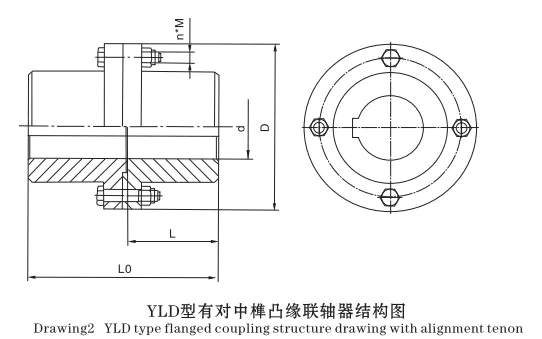
| Type | Nominal Torque Tn (N.m) | Max Speed Iron (rpm) | Max Speed Steel (rpm) | Bore d Iron (mm) | Bore d Steel (mm) | D (mm) | D1 (mm) | Bolt Qty / Dia | Weight (kg) | Rot. Inertia (kg·m²) |
|---|---|---|---|---|---|---|---|---|---|---|
| YL1/YLD1 | 10 | 8100 | 13000 | 10–20 | 10–22 | 71 | 53 | 3 / M6 | 0.94 | 0.0018 |
| YL2/YLD2 | 16 | 7200 | 12000 | 12–20 | 12–22 | 80 | 64 | 4 / M6 | 1.50 | 0.0035 |
| YL3/YLD3 | 25 | 6400 | 10000 | 14–22 | 14–25 | 90 | 69 | 3 / M8 | 1.99 | 0.0060 |
| YL4/YLD4 | 40 | 5700 | 9500 | 18–25 | 18–28 | 100 | 80 | 3 / M8 | 2.47 | 0.0093 |
| YL5/YLD5 | 63 | 5500 | 9000 | 22–30 | 22–32 | 105 | 85 | 4 / M8 | 3.19 | 0.013 |
| YL6/YLD6 | 100 | 5200 | 8000 | 24–32 | 24–35 | 110 | 90 | 4 / M8 | 3.99 | 0.017 |
| YL7/YLD7 | 160 | 4800 | 7600 | 28–38 | 28–40 | 120 | 95 | 4 / M10 | 5.66 | 0.029 |
| YL8/YLD8 | 250 | 4300 | 7000 | 32–42 | 32–45 | 130 | 105 | 4 / M10 | 7.29 | 0.043 |
| YL9/YLD9 | 400 | 4100 | 6800 | 38–48 | 38–50 | 140 | 115 | 6 / M10 | 9.53 | 0.064 |
| YL10/YLD10 | 630 | 3600 | 6000 | 45–55 | 45–60 | 160 | 130 | 6 / M10 | 12.46 | 0.112 |
| YL11/YLD11 | 1000 | 3200 | 5300 | 50–65 | 50–70 | 180 | 150 | 8 / M12 | 17.97 | 0.205 |
| YL12/YLD12 | 1600 | 2900 | 4700 | 60–75 | 60–80 | 200 | 170 | 12 / M12 | 30.62 | 0.443 |
| YL13/YLD13 | 2500 | 2600 | 4300 | 70–85 | 70–90 | 220 | 185 | 8 / M16 | 35.58 | 0.646 |
| YL14/YLD14 | 4000 | 2300 | 4800 | 80–100 | 80–110 | 250 | 215 | 12 / M16 | 57.13 | 1.353 |
| YL15/YLD15 | 6300 | 2000 | 3400 | 90–120 | 90–125 | 290 | 250 | 12 / M20 | 89.59 | 2.845 |
| YL16/YLD16 | 10000 | 1800 | 3000 | 100–130 | 100–140 | 340 | 290 | 12 / M24 | 119.57 | 5.271 |
| YL17/YLD17 | 14000 | 1600 | 2600 | 120–150 | 120–160 | 380 | 330 | 12 / M24 | 171.71 | 9.139 |
| YL18/YLD18 | 20000 | 1400 | 2300 | — | 140–180 | 420 | 360 | 12 / M30 | 263.85 | 17.883 |
Notes: (1) Weight and rotational inertia values are calculated based on cast iron material (cast steel values in parentheses where applicable), using minimum shaft bore and maximum shaft hub length as approximations. (2) Maximum rotational speed for cast iron is based on a peripheral speed of 30 m/s; for cast steel, 50 m/s is used. (3) Bolt quantities shown include reamed hole bolts. (4) Shaft hole keyway forms and dimensions per GB 3852-1997.
Typical Application Sectors in Australian Industry
The YL/YLD flanged coupling's broad torque range — spanning three orders of magnitude from 10 N.m to 20,000 N.m — makes it appropriate across virtually every major sector of Australian industry. The following applications represent the most common deployments seen in local projects:
Mining and Minerals Processing
Conveyor drive shafts, crusher feeds, ball mill pinion connections, slurry pump drives, and underground longwall shearers regularly employ mid-to-large YL flanged couplings (YL9 through YL18) for their rigid, high-torque transmission characteristics.
Water and Wastewater Infrastructure
Pump stations, sewage treatment plant aeration drives, desalination facility high-pressure pumps, and stormwater infrastructure commonly use YL5 through YL12 couplings to link motor output shafts to centrifugal pump impeller shafts.
Food and Beverage Manufacturing
Stainless-compatible shaft couplings in hygienic mixing tanks, bottling lines, and bulk material conveyors in Queensland and Victoria food processing facilities frequently utilise smaller YL1 through YL6 sizes for their compact form factor and zero-backlash torque delivery.
Power Generation
Generator sets, gas turbine auxiliary drives, and coal-fired power station feed pump connections use heavy-duty YL14 through YL18 series couplings capable of transmitting torques exceeding 10,000 N.m at sustained rotational speeds.
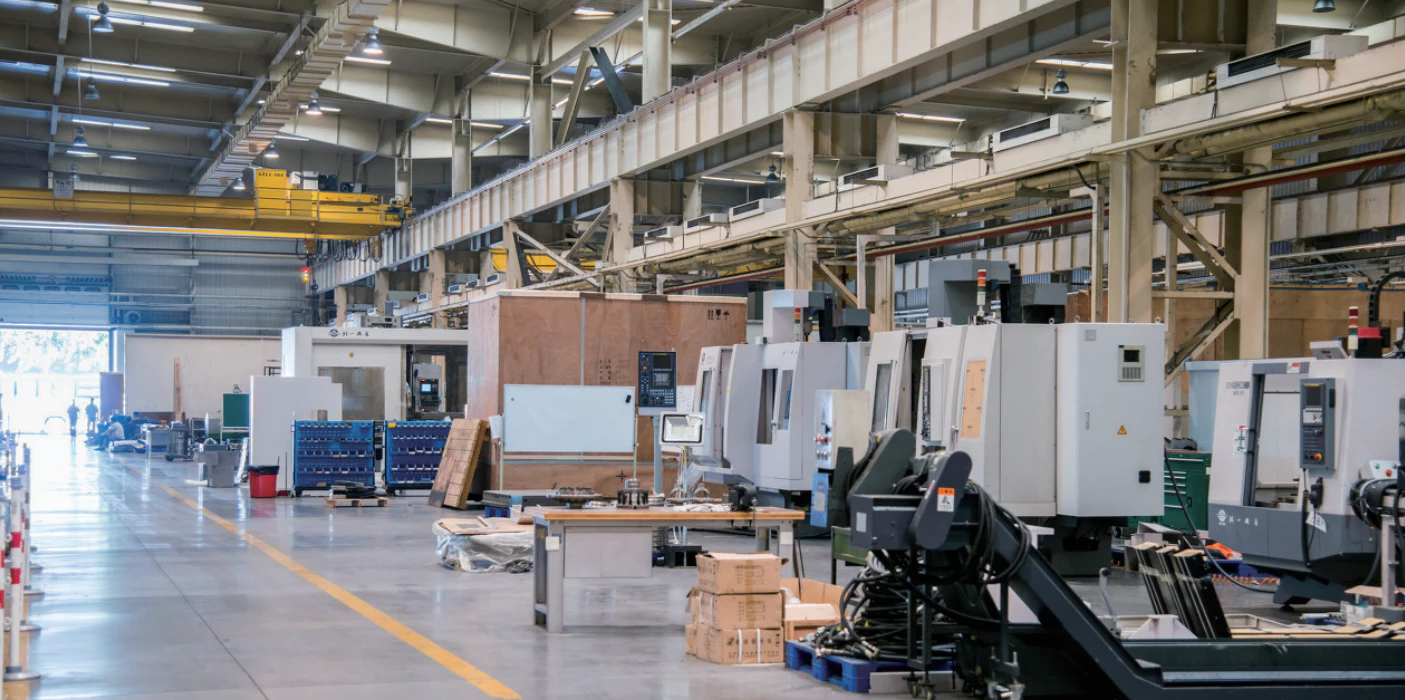
Our manufacturing facility maintains dedicated CNC turning, boring, and drilling lines for flanged coupling production, with in-process dimensional inspection at every stage. Shaft bores are honed to H7 tolerance as a standard, with customer-specific keyway profiling and taper bore machining available on request. For further information on our broader rigid coupling programme, visit our rigid coupling product range or browse the complete couplings catalogue.
Customer Reviews and Case Studies
★★★★★
Australia — Mining Conveyor Upgrade, Queensland
Industry: Coal Mining | Application: Main belt conveyor drive shaft coupling, YL12 series, 1600 N.m rated
"We replaced worn-out domestic couplings on three conveyor drives with these flanged units. The dimensional accuracy was spot-on — the bores were right on tolerance and the bolt circles lined up perfectly with our existing flanges. Fourteen months in and there has been no fretting, no bolt loosening, and zero downtime attributable to the couplings. Very satisfied."
— Maintenance Engineer, Bowen Basin Operation
★★★★★
Germany — Pharmaceutical Mixing Plant, Bavaria
Industry: Pharmaceutical Manufacturing | Application: Agitator drive shaft, YLD7 alignment tenon type, 160 N.m
"The YLD alignment tenon made installation straightforward even in our tight equipment room. Concentricity was achieved without laser alignment — the tenon self-centred the halves immediately. We ordered twelve sets for a full plant upgrade and every one arrived with consistent machining quality."
— Plant Equipment Manager, Bavaria Pharma Facility
★★★★☆
United States — Water Treatment Pump Station, Texas
Industry: Municipal Water Infrastructure | Application: Centrifugal pump motor coupling, YL9, 400 N.m, 4100 rpm
"Sourced these as a cost-effective alternative to a European-branded equivalent. The bore H7 tolerances checked out with our gauges and the keyways were clean cuts with no chatter marks. Lead time from order to delivery was acceptable. Would order again for our next pump station project."
— Procurement Officer, Texas Municipal Utility
★★★★★
Singapore — Petrochemical Compressor Drive, Jurong Island
Industry: Petrochemical Processing | Application: High-speed compressor drive, YLD14 alignment tenon type, 4000 N.m
"Operating at close to 2,300 rpm continuously in a critical service. We specified the YLD type precisely for the alignment tenon, which our rotating equipment engineer recommended for this speed range. Balance grades were verified on delivery. Performance has been excellent through two scheduled turnarounds."
— Rotating Equipment Engineer, Jurong Island Facility
Frequently Asked Questions
What is the difference between the YL and YLD flanged coupling types?
The YL type is a standard flanged coupling without a centring feature between the two halves. The YLD type incorporates a machined alignment tenon — a male-female spigot interface — that self-centres the two flanges during assembly. Both types share the same outer diameter, bolt circle, and torque rating for each size number. The YLD is preferred for higher-speed applications or where precision alignment is required without specialist tooling.
Can the shaft bores be customised to non-standard diameters?
Yes. While the standard bore range for each size follows the GB 5843-86 specification table, custom bore diameters outside this range can be machined to order. Taper bores can also be supplied as an alternative to the standard cylindrical H7 bore. Please specify the required bore diameter, tolerance, keyway form, and hub length when placing a custom order.
What material options are available for YL/YLD flanged couplings?
Standard production uses cast iron for general industrial applications and cast steel for higher-speed or higher-load requirements. Cast steel variants permit a peripheral speed of 50 m/s versus 30 m/s for cast iron, resulting in significantly higher maximum rpm ratings for the same coupling size. Material certification documentation can be provided on request.
How do I correctly specify a YL flanged coupling for my application?
The marking convention follows: YL[Size]–[Shaft Hole Type][Bore]X[Hub Length]/[Shaft Hole Type][Bore]X[Hub Length] GB5843-86. For example, YL5–JA30X60/J1B28X44 GB5843-86 identifies a YL5 coupling with specific bore configurations on each half. Contact our technical team if you need assistance selecting the correct size and configuration for your drivetrain.
What is the maximum torque available in the YL/YLD flanged coupling range?
The largest size, YL18/YLD18, is rated for a nominal torque of 20,000 N.m. This size accommodates shaft bores up to 180mm with M30 bolts and an outer diameter of 420mm. For applications requiring torques beyond 20,000 N.m, please contact us to discuss custom-engineered solutions.
Ready to Source YL/YLD Flanged Couplings for Your Project?
We supply B2B customers across Australia, New Zealand, and the wider Asia-Pacific region with GB-standard flanged couplings in any size and quantity. Whether you need a single replacement coupling or a standing supply arrangement for ongoing projects, our team can assist with size selection, custom bore machining, material certification, and consolidated shipping.
GB 5843-86 standard YL/YLD flanged rigid coupling for coaxial cylindrical shaft connections. Transmits nominal torque from 10 to 20,000 N.m across 18 sizes. YL type suits standard drives; YLD type adds precision alignment tenon for high-speed applications. Available in cast iron and cast steel with H7-tolerance keyway bores to GB 3852-1997.
MOQ: 50 pcs. Minimum order value USD 1,500; mixed orders and trial quantities welcome.