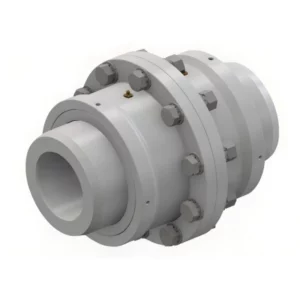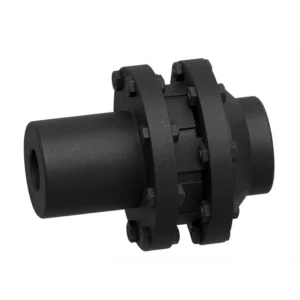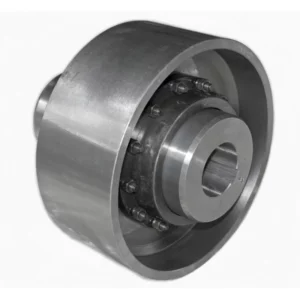
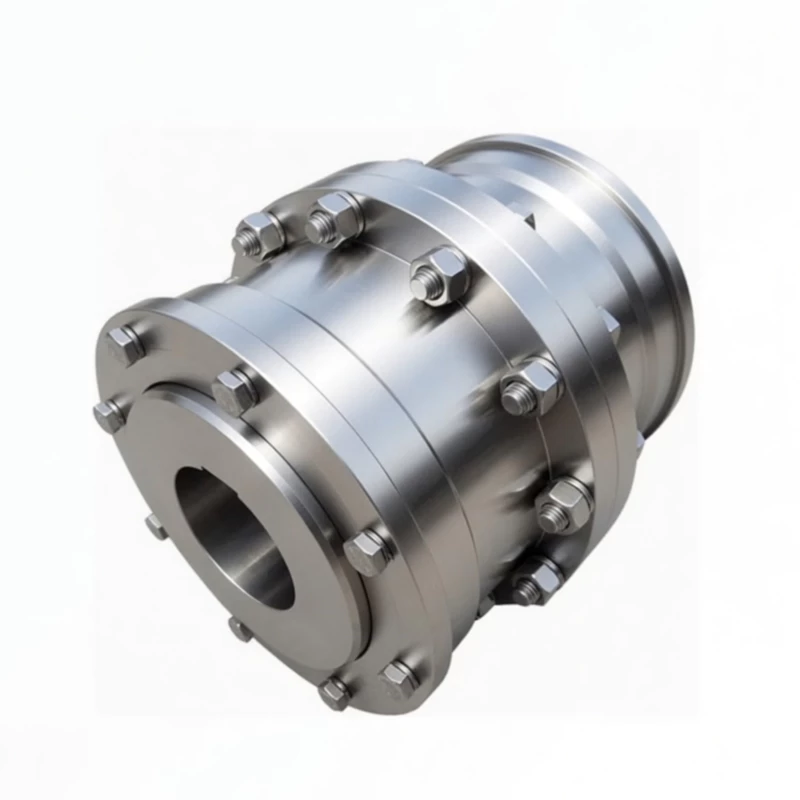
WGC Vertical Installation Drum Shape Gear Coupling
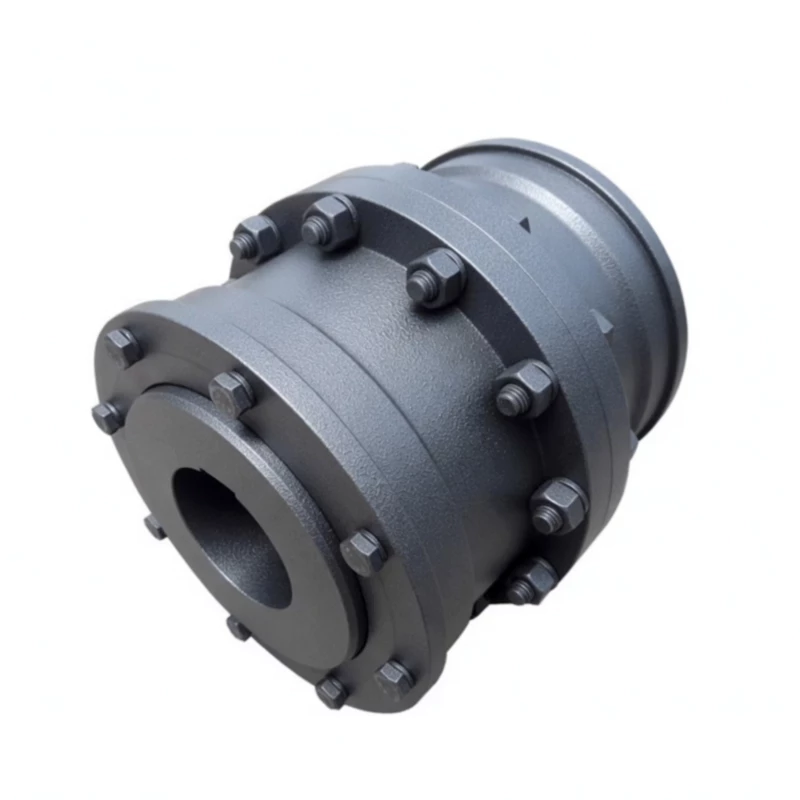
WGC drum shape gear coupling purpose-built for vertical shaft installations per JB/T7002-93. Modified internal oil retention prevents lubrication starvation in vertical orientation. 14 sizes, 710 N·m to 160,000 N·m, up to 7500 RPM. Type I and Type II. Suits vertical turbine pumps, agitators, fans, and mixer drives in Australia.
MOQ: 50 pcs. Minimum order value USD 1,500; mixed orders and trial quantities welcome.
WGC Vertical Installation Drum Shape Gear Coupling
The only WG-family coupling purpose-built for vertical shaft drives. Modified internal oil retention keeps the crowned tooth mesh lubricated in both shaft-up and shaft-down orientations. Factory direct to Australia for vertical pump, agitator, fan, and mixer drives.
Product Overview
The WGC drum shape gear coupling is the purpose-built vertical installation variant of the WG coupling family. It is the correct coupling to specify whenever a drive train is oriented vertically — whether shaft-up (motor above, driven machine below) or shaft-down (driven machine above, motor below) — and a standard horizontal gear coupling would fail from lubricant starvation at the upper tooth mesh within months of commissioning.
The WGC's core engineering difference from the WG base series is its internal oil retention design. In any crowned-tooth gear coupling, the tooth mesh requires continuous lubrication to maintain the Hertzian contact ellipse that distributes tooth loading and prevents surface fatigue. On a horizontal shaft, gravity distributes lubricant naturally around the full tooth mesh circumference. On a vertical shaft, gravity pulls lubricant away from the upper mesh, starving it of the oil film it needs. The WGC addresses this with modified internal sleeve geometry and sealing that retains lubricant at both upper and lower meshes throughout operation, regardless of shaft orientation.
GBC manufactures WGC couplings factory-direct and exports to Australian customers in water utilities, mineral processing, chemical manufacturing, HVAC, and other industries operating vertical drive trains. All couplings ship with full material traceability documentation and ISPM-15 compliant export packing.
Technical Definition and Working Principle
Why Vertical Installation Requires a Dedicated Coupling
This is the question that every maintenance engineer replacing a failed gear coupling on a vertical turbine pump or vertical agitator drive needs answered. A standard WG coupling installed on a vertical shaft will initially operate correctly, as the tooth mesh is lubricated at startup. Within the first 200–500 operating hours, however, the upper tooth mesh begins to run dry. The lubricant that was filled into the coupling body pools at the lower half under gravity, leaving the upper teeth in metal-to-metal contact. The result is rapid tooth wear, elevated vibration, and premature failure — often attributed to misalignment or under-specification of the coupling, when the actual cause is incorrect coupling selection for the installation orientation.
The WGC solves this with a modified internal geometry that creates an oil trap around both upper and lower tooth meshes. The outer sleeve profile and the inner sealing arrangement work together to maintain lubricant film coverage at both meshes throughout operation. This is not a minor modification — it requires a fundamentally different approach to the sleeve cross-section and lubricant fill specification compared to the horizontal WG.
Crowned Tooth Geometry and Misalignment on Vertical Drives
The WGC retains the same crowned tooth geometry as all WG-family couplings. Each hub carries externally crowned (barrel-shaped) teeth that mesh with internal straight teeth in the outer sleeve. The crown radius creates a self-centring Hertzian contact ellipse that remains near the centre of the tooth regardless of shaft misalignment, eliminating the destructive edge loading that occurs in straight-tooth couplings under the same conditions.
On vertical drives, angular misalignment arises from different sources than on horizontal drives. Vertical turbine pump drives experience thermal expansion of the motor frame relative to the pump casing during heat-soak — particularly on water-cooled motors where the cooling water temperature changes with ambient conditions. Vertical agitator drives in heated vessels experience differential thermal growth between the vessel structure and the motor mounting frame. The WGC's 1.0–1.5 degree angular misalignment tolerance per mesh continuously absorbs these thermal misalignment events without tooth edge loading or bearing overloading. Axial displacement is accommodated by the axial sliding of the crowned teeth within the outer sleeve — on vertical turbine pump drives, shaft float during pump priming is absorbed by this axial clearance, protecting the motor bearings from impeller hydraulic thrust during the startup transient.
Type I and Type II Construction for Vertical Applications
The WGC is available in two construction types for WGC1 through WGC14. Type I uses a single outer sleeve design with the vertical oil retention features built in. Type II adds an inner bore collar (D3 dimension) providing greater hub engagement length. On vertical drives, the Type II construction is preferred for applications where the drive experiences significant axial loading — such as vertical pump drives where hydraulic thrust passes through the coupling during priming — or where the vertical drive experiences intermittent horizontal excitation from process imbalance, as in large agitator drives in mixing vessels with uneven product density. The additional B1 engagement length of Type II provides greater resistance to axial hub displacement under combined loading.
Comparison with Other Coupling Types on Vertical Drives
| Feature | WGC (this product) | WG (horizontal) | Jaw Coupling | Disc Coupling |
|---|---|---|---|---|
| Vertical Installation Rating | Purpose designed — JB/T7002-93 | Not rated for vertical use | Yes — no lubrication needed | Yes — no lubrication needed |
| Oil Retention on Vertical Shaft | Modified geometry — both meshes retained | Upper mesh starved by gravity | N/A — elastomer element | N/A — no lubricant |
| Angular Misalignment Tolerance | 1.0–1.5 deg per mesh | 1.0–1.5 deg per mesh | Up to 1 deg | Up to 1 deg |
| Axial Displacement | Yes — shaft float absorbed | Yes | Limited | Yes |
| Shock Load Tolerance | Excellent — crowned teeth | Excellent | Good (elastomer dampens) | Poor — disc fatigue |
| Torque Capacity | 710 – 160,000 N·m | 710 – 1,250,000 N·m | Low–Medium | Medium |
WGC in the WG Family — When Vertical Orientation Changes Everything
The WGC is the only member of the WG coupling family rated for vertical shaft installation. All five WG-family variants share the same crowned gear mesh principle; what makes the WGC unique is its internal modification for vertical lubricant retention. The table below shows where each variant fits.
| Factor | WG | WGP | WGC | WGZ | WGT |
|---|---|---|---|---|---|
| Standard | JB/T8854.2 | JB/T7001 | JB/T7002-93 | JB/T7003-93 | JB/T7004 |
| Shaft Orientation | Horizontal | Horizontal | Vertical — purpose built | Horizontal | Horizontal |
| Vertical Oil Retention | No | No | Yes — both meshes retained | No | No |
| Braking Feature | None | Flat disc — caliper | None | Drum — shoe brake | None |
| Intermediate Shaft | No | No | No | No | Yes |
| Sizes Available | 24 | 14 | 14 | 14 | 24 |
| Choose When... | Standard horizontal drive, no brake | Caliper disc brake required | Vertical shaft drive — pump, agitator, fan, mixer | Shoe brake required on horizontal drive | Distant shafts, axle withdrawal needed |
Specifications & Size Matrix — WGC1 to WGC14
All specifications are from the WGC catalogue per JB/T7002-93. Dimensions in millimetres. Weight and inertia are calculated based on maximum shaft hole diameter, Y type bore. Where Type I and Type II weights differ, both are shown. The B dimension is the Type I face width; B1 is the additional hub engagement length for Type II.
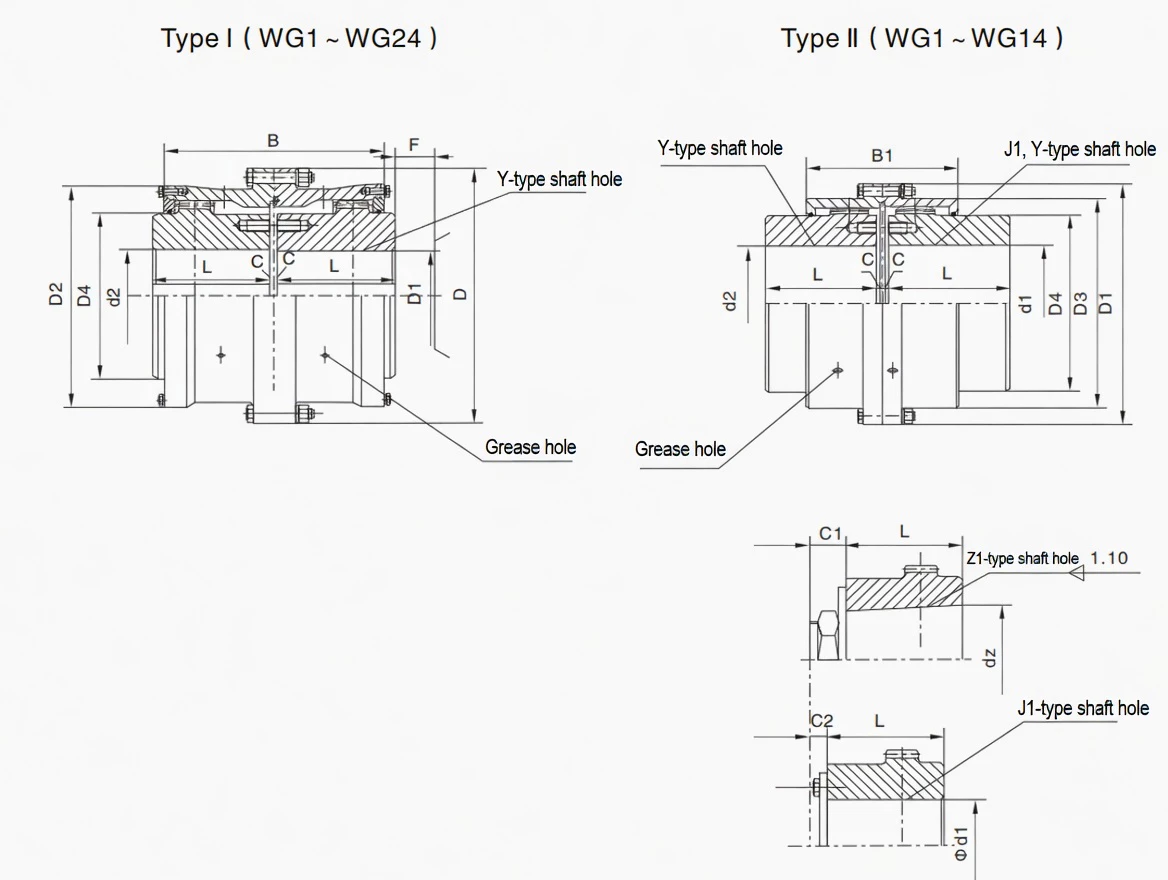
WGC1 – WGC14 Complete Specifications
| Size | Torque (N·m) |
Speed (rpm) |
Bore d1,d2 (mm) |
Y bore length |
D | D1 | D2 | D4 | B | B1 | F | Inertia I (Kg·m²) |
Inertia II (Kg·m²) |
Weight I (Kg) |
Weight II (Kg) |
|---|---|---|---|---|---|---|---|---|---|---|---|---|---|---|---|
| WGC1 | 710 | 7500 | 12 – 42 | 32–112 | 122 | 115 | 98 | 60 | 116 | 100 | 30 | 0.0079 | 0.0064 | 5.8 | 5.1 |
| WGC2 | 1250 | 6700 | 22 – 56 | 52–112 | 150 | 145 | 118 | 77 | 136 | 104 | 30 | 0.022 | 0.017 | 7.9 | — |
| WGC3 | 2500 | 6300 | 22 – 63 | 52–142 | 170 | 165 | 140 | 90 | 160 | 108 | 30 | 0.047 | 0.033 | 17 | 12.8 |
| WGC4 | 4500 | 5600 | 30 – 80 | 82–172 | 200 | 195 | 160 | 112 | 180 | 116 | 30 | 0.099 | 0.074 | 20.5 | 20.5 |
| WGC5 | 7100 | 5300 | 30 – 90 | 82–172 | 225 | 215 | 180 | 128 | 200 | 126 | 30 | 0.177 | 0.13 | 36.1 | 27.7 |
| WGC6 | 10000 | 5000 | 32 – 100 | 82–212 | 245 | 230 | 200 | 145 | 224 | 134 | 30 | 0.30 | 0.22 | 53.2 | 39.8 |
| WGC7 | 14000 | 4500 | 32 – 110 | 82–212 | 272 | 265 | 230 | 160 | 244 | 148 | 30 | 0.53 | 0.35 | 71.1 | 47.5 |
| WGC8 | 20000 | 4250 | 55 – 125 | 112–212 | 290 | 272 | 245 | 176 | 272 | 162 | 30 | 0.72 | 0.47 | 83 | 59.6 |
| WGC9 | 25000 | 4000 | 65 – 140 | 142–252 | 315 | 305 | 265 | 190 | 280 | 176 | 30 | 1.06 | 0.80 | 110 | 85 |
| WGC10 | 40000 | 3550 | 75 – 160 | 142–302 | 355 | 340 | 300 | 225 | 330 | 196 | 30 | 1.77 | 1.56 | 164 | 128 |
| WGC11 | 56000 | 3000 | 85 – 180 | 172–302 | 412 | 385 | 345 | 256 | 360 | 224 | 40 | 3.76 | 2.88 | 224 | 178 |
| WGC12 | 80000 | 2800 | 120 – 200 | 212–352 | 440 | 435 | 375 | 288 | 414 | 250 | 40 | 6.55 | 4.93 | 315 | 255 |
| WGC13 | 112000 | 2500 | 140 – 220 | 252–352 | 490 | 480 | 425 | 320 | 470 | 272 | 50 | 10.6 | 8.0 | 406 | 325 |
| WGC14 | 160000 | 2300 | 160 – 260 | 302–410 | 545 | 540 | 462 | 362 | 530 | 316 | 50 | 17.8 | 13.9 | 542 | 423 |
Note: Weight and inertia are approximations calculated at maximum shaft hole diameter, Y type bore. D3 (inner bore collar diameter for Type II) varies per size — contact our engineering team for detailed dimensional drawings. Bore options only include Y type for WGC series.
Custom Bore and Vertical Drive Engineering Available
Need a non-standard bore diameter, a specific hub engagement length for high axial thrust, or an engineering assessment of your vertical drive application? Our engineering team reviews vertical drive drawings and specifies the correct WGC size and type. Send your motor and pump/driven machine data sheets for a same-day assessment.
Industries & Applications in Australia
Vertical drive trains are more common in Australian industry than many engineers realise. Vertical turbine pumps, vertical agitators, vertical cooling tower fans, and vertically mounted motor-gearbox assemblies appear across mining, water treatment, chemical processing, HVAC, and power generation infrastructure. Every one of these drives requires the WGC, not the standard WG — and many coupling failures on vertical drives trace back to this simple specification error.
Mine Dewatering — Vertical Turbine Pumps
Equipment: Deep-well vertical turbine pumps, vertical submersible pump drives, bore pump installations, dewatering sump pumps with vertical motor-to-pump connections.
In Western Australian gold and nickel operations and Queensland coal mine dewatering systems, vertical turbine pumps are the primary dewatering tool. The WGC absorbs thermal expansion between the motor casing and pump column head — which can reach 2–3 mm on large pumps after heat soak — without transmitting misalignment-induced forces to motor or pump shaft bearings. It also accommodates the axial shaft float that occurs during pump priming, when the impeller stack shifts axially before hydraulic pressure stabilises. A standard horizontal coupling installed on a vertical turbine pump drive will starve the upper tooth mesh of lubrication within 300–500 operating hours, leading to premature tooth failure that is often misdiagnosed as pump cavitation damage.
Water Treatment and Desalination — High-Service Pump Drives
Equipment: High-service vertical turbine pumps, water transfer pump drives, desalination plant intake and high-pressure pump drives in Perth, Adelaide, and Gold Coast facilities.
Australian water utilities operating vertical turbine pumps at treatment plants and coastal desalination facilities require coupling solutions that deliver multi-year service life without unplanned maintenance. The WGC's vertical oil retention eliminates the lubrication starvation failure mode that causes premature coupling replacement on non-vertical-rated couplings. The crowned tooth's angular misalignment tolerance absorbs the differential thermal expansion between concrete pump structures and steel motor mounting frames that occurs across Australian temperature extremes — from cold mornings to hot afternoons — without generating bearing-damaging misalignment forces. Explore the full range of industrial couplings on australia-drive.com.
Mineral Processing — Vertical Agitators and Mixers
Equipment: Vertical agitator drives in leach tanks, flotation cell agitator drives, mixing tank drives, vertical reactor drives in hydrometallurgical processing plants.
Gold, copper, and nickel hydrometallurgical processing plants across Queensland, Western Australia, and South Australia operate hundreds of vertical agitator drives. These drives experience intermittent axial loading as the agitator impeller encounters density stratification in the vessel contents — creating brief axial thrust pulses that the WGC absorbs through its crowned tooth axial sliding capability. The WGC Type II is particularly suited to large agitator drives in heated leach tanks where the combined axial thermal growth of the tank structure and impeller shaft requires additional hub engagement length to resist upward axial displacement of the lower coupling hub.
Cooling Towers and HVAC — Vertical Fan Drives
Equipment: Cooling tower fan drives, induced draft fan drives with vertical shaft arrangement, HVAC cooling tower drives in commercial and industrial facilities across Australian cities.
Cooling tower fan drives in Australian commercial and industrial facilities typically run 24 hours per day, 7 days per week, throughout the summer cooling season. These continuous-duty vertical drives cannot afford coupling failures that require system shutdown, as the consequence is loss of process cooling. The WGC's reliable vertical lubrication retention and crowned tooth misalignment tolerance make it the correct choice for these high-availability vertical drives. WGC1 through WGC5 cover the torque range of most industrial cooling tower fan drive applications.
Chemical Processing and Food Production — Vertical Mixer Drives
Equipment: Vertical reactor drives, crystalliser agitator drives, fermentation vessel drives, large-volume mixer drives in chemical, food, and beverage processing facilities.
Chemical and food processing plants in Victoria, NSW, and Queensland operate vertical mixer and reactor drives where product quality directly depends on reliable, consistent agitation. The WGC's long service life on vertical drives — versus the 3–6 month replacement cycles often seen with incorrectly specified horizontal couplings on vertical shafts — reduces both planned and unplanned downtime. For food and pharmaceutical applications, GBC can supply WGC couplings with stainless steel hardware and food-grade lubricant pre-fill where required.
Technical Advantages — Why Crowned Tooth Outperforms Straight Tooth on Vertical Drives
Higher Misalignment Tolerance — Especially Critical on Australian Mine and Processing Sites
Vertical drive installations on Australian mine and processing sites face unique misalignment challenges. Concrete pump structures and steel motor frames expand and contract at different rates with temperature — in the Pilbara, the daily temperature swing of 20–30 degrees Celsius generates significant differential thermal expansion between a concrete well casing and a steel motor mounting frame. The WGC's crowned tooth tolerates 1.0–1.5 degrees of angular misalignment per mesh without any increase in tooth contact stress, absorbing these thermal misalignment cycles throughout each day without accumulating fatigue damage. A straight-tooth coupling in the same application generates edge-loading stress spikes with each thermal cycle, progressively wearing the tooth contacts until failure.
Longer Service Life Under Shock Loads — Particularly on Pump Starts
Vertical pump drives experience peak torque during startup — as the pump accelerates from rest, the inertia of the impeller and water column generates a torque spike that can reach 3–5x rated torque for the first 1–3 seconds. The WGC's crowned tooth distributes this startup torque as a Hertzian contact ellipse, avoiding the stress concentration at tooth edges that a straight-tooth coupling would experience under the same startup shock. Over a 20-year pump life with thousands of startup events, this difference in startup stress accumulation is the primary reason crowned-tooth gear couplings outlast straight-tooth alternatives by 3–5x on high-cycle vertical pump drives.
Reduced Bearing Loads — Protecting Motor and Pump Shaft Bearings
On vertical drives, motor and pump shaft bearings carry both the radial load from any residual misalignment and the axial load from the weight of the rotating assembly plus any hydraulic thrust from the impeller. A misaligned straight-tooth coupling adds a cyclic bending moment at 2x running frequency to this axial loading, overloading motor bearings that are already marginal under combined axial and radial loading in vertical orientation. The WGC's self-centring crowned teeth minimise misalignment-induced bending moments at the bearing, keeping bearing loading within design limits and extending motor bearing life by 30–60% compared to straight-tooth equivalents in documented Australian water utility pump applications.
Lower Maintenance Frequency — Built-In Lubrication Port for Vertical Drives
Like all WG-family couplings, the WGC includes a standard lubrication port for re-lubrication without disassembly. For vertical pump and agitator drives — which are often located in pits, on towers, or in process vessels where access is constrained — the ability to re-lubricate without coupling disassembly dramatically reduces the maintenance access time and permit-to-work burden per service interval. Standard re-lubrication intervals for WGC couplings on vertical drives are 6–12 months, significantly longer than the 3–6 month intervals typical of straight-tooth couplings operating under the same misalignment conditions.
Suitable for High-Speed Applications — Up to 7500 RPM on WGC1
WGC1 is rated to 7500 RPM — the highest speed available in the WGC series — making it suitable for direct connection to 2-pole motors on 50 Hz supplies (nominally 2950–3000 RPM at full load) and some 4-pole drives running at elevated speeds. The crowned tooth profile generates less vibration at speed than a straight-tooth coupling under equivalent misalignment, keeping vibration within limits for motor warranty compliance on high-speed vertical pump drives. For VSD-controlled vertical pump drives, the WGC maintains dynamic stability across the full operating speed range.
Manufacturing & Quality Assurance
Manufacturing Process
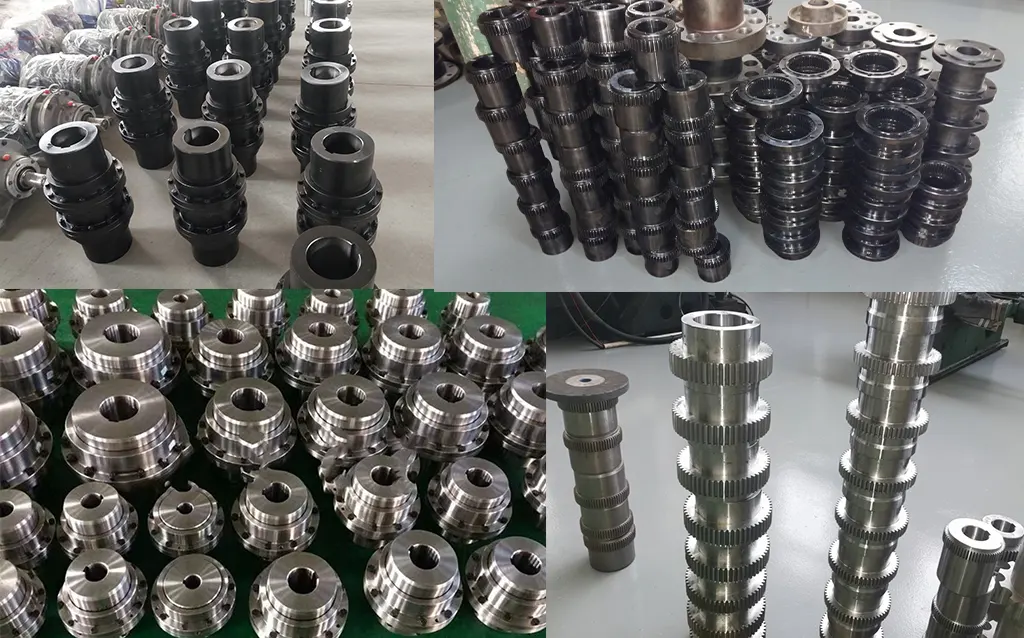
WGC couplings are manufactured from forged alloy steel blanks — 42CrMo4 for WGC8 and above, 45# carbon steel for smaller sizes. The crowned external teeth are CNC hobbed to DIN Class 7 accuracy using dedicated crowned-tooth tooling that machines the crown radius to ensure correct Hertzian contact geometry across the full tooth width. Tooth flanks are carburised and quenched to HRC 58–62 surface hardness with HRC 30–35 core hardness, providing the high surface fatigue resistance required for long service life under the cyclic loading of continuous vertical drive applications.
The internal oil retention geometry of the WGC outer sleeve is machined to tight tolerances to ensure the oil trap depth and sealing land dimensions are correct for the viscosity range of the specified lubricant. The lubrication fill port is drilled and tapped after final machining, with thread-form checked for compatibility with standard grease nipple specifications. All Y-type bores are finish-machined to H7 tolerance with keyway slots per GB/T1801-1999.
Quality Control Flow
Certifications
ISO 9001:2015 quality management certification covers all WGC manufacturing operations. CE marking applies to applicable sizes. Products manufactured per JB/T7002-93. Every shipment includes material mill certificates, heat treatment records, Rockwell hardness test certificates, and dimensional inspection reports. For water utility applications where coupling documentation is required to support asset management records, our documentation package is structured to include all parameters needed for engineering file compliance.
Why Source Your WGC Couplings from GBC?
Understanding Australian Vertical Drive Applications
We understand the specific challenges of Australian vertical drive installations — high ambient temperatures, remote site access constraints, continuous-duty pump operating profiles, and the documentation requirements of water utilities and mining companies. Our engineering team can review vertical drive data sheets and confirm WGC specification without requiring repeated back-and-forth communication.
15+ Years of Australian Export Experience
GBC has supplied WGC and WG-family couplings to Australian water utilities, mining operations, and processing plants since 2010. Every export order ships with ISPM-15 compliant timber packing for clean Australian biosecurity clearance, and our documentation is structured for straightforward customs entry.
English-Speaking Engineering Team
Our engineers communicate in technical English and understand the terminology used in Australian pump and rotating equipment engineering. We can review vertical turbine pump data sheets, agitator drive specifications, and cooling tower fan drive drawings, and confirm coupling selection with the specific data points Australian engineers need — torque, speed, bore, and axial thrust values — without translation ambiguity.
Single-Unit Orders to Full Project Supply
WGC couplings are available from a single unit for emergency replacement through to full project quantities for new installations. Water utilities replacing a single failed coupling on a critical pump and mining companies equipping a new processing facility both receive the same technical support and documentation quality. Standard sizes ship within 15–20 working days ex-works; custom bores add 5–10 working days. Contact us for a quote.
Full WG Family — All Variants, One Supplier
As the manufacturer of WG, WGP, WGC, WGZ, and WGT, GBC supplies the complete family from a single source. Processing plants requiring WGC on vertical agitator drives and WG on horizontal conveyor drives handle both through one engineering team and one procurement channel.
OEM and Custom Vertical Drive Solutions
Non-standard bore diameters, special hub engagement lengths for high axial thrust applications, stainless steel hardware for food or chemical environments, and modified oil retention configurations for extreme-temperature vertical drives are all achievable to customer drawings. Australian pump OEMs and agitator manufacturers have used GBC for custom WGC configurations on a repeat basis.
Application Case Studies
Case 1: Mine Dewatering Vertical Turbine Pump — Western Australia
Customer Profile: A mid-tier gold producer in the Eastern Goldfields of Western Australia operating 18 vertical turbine dewatering pumps in open pit and underground configurations.
Challenge: The existing couplings on 12 of the 18 pumps were standard horizontal WG-type couplings installed by a local supplier who did not differentiate between horizontal and vertical ratings. These couplings were failing every 4–6 months due to upper mesh lubrication starvation. The mine's maintenance manager had identified the coupling as the highest-frequency failure item in the dewatering system, accounting for more than 60 hours of unplanned pump downtime per year across the 12 affected drives.
Solution: We supplied 12x WGC5 couplings (7,100 N·m, 75 mm bore, Type I) for the 18 kW and 22 kW pump drives, and 6x WGC7 (14,000 N·m, 95 mm bore, Type II) for the 37 kW and 45 kW deep-well pumps where higher axial thrust from the longer shaft column required the additional hub engagement of Type II.
Result: In 30 months of operation following replacement, zero coupling failures were recorded across all 18 drives. The mine's maintenance planner extended the coupling inspection interval from 4 months to 12 months based on observed wear at the first inspection. Estimated annual savings from eliminated unplanned downtime: AUD $142,000 based on the mine's documented pump downtime cost of AUD $2,380 per hour.
Case 2: Water Treatment Vertical High-Service Pumps — South Australia
Customer Profile: A metropolitan water authority in South Australia operating eight vertical high-service pumps at a major water treatment facility, each rated 315 kW on continuous duty.
Challenge: The authority's asset management system required coupling replacement on 6 of the 8 pumps at 18-month intervals due to tooth wear — a cost the authority's chief engineer attributed to a combination of thermal misalignment between the concrete pump slab and steel motor mounting frames, and uncertainty about whether the installed horizontal-rated couplings were lubrication-starving in vertical orientation. The authority needed a coupling solution that would extend the 18-month replacement cycle to at least 5 years to meet new asset management KPIs.
Solution: We supplied 8x WGC10 couplings (40,000 N·m, 130 mm bore, Type I) with full material traceability documentation package to support the authority's asset management system. The selection was validated against the pump's axial thrust data sheet and the motor-to-pump coupling distance to confirm WGC10 was correctly specified for the thermal expansion range.
Result: At the 24-month inspection, no measurable tooth wear was detected on any of the 8 couplings. The authority revised their maintenance plan to a 5-year inspection interval for WGC couplings on these drives, meeting the asset management KPI. The authority's chief engineer documented the coupling change as the single highest-impact maintenance improvement across all rotating equipment that year.
Case 3: Mineral Processing Vertical Leach Tank Agitators — Queensland
Customer Profile: A copper hydrometallurgical processing plant in Queensland operating 24 vertical agitator drives on atmospheric leach tanks, each agitator rated 55 kW continuous duty at 60–80 degrees Celsius process temperature.
Challenge: The plant was experiencing accelerated coupling wear on the agitator drives that could not be explained by standard misalignment analysis. Investigation identified two contributing factors: first, the horizontal-rated couplings installed were not suitable for the vertical drive orientation; second, the thermal growth of the heated tank structure was pushing the lower agitator shaft upward by 1.8–2.2 mm during operation, creating an axial loading event on the coupling that the horizontal-rated units were not designed to handle in combination with vertical lubricant starvation.
Solution: We supplied 24x WGC8 couplings (20,000 N·m, 95 mm bore, Type II) specified with Type II construction to provide additional axial loading resistance, and lubricated with a high-temperature EP grease rated to 180 degrees Celsius for the elevated ambient conditions around the leach tank periphery.
Result: The plant completed a full 12-month production campaign without a single coupling-related stoppage across all 24 agitator drives — compared to an average of 7 coupling replacements per campaign under the previous specification. Maintenance cost per campaign for coupling-related work reduced by AUD $63,000. The engineering team cited the Type II WGC specification as the key technical decision, as the additional hub engagement of Type II was essential to withstand the combined axial thermal growth and torque loading on these elevated-temperature agitator drives.
Frequently Asked Questions
What is a WGC vertical installation drum shape gear coupling?
The WGC (JB/T7002-93) is a crowned-tooth gear coupling purpose-engineered for vertical shaft installations. Its internal construction maintains lubricant at both upper and lower tooth meshes in vertical orientation — solving the lubrication starvation failure that occurs when standard horizontal couplings are incorrectly used on vertical drives. 14 sizes cover 710 N·m to 160,000 N·m and up to 7500 RPM.
Why can't a standard horizontal gear coupling be used on a vertical shaft?
In a standard horizontal gear coupling, gravity distributes lubricant around the full tooth mesh circumference. In a vertical installation, gravity pulls lubricant to the lower half of the coupling, starving the upper tooth mesh of the oil film it needs. This causes accelerated tooth wear on the upper mesh, typically leading to coupling failure within 200–500 hours of operation. The WGC's modified internal geometry retains lubricant at both meshes regardless of shaft orientation, eliminating this failure mode.
When should I choose WGC Type II over Type I?
Choose Type II when the vertical drive experiences significant axial loading — such as vertical turbine pump drives with hydraulic shaft thrust during priming, agitator drives in heated vessels with thermal axial growth, or drives with frequent reversals. Type II's additional inner bore collar (D3 and B1 dimensions) provides greater resistance to axial hub displacement under combined axial force and torque. Type I is lighter and suited to standard vertical drives with modest axial loads.
How is the WGC different from the WGP or WGZ?
The WGP has a flat brake disc for caliper brakes and is for horizontal drives. The WGZ has a cylindrical brake drum for shoe brakes and is for horizontal drives. The WGC has no braking feature — its unique modification is the internal vertical oil retention geometry for vertical shaft operation. If you need a vertical drive with braking, the WGZ or WGP cannot be directly substituted for the WGC; contact our engineering team to discuss the correct solution for your specific vertical braking application.
What lubricant should be used in a WGC coupling?
EP-grade gear oil (ISO VG 220 or equivalent) or lithium complex grease with EP additives is standard for most WGC applications. For elevated-temperature environments (above 60 degrees Celsius ambient), a high-temperature EP grease rated to at least 150 degrees Celsius is recommended. The WGC must be filled to the specified volume for vertical installation — typically higher than the equivalent horizontal coupling fill level — to compensate for gravity effects on lubricant distribution within the oil trap geometry. Contact our engineering team for lubricant specification for your specific operating temperature range.
Can the WGC accommodate shaft float on vertical turbine pumps?
Yes. Shaft float — the axial movement of the pump shaft that occurs during priming as the impeller stack shifts before hydraulic pressure stabilises — is accommodated by the axial sliding of the WGC's crowned teeth within the outer sleeve. The axial clearance in the coupling absorbs the shaft float without transmitting it as an axial thrust event to the motor bearing. For vertical turbine pumps with documented shaft float exceeding the standard axial clearance of the selected WGC size, our engineering team can recommend the appropriate coupling size or type to accommodate the specific float value.
Specify Your WGC Coupling for Vertical Drive
Send us your motor power, speed, shaft bore diameter, and installation orientation. If you have axial thrust data or thermal growth estimates, include those too. Our engineering team confirms the right WGC size and construction type, and provides a factory-direct quotation within 24 hours.
|
English-speaking engineering team
|
sales@australia-drive.com
GBC — Factory-direct WGC vertical installation drum shape gear couplings for Australian pump, agitator, fan, and mixer drives since 2010.
WGC drum shape gear coupling purpose-built for vertical shaft installations per JB/T7002-93. Modified internal oil retention prevents lubrication starvation in vertical orientation. 14 sizes, 710 N·m to 160,000 N·m, up to 7500 RPM. Type I and Type II. Suits vertical turbine pumps, agitators, fans, and mixer drives in Australia.
MOQ: 50 pcs. Minimum order value USD 1,500; mixed orders and trial quantities welcome.