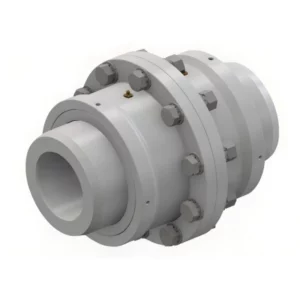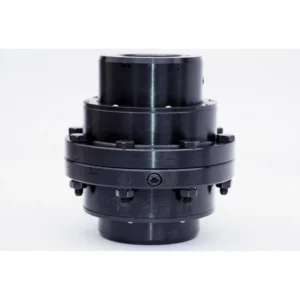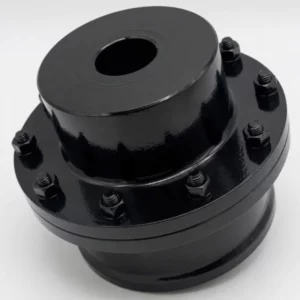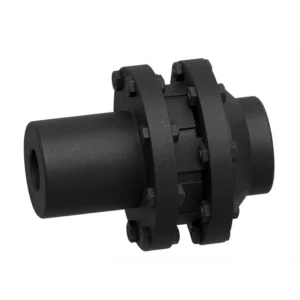
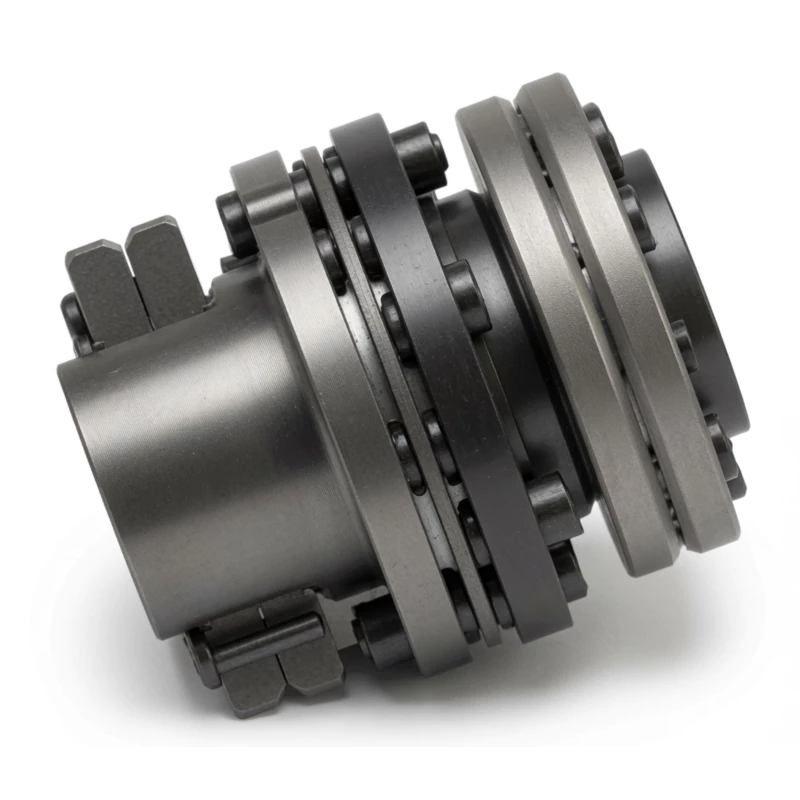
DJM / SJM-YP Type Locking Disc Single and Double Flexible Diaphragm Coupling
The DJM / SJM-YP Type Locking Disc Flexible Diaphragm Coupling combines all the advantages of the DJM/SJM diaphragm series with a Z7B-type locking disc (锁紧盘) hub connection, delivering zero backlash and larger bore capacity across a torque range of 33 N·m to 8,100,000 N·m in 40 sizes. Available as single-pack DJM-YP and double-pack SJM-YP — the zero-backlash, lubrication-free solution for heavy industrial drives where keyway connection is impractical or insufficient.
MOQ: 50 pcs. Minimum order value USD 1,500; mixed orders and trial quantities welcome.
What Is a DJM / SJM-YP Locking Disc Diaphragm Coupling?
The DJM / SJM-YP locking disc flexible diaphragm coupling addresses the limitation that affects all keyway-connected couplings at large bore sizes: at shaft diameters above approximately 80–100 mm, the keyway represents a significant stress concentration in the hub, and the clearance between key and keyway becomes a meaningful source of rotational backlash. The YP series replaces the keyway entirely with a Z7B-type locking disc — a multi-bolt friction collar that clamps uniformly around the shaft circumference, transmitting torque through friction contact rather than shear.
The stainless steel diaphragm pack and the misalignment compensation characteristics are identical to the standard DJM/SJM key-connection types. What changes is the hub-to-shaft interface: no keyway to machine, no key to fit, no key clearance to produce backlash. The Z7B disc can be tightened and released with standard hex key tools, making shaft mounting and repositioning straightforward even on large-diameter shafts where pressing is impractical.
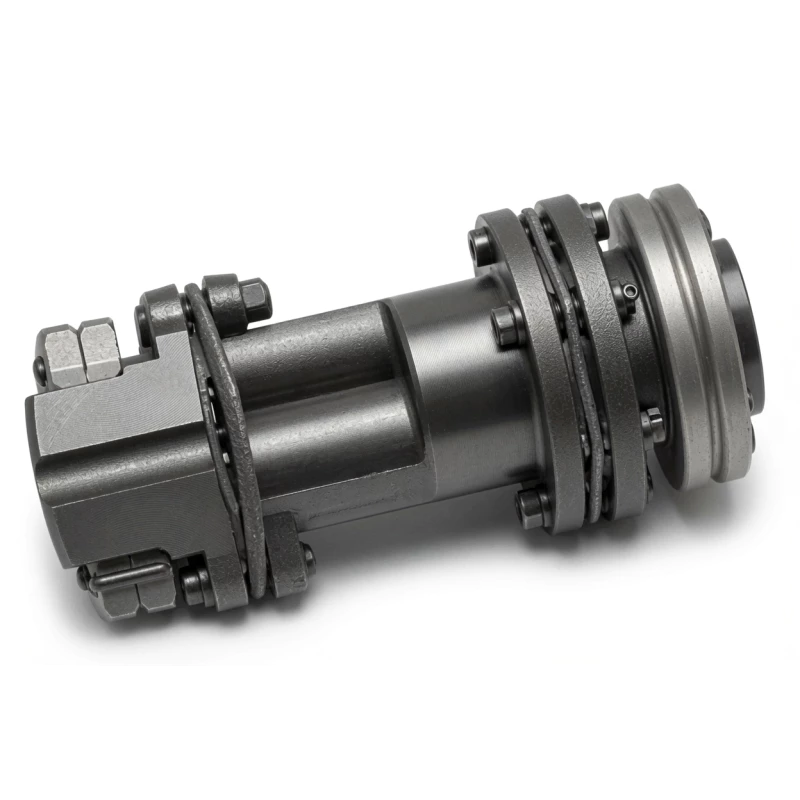
Z7B Locking Disc vs Keyway Connection
| Feature | DJM/SJM-YP (Z7B Locking Disc) | DJM/SJM Standard (Keyway) |
|---|---|---|
| Backlash | Zero | Small (key clearance) |
| Max bore at same OD | Larger (Omax listed in table) | Limited by keyway depth |
| Keyway machining | Not required | Required on shaft and hub |
| Hub stress concentration | None (uniform clamping) | Keyway root stress |
| Axial repositioning | Release bolts, slide, re-torque | Press-out and re-press |
| Overload protection | Slips at overload, protects train | Key shears or hub fractures |
| Torque range (YP series) | 33–8,100,000 N·m (40 sizes) | Same torque range |
DJM-YP (Single Pack) vs SJM-YP (Double Pack)
Both types use the Z7B locking disc hub. DJM-YP has a single diaphragm pack — shorter overall length, suited to well-aligned drives. SJM-YP adds a second pack and spacer C, providing approximately double the axial compensation and direct radial offset capacity, identical to the SJM standard type. Choose DJM-YP for compact heavy-duty drives; SJM-YP for turbomachinery, large pump trains, and drives where shaft radial offset must be accommodated.
DJM / SJM-YP Coupling Specifications and Dimensions
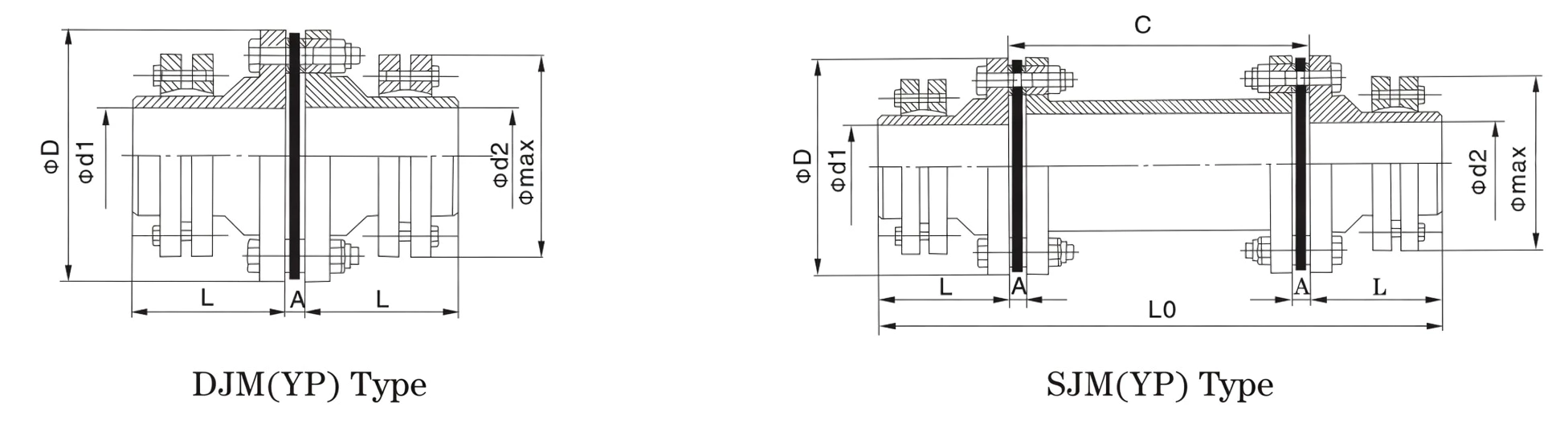
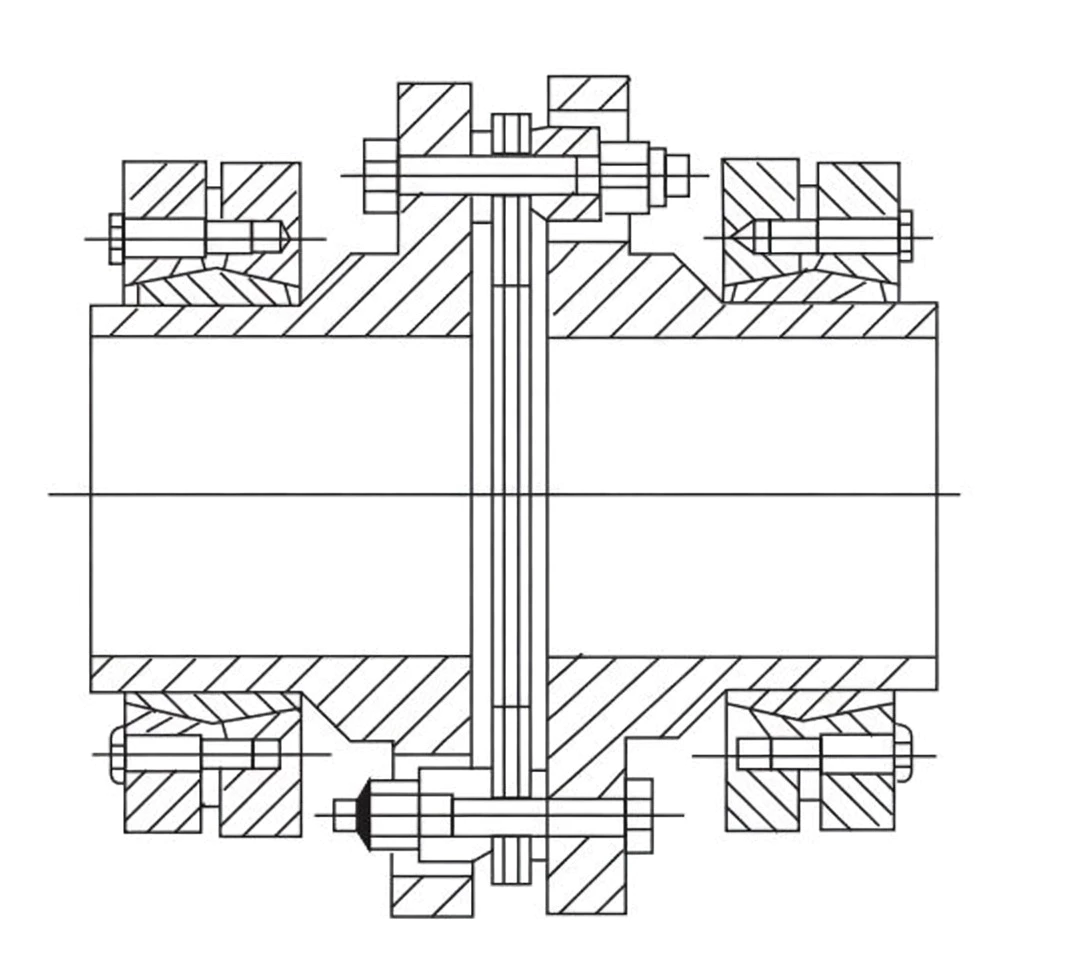
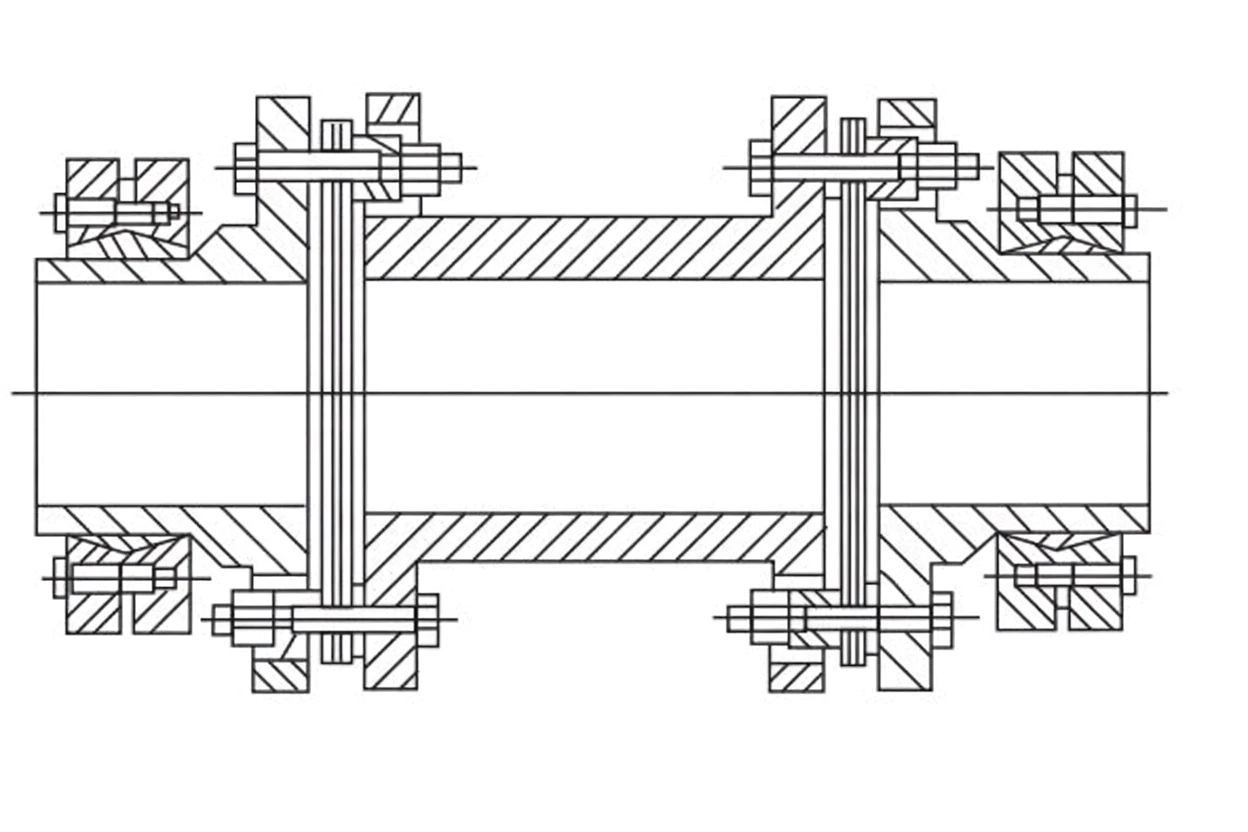
Materials and Locking Device Note
Diaphragm packs: stainless steel sheet. Hubs and spacer: alloy steel. Locking disc: Z7B type (replaceable with Z10 for larger bore). Bolts: high-tensile grade 12.9. Note: Omax in the parameter table changes with d1/d2 bore selection — refer to the Z7B locking device catalogue for exact Omax at each bore.
Ordering Mark Example
→ DJM single-pack, size 07 | Y-bore with P locking disc | drive: 70 mm / driven: 65 mm | C = 140 mm (SJM only)
SJM07-Y P 70 / Y P 65 – 140 (double-pack, spacer C = 140 mm)
Complete Parameter Table — DJM/SJM-YP Sizes 01–40
Misalignment compensation identical to standard DJM/SJM at each size. Omax varies with bore selection — tabulated values are for reference bore. Z7B can be substituted with Z10 for larger bore. SJM-YP total length L0 = DJM-YP L + SJM-YP additional spacer C.
| Size | Nom. Torque N·m | Max Speed rpm | d1,d2 mm | D mm | L mm | Omax mm | A mm | C mm | L0 DJM mm | L0 SJM mm |
|---|---|---|---|---|---|---|---|---|---|---|
| 01 | 33 | 20,000 | 19–31 | 68 | 45 | 72 | 6.1 | 89 | 96.1 | 179 |
| 02 | 90 | 20,000 | 19–31 | 81 | 45 | 72 | 6.6 | 89 | 96.6 | 179 |
| 03 | 173 | 18,000 | 19–42 | 93 | 56 | 100 | 8.4 | 102 | 120.4 | 214 |
| 04 | 245 | 15,000 | 20–48 | 104 | 63 | 110 | 11.2 | 127 | 137.2 | 253 |
| 05 | 420 | 13,000 | 28–60 | 126 | 70 | 138 | 11.7 | 127 | 151.7 | 267 |
| 06 | 772 | 12,000 | 35–70 | 143 | 75 | 170 | 11.7 | 127 | 161.7 | 277 |
| 07 | 1,270 | 10,000 | 45–80 | 168 | 98 | 185 | 16.8 | 127 | 212.8 | 323 |
| 08 | 2,080 | 10,000 | 50–85 | 194 | 98 | 215 | 17.0 | 140 | 213 | 336 |
| 09 | 3,328 | 9,000 | 60–95 | 214 | 98 | 230 | 21.6 | 152 | 217 | 348 |
| 10 | 4,900 | 8,000 | 65–105 | 250 | 110 | 263 | 23.9 | 178 | 243.9 | 398 |
| 11 | 6,368 | 6,300 | 75–115 | 276 | 110 | 290 | 27.2 | 178 | 247.2 | 398 |
| 12 | 8,900 | 6,300 | 80–115 | 276 | 110 | 290 | 17.5 | 153 | 237.5 | 373 |
| 13 | 15,280 | 5,000 | 95–135 | 300 | 160 | 330 | 19.0 | 172 | 339 | 440 |
| 14 | 25,410 | 4,700 | 110–160 | 350 | 180 | 370 | 21.5 | 190 | 381.5 | 510 |
| 15 | 37,130 | 4,300 | 125–170 | 370 | 200 | 405 | 24.0 | 224 | 424 | 584 |
| 16 | 47,120 | 3,900 | 135–190 | 405 | 210 | 430 | 29.5 | 254 | 449.5 | 614 |
| 17 | 57,000 | 3,500 | 140–210 | 430 | 220 | 460 | 29.5 | 270 | 469.5 | 670 |
| 18 | 63,186 | 3,500 | 145–230 | 460 | 250 | 485 | 31.0 | 274 | 531 | 754 |
| 19 | 82,590 | 3,200 | 155–260 | 520 | 270 | 570 | 32.0 | 287 | 572 | 807 |
| 20 | 102,100 | 2,800 | 160–270 | 570 | 280 | 590 | 32.5 | 292 | 592.5 | 852 |
| 21 | 126,070 | 2,450 | 170–295 | 590 | 290 | 645 | 34.0 | 312 | 614 | 912 |
| 22 | 146,350 | 2,150 | 190–310 | 645 | 290 | 660 | 34.5 | 344 | 614.5 | 944 |
| 23 | 173,830 | 2,000 | 200–320 | 660 | 330 | 660 | 35.5 | 356 | 695.5 | 956 |
| 24 | 200,000 | 1,400 | 210–350 | 690 | 360 | 750 | 44 | 380 | 764 | 1140 |
| 25 | 250,000 | 1,250 | 220–360 | 750 | 380 | 770 | 44 | 400 | 804 | 1240 |
| 26 | 315,000 | 1,200 | 240–380 | 770 | 450 | 800 | 50 | 420 | 950 | 1380 |
| 27 | 400,000 | 1,150 | 250–400 | 800 | 480 | 850 | 50 | 440 | 1010 | 1540 |
| 28 | 500,000 | 1,100 | 280–420 | 850 | 500 | 850 | 50 | 450 | 1050 | 1550 |
| 29 | 630,000 | 1,000 | 300–470 | 940 | 550 | 980 | 60 | 480 | 1160 | 1780 |
| 30 | 800,000 | 930 | 330–520 | 1020 | 570 | 1020 | 60 | 500 | 1200 | 1800 |
| 31 | 1,000,000 | 880 | 360–550 | 1070 | 570 | 1070 | 66 | 520 | 1206 | 1820 |
| 32 | 1,250,000 | 820 | 390–590 | 1180 | 590 | 1080 | 70 | 580 | 1250 | 1880 |
| 33 | 1,600,000 | 740 | 420–630 | 1250 | 650 | 1250 | 82 | 600 | 1382 | 2240 |
| 34 | 2,000,000 | 680 | 450–670 | 1370 | 680 | 1370 | 92 | 600 | 1452 | 2300 |
| 35 | 2,500,000 | 620 | 490–760 | 1480 | 680 | 1480 | 105 | 700 | 1465 | 2800 |
| 36 | 3,020,000 | 570 | 520–760 | 1520 | 700 | 1480 | 110 | 700 | 1510 | 2100 |
| 37 | 4,050,000 | 520 | 590–760 | 1550 | 700 | 1480 | 115 | 710 | 1515 | 2110 |
| 38 | 5,300,000 | 480 | 645–760 | 1580 | 700 | 1480 | 124 | 710 | 1524 | 2110 |
| 39 | 6,600,000 | 430 | 700–760 | 1600 | 700 | 1480 | 130 | 720 | 1530 | 2120 |
| 40 | 8,100,000 | 400 | 720–760 | 1650 | 700 | 1480 | 138 | 720 | 1538 | 2120 |
Note: Omax changes with d1/d2 bore selection — values shown are reference. Z7B can be replaced with Z10 for larger bore. L0 DJM = total length single pack; L0 SJM = total length double pack with spacer C.
How to Select a DJM / SJM-YP Locking Disc Coupling
Design Torque Calculation
K = service factor | P = motor rated power (kW) | N = operating speed (rpm) | Tn = nominal torque of selected size
When to Specify YP Locking Disc over Standard Keyway
- Shaft diameter is large (>80 mm) and keyway stress concentration is a design concern
- Zero backlash is required on a drive too powerful for the taper sleeve type range (above 420 N·m)
- Shaft surface has no keyway (smooth motor shaft, large pump shaft, turbine stub shaft)
- Axial repositioning of the hub is expected during commissioning or periodic recalibration
- Overload protection is desired — the locking disc slips at a defined overload torque, protecting the driven equipment without destructive key shear
- Noise and vibration from key-clearance reversal is unacceptable in the drive train
Locking Disc Bolt Torque and Shaft Tolerance
For the Z7B locking disc: shaft tolerance h8 for diameters ≥ 38 mm; h6 for < 38 mm. Tighten locking disc ring bolts in a cross-pattern in three progressive passes (1/3, 2/3, full torque). Do not exceed the specified torque — over-torquing deforms the disc and reduces its reusability. For large sizes (size 20+), use a calibrated torque multiplier rather than an extension bar.
Metal Diaphragm Coupling Range
The YP series spans 33–8,100,000 N·m across all 40 sizes in both single and double pack configurations. For drives where torque is below 420 N·m and minimum inertia is the priority, the taper sleeve DJM/SJM type offers lower inertia at reduced cost.
9.8–8,100,000 N·m · 41 sizes · Standard keyway · General industrial
9.8–8,100,000 N·m · 41 sizes · Keyway · Radial offset to 3.0 mm
33–1,270 N·m · 7 sizes · Z1 locking device · CNC servo drives
33–420 N·m · 5 sizes · Cone hub · Lowest inertia · CNC feed shafts
33–8,100,000 N·m · 40 sizes · Z7B locking disc · Zero backlash · Heavy industrial
420–25,410 N·m · Integrated disc brake · Servo brake drives
40–180,000 N·m · Rod-type · Long shaft spans
Maximum misalignment · Rod-type · Long shaft spans
DJM / SJM-YP Locking Disc Coupling Applications
SJM-YP-10 through SJM-YP-20 on process compressor and large centrifugal pump trains where shaft diameters of 80–200 mm make keyway-based connections impractical from a stress analysis perspective. The Z7B locking disc eliminates keyway fatigue, while the SJM double pack provides radial compensation for thermal shaft growth.
DJM/SJM-YP-15 through size-25 on steam turbine and gas turbine generator shaft couplings. The locking disc allows hub removal for bearing replacement without shaft machining, and its defined slip torque provides overload protection for the generator in the event of grid fault conditions.
Large rolling mill backup roll and work roll drives use SJM-YP-25 through SJM-YP-35 for their ability to handle very large shaft diameters (300–600 mm) with zero backlash. The locking disc's uniform shaft loading eliminates the fretting corrosion that chronically affects keyed couplings in rolling mill applications.
Large diesel or dual-fuel main engine to intermediate shaft couplings use DJM/SJM-YP for their torque capacity (up to 8,100,000 N·m), zero lubrication, and the locking disc's ability to be serviced in the field without pulling the shaft. The stainless steel diaphragm pack withstands the corrosive marine atmosphere.
Multi-MW wind turbine main shaft connections use SJM-YP-20 through size-30. The locking disc connection eliminates the risk of keyway-initiated hub fracture from the complex fatigue loading inherent in wind turbine duty. Zero-lubrication diaphragm packs require no maintenance in nacelle installations with restricted access.
Ball mill and SAG mill drives in mining and cement plants use SJM-YP for their high torque capacity and the locking disc's overload slip function — a controlled slip at overload protects the pinion and gearbox from damage when tramp iron enters the mill, avoiding catastrophic failures.
Installation and Maintenance
Z7B Locking Disc Installation Steps
- Shaft preparation: Clean shaft end; remove all oil, rust, and burrs. Confirm shaft diameter is h8 (≥38 mm) or h6 (<38 mm) tolerance. No keyway required.
- Hub mounting: Slide the YP hub onto the shaft to the required axial position. The Z7B locking disc ring bolts should be finger-tight at this stage, allowing free axial sliding.
- Progressive tightening: Torque ring bolts progressively in a star pattern: 1/3 specified torque, then 2/3, then full. For sizes 15 and above, use a torque multiplier rather than an extension bar to achieve the specified torque without operator fatigue error.
- Diaphragm assembly: Fit diaphragm pack; torque mounting bolts in three cross-pattern passes.
- Verification: Check hub concentricity with a dial gauge (recommended for sizes 12+); runout should not exceed 0.05 mm TIR. Rotate by hand; confirm smooth operation.
Locking Disc Removal and Reuse
Release ring bolts progressively in a star pattern (same sequence as tightening). The disc releases uniformly, allowing the hub to slide off without pulling equipment. Z7B discs can be reused up to 3–5 times provided the friction surfaces are clean and undamaged. After an overload-induced slip event, the disc friction surfaces must be thoroughly cleaned and inspected before re-use; replace if scoring is visible.
Fault Diagnosis
| Symptom | Likely Cause | Action |
|---|---|---|
| Backlash / position drift | Locking disc slipped; insufficient bolt torque; oil contamination | Clean shaft; re-torque disc bolts; verify shaft tolerance |
| 1× vibration increase | Hub eccentricity from uneven disc tightening | Release and re-torque evenly; check hub runout |
| Diaphragm fatigue crack | Misalignment beyond limit; chronic overload; bolt under-torque | Replace diaphragm pack; re-align; recalculate TC |
| Disc slip at normal load | Coupling undersized; friction surface contamination | Recalculate TC; clean disc; consider next size up |
DJM / SJM-YP vs Alternative Large-Bore Coupling Solutions
vs Gear Coupling with Locking Disc:A gear coupling can also be supplied with a locking disc hub, but requires grease re-lubrication every 6–12 months. The DJM/SJM-YP diaphragm pack is entirely lubrication-free — on process plant drives where re-lubrication access is difficult or where contamination risk from grease is unacceptable, this is a decisive advantage.
vs Standard DJM/SJM Keyway Type: The keyway connection is lower cost and adequate for moderate shaft diameters. At shaft diameters above 80–100 mm, the keyway creates a stress concentration that limits the allowable bore and produces fretting corrosion under the cyclic contact stresses of reversing loads. The DJM/SJM standard keyway types remain the more cost-effective choice for smaller shaft sizes where these effects are negligible.
vs Rigid Flange Coupling with Locking Disc: Rigid flanged couplings offer no misalignment accommodation — any angular or axial offset transmits directly as bending moments onto the shaft bearings. The DJM/SJM-YP's diaphragm pack provides meaningful angular and axial compensation (and radial offset capacity on the SJM-YP) while maintaining the zero-backlash, zero-lubrication characteristics that locking disc users require.
Customer Case Studies
Australia — LNG Compressor Train
SJM-YP-16 on the main process gas compressor coupling at a gas processing facility. Shaft diameter of 165 mm made keyway-based coupling impractical from a fatigue analysis perspective. The locking disc hub installation took three hours on site with standard tooling — far faster than the shrink-fit process our previous coupling required. Twenty months of continuous operation, no maintenance interventions on the coupling.
Rotating Equipment Specialist, Western Australia AU
★★★★★
Germany — Wind Turbine OEM
DJM-YP-18 and DJM-YP-20 on main shaft couplings for a 3.5 MW platform. The locking disc connection allows hub removal without pulling the main shaft during drivetrain servicing in the nacelle. The zero-lubrication diaphragm pack was a design requirement — no grease in the nacelle. Field reports show zero unplanned outages attributable to the coupling across a 40-unit reference fleet.
Drivetrain Engineer, Hamburg DE
★★★★★
India — Steel Mill Rolling Line
SJM-YP-22 through SJM-YP-26 on backup roll couplings for a hot rolling mill. The locking disc's defined slip torque provided protection against roll bite irregularities that were causing keyway-hub fractures in the previous coupling design. Three years operating data shows zero coupling-related roll change delays since the upgrade.
Maintenance Engineering Manager, Odisha IN
★★★★☆
USA — Power Plant Generator Coupling
DJM-YP-19 on a combined-cycle steam turbine generator coupling. The single-pack DJM-YP was chosen over SJM-YP because shaft alignment is tightly controlled by the manufacturer and the shorter length was preferable in the confined bearing span. Locking disc enables hub removal for turbine outage inspections without disturbing the shaft.
Turbine Coupling Specialist, Texas US
★★★★★
Frequently Asked Questions
▶ What is the Z7B locking disc and why is it used on large diaphragm couplings?
The Z7B locking disc is a mechanical friction collar with a ring of uniformly spaced tightening bolts. As the bolts are progressively torqued, the collar compresses radially onto the shaft, creating an interference grip over the full shaft circumference — zero backlash and no keyway stress concentration. For large shaft diameters (typically above 80–100 mm), a keyway represents a significant fatigue risk and limits the maximum bore diameter. The Z7B disc eliminates both problems while offering the added benefit of overload slip protection.
▶ What is the maximum bore the DJM/SJM-YP can accommodate?
The maximum bore (Omax) is listed for each size in the parameter table. Omax varies with the actual bore diameter selected — refer to the Z7B locking device catalogue for precise Omax at any specific bore. As a guide: size 01–05 Omax 72–138 mm; size 10–15 Omax 263–405 mm; size 25–30 Omax 770–1,020 mm; size 40 Omax 1,480 mm. Z7B can be replaced with Z10 to increase the available bore at the same coupling size.
▶ How does the Z7B locking disc protect against drivetrain overload?
The Z7B transmits torque through friction between the disc faces and the shaft. If the applied torque exceeds the disc's rated slip torque (which can be specified independently of the coupling nominal torque), the disc slips cleanly on the shaft before mechanical damage occurs to gearboxes, couplings, or driven equipment. After a slip event, the drive train must be de-energised, the disc faces cleaned and inspected, and the disc re-torqued before returning to service. This is far less costly than replacing sheared keys, broken hubs, or damaged gearbox teeth.
▶ Can I use DJM-YP or SJM-YP as a direct replacement for a keyed coupling?
Yes, subject to dimensional compatibility. The YP hub fits a larger bore at the same coupling OD than the equivalent keyway type, and the diaphragm pack dimensions are identical — so the coupling envelope is usually compatible. The shaft needs no modification; the existing keyway (if present) does not interfere with the locking disc grip. Supply GBC with the existing coupling size, shaft diameters, torque, and speed, and the engineering team will confirm the correct YP size and locking disc specification.
▶ How many times can the Z7B locking disc be reused?
A Z7B disc in good condition can typically be re-tightened 3–5 times. Reusability depends on the condition of the friction surfaces after each release — they must be clean, undamaged, and free of fretting marks. After any overload-induced slip event, the friction surfaces should be carefully inspected before re-use. If scoring or material transfer is visible, replace the disc. GBC supplies replacement Z7B disc sets independently of the coupling hub for all sizes.
Source DJM / SJM-YP Locking Disc Couplings for Your Drive
GBC supplies all 40 DJM/SJM-YP sizes in both single and double-pack configurations with full dimensional documentation, Z7B locking disc, custom bore options, balance certification, and material test certificates. Send your shaft diameters, torque, speed, and alignment data and our engineering team will confirm the correct size, pack configuration, and locking disc specification within 24 hours.
The DJM / SJM-YP Type Locking Disc Flexible Diaphragm Coupling combines all the advantages of the DJM/SJM diaphragm series with a Z7B-type locking disc (锁紧盘) hub connection, delivering zero backlash and larger bore capacity across a torque range of 33 N·m to 8,100,000 N·m in 40 sizes. Available as single-pack DJM-YP and double-pack SJM-YP — the zero-backlash, lubrication-free solution for heavy industrial drives where keyway connection is impractical or insufficient.
MOQ: 50 pcs. Minimum order value USD 1,500; mixed orders and trial quantities welcome.